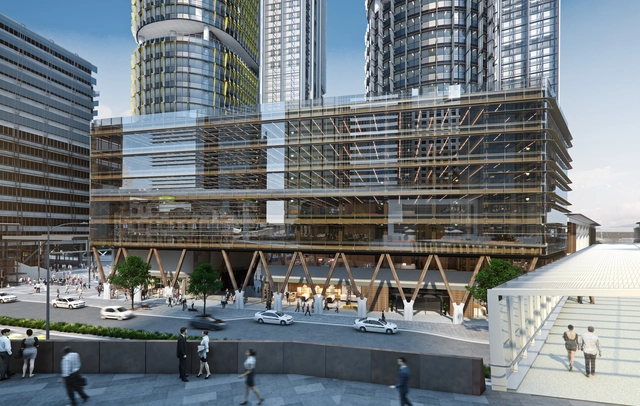
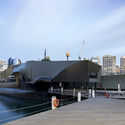
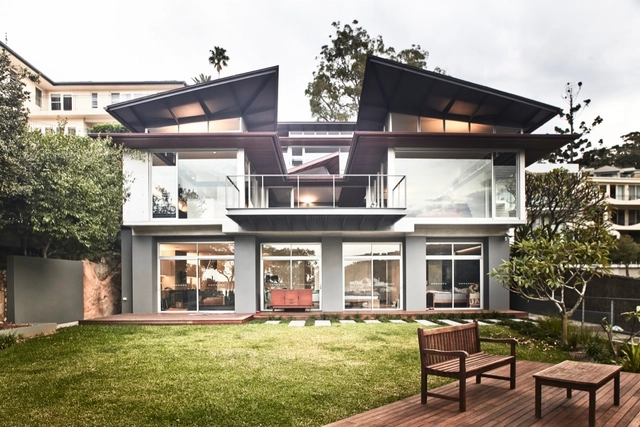
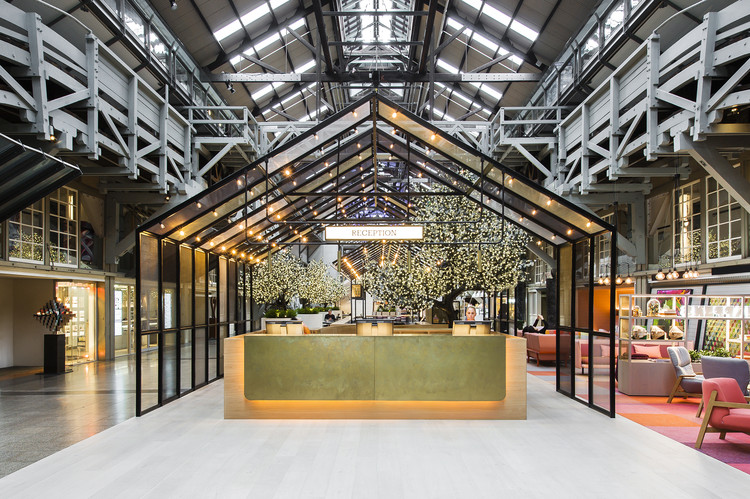
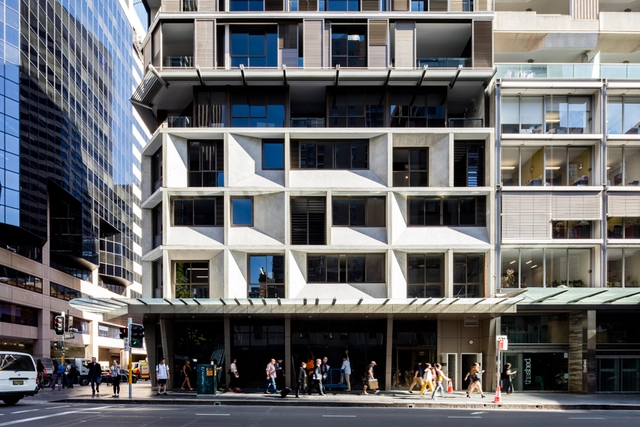
View from Hickson Road pedestrian bridge. Image Courtesy of Tzannes
Adding to the growing trend of timber-framed architecture, Tzannes has released plans for International House Sydney, the “first modern commercial engineered timber building of its size and type in Australia.” Located in the new urban district of Barangaroo, the building was conceived as a gateway to the area, linking pedestrian infrastructure systems and providing six floors of new commercial space.
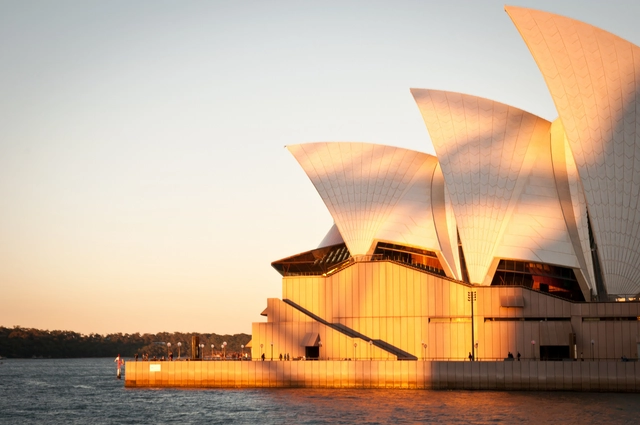
Courtesy of Flickr user Chris Maidlow, licensed under Creative Commons 2.0
The Sydney Opera House is one of the most iconic buildings in the world. A momentous achievement in design and engineering, the building quickly cemented itself as a defining feature of the Australian cultural landscape. But the realization of the building was not a straightforward one, and almost immediately after the project was awarded it became fraught with controversy and uncertainty. At the center of this controversy was the architect, Jørn Utzon, who eventually resigned after mounting conflict with the state government. Now, this period of Utzon's life will be chronicled in a new feature length film, Utzon, The Man Behind the Opera House, reportsThe Guardian.
Videos
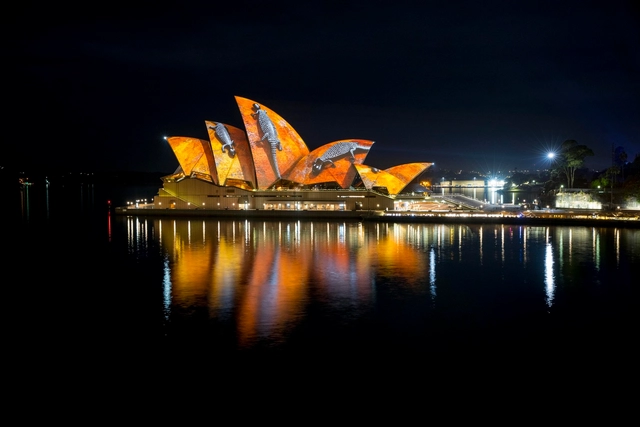
Opera House Songlines. Image Courtesy of Destination New South Wales
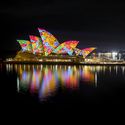
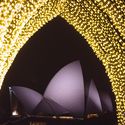
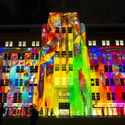
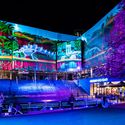
Vivid Sydney, the Australian city's annual festival of lights, began today with colorful installations that reinvent icons like the Sydney Harbour Bridge and Jørn Utzon’s renowned Opera House. The event is host to over 90 light installations devised by more than 150 artists from 23 countries, appearing in eight precincts across the city.
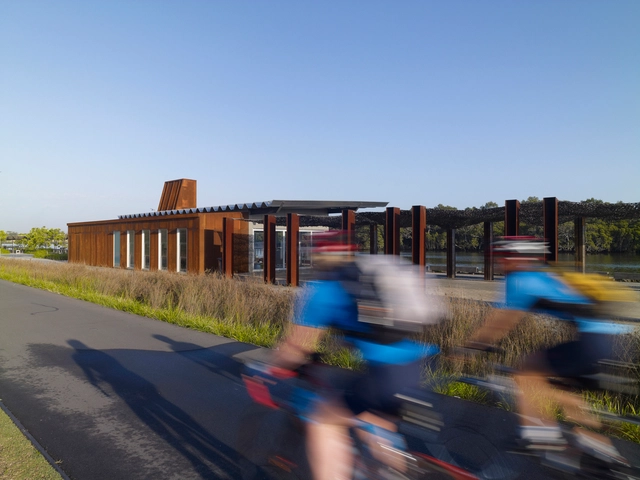
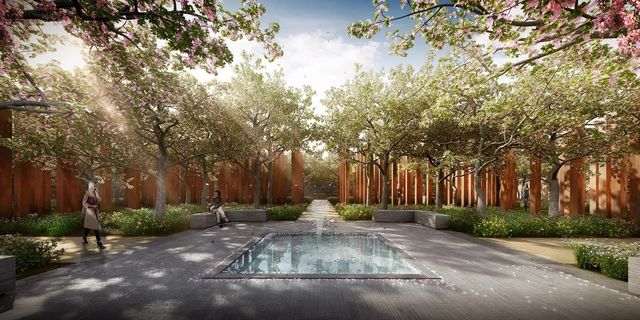
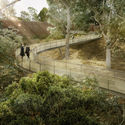
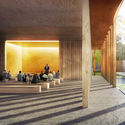
CHROFI and McGregor Coxall have designed Acadia Remembrance Sanctuary as a “bushland cemetery for a secular society.” The architects are proposing a burial ground located in the idyllic setting of a conservation woodland area on the outskirts of Sydney. The project calls for natural graves without headstones, instead opting for GPS technology to find the resting sites of loved ones. The tactic shifts the emphasis of cemeteries from the manicured appearances of individual plots and headstones to the retention and protection of the bush ecology. The proposed cemetery is situated on 10.1 hectares (25 acres) of parkland with a 400 square meter (4,500 square foot) building located at its center.
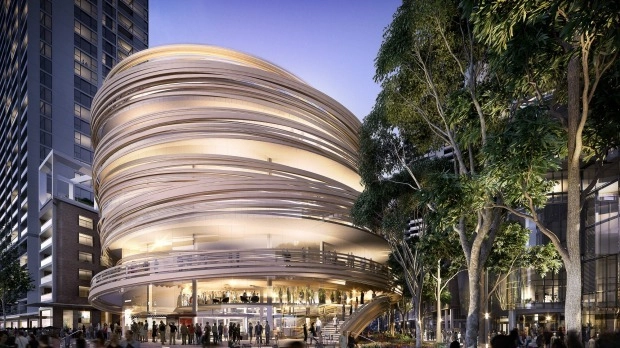
Darling Harbour has commissioned Kengo Kuma to design a new civic and creative center in Sydney - the Japanese practice's first Australian project. The 30-meter-tall, wood-clad "Darling Exchange" will rise six stories and provide space for a ground-floor market hall, library, childcare center, makerspace, and additional program for start-ups, as well as a rooftop bar and restaurant.
“Our aim is to achieve architecture that is an open and tangible as possible to the community, and this is reflected in the circular geometry that creates a building that is accessible and recognizable from multiple directions,” said Kuma.
In this short film, Monocle speaks to Penelope Evatt Seidler about the Modernist home she designed and built with her late husband, Harry Seidler, at Killara on Sydney's north shore. Far removed from the skyscrapers and residential towers for which the Seidler practice is known for, this house—completed in 1967—is a manifesto in early Modern and Bauhaus aesthetics that "are just as forward-thinking today as they were back then," built into the Australian landscape.
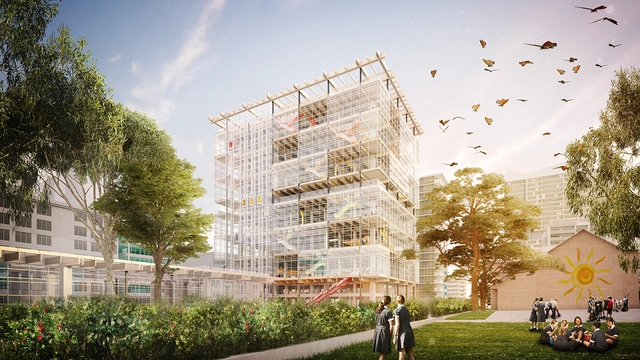
Grimshaw and BVN have won an international competition to redesign schools in Parramatta, a suburb in Sydney, Australia. Planned to be the state's first high-rise educational facility, the proposal combines the Arthur Phillip High School (APHS) and Parramatta Public School (PPS) into a 14-story building designed after the ‘Schools-within-Schools’ (SWIS) model - "a template which delivers learning in stages rather than via age groups."
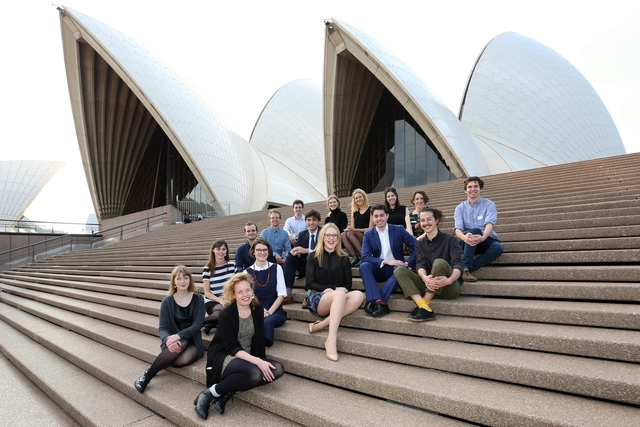
The 2015 session of MADE—the Multidisciplinary Australian Danish Exchange—has recently been completed and presented to the public. Established in 2013 by the Sydney Opera House, the MADE Program is an extracurricular experience for Australian and Danish students of architecture, engineering, and design.
Teams of five students are exchanged between Australia and Denmark and work in multidisciplinary teams of two architects, two engineers, and one designer for six weeks on a collaborative project aligned with Jørn Utzon’s Design Principles.
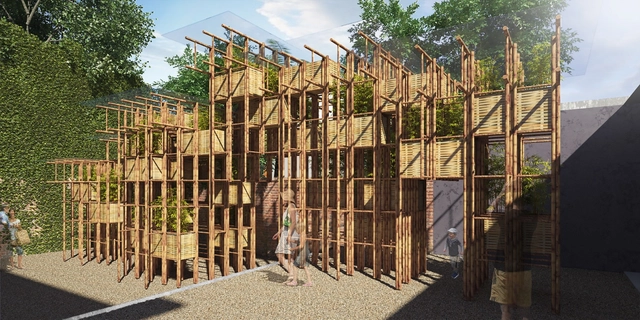
Courtesy of The Sherman Contemporary Art Foundation (SCAF)
The Sherman Contemporary Art Foundation (SCAF) has announced the fourth iteration of its annual pavilion series Fugitive Structures. Designed by Vo Trong Nghia Architects, the pavilion centers around “the innovative use of bamboo, and [the architect’s] passion and self-imposed duty to green the world’s urban landscapes with plants and vegetation.”