The Urban Futures Studio proudly presents the Post-Fossil City Contest. We are calling on artists, designers, architects, urbanists, authors, photographers, filmmakers and all-around creative thinkers to imagine a city that is no longer reliant on fossil fuels. Proposals in any shape or form are welcome: from illustrations, 3D models and essays to videos, products and interventions.
The event is a one of a kind platform that brings together all the stakeholders in the building and construction industry under one roof - the Government, architects, builders, corporate houses, thought leaders and industry bodies .
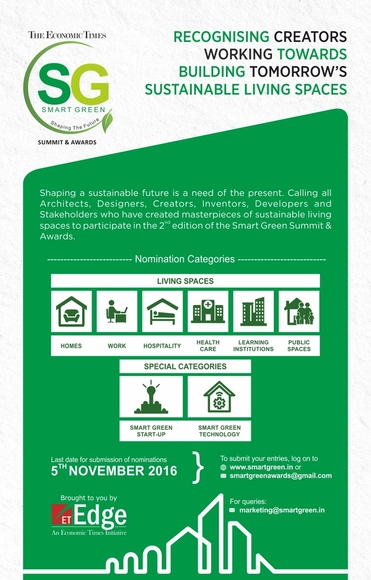
Saint-Gobain & Economic Times Smart Green Awards will honor those who have worked towards creating ecological, innovative development solutions towards building a sustainable tomorrow.
FuturArc Prize seeks forward-thinking, innovative design ideas for Asia. The competition offers a platform to professionals and students who are passionate about the environment. Through the force of their imagination it aspires to capture visions of a sustainable future. FuturArc Prize 2017 invites you to Envisage an Architecture for the Common Good.
Bridges and Highways infrastructure development have rapidly escalated in recent years in Asia Pacific, constituting 60% of the global market. Demand is largely driven by the availability of government road building funds, urbanization growth, and the need to replace or repair aging infrastructure. The Engineering and Maintenance components play a vital role in bridges & highways development as they are key to overall safety, project management and delivery of bridge and highway project and on a larger scale, a reflection of the country’s infrastructure plans and reputation.
Year on year, we are seeing Asia drastically outperforming all other regions in Skyscraper construction. For example, in 2015, 81 of the 106 completions were constructed in Asia.
A direct consequence of Asia’s Economy Growth, Rapid Urbanization and a Tremendous Appetite to build the Smartest, Most Asthetic and Tallest Buildings in the world, going forward it looks like it is no different as another record breaking year of skyscrapers completion is expected to take place in Asia.
Be sure not to miss out Equip Global’s leading Skyscrapers Asia Summit 2017.
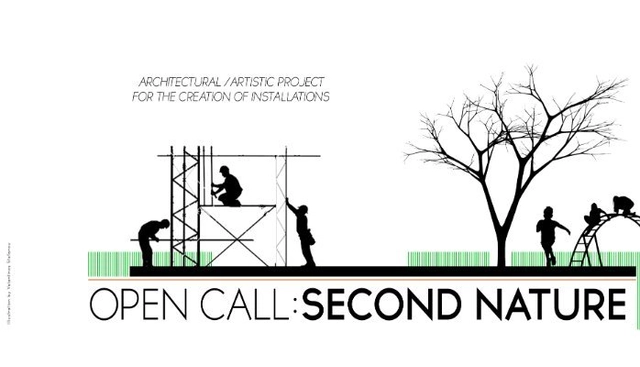
The European Capital of Culture – PAFOS2017 announces the architectural/artistic Open Call entitled “SECOND NATURE”, for the creation of light, small scale structures that will be placed in the Municipal Garden, in the centre of Pafos-CYPRUS. The Open Call is open to professional architects, artists, designers and students of architecture schools of member states of the International Union of Architects (UIA).
The Hyperloop One Global Challenge is a competition which invites teams anywhere on Earth to put forward a comprehensive commercial, transport, economic, and policy case for their cities, regions, or countries to be considered to host the first hyperloop networks. The Hyperloop One Global Challenge is not an engineering competition: we bring the technology, you tell us how it should be used in your location.
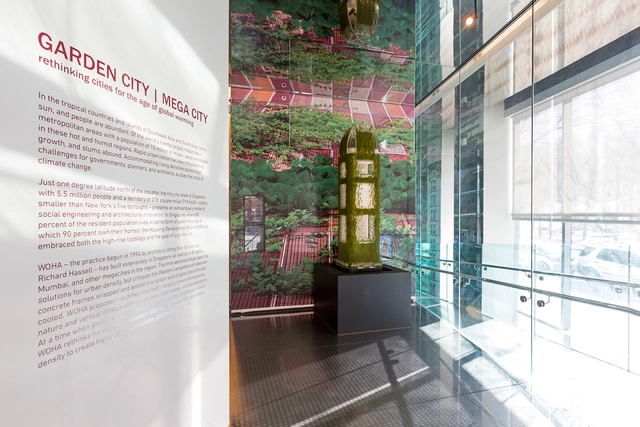
From commercial mixed-use to hospitality and social housing, Singapore- based WOHA reinterprets the skyscraper as a prototype for hyper-dense, green urban living. Their first major exhibition in the United States, GARDEN CITY MEGA CITY, opens March 23rd, 2016 at The Skyscraper Museum, and unveils twelve of their most recent vertical ecosystems.
Featuring architectural models, videos and renderings, the show contextualizes the firm’s towering endeavors as a stunning contribution to skyscraper design and a radical response to the Asian megacity. WOHA’s projects—in China, Bangkok, and Singapore, among others—address issues such as rampant population growth, preservation of tropical biodiversity, and the desire for
Don Gatzke, Professor & Former Dean of UTA School of Architecture will moderate "The Social Impact of Greening the City" Panel Discussion for the Dallas Architecture Forum
Dallas Architecture Forum, a non-profit organization dedicated to providing public education about architecture, design and the urban environment, will continue its 2015-2016 Panel Discussion Series on Tuesday, April 19, 2016 with “The Social Impact of Greening the City” moderated by Donald Gatzke, who served as Dean of the School of Architecture at the University of Texas at Arlington from 2004 through 2014 and is now a Professor at the university on the faculty.
Community Forests International (CFI) is excited to announce its second architectural design competition for the backwoods cabin of the future. The first, hosted in 2014, drew in over 50 entries from 11 different countries and served as a platform for exploring how humans can get back to nature in the 21st century. Bringing together visionary architects, artists, green builders and DIYers, this new challenge addresses the climate crisis and will help transform the organization’s 235 hectare (580 acre) organic farm and forest outside of Sussex, New Brunswick, Canada into a Rural Innovation Campus.
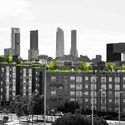
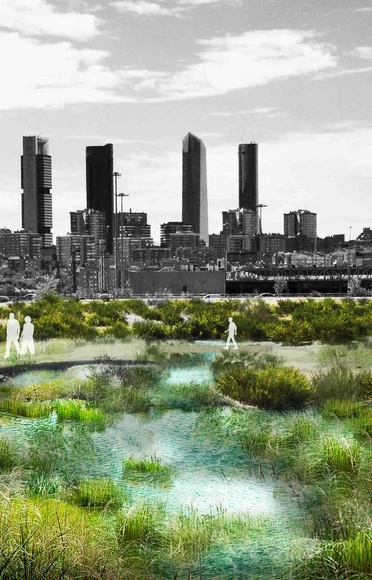
Arup’s Foresight + Research + Innovation, Madrid Sustainability and Master Planning, and Landscape Architecture teams have released Madrid + Natural, a series of guidelines to address climate change within the city.
The forward-thinking report to seeks to provide “multiple nature-based solutions to regulate Madrid’s urban environment and respond to problems like pollution, increased heavy storm events, drought, periods of abnormally hot temperatures, and local biodiversity loss.”
“As an architect you design for the present, with an awareness of the past, for a future which is essentially unknown. The green agenda is probably the most important agenda and issue of the day […] all the projects which have, in some way, been inspired by that agenda are about a celebratory lifestyle, in a way celebrating the places and spaces which determine the quality of life.”
FuturArc Prize seeks forward-thinking, innovative design ideas for Asia. The Competition offers a platform to professionals and students who are passionate about the environment. Through the force of their imagination it aspires to capture visions of a sustainable future.
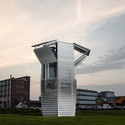
Dubbed Smog Free Tower, the 7-meter-tall vacuum acts as a filter that uses patented “ozone free ion technology” to clean 30,000 cubic meters of air per hour using only minimal wind and electrical energy.
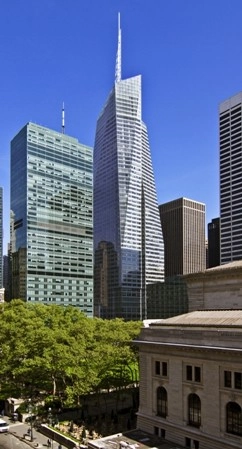
The Bank of America Building, by Cook + Fox, is LEED Platinum. However, due to its use, it is one of the buildings that consumes the most energy in NYC. Image courtesy of Bank of America, via The New Republic.
Something surprising has happened with many so-called “sustainable” buildings. When actually measured in post-occupancy assessments, they’ve proven far less sustainable than their proponents have claimed. In some cases they’ve actually performed worse than much older buildings, with no such claims. A 2009 New York Times article, “Some buildings not living up to green label,” documented the extensive problems with many sustainability icons. Among other reasons for this failing, the Times pointed to the widespread use of expansive curtain-wall glass assemblies and large, “deep-plan” designs that put most usable space far from exterior walls, forcing greater reliance on artificial light and ventilation systems.
Partly in response to the bad press, the City of New York instituted a new law requiring disclosure of actual performance for many buildings. That led to reports of even more poor-performing sustainability icons. Another Times article, “City’s Law Tracking Energy Use Yields Some Surprises,” noted that the gleaming new 7 World Trade Center, LEED Gold-certified, scored just 74 on the Energy Star rating — one point below the minimum 75 for “high-efficiency buildings” under the national rating system. That modest rating doesn’t even factor in the significant embodied energy in the new materials of 7 World Trade Center.
What's going on with these supposedly "sustainable" buildings? Read on, after the break...
This article, which originally appeared on GreenBiz, is by Lance Hosey, the chief sustainability officer of the global design leader RTKL.
Sustainability leader Hunter Lovins once called the building industry "dynamically conservative — it works hard to stay in the same place."
But old habits cannot fully address new challenges. According to 350.org, fossil fuel corporations currently have in their reserves five times the amount of carbon that, if burned too quickly, may raise atmospheric temperatures to a catastrophic level where Hurricane Sandy-scale storms could become the norm. Quicker, deeper progress is imperative.
Architecture is an essential arena for sustainable innovation. Buildings represent about half the annual energy and emissions in the U.S. and three-quarters of its electricity. With the built environment growing — the U.S. building stock increases by about 3 billion square feet every year — architects have a historic opportunity to transform its impact for the better.
Keep reading to find out the 6 Steps architects can take to transform the profession, after the break...









.jpg?1449882975 "Urban farming. Image Courtesy of Arup")