How do we know that sulfuric acid does not cure scurvy? Is it our wonderful intuitive sense about sulfuric acid’s properties? That can’t be it. Vitriol (sulfuric acid) used to be the Royal College of Physicians’ favored choice. The British Admiralty preferred vinegar. Still others favored a variety of remedies including the seemingly ridiculous notion of fresh fruit. This mess wasn’t sorted out until a young Scottish naval surgeon named James Lind did something revolutionary. In 1747 Lind conducted world’s first controlled clinical trial. Fresh fruit won, sulfuric acid and vinegar lost.
Similarly, there are various untested claims about which architectural interventions are beneficial for individuals with autism (see: here, here, here, and here). For the most part, these claims are mired in anecdote and conjecture. This makes it impossible to decipher which ones are sulfuric acid, vinegar or fresh fruit. Fortunately there are a few architects that have started to embrace the Lind spirit. This is the most important and necessary step architects need to take. If architects do not try to verify their claims through fair tests then they run the risk of undermining the public’s trust or worse, unintentionally doing harm to a vulnerable population.
https://www.archdaily.com/197788/architecture-for-autism-architects-moving-in-the-right-directionChristopher N. Henry
For those of you still in search for some last minute gift ideas, we present to you part three of the 2011 ArchDaily Holiday Gift Guide. We hope this provides you with that last bit of inspiration to finish your holiday shopping. In case you missed our previous guides, view Part One and Part Two for more gift ideas that is guaranteed to please any architect.
Chinese artist Ai Weiwei was selected as one of the runner-up candidates for TIMES 2011 Person of the Year Award. Ai Weiwei is known in the architecture world for his collaboration with Herzog & de Meuron, serving as the artistic consultant for the Beijing National Stadium, otherwise known as the Bird’s Nest stadium.
How often do you hear phrases with the following general undertones: “architecture isn’t a profession it is a calling,” “architecture isn’t a career it is a way of life,” or “architecture doesn’t make life possible it makes it worth living”? Perhaps not that often, but enough that many architects see themselves as uniquely sacrificing aspects of their life for a higher cause. Some claim that architects have high divorce rates, suffer from depression, and endure a special degree of stress that causes early mortality from cancer and heart disease. Yikes! But what evidence is there for these serious claims? Admittedly, the evidence for or against such claims is not very robust. The first and best answer, except in the case of divorce, is to say, “I don’t know.” Sorting out the muddled statistics takes a fair degree of interpretation and guesswork. However, after reviewing the data that are available, it is more reasonable to believe that architects are, on average, happily married and healthy people.
https://www.archdaily.com/192349/are-architects-depressed-unhealthy-and-divorcedChristopher N. Henry
DesignByMany’s latest challenge: Electric Vehicle Charging Station sponsored by HP and media partners ArchDaily. Historically, the filling station was designed with the basic concept of sheltering those in need of filling up their tanks and nothing more. However, as consumers adopt an environmentally conscious lifestyle and hybrid technology advances, the functionality of the filling station is no longer what it used to be. This challenge is to design an electric vehicle charging station that will define a new era of electric mobility.
DesignByMany is a challenge based design technology community where users post challenges to the community along with their design source files. The community can then post responses with their own source files to solve the challenge. They can also comment on the challenge and interact with other designers throughout the process.
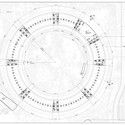
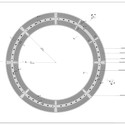
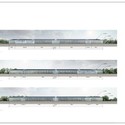
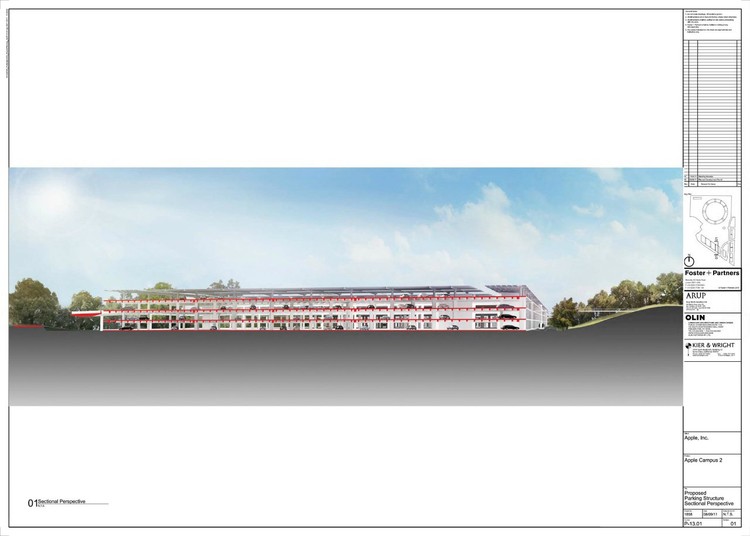
Apple has released updated plans revealing an ambitions solar installation for their proposed campus in Cupertino. Announced back in June, the campus will include an office, research and development building, research facilities, corporate auditorium, fitness center, a central plant and associated parking. Foster + Partners will collaborate with ARUP North America and local civil engineering firm Kier & Wright for the completion of the project.
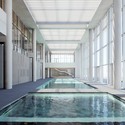
Rem Koolhaas and Ellen van Loon discuss their design of the Rothschild Bank headquarters in London. Viewing the bank as a “dynamic system”, the main task was to create an “always efficient and always pleasant” machine that will accommodate all of the Bank’s London staff and reunite its connections with the city, including the St. Stephen’s Walbrook. OMA’s design for the New Court is the fourth iteration of NM Rothschild & Sons’ headquarters, all of which have been built on the dense and narrow medieval alley of St. Swithin’s Lane.
London-based architect David Adjaye was selected for the 2011 Designer of the Year Award by Design Miami – a global forum for design that highlights influential collectors, gallerists, designers, curators and critics from around the world, presenting annual fairs in Miami, USA and Basel, Switzerland. Design Miami praised Adjaye for his “ingenious use of materials and unique ability to showcase light coupled with his democratized approach to the architectural process.”
Chilean architect Sebastian Irarrazaval recently completed the new building for the Universidad Catolica School of Design in Santiago, Chile.
The new 4-stories tall building is organized around two patios with different spatial qualities, that create new intimate spaces in the campus. The building is cladded in corten steel, a material chosen to age with the building, contrasting with the combination of concrete and light wood to give a more intimate character to the interior spaces, patios and circulations.
Thanks to this video by architectural photographer Cristobal Palma we are able to see dynamic aspects of the building in use, such as the the windows, which play a key role bringing indirect light to the classrooms and allowing for cross ventilation through the patios.
During the 2009 AIA Convention in San Francisco, I had the chance to see a very interesting group of architects, Emerging Voices. That group, in my opinion, represented the new generation of US architects who are advancing the profession with new ideas and innovative projects. Several of those architects have already been interviewed and featured on ArchDaily, but it took me a while to finally meet one of them: Philip G. Freelon. We met during the 2011 AIA Convention in New Orleans, where I had the opportunity to interview him. I really liked this interview, where Philip shares valuable insights on running a firm and his views on the role of the architect.
Earlier we brought to you WORKac‘s preliminary scheme for the transformation of Salem-Keizer, Oregon. We would now like to present the final scheme presented by Amale Andraos and Dan Wood. The project integrates elements of the city and nature across an existing 200 acre big box retail site. WORKac is one of five interdisciplinary teams participating in “MoMA’s Foreclosed: Rehousing the American Dream.” Each team is challenged to re-imagine struggling American cities and suburbs, seeing the current economic crisis as an opportunity to evolve.
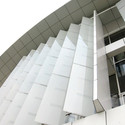
Construction of Richard Meier’s Shenzhen Clubhouse is nearing completion. Unique geometry fully clad in white metal panels play with overlays of solid and void, unmistakably consistent with the Richard Meier signature style. Being located on an island in the center of OCT Bay, the facility is surrounded by large bodies of water and lush gardens. The Shenzhen Clubhouse is scheduled to be completed early next year.
Continue reading for the architects project description, photographs, renderings and drawings.
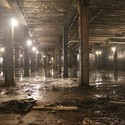
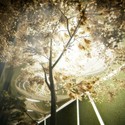
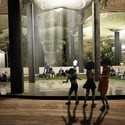
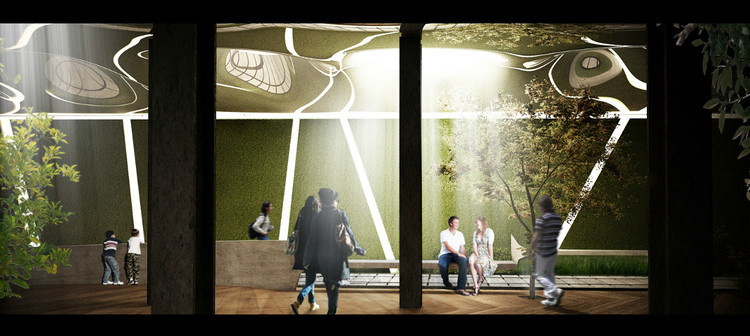
As the Highline has everyone looking up, James Ramsey and Dan Barasch are asking people to start looking down. James Ramsey’s vision to transform the abandoned Williamsburg Bridge Trolley Terminal into a subterranean park filled with sunlight and lush vegetation is gaining international attention and support. The satellite engineer turned architect has developed a skylight using fiber-optic technology that will naturally light and bring life to this forgotten, graffiti-covered cavity below the streets of New York City.
Continue reading for more information, video and exclusive statements from Ramsey and Barasch.