The largest private project New York City has seen in over 100 years may also be the smartest. In a recent article on Engadget, Joseph Volpe explores the resilience of high-tech ideas such as clean energy and power during Sandy-style storms. With construction on the platform started, the Culture Shed awaiting approval, and Thomas Heatherwick designing a 75-Million dollar art piece and park – the private project is making incredible headway. But with the technology rapidly evolving, how do investors know the technology won't become obsolete before its even built?
Have you ever wondered where your information goes when you save it to "The Cloud"? The answer is within giant data centers. According to reports, Facebook and Google's data centers resemble something from Science Fiction, while some could come straight from a Bond flick. In a new short film named Internet Machine, Filmmaker and Visual artist Timo Arnall takes us where few have been granted access, showing the world what "The Cloud" really is - a massive architectural space with extreme energy demands. To experience the power surging and hear the deafening hum of a data center, check out the trailer above.
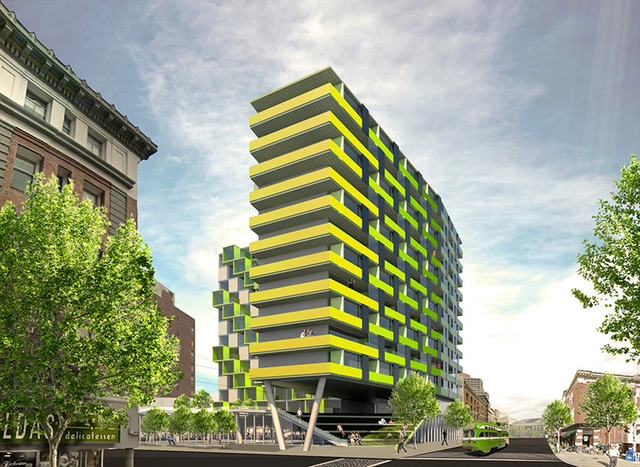
NZ+ Beyond Net Zero Energy. Image Courtesy of Architecture at Zero
Industry leaders recently came together to announce the winners of the 2013 Architecture at Zero competition, which included five professional and one student awardee. The competition, which is co-sponsored by AIA San Francisco and Pacific Gas & Electric, focuses specifically on the design of zero-net energy structures.
While zero net energy is easily achieved in smaller buildings, it's a challenge in larger structures - and the competition challenged entrants to think big. With the aim of being as close to zero net energy as possible, competition entries had to be a mix of affordable and market rate housing units and include a full neighborhood-serving grocery store on the ground level.
Read more for the winners...
https://www.archdaily.com/447778/winners-of-2013-architecture-at-zero-competition-announcedKatherine Allen
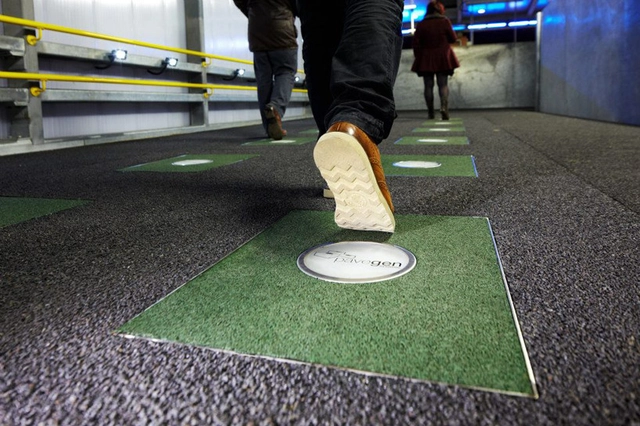
The potential to generate energy is hidden in many places, from skyscrapers to ski-slopes. But new research is showing that a potent source of energy is hiding right beneath our noses, or feet to be more specific.
This past Monday, President Obama made climate change and sustainable energy the focal points of his Inaugural Address when he declared that choosing to ignore these key environmental issues "would betray our children and future generations." This is the first time in the last few months that the President has taken a firm stand for the future of our Earth, a direct result of Super Storm Sandy and a smart choice to reveal controversial policies only after re-election. Although Monday morning was not the time to outline a specific political strategy, President Obama made it very clear that this time around, denial of scientific judgment and Congressional opposition would not be reasons for failure to act.
While this is a sentiment easier said than done and there is doubtlessly a long and difficult road ahead for the President and his administration. The White House has revealed that it plans to focus on what it can do to capitalize on natural gas production as an alternative to coal, on "reducing emissions from power plants, [increasing] the efficiency of home appliances and [on having] the federal government itself produce less carbon pollution" (NYTimes). According to the New York Times, they aim to adopt new energy efficiency standards for not only home appliances but for buildings as well, something that should spark the interests of architects and urban planners already committed to designing with climate change and sustainable energy in mind.
AMO is a design and research studio inside OMA, a think tank operating on the boundaries of architecture: media, politics, sociology, sustainability, technology, fashion, curating, publishing and graphic design. Some of their works include the barcode flag for the EU and a study for Wired magazine.
And while OMA covers sustainable strategies on a building or master plan scale, AMO is approaching it on en European scale as one of the five consultants conducting technical, economic and policy analyses for Roadmap 2050, an initiative by the European Climate Foundation which looks to chart a policy roadmap for the next 5-10 years based on the European leaders’ commitment to an 80-95% reduction in CO2 emissions by 2050. You can download a brief of Roadmap 2050 in PDF.
The goal is to achieve a 2% energy efficiency saving per year in order to meet this goal, with power and vehicle transportation being the most important areas.
Through the complete integration and synchronization of the EU’s energy infrastructure, Europe can take maximum advantage of its geographical diversity. The report’s findings show that by 2050, the simultaneous presence of various renewable energy sources within the EU can create a complementary system of energy provision ensuring energy security for future generations.
AMO’s work focuses on the production of a graphic narrative which conceptualizes and visualizes the geographic, political, and cultural implications of the integrated, decarbonized European power sector.
On their study you can find an interesting approach to a diverse european energy grid, including energy trade and the use of new non-traditional sources.
The image of “Eneropa” appears as a new continent based on its energy production: Biomassburg, Geothermalia, Solaria, the Tidal States… are part of this new territory. Other branding concepts are introduced on the study, creating a tangible image of this ambitious plan, which reminds the powerful (yet simple) idea behind the barcode flag.