1. ArchDaily
  2. Elderly Design

Elderly Design: The Latest Architecture and News

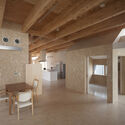
Appleby Blue Almshouse by Witherford Watson Mann Architects Wins RIBA Stirling Prize 2025

The RIBA Stirling Prize 2025 has been awarded to Appleby Blue Almshouse by Witherford Watson Mann Architects, a new social housing development for older residents in London. Presented annually by the Royal Institute of British Architects (RIBA) since 1996, the prize recognizes the UK's best new building, celebrating architectural excellence, innovation, and social impact. This marks the second Stirling Prize win for Witherford Watson Mann Architects, following their 2013 recognition for Astley Castle, and continues their trajectory as a practice that engages deeply with social and cultural contexts. The firm was also shortlisted in 2019 and 2023.

Appleby Blue Almshouse by Witherford Watson Mann Architects Wins RIBA Stirling Prize 2025 - Image 1 of 4Appleby Blue Almshouse by Witherford Watson Mann Architects Wins RIBA Stirling Prize 2025 - Image 2 of 4Appleby Blue Almshouse by Witherford Watson Mann Architects Wins RIBA Stirling Prize 2025 - Image 3 of 4Appleby Blue Almshouse by Witherford Watson Mann Architects Wins RIBA Stirling Prize 2025 - Image 4 of 4Appleby Blue Almshouse by Witherford Watson Mann Architects Wins RIBA Stirling Prize 2025 - More Images

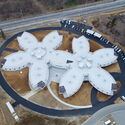
How Architecture Brings Social Interaction in Care: 9 Elderly Care Facilities in Japan

Japan, one of the places known for its high longevity, is critically facing a demographic shift. As the aging population continues to grow, so too does the demand for thoughtful, well-designed spaces that support elderly care. Traditionally, caregiving was woven into the fabric of family life, often falling on the shoulders of female members in a patriarchal society. However, as a traditional big family structure largely dissolves and the nuclear family becomes the norm, elder care increasingly relies on social welfare services and specialized facilities.

This situation presents a profound, growing architectural challenge: How can care environments not only accommodate medical and nursing needs but also foster individual dignity, comfort, and human and nonhuman interactions? The ideal design of elderly care facilities balances clinical functionality with the nuances of daily life—for the elderly themselves, for those experiencing challenges and difficulties such as dementia, for their families, and for the caregivers who support them.

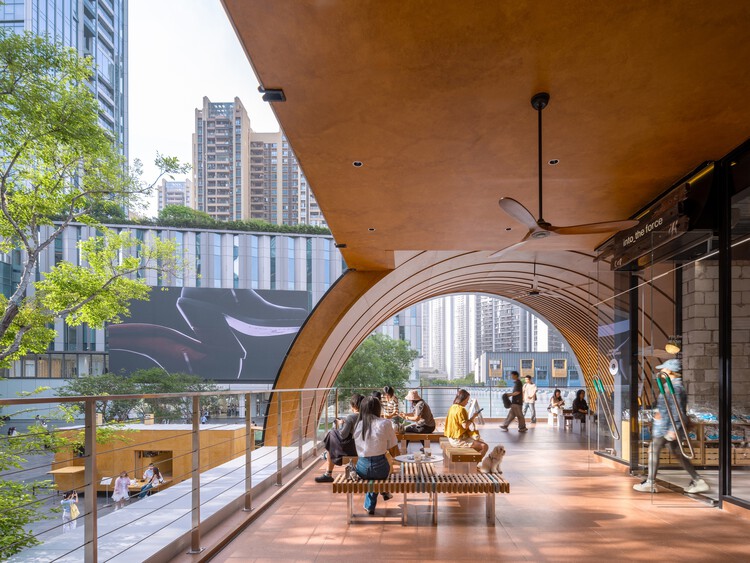
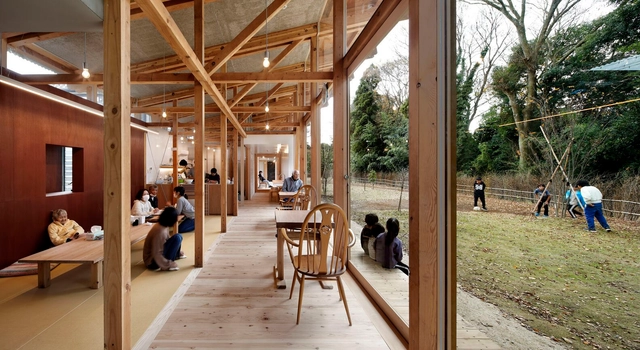
How Architecture Brings Social Interaction in Care: 9 Elderly Care Facilities in Japan - Imagen 1 de 4How Architecture Brings Social Interaction in Care: 9 Elderly Care Facilities in Japan - Imagen 2 de 4How Architecture Brings Social Interaction in Care: 9 Elderly Care Facilities in Japan - Imagen 3 de 4How Architecture Brings Social Interaction in Care: 9 Elderly Care Facilities in Japan - Imagen 4 de 4How Architecture Brings Social Interaction in Care: 9 Elderly Care Facilities in Japan - More Images+ 17

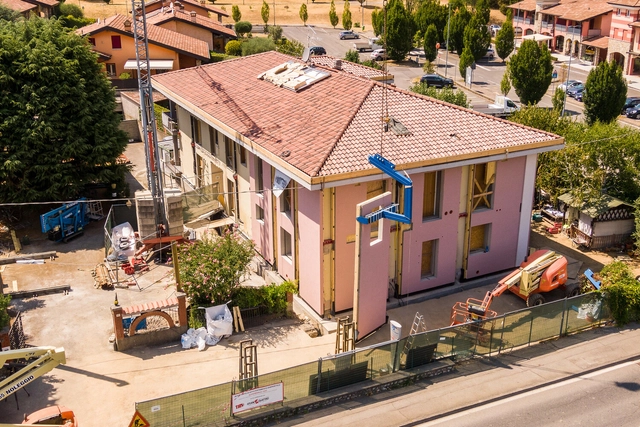
World Habitat Awards 2024 Recognize Housing Initiatives that Empower Communities

International non-profit organization World Habitat, in partnership with UN-Habitat, has announced the World Habitat Awards 2024. The prizes strive to highlight projects that demonstrate novel and transformative approaches to housing that incorporate principles of climate change adaptation and community-driven solutions. This year, 8 projects have been selected, out of which 2 projects were recognized with the Gold World Habitat Award.

World Habitat Awards 2024 Recognize Housing Initiatives that Empower Communities - Image 1 of 4World Habitat Awards 2024 Recognize Housing Initiatives that Empower Communities - Image 2 of 4World Habitat Awards 2024 Recognize Housing Initiatives that Empower Communities - Image 3 of 4World Habitat Awards 2024 Recognize Housing Initiatives that Empower Communities - Image 4 of 4World Habitat Awards 2024 Recognize Housing Initiatives that Empower Communities - More Images+ 10

The Trends that Will Influence Architecture in 2019

It is, once again, the time of year where we look towards the future to define the goals and approaches that we will take for our careers throughout the upcoming year. To help the millions of architects who visit ArchDaily every day from all over the world, we compiled a list of the most popular ideas of 2018, which will continue to be developed and consolidated throughout 2019.

Over 130 million users discovered new references, materials, and tools in 2018 alone, infusing their practice of architecture with the means to improve the quality of life for our cities and built spaces. As users demonstrated certain affinities and/or demonstrated greater interest in particular topics, these emerged as trends. 

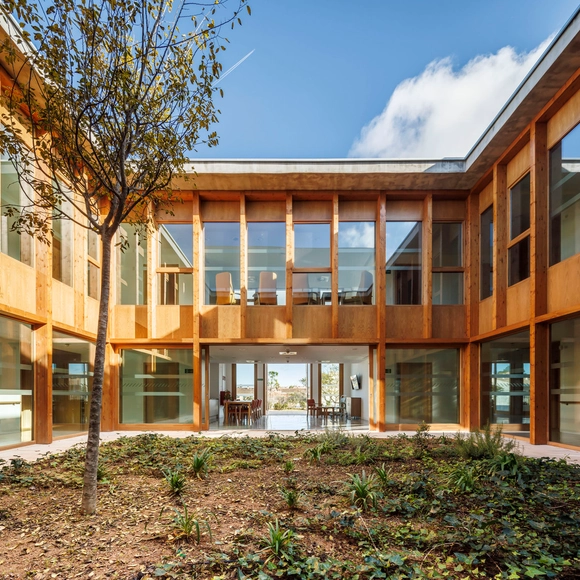
Santa Casa da Misericórdia’s Elderly Care Centre / Nuno Piedade Alexandre

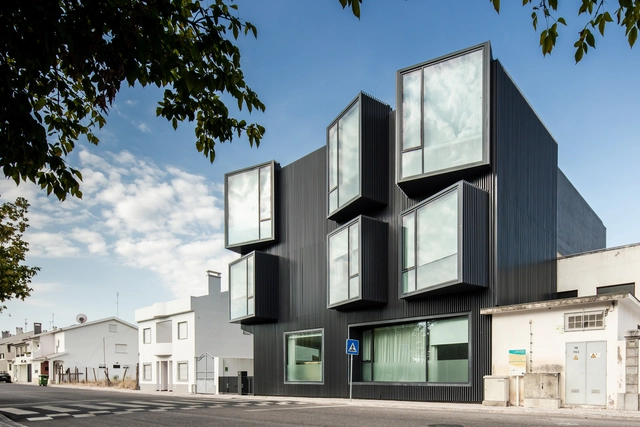
Santa Casa da Misericórdia’s Elderly Care Centre / Nuno Piedade Alexandre - Exterior Photography, Asylum, Facade, LightingSanta Casa da Misericórdia’s Elderly Care Centre / Nuno Piedade Alexandre - Interior Photography, Asylum, FacadeSanta Casa da Misericórdia’s Elderly Care Centre / Nuno Piedade Alexandre - Exterior Photography, Asylum, FacadeSanta Casa da Misericórdia’s Elderly Care Centre / Nuno Piedade Alexandre - Interior Photography, Asylum, Bedroom, DoorSanta Casa da Misericórdia’s Elderly Care Centre / Nuno Piedade Alexandre - More Images+ 52

Ponte de Sor, Portugal

To Design for the Elderly, Don't Look to the Past

Subscriber Access | 

When the world undergoes major changes (be it social, economic, technological, or political), the world of architecture needs to adapt alongside. Changes in government policy, for example, can bring about new opportunities for design to thrive, such as the influx of high-quality social housing currently being designed throughout London. Technological advances are easier to notice, but societal changes have just as much impact upon the architecture industry and the buildings we design.

To Design for the Elderly, Don't Look to the Past - Image 1 of 4To Design for the Elderly, Don't Look to the Past - Image 2 of 4To Design for the Elderly, Don't Look to the Past - Image 3 of 4To Design for the Elderly, Don't Look to the Past - Image 4 of 4To Design for the Elderly, Don't Look to the Past - More Images+ 28

What Makes a City Livable to You?

What Makes a City Livable to You? - Arch Daily Interviews
© Flickr user Hafitz Maulana licensed under CC BY-SA 2.0. ImageA music festival in Singapore

Mercer released their annual list of the Most Livable Cities in the World last month. The list ranks 231 cities based on factors such as crime rates, sanitation, education and health standards, with Vienna at #1 and Baghdad at #231. There’s always some furor over the results, as there ought to be when a city we love does not make the top 20, or when we see a city rank highly but remember that one time we visited and couldn’t wait to leave.

To be clear, Mercer is a global HR consultancy, and their rankings are meant to serve the multinational corporations that are their clients. The list helps with relocation packages and remuneration for their employees. But a company’s first choice on where to send their workers is not always the same place you’d choose to send yourself to.

And these rankings, calculated as they are, also vary depending on who’s calculating. Monocle publishes their own list, as does The Economist, so the editors at ArchDaily decided to throw our hat in as well. Here we discuss what we think makes cities livable, and what we’d hope to see more of in the future.

A McDonald's Controversy Raises Debate on Designing for the Elderly

In an article for the New York Times, Michael Kimmelman gets to the bottom of an unusual local dispute: a McDonald's in Queens, New York is kicking out groups of elderly Koreans who are out-staying their 20-minute welcome (and who have no access to community spaces nearby). The story raises an important question: how can we design our cities with elder populations in mind (a generation on track to out-number all others in the next few years)? You can read this poignant tale in full here.

AD Architecture School Guide: Institute on Aging and Environment, University of Wisconsin-Milwaukee School of Architecture and Urban Planning

Subscriber Access | 

According to the UN, the elderly population not only exceeds the population of children in developed nations, but will increase more rapidly than any other demographic over the next 50 years -- in fact, it could even triple.

Although most countries deal with the elderly population through institutionalized care, whether public, as in Canada or in Great Britain, or private, as in the U.S., the quality of care is widely divergent. It’s therefore fitting - and necessary - that the physical environment’s effect on elderly care is becoming a more prominent issue for research. 

One institute that is leading the way in this research is the University of Wisconsin-Milwaukee’s School of Architecture and Urban Planning’s Institute on Aging and Environment.

Old City: The New Paradigm

Subscriber Access | 

This article appeared on Metropolis Magazine's Point of View Blog as "Old City: the New Paradigm."

The current conversation about redesigning cities usually focuses on Boomers or Milllennials, two extremes of the age spectrum.  The largest percent of people are between 30-64 years old and everyone will eventually be elderly--a reality no one can escape. 

We are a global society, more savvy, fashionable and in-the-know than ever before, and most of us want an urbanized lifestyle, meaning a blend of great food and conversation, tech modernization, access to healthy and alternative life choices, and being at the center of the action. 

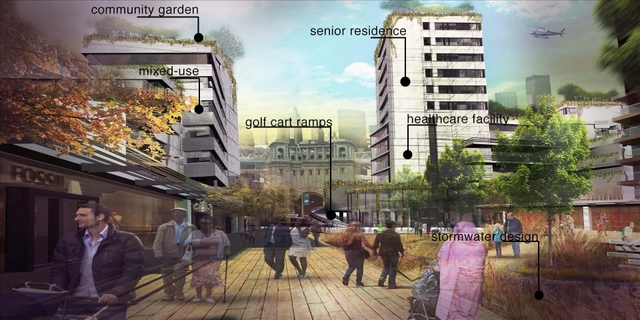
The best cities in the world like New York, Berlin, and Tokyo market themselves as meccas for young, energetic people that promise diversity and innovation. This generates a lack of ideal architecture for people over the age of 65 and shuts the door on them. Thus we lose the knowledge, stability, and experience they provide to civilization. 

More on "old" cities, after the break...