Vernacular architecture, the simplest form of addressing human needs, is seemingly forgotten in modern architecture. However, due to recent rises in energy costs, the trend has sensibly swung the other way. Architects are embracing regionalism and cultural building traditions, given that these structures have proven to be energy efficient and altogether sustainable. In this time of rapid technological advancement and urbanization, there is still much to be learned from the traditional knowledge of vernacular construction. These low-tech methods of creating housing which is perfectly adapted to its locale are brilliant, for the reason that these are the principles which are more often ignored by prevailing architects.
Joel Pirela of Miami based studio Blue Ant Studio has ingeniously reinterpreted the traditional ophthalmology exam to suit the refined tastes of designers. More after the break.
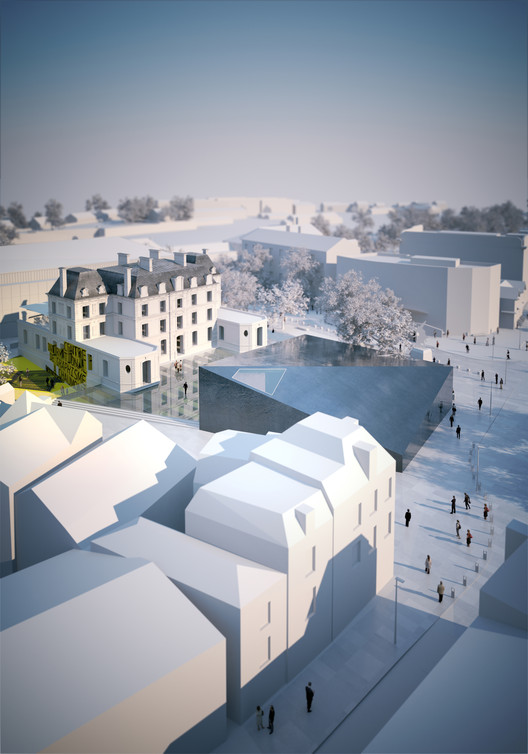
In response to a public debate about rebuilding the historic wing of the Louvre in Paris, Carl Fredrik Svenstedt Architecte shared with us their initiative to extend the Louvre. Destroyed by the French Republic at the end of the 19th century as a symbol of royal and imperial power, this proposal aims to build a more democratic building better suited to the site and our times. More images and architects’ description after the break.
One of the New York City’s most forgettable buildings has been transformed into a model of modern technology. The Port Authority Bus Terminal (PABT), located in midtown Manhattan between 40th and 42nd street, now boasts the world’s largest transparent media façade completed by GKD Metal Fabrics which effectively covers the building’s outdated steel façade. More images and project description after the break.
The Rotterdam based design team STAR strategies + architecture has shared with us their recent project, O’ Mighty Green, a critical piece about Green – washing and especially about the abuse of “Green” in architecture. Additional images and text can be seen after the break.
The French design team, Olgga Architects, recently placed second in the competition to design the International Graphic Design Center in Chaumont, France. Images of their proposal in addition to a press release narrative from the architects can be viewed after the jump.
DI Bernhard Gruber has devised a creative proposal for a new typology of playground systems for harsh weather climates such as Tel-Aviv Israel. Read more about this conditioned micro climate playground and additional images of the project after the break.
Department of Unusual Certainties [DoUC] recently completed a submission to the Network Reset, Rethinking the Chicago Emerald Necklace, competition hosted by Mas Studio and the Chicago Architectural Club. Participants were asked to look at the urban scale and propose a framework for the entire boulevard system as well as provide answers and visualize the interventions at a smaller scale that can directly impact its potential users. Through images, diagrams and drawings the work should express what are the soft or hard, big or small, temporary or permanent interventions that can reactivate and reset the Boulevard System of Chicago. DoUC’s proposal focused on filling Chicago’s Emerald Necklace with a framework of posts, beams, ropes and counterweights - to produce a pick-and-choose- method of program management. Images of their entry and a description can be seen after the jump.
As a part of MIT’s 150th anniversary celebration, a student competition was held for a installation to become part of the festivities. Yushiro Okamoto‘s winning proposal, ICEWALL, has recently been completed and has been submitted to share with us here at ArchDaily. Follow after the break to browse through a large collection of photographs of the project.
Edwards Moore recently completed a temporary concept store for Arnsdorf womens label, the system, composed entire of tights, set to create a sculptural setting for the boutique clothing store. For more images of the installation and a brief description from Edwards Moore, follow after the jump.
Architects’ Week is a longstanding tradition of the Tulane School of Architecture as a weeklong, design and build, group project. It is a unique occasion for students to work not only with a proven designer, but also with fellow students. The exact form that it takes varies from year to year. In 2010, A-Week groups created information kiosks for New Orleans. The year before was an exploration in rethinking the bench. This year the project brief was a bit different. The project brief, images and descriptions of each student project and the winning design after the break.
Tel-Aviv based designers, Ifat Finkelman_Ofer Bilik Architects, have submitted their competition winning entry, a Habitat for Urban Wildlife, which repurposes existing Israeli water towers. Additional images and a description of both the project and the competition after the break.
Department of Unusual Certainties was recently awarded honorable mention for their submission to Conditions Magazine’s Tell Them What They Need Competition, a competition which asked people to come up with alternatives for architectural competition practice. Their submission “Warehouse for Architectural Recycling (W.A.R.)” proposes a global institution which archives competition submissions and auctions them off to potential buyers elsewhere. A re-purposing of loser ideas. Follow after the jump for a comprehensive description of W.A.R. from DoUC.
Greek architects, mab architecture, have shared with us their interactive, multi sensory pavilion, Plinthos. Additional images, multiple videos and a description of this visually striking project after the break.
Popular Architecture has shared with us their competition entry for the proposed Astrium Nature Select Shop in Taichung, Taiwan. While the Brooklyn based firm’s proposal did not win, the design provides an interesting aesthetic and retail solution. More images and a brief description after the jump.
The Los Angeles design collaborative, SPORTS, has sent us their most recent project, a gallery installation in Hollywood, California. A description of the project and additional images are after the break.
Shane Neufeld and Kevin Kunstadt have worked together to create Kissing Booth, a progressive warming hut for the Assiniboine River and Winnipeg. Follow after the break for additional rendering, diagrams and a quick description from the designer.
Egyptian architect, Ahmed Zayed has shared his design proposal for the 2012 London Olympic Games, a interactive installation along one of the iconic structures of London. Additional images and a brief description after the break.