
-
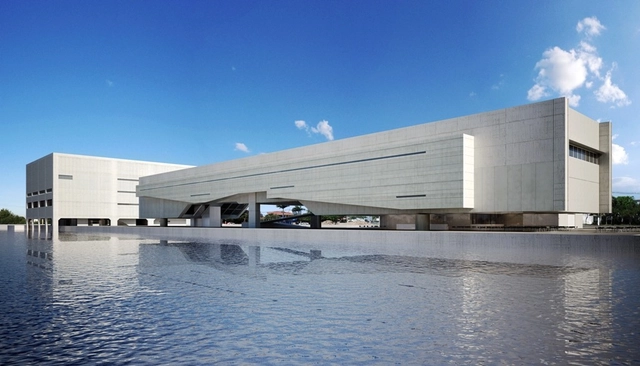
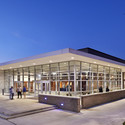
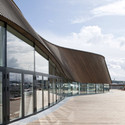
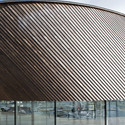
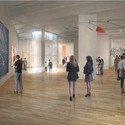
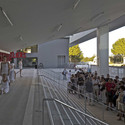
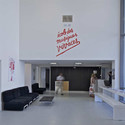
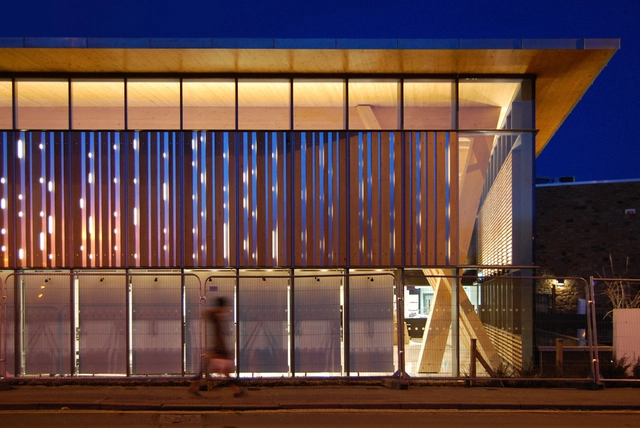
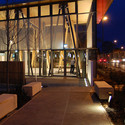
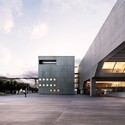
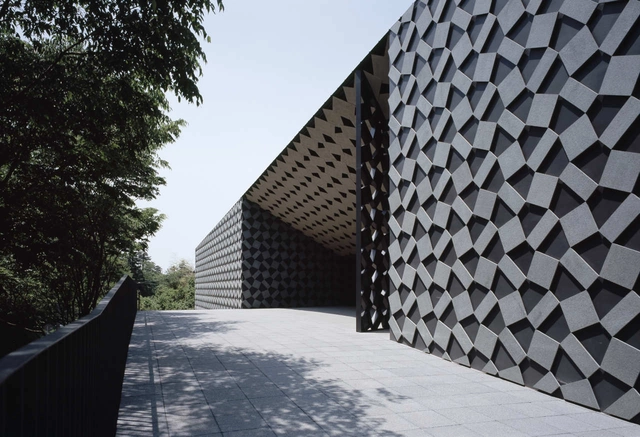
Architects: Kengo Kuma & Associates
- Area: 3318 m²
- Year: 2009



This past Fall, ROMA Design Group proudly announced the completion of the Martin Luther King Jr. National Memorial in Washington D.C. In 2000, ROMA won the international design competition among nearly 1,000 entries. ROMA Design Group worked for several years to develop the design. The memorial has now been built and was officially dedicated by President Obama on October 16, 2011.
Architect: ROMA Design Group Location: Washington D.C., USA Illustrations: Christopher Grubbs Photographs: Courtesy of ROMA Design Group


The Kimball Art Center design proposal by Will Bruder+PARTNERS focuses on the nature of “exhibition” in the context of history. Taking a cue from the “colorful prehistoric petroglyphs and pictographs” of Utah’s canyons along with its abundance of formally expressive Victorian architecture, the proposal takes on the role of expression and education through color and craft. This sensitivity to the history and propogation of exhibition is instantly understood with the facade walls of Main and Heber Streets.
Follow us after the break for more…

The Kimball Art Center in Park City, Utah is hosting a competition for a transformation of the “non-profit center for the arts in the heart of Park City’s historic and vibrant art community”. The list of architects competing to transform this cultural space is selective. Among them is Sparano + Mooney Architecture, an internationally recognized firm with offices in Park City, Utah and Los Angeles, California. The competition submissions for Stage II will be presented on February 2nd, but until then here is a preview of Sporano + Mooney’s Proposal!
Follow us after the break for more…

In the design proposal for the Asian Culture Complex, UnSangDong Architects + Kim Woo II constitutes a stage that acts as a new container for the culture and everyday events. If the new stage for the city is creating an empty open space out of penetrations pathways and plazas, making the new ‘city stage’ is the same as to conduct an enormous mapping operation with penetrating programs and landscape. They propose the Asian Culture Complex as the earth in between creation and disappearance. The earth that is transformed into fragmented pieces and become urban landscape filled with memories of the site and historical evolution of various spectrums of relationships. More images and architects’ description after the break.

Marking the two year anniversary of the devastating 7.0 earthquake in Haiti, we would like to share with you the important efforts of Project Haiti – a LEED Platinum orphanage and children’s center that is planned to be built in Port au Prince, Haiti. The project is lead by the United States Green Building Council (USGBC) and their official pro-bono design partner, HOK. Project Haiti not only focuses on the children, but also aims to create a “replicable, resilient model for rebuilding” that may serve as a practical teaching tool for the local community. The USGBC motto states, “Every story about green building is a story about people.”
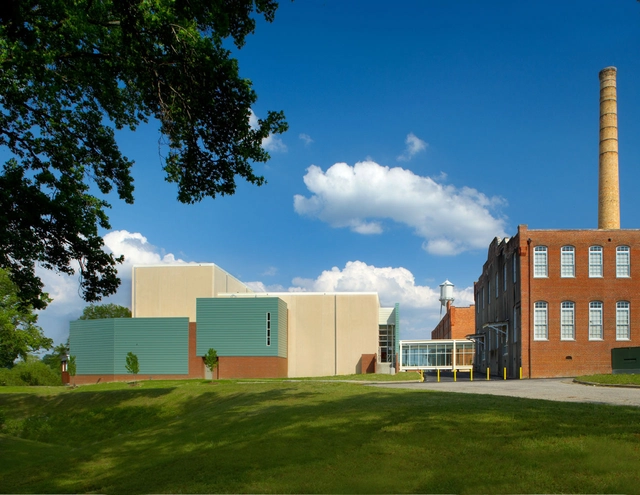

For our eight selection of previously featured Cultural Centers we have 5 amazing projects from early-2011. Check them all after the break.
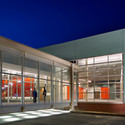
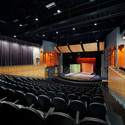
Edcouch-Elsa ISD Fine Arts Center / Kell Muñoz Architects This building evolved from significant public conversations with students, parents, teachers and community activists, working with historians, curators, folklorists, artists and architects to envision a community gathering place. As the first important civic building funded in over thirty years, the fine arts center needed to convey the community’s cultural heritage, hopes and aspirations (read more…)

This article, recently seen on The New York Times, was kindly shared with us by the author Sarah Williams Goldhagen.
A REVOLUTION in cognitive neuroscience is changing the kinds of experiments that scientists conduct, the kinds of questions economists ask and, increasingly, the ways that architects, landscape architects and urban designers shape our built environment.
This revolution reveals that thought is less transparent to the thinker than it appears and that the mind is less rational than we believe and more associative than we know. Many of the associations we make emerge from the fact that we live inside bodies, in a concrete world, and we tend to think in metaphors grounded in that embodiment.

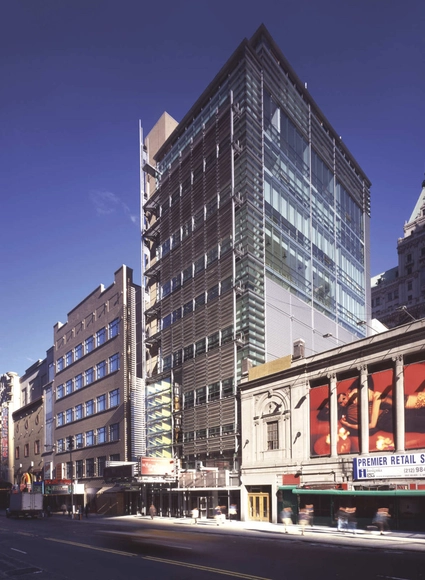

R4 is a territory whose urban and river-port aspects have been marked by exchanges, artists and the public. Yet it is not characterised as having any particular identity, but rather as a melting pot and a territory which is singularised by its ever-changing content.