1. ArchDaily
  2. Climate Crisis

Climate Crisis: The Latest Architecture and News

The Facts about Architecture and Climate Change

The "Climate Emergency" continues to embody a renewed worldwide focus on tackling climate change. While there is no "one solution" to the multifaceted challenges brought about by this crisis, there is an onus on every citizen, in both a personal and professional capacity, to apply their skills and actions in addressing the profound pressures on the natural world.

For those involved in the design of buildings and cities, be they architects, urbanists, or citizens, there is a deep responsibility to be aware of, and design for, the impact of climate change. With 36% of global energy devoted to buildings and 8% of global emissions caused by cement alone, the architectural community is deeply entwined with the flows of materials, energy, and ideas that relate to climate change, both causes, and solutions.
Net-Zero Buildings Are Critical to Staving off Further Climate Change

A new report from the Intergovernmental Panel on Climate Change (IPCC) states that global warming of 1.5°C (2.7 °F) is essentially inevitable in coming decades. The question now is whether the world can prevent further, more destructive warming of 2°C (3.6°F), or, even worse, 3°C (5.4°F), which is what current policies put us on a trajectory to experience. Our economies can only put another 420 gigatons of greenhouse gas emissions into the atmosphere if we want a good chance of keeping a temperature increase to 1.5°C instead of 2°C. At our current pace, the world’s carbon budget will be used up before 2030. We need to phase out fossil-fuel use, build thousands of new clean power plants -- and swiftly move to power our homes, offices, schools, and transportation systems with clean energy.

Net-Zero Buildings Are Critical to Staving off Further Climate Change    - Image 1 of 4Net-Zero Buildings Are Critical to Staving off Further Climate Change    - Image 2 of 4Net-Zero Buildings Are Critical to Staving off Further Climate Change    - Image 3 of 4Net-Zero Buildings Are Critical to Staving off Further Climate Change    - Image 4 of 4Net-Zero Buildings Are Critical to Staving off Further Climate Change    - More Images+ 7

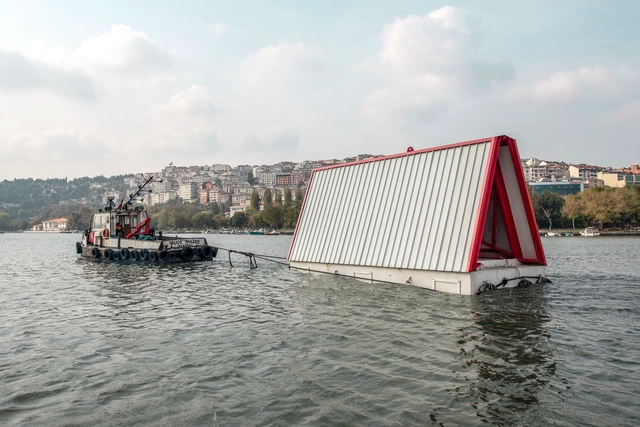
Architecture and Climate: 6 Techniques for Emergency Shelters

According to data from CRED (Centre for Research on the Epidemiology of Disasters) and UNISDR (UN Office for Disaster Risk Reduction), in a report released in 2016, the number of disasters related to the climate change has duplicated in the last forty years. The need for temporary shelters for homeless people is, as well as an effect of the climate crisis, is also one of the consequences of the disorderly growth of cities, which leads to a significant part of the world population living in vulnerable conditions due to disasters.

Could Volcanic Rock Be the Latest Material to Help Us Combat Climate Change?

Subscriber Access | 

Climatic conditions throughout the world are changing and with extreme temperatures and scarce resources becoming the norm, architectural materials and techniques are having to innovate to prepare for the future.

'Carbon to Rock' is an installation by IGNEOUS TECTONICS (Cristina Parreño and Sergio Araya) being presented in the 2021 Venice Biennale that highlights volcanic rock as a promising material in the global push to mitigate climate change. 

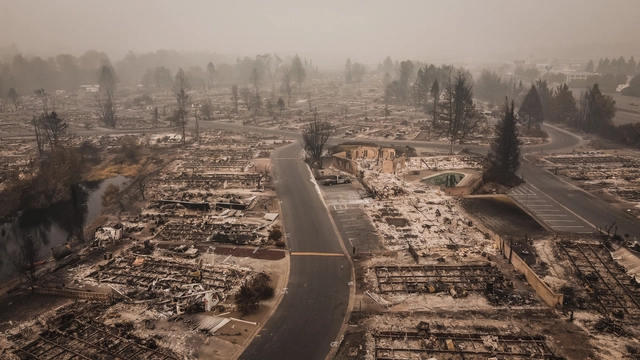
IPCC’s Latest Report Reveals Widespread and Intensifying Climate Change

The Intergovernmental Panel on Climate Change, the UN's body for assessing the science related to climate change, has recently published a comprehensive report documenting the extent of global warming. The paper provides new time estimates for crossing the 1.5 degrees Celsius threshold, urging immediate and large-scale action to reduce greenhouse gas emissions. Following the publication of the report, UK Architects Declare has issued a statement inviting decision makers to a dialogue on how to collectively address the climate crisis while at the same time calling for the design professionals to re-evaluate their practice to support meaningful change.

IPCC’s Latest Report Reveals Widespread and Intensifying Climate Change - Image 1 of 4IPCC’s Latest Report Reveals Widespread and Intensifying Climate Change - Image 2 of 4IPCC’s Latest Report Reveals Widespread and Intensifying Climate Change - Image 3 of 4IPCC’s Latest Report Reveals Widespread and Intensifying Climate Change - Image 4 of 4IPCC’s Latest Report Reveals Widespread and Intensifying Climate Change - More Images

Future-Proofing Cities Against Climate Change

Subscriber Access | 

Recent extreme weather events and the acceleration of climate change, paired with decarbonization efforts that are not on track, make climate-related disruption unavoidable for urban environments, raising the issue of climate-risk adaptation. Moving past what can be done to prevent climate change, there is a strong imperative to develop strategies to prepare urban environments to cope with inevitable challenges such as sea-level rise, floods, water scarcity or extreme heat. The following discusses how cities can build resilience and adapt to undergoing and expected future climate threats.

Future-Proofing Cities Against Climate Change - Image 2 of 4Future-Proofing Cities Against Climate Change - Image 3 of 4Future-Proofing Cities Against Climate Change - Image 1 of 4Future-Proofing Cities Against Climate Change - Featured ImageFuture-Proofing Cities Against Climate Change - More Images+ 2

Cities and Governments are Taking Action to Mitigate Climate Change

Recently, a series of cities and government entities worldwide have announced various plans to either fight climate change or combat its effects. From New York’s investment in carbon-capturing technologies to Miami’s Stormwater Masterplan, or EU’s target to reduce emissions by 55% by 2030, the issue begins to take centre stage in urban design and politics. The measures come at a time when the consequences of climate change are becoming more apparent in extreme weather events, and the scientific forecast is less than optimistic.

Cities and Governments are Taking Action to Mitigate Climate Change - Image 2 of 4Cities and Governments are Taking Action to Mitigate Climate Change - Featured ImageCities and Governments are Taking Action to Mitigate Climate Change - Image 4 of 4Cities and Governments are Taking Action to Mitigate Climate Change - Image 1 of 4Cities and Governments are Taking Action to Mitigate Climate Change - More Images

Miami Unveils its 40-Year Mitigation Plan to Combat Sea Level Rise

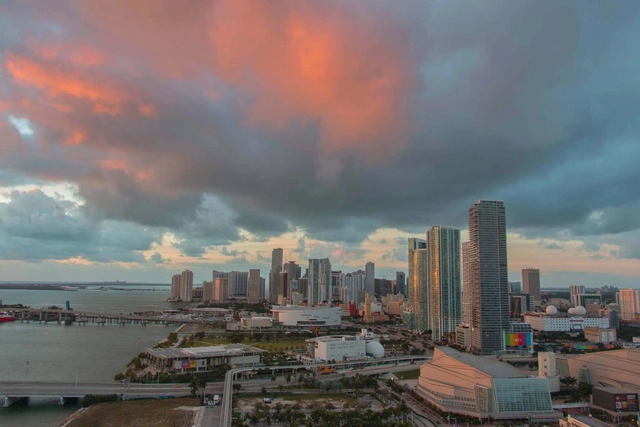
Earlier this month, the city of Miami released a draft version of its comprehensive plan to combat the effects of climate change. The so-called Stormwater Master Plan (SWMP) will be implemented to alleviate the threat of flooding throughout the city, improve the quality of water in Biscayne Bay, and fortify its coastline against stronger and more frequent storm surges over the next 40 years, at an overall cost estimate of $3.8 billion.

Ecological Design: Strategies to Protect Latin America and the Caribbean's Vulnerable Cities in the Face of Climate Change

Subscriber Access | 

Throughout the world's cities, in the midst of current and projected crises-- environmental, health, economic, and otherwise--one question looms: How can we prepare our urban centers' most vulnerable sectors?

Current data paints a bleak picture of cities and the impact of climate change. With urban populations skyrocketing as people around the globe seek opportunities for a better life in the world's urban centers, cities have become gluttons for energy and other resources while simultaneously producing more emissions than ever before. On top of this, 3 out of 5 cities are at high risk for natural disasters.

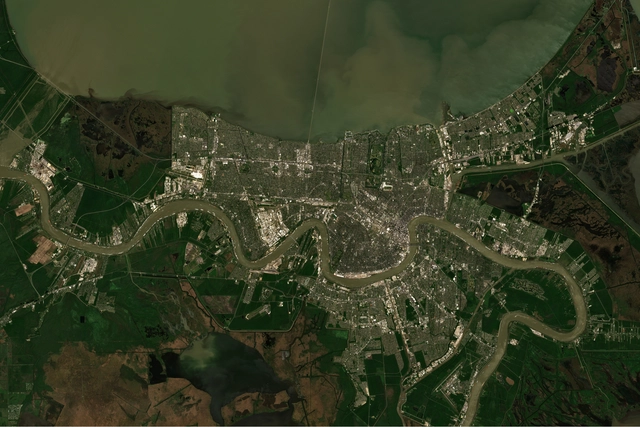
We Must Begin Planning Now for an Inevitable Sea Level Rise

This article was originally published on Common Edge.

In this week's reprint, Martin C. Pedersen talks with John Englander, author of Moving to Higher Ground: Rising Sea Level and the Path Forward, about the “unstoppable” sea-level rise. The article explores the importance of planning for this challenge right away. In fact, "we have some time, but not all the time in the world" states John Englander.

Could Tall Wood Construction Be the Future of High-Rise Buildings?

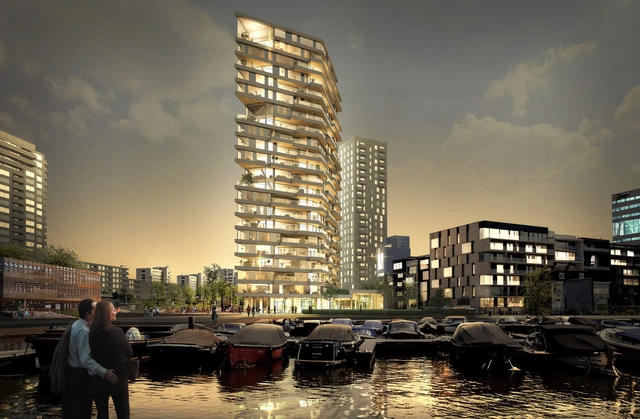
Across the globe, tall wood structures have begun transforming the world of skyscrapers and high-rise buildings, ushering in an important shift to an architectural practice that has traditionally been dominated by steel and concrete. Typically defined as wood-constructed buildings over 14 stories or 50 meters high, the past six years have seen over 44 tall wood buildings built or underway around the world. Notable examples include Michael Green Architecture and DLR Group’s T3 and Team V Architectuur’s upcoming 73 meter residential tower HAUT.

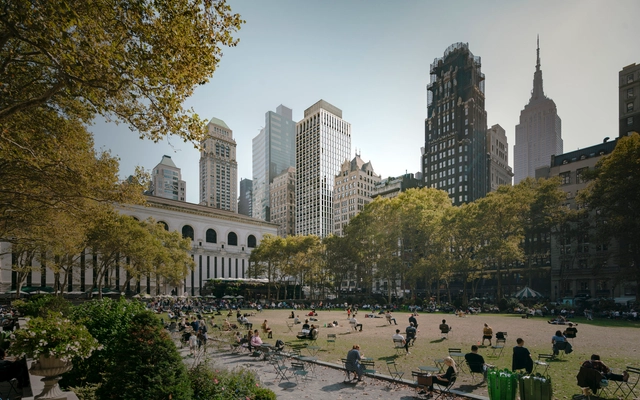
Urban Heat Islands Are Increasingly Dangerous, But Planners and Designers Have Solutions

For this month, The Dirt and author Jared Green share with us a study about urban heat islands, exploring new approaches that have been designed to both reduce urban temperatures and help communities adapt to a hotter world, In three cities: New York City, Copenhagen, and Abu Dhabi.

5 National Pavilions at the 2021 Venice Biennale that Explore Sustainability and Climate Change

Subscriber Access | 

The 17th Venice Architecture Biennale is currently unfolding, revealing a wide range of answers to the question "How will we live together". With 60 national pavilions, numerous contributions of invited architects from all around the world and several collateral events, this year's edition restates the Biennale's role as a platform for inquiry, exploration, and disruptive thinking in architecture. Curator Hashim Sarkis' original statement called upon architects "to imagine spaces in which we can generously live together." Recent circumstances have made the question even more relevant, prompting a holistic re-evaluation of how the world as a collective can face changes and challenges of an unprecedented scale from the disrupting role of technology, to inequality, mass migration and climate change. The following national contributions reflect on "how will we live together" amidst climate change, exploring ideas for a more sustainable future.

Italian Pavilion Reflects on the Resiliency of Local Communities in the Face of Climate Change

The Italian Pavilion for the 17th Venice Architecture Biennale explores the capabilities for transformation and adaptation of Italian communities in an attempt to define tangible solutions to current global challenges. Titled "Resilient Communities", the exhibition curated by Alessandro Melis presents Italian research and innovation across many fields, exploring ideas for improving the conditions of the built environment and addressing climate change, with the hope of defining the building blocks for a sustainable future.

Italian Pavilion Reflects on the Resiliency of Local Communities in the Face of Climate Change - Image 1 of 4Italian Pavilion Reflects on the Resiliency of Local Communities in the Face of Climate Change - Image 2 of 4Italian Pavilion Reflects on the Resiliency of Local Communities in the Face of Climate Change - Image 3 of 4Italian Pavilion Reflects on the Resiliency of Local Communities in the Face of Climate Change - Image 4 of 4Italian Pavilion Reflects on the Resiliency of Local Communities in the Face of Climate Change - More Images+ 6

Nathaniel Rich on Remaking Nature and Living with Uncertainty

This article was originally published on Common Edge

Two years ago, Nathaniel Rich published Losing Earth, his account of the pivotal decade from 1979 to 1989 when the political consensus around climate change somewhat miraculously formed and then collapsed, hardening into an impasse that’s now more than three decades old. Though not explicitly a sequel, Rich’s new book, Second Nature: Scenes From a World Remade, is a follow-up of sorts.

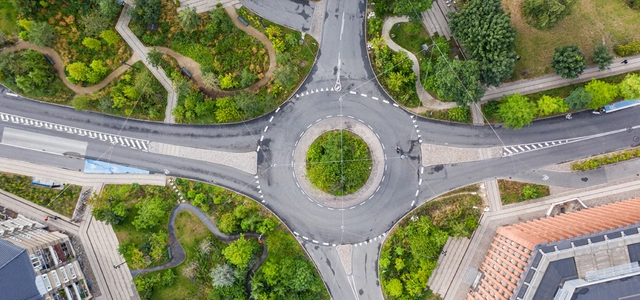
Replacing Asphalt Can Build a More Sustainable and Open City

Subscriber Access | 

The City Prosperity Index, CPI, set by UN-Habitat, evaluates urban prosperity according to five parameters as productivity, infrastructure development, environmental sustainability, quality of life, and equity/social inclusion. To a greater or lesser extent, these five factors are represented in the street pattern of every city in the world. Streets have multiple functions as the mobility of people and goods, the supply of energy, water, and information, the collection of waste, the growth of trees, plants, insects or birds, the shadow and sun radiation, the bench where to sit, the place to salute and talk with your neighbors, a playground, or the access to the bakery where you buy the bread. In this sense, streets are public and vibrant spaces, which can perform multiple functions and activities.

Addressing the Intersecting Challenges of Climate Crisis, Housing, and Social Equity

Recent sessions of the RBA/Northeastern University Myra Kraft Open Classroom Inspiring Design: Creating Beautiful, Just, and Inspiring Places in America series featured speakers from Boston, Dallas, Los Angeles, and New York City. They described how inclusive design can help build social infrastructure and capital, enabling communities to tackle big challenges such as climate change, responding to the COVID-19 pandemic, and homelessness. Their comments reinforced the value of visionary leadership, engaging and empowering people, and design thinking—all key themes from previous sessions on Planning Equity, Engaging Communities via Food and Education, and Building Equity with Housing and Parks.