1. ArchDaily
  2. Carbono Neutral

Carbono Neutral: The Latest Architecture and News

The Barcelona Method: How Climate Data is Saving Historic Architecture from Carbon Stranding

Subscriber Access | 

In heritage districts from Prague to Paris, a countdown has begun. Years until countless architectural treasures become, quite literally, worthless. Not through the slow erosion of time or the erratic shifts of cultural taste, but through the inevitable mathematics of atmospheric chemistry. In UrbanDecarbonisation: Destranding Cities for a Post-fossil Future, Paolo Cresci, Francesca Galeazzi, and Aurel von Richthofen introduce the concept of "carbon stranding", a scenario in which buildings become financially non-viable due to tightening carbon regulations. This threatens to render entire heritage districts financially extinct before they reach their centennials.


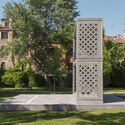
The Barcelona Method: How Climate Data is Saving Historic Architecture from Carbon Stranding - Image 1 of 4The Barcelona Method: How Climate Data is Saving Historic Architecture from Carbon Stranding - Image 2 of 4The Barcelona Method: How Climate Data is Saving Historic Architecture from Carbon Stranding - Image 3 of 4The Barcelona Method: How Climate Data is Saving Historic Architecture from Carbon Stranding - Image 4 of 4The Barcelona Method: How Climate Data is Saving Historic Architecture from Carbon Stranding - More Images+ 3

Between Housing Demand and Environmental Goals: Alejandro Aravena on Incremental Solutions and Net-Zero Concrete

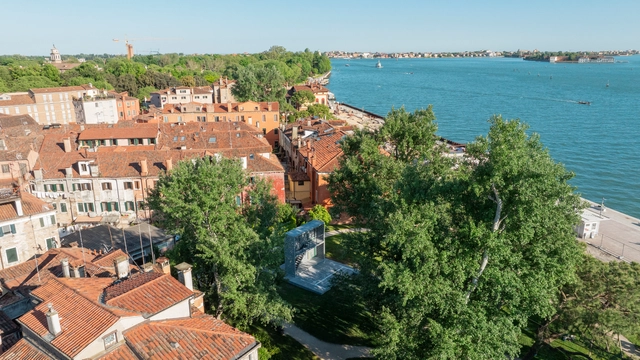
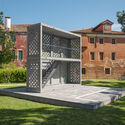
During the Time Space Existence exhibition, organized by the European Cultural Centre in Venice, Pritzker Prize-winning architect Alejandro Aravena and his firm ELEMENTAL unveiled a full-scale prototype for a new approach in incremental housing solutions. Titled the USB Core, standing for Basic Services Unit housing prototype, this proposal aims to demonstrate how efficient construction can provide all the essential housing components in a minimal space. The prototype is also the result of a collaboration between the architecture office and concrete manufacturer and researcher Holcim, and is built out of a newly developed type of net-zero concrete mix. It also incorporates fully recycled aggregates, in alignment with circular economy principles. The collaboration aims to demonstrate a more environmentally conscious yet cost-effective way of providing essential services to at-risk communities without harming the planet.

While on site in Venice, ArchDaily's managing editor Maria-Cristina Florian had the chance to sit down with Alejandro Aravena and discuss the implications of this collaboration, the urgent need for housing, and the role of the architect as the coordinator of a process involving many actors.

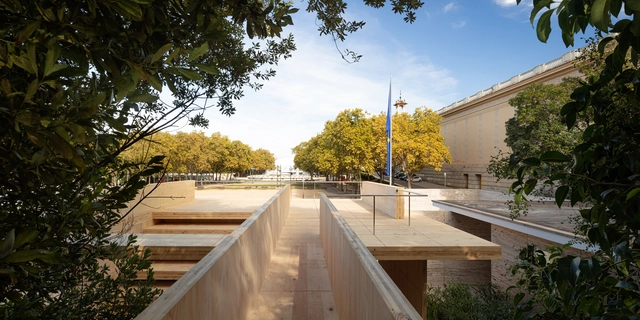
Between Housing Demand and Environmental Goals: Alejandro Aravena on Incremental Solutions and Net-Zero Concrete - Image 1 of 4Between Housing Demand and Environmental Goals: Alejandro Aravena on Incremental Solutions and Net-Zero Concrete - Image 2 of 4Between Housing Demand and Environmental Goals: Alejandro Aravena on Incremental Solutions and Net-Zero Concrete - Image 3 of 4Between Housing Demand and Environmental Goals: Alejandro Aravena on Incremental Solutions and Net-Zero Concrete - Image 4 of 4Between Housing Demand and Environmental Goals: Alejandro Aravena on Incremental Solutions and Net-Zero Concrete - More Images+ 29

At COP27, SOM Presents Urban Sequoia, a Building Proposal that Absorbs Carbon from the Atmosphere

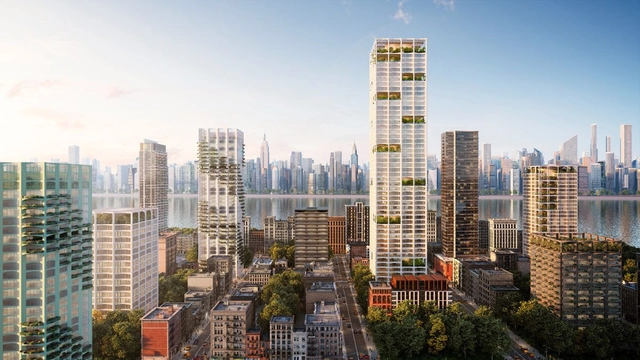
In a presentation at the Buildings Pavilion Auditorium during COP27, the UN Climate Change Conference in Sharm El-Sheikh, Egypt, Skidmore, Owings & Merrill (SOM) presented the Urban Sequoia NOW concept. The proposal, developed by an interdisciplinary team at SOM, represents a design that can sequester carbon from the atmosphere throughout its lifecycle. The design can be implemented with today’s technologies. This represents SOM’s concept of going beyond net zero carbon by combining multiple strategies: reducing embodied carbon, generating energy, absorbing carbon, and increasing the typical 60-year lifespan of the building.