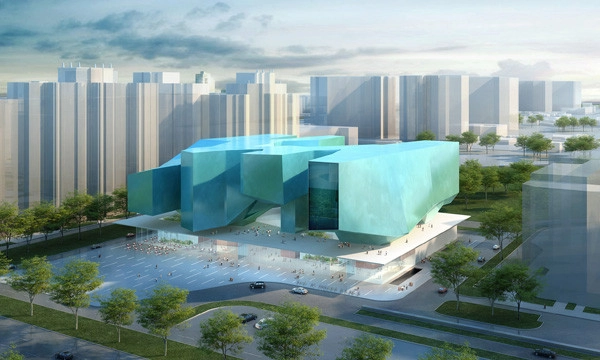
first prize / Courtesy of MASSIMILIANO FUKSAS Architetto and SPEECH
Organized by the Polytechnic Museum Development Foundation, the team of MASSIMILIANO FUKSAS Architetto (Italy) and SPEECH (Russia) was recently announced the winner of Architectural Concepts Competition for the Museum and Educational Center of the Polytechnic Museum and Lomonosov Moscow State University. The challenge was to create a museum and educational center for demonstrating most recent scientific and technological discoveries using state-of-the-art multimedia technologies for accommodating multiple displays and exhibitions as well as for conducting scientific educational programs. More images and information on the winning team and finalists after the break.
The Applied: Research Through Fabrication exhibition which took place the first weekend in March highlighted the winning proposal of their competition, titled 'Cast Thicket', designed b yo_cy’s Ken Tracy and Christine Yogiaman. The project was exhibited at the two-day event led by internationally recognized instructors within the field of parametric modeling provided a robust opportunity for participants to be exposed to the highest level of concentrated learning possible. More images and information on the event after the break.
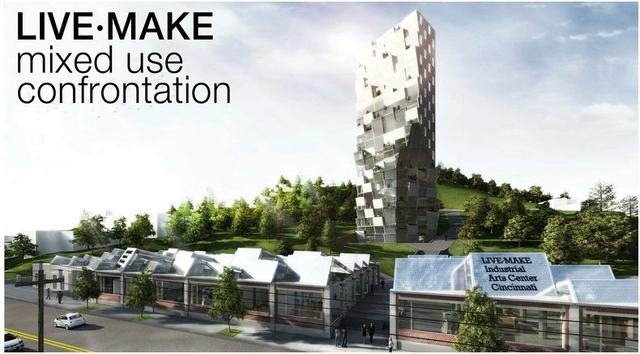
AIA Cincinnati, in partnership with the Over-the-Rhine Brewery District Community Urban Redevelopment Corporation, recently announced the winners of their LIVE-MAKE Industrial Arts Center Cincinnati competition. The challenged was to design a membership based facility that will feature private residences, maker-in-residence studios, light industrial studios and an open workshop that will help shape a new economic opportunity for the neighborhood. The grand prize went to Frenchman Olivier Terrisse’s scheme, whose iconic element consisted of a silvery residential loft tower rising from the rear hill over the renovated factories, whose fabric the architect cut to continue the existing street patter and to open up the spaces of the factory building. More information on the winning proposals after the break.
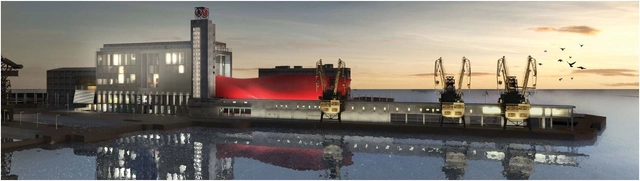
The results of the Piraeus Underwater Antiquities Museum Competition were recently announced with the collaborative team of architects Antonopoulos Evangelos, Vetta Thalia, Gavalas Georgios, Riga Maria – Kiriaki, and Stamouli Anastasia, and Pilarinou Maria announced as the first place winner. The challenge was for the design of a new landmark for the city and the port of Piraeus, with main reference to the culture, quality tourism and sustainability as well. Piraeus Port Authority is organizing an open exhibition with all the proposals that were submitted to the competition at the “Petrini” (Stonebuilt) Warehouse – future Museum of the History of P.P.A. and Museum of Immigrants – within the zone of the Cultural Coast. The opening of the exhibition is planned on 28th March 2013. More information on the winning proposals after the break.
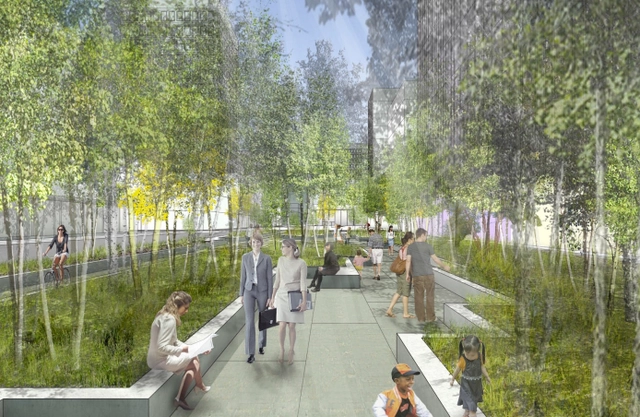
The Urban Land Institute (ULI) has selected the finalist teams in the eleventh annual ULI Gerald D. Hines Student Urban Design Competition. Graduate-level student teams representing Harvard University, Yale University, a joint team from Ball State University and Purdue University, as well as another join team from Kansas State University, the University of Missouri-Kansas City, and the University of Kansas are all advancing to the final round of competition, scheduled to take place in March and April. This year’s finalists were charged with proposing a long-term development plan for downtown Minneapolis that creates value for property owners, city residents, and the greater Twin Cities region.
During a time of paralizing political turmoil, local leaders are stepping up to fulfill their role as pragmatic problem-solvers and combating the tough challenges - such as economic growth, environmental protection, public safety and poverty - facing our cities today. This empowering phenomenon is highlighted by Bloomberg Philanthropies’ Mayors Challenge, a competition designed to further inspire America’s mayors and local leaders to generate innovative ideas that solve major challenges and improve city life.
Over 300 cities across the nation took the challenge and 20 finalists were selected in November. Now, it is your turn to vote on the idea you believe to have the greatest potential for impact. Five bold ideas will be selected in the coming weeks, each receiving national and local recognition. In addition, the winning city will receive a $5,000,000 grand prize and four other cities will receive $1,000,000 to help implement their ideas.
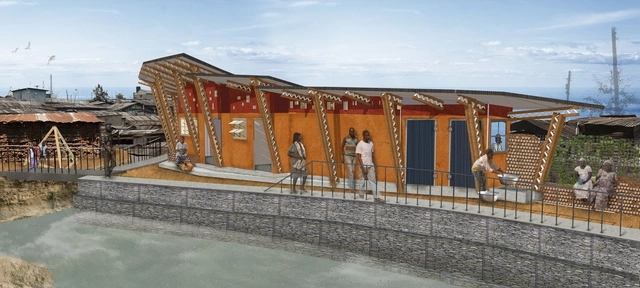
AECOM has announced 'Unslumming Kibera' as winner of the fourth annual Urban SOS competition.
The student competition received submissions from 118 universities in 41 countries. Three projects were shortlisted for a presentation to a panel of judges in New York on Jan 16.
Read about the finalists and their projects after the break
Aimed to support educational, cultural, and artistic projects based on the knowledge of the marine environment and its comprehension, the Jacques Rougerie Foundation recently announced the winners of their 2012 competition. The Foundation’s ambitions are to encourage young architects’, designers’, and engineers’ creativity, by promoting groundbreaking projects that will have an impact on our future lifestyles. The purpose is to imagine unprecedented solutions to current challenges, and to work in compliance with sustainable development. More images and the descriptions of the winning projects after the break.
Our friends from JAJAshared their latest proposal, which was awarded third prize, for a new public library in Daegu, South Korea. Pushing the boundary of the notion that a library must be a contained, quiet and nearly isolated space, JAJA’s proposal treats the library as massive public zone for the fostering of communal creativity, and dissolves the separation between inside and nature. JAJA, typically noted for their form making abilities, have opted for a minimialistic formal language of the architecture, so that the streamlined library can capture the textures of the existing trees and the books within to create a cohesive experience that celebrates both.
More, including images, drawings and model photos, after the break.
Norwegian-based architecture firm, Snøhetta, has just been announced the winner for the Ordrupgaard competition to design an underground extension to the existing museum in Denmark. In addition to the necessary gallery space to hold the Ordrupgaard’s expanding French collection, Snøhetta’s proposal creates a new solution for landscape and building integration. By adapting existing buildings, and adding landscape elements, the proposal maintains the existing entrance to the building, designed by Zaha Hadid, and creates a circulation new route which the public comfortably flow through as they visit the different exhibition halls. Hadid’s building was originally conceived as a continuous flow of spaces between building, galleries, and gardens, so Snøhetta’s newest addition will build upon such a foundation.
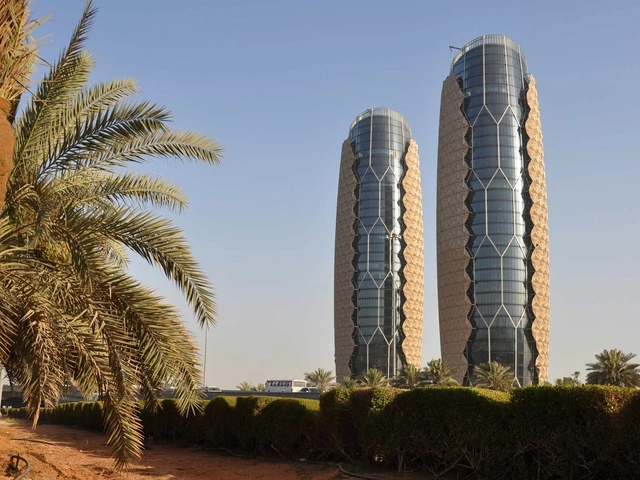
A quick glimpse at the upcoming weather for Abu Dhabi will show a week of intense sunshine, temperatures steadily above 100 degrees Fahrenheit with 0% chance of rain. In such extreme weather conditions, even architects listing environmental design as their top priority are up against a tough battle. Never mind that the sand can compromise the structural integrity of the building, the intense heat and glare can render a comfortable indoor environment relatively impossible if not properly addressed. For Abu Dhabi’s newest pair of towers, Aedas Architectshave designed a responsive facade which takes cultural cues from the “mashrabiya”, a traditional Islamic lattice shading device.
More about the towers’ shading system after the break.
Spearheading the development of the new district in Egedal, Demark, the town hall and health center will be the uniting center of the new Municipality of the city as one of the first buildings in the new planned urban area around Egedal Station. Designed by Henning Larsen Architects, their proposal won the highest score for all criteria in the competition to get the first prize. The health center will become an active part of the town hall, while at the same time offering citizens the opportunity to use the area outside town hall opening hours. More images and architects’ description after the break.
The first prize winning competition proposal for the Fishing Boat Harbor and ‘River’ of Liopetri was designed by the collaborative effort of architects Iereidis Vasilis, Michael Aimilios, Zomas Alexandros, Mitakou Eleni, Raisi Alexia, Hatzopoulos Dimitris, Fanou Paraskevi, and Lada Anastasia. With the challenge for a proposal that would provide all the necessary facilities for the fishing boat harbor and create a park that focuses on environmental education, this design stands as a binary between experience and function. As an outcome there are no clear boundaries between the fishing boat harbor and the park or in that sense between any other of the proposed interventions. More images and architects’ description after the break.
The first prize winning proposal for the Halide Edip Adivar Mosque and Social Complex is an objection to the continuing entegrist attitude-action which is mostly validated on mosque design and kept popular in media of Turkey. Designed by Kolektif Mimarlar, one of the main ideas of the design is to produce a well integrated structure with its surrounding and the nearby dwellers, where additional functions to the mosque can take place. More images and architects’ description after the break.
In its seventh year, the Shaw Contract Group recently announced the winners in their Design Is… Award program, which honors architecture and design firms that are changing the very idea of what design is. Through these winning projects, selected from commercial spaces from around the globe, we see how design is redefining the way we work, play and organize our lives. Out of 285 entries from 19 countries, the following five winning firms that won the Design Is… Award for 2012 can be viewed after the break and seen in the video above.
Designed by ANMA to act as a natural machine, the new headquarters of the Ministry of Defense, located in southwestern Paris, includes a health center, restaurants, media and sport centers as well as a crèche. This complex structure, designed around the strictest security requirements, is the largest public building to be built in France for 20 years. The structure aims to present an image of the armed forces, not only as a protective force, but a strong and stately force as well. More images and architects’ description after the break.
Located in a land about 80 hectares in Tehran, the design for the Army Residential Complex by Hootanpei was chosen in an architectural competition. With the contractor’s demand of 28-30 towers with 20-30 floors, the most important factor of design was minimum interference between pathways and driving ways and also suitable green places to create comfort and welfare for residents. More images and architects’ description after the break.