1. ArchDaily
  2. ArchitectureBuilt Environment

ArchitectureBuilt Environment: The Latest Architecture and News

Subscriber Access

Green by Law? Rethinking Sustainability and Architectural Responsibility Across Borders

Audio available

Sustainability in architecture is often discussed as though it were a universal standard—and, in principle, it should be. Buildings are increasingly evaluated through energy performance, embodied carbon, certification systems, material efficiency, biodiversity, and whole-life impact. Yet the rules determining what must actually be done remain highly local. A project designed in London, New York, or Copenhagen may be shaped by stringent energy codes, environmental review, disclosure requirements, planning controls, and increasingly ambitious carbon targets. The same practice working elsewhere may encounter a very different regulatory landscape.

This creates a difficult question for international architecture: when sustainability is not enforced to the same degree by law, what standards should architects carry with them?
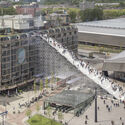
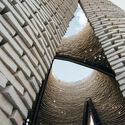
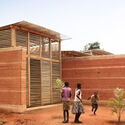
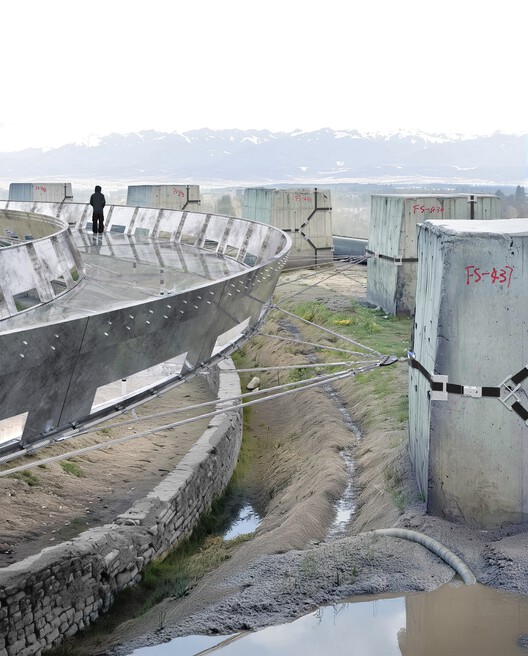
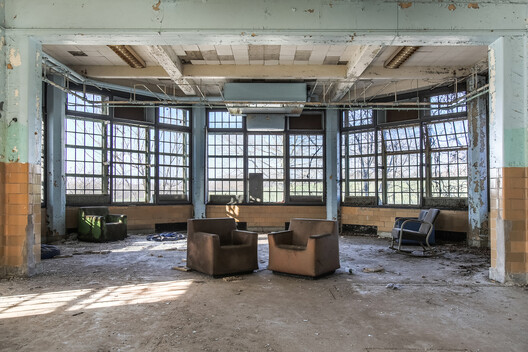
Green by Law? Rethinking Sustainability and Architectural Responsibility Across Borders - Image 1 of 4Green by Law? Rethinking Sustainability and Architectural Responsibility Across Borders - Image 2 of 4Green by Law? Rethinking Sustainability and Architectural Responsibility Across Borders - Image 3 of 4Green by Law? Rethinking Sustainability and Architectural Responsibility Across Borders - Image 4 of 4Green by Law? Rethinking Sustainability and Architectural Responsibility Across Borders - More Images+ 4

"Calibrated Instability": Daryan Knoblauch on Building With Tension, Time, and Light

Audio available

Daryan Knoblauch's work sits at the intersection of architecture and live cultural production, with a focus on how space is made legible through tension and atmosphere. Rather than treating temporary work as a lesser category of architecture, Knoblauch approaches installations, stages, and event architectures as full disciplinary problems—where enclosure, stability, light, and movement must be resolved with the same seriousness as any building, often under tighter constraints and faster timelines.

Across projects, a consistent thread is the productive tension between high-modern precision and an intentionally raw clarity of assembly. Membranes and lightweight systems are not deployed as surface effects, but as structural and spatial instruments—tuned to wind, load, and occupation, and calibrated to produce a sublimity that is felt as much as it is seen. Here, ephemerality is not simply a duration, but a design condition: temporality makes forces—weather, wear, performance—more visible, and demands an ethic of making that is both exacting and adaptable.

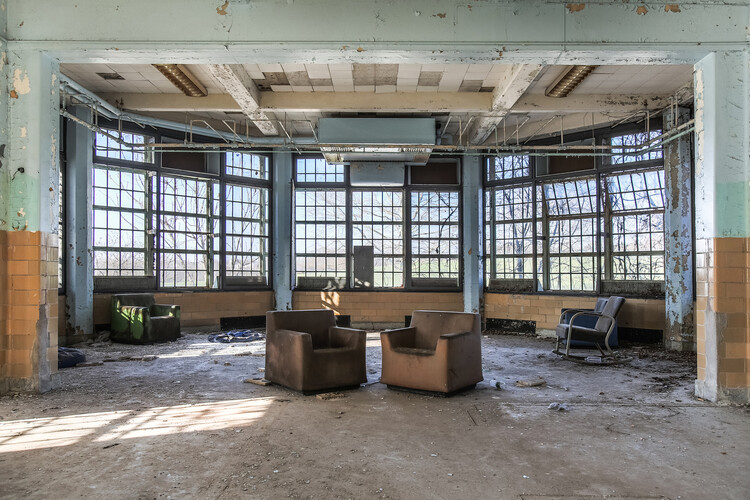
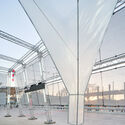
"Calibrated Instability": Daryan Knoblauch on Building With Tension, Time, and Light - Imagem 1 de 4"Calibrated Instability": Daryan Knoblauch on Building With Tension, Time, and Light - Imagem 2 de 4"Calibrated Instability": Daryan Knoblauch on Building With Tension, Time, and Light - Imagem 3 de 4"Calibrated Instability": Daryan Knoblauch on Building With Tension, Time, and Light - Imagem 4 de 4Calibrated Instability: Daryan Knoblauch on Building With Tension, Time, and Light - More Images+ 4