1. ArchDaily
  2. Archigram

Archigram: The Latest Architecture and News

A Walking City for the 21st Century

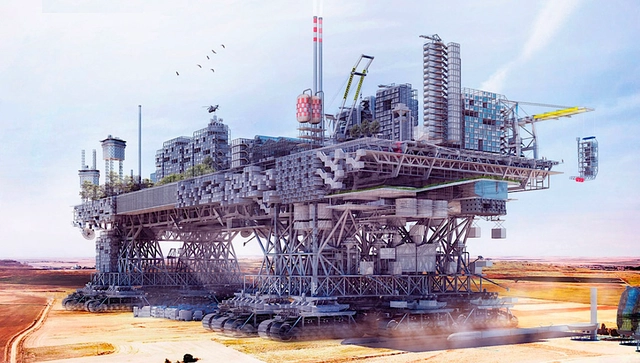
In a world where people live more mobile lifestyles than they have for centuries, cities are facing a problem they rarely planned for: their citizens move away. When jobs and resources start to decline, modern cities, such as Detroit, suffer difficult and often wasteful processes of urban contraction. In contrast to this, Manuel Dominguez's "Very Large Structure," the result of his thesis project at ETSA Madrid, proposes a nomadic city that can move on caterpillar tracks to locations where work and resources are abundant.

Of course this is not the first time that the idea of a nomadic city has been proposed. Ron Herron's Walking City is one of the more recognizable Archigram designs from the 1960s, and has been influential to architectural theory ever since. However, the design for the "Very Large Structure" expands on the Walking City by including strong proposals for energy generation on board the city.

Read on to see more on this provocative project - including a full set of presentation boards in the image gallery.

A Walking City for the 21st Century - Image 1 of 4A Walking City for the 21st Century - Image 2 of 4A Walking City for the 21st Century - Image 3 of 4A Walking City for the 21st Century - Image 4 of 4A Walking City for the 21st Century - More Images+ 10

AD Round Up: Unbuilt Classics

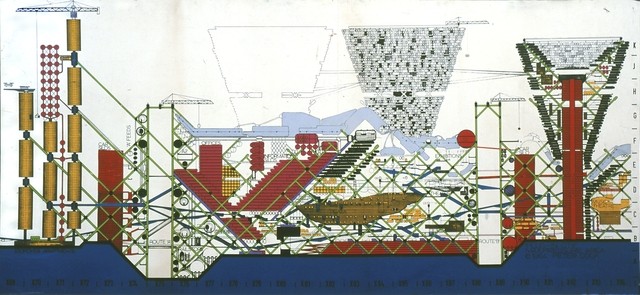
This AD Round Up is dedicated to unbuilt classics, a selection of projects and ideas that, although never built, contributed greatly to the canon of twentieth century architecture. In 1920, Buckminister Fuller designed the Dymaxion House, which displayed forward-thinking innovations in sustainability and prefabrication. In 1924, Le Corbusier’s radical plan for Ville Radieuse (The Radiant City) had an extensive influence upon modern urban planning and led to the development of new high-density housing typologies. In the same year Friedrick Kiesler introduced his "Endless House", the basis for his subsequent manifesto of Correalism. Eight years later in 1932, Philip Johnson and Henry-Russell Hitchcock curated the “Modern Architecture: International exhibition” at the MoMA, introducing the emerging International Style and laying the principles for Modern architecture. And finally, one of Archigram’s most famous utopian visions, the Plug-In City, proposed by Peter Cook in 1964, offered a fascinating new approach to urbanism and reversed traditional perceptions of infrastructure’s role in the city.

AD Classics: The Plug-In City / Peter Cook, Archigram

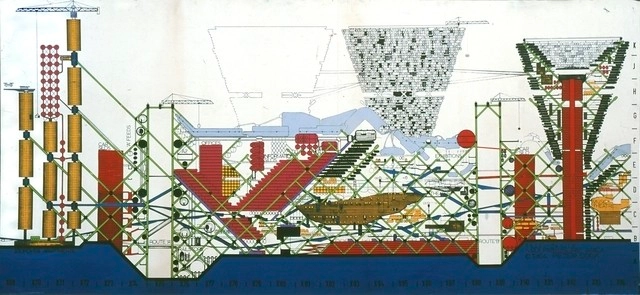
AD Classics presents you with great buildings of the past, providing inspiration and motivation for architects to design for the future. But why must inspiration only come from poured concrete and erected walls? For this edition of AD Classics, we share a work, the Plug-In City, by the avant-garde group Archigram. Though never built, their projects and ideas provoked debates, combining architecture, technology and society; when Plug-In City was proposed in 1964, it offered a fascinating new approach to urbanism, reversing traditional perceptions of infrastructure’s role in the city.

More on this radical project after the break...

AD Classics: The Plug-In City  / Peter Cook, Archigram  - UrbanismAD Classics: The Plug-In City  / Peter Cook, Archigram  - UrbanismAD Classics: The Plug-In City  / Peter Cook, Archigram  - Urbanism, FacadeAD Classics: The Plug-In City  / Peter Cook, Archigram  - UrbanismAD Classics: The Plug-In City  / Peter Cook, Archigram  - More Images+ 10

Arup Envisions the Skyscrapers of 2050

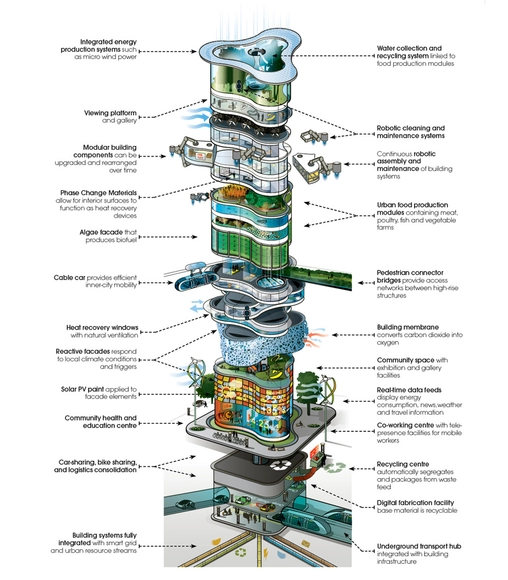
It is estimated that by 2050, 75 percent of the worlds - then 9 billion strong - population will live in cities. Urban Sprawl is already problematic and planners are faced with new challenges as they aim to build towards the sky rather than the horizon. In addition, cities are increasingly faced with climate change, resource scarcity, rising energy costs, and the possibility of future natural or man-made disasters. In response to these issues, Arup has proposed their vision of an urban building and city of the future.

In their proposal, titled “It’s Alive!”, they imagine an urban ecosystem of connected ‘living’ buildings, that not only create space, but also craft the environment. According to Arup, buildings of the future will not only produce energy and food, but will also provide its occupants with clean air and water.

More info on Arup's vision after the break...