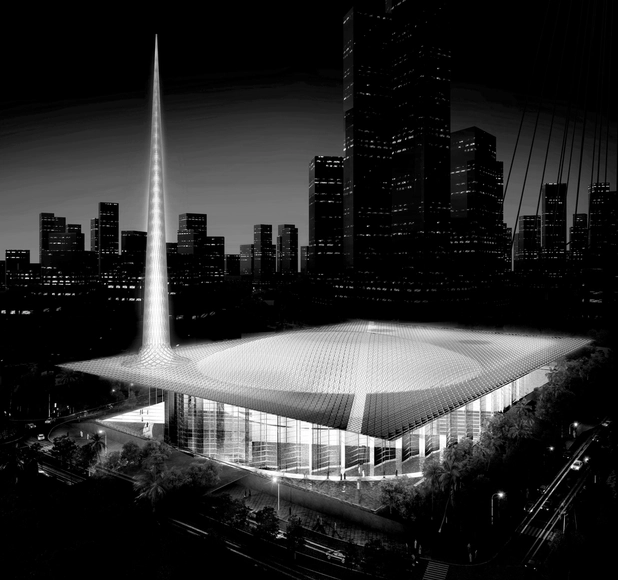
Vladimir Belogolovsky talks with Mexican-American architect Francisco Gonzalez-Pulido on his exhibition 30 Projects/30 Years/30 Stories now on view at the Museo Metropolitano in Monterrey, Mexico.30 Projects/30 Years/30 Stories, a large retrospective on the work of Mexican-American architect Francisco Gonzalez Pulido, was opened on June 18 at the Museo Metropolitano in Monterrey, Mexico. The exhibition will remain on view until September 21.
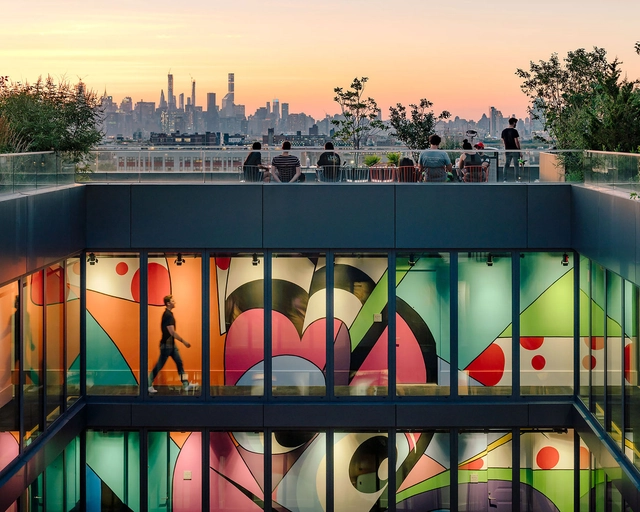
New York-based architect Eran Chen (b. 1970) was born and grew up in Be'er Sheva, Israel where his Polish-born grandparents, Holocaust survivors, settled right after World War Two. Early on the original long Polish surname was abbreviated to short Chen, which is pronounced “Khen.” In Hebrew, it stands for charm. After four years in the army, following high school, Chen studied architecture at the Bezalel Academy of Arts and Design in Jerusalem, the top architecture school in the country. Upon graduation in 1999, he ventured to New York to gain professional experience. He was hired by Perkins Eastman, a global New York-based giant of over 1,000 architects. In just a few years Chen was made the youngest principal in the company to oversee the design of his own diverse projects, including several competition-winning entries. By then he got married, became a father, a licensed architect, and settled in the city that he now calls home. In 2007, Chen decided to strike on his own. He focused on working with developers on residential projects, mainly in New York, as well as other major cities in the US and around the world. Many of Chen’s projects are situated in dense urban places. They are about reinventing the familiar living typology of buildings as extruded boxes. We met at the architect’s busy Manhattan office of over 100 young, ambitious architects helping Chen to make our cities more livable. We discussed his concept of vertical urban village and the truly democratic idea that every apartment, no matter where it is positioned in the building, can be turned into a penthouse.
Where does originality and independent thinking come from? The answer is prosaically straight forward – from an inquiring individual, and an experimental environment wouldn’t hurt to stimulate it. Rem Koolhaas is credited with fostering such an environment, both through building his practice, Office for Metropolitan Architecture (OMA), a 300-architect network of seven global offices, and teaching at Harvard’s GSD, as well as lecturing all over the world. Koolhaas now has eight partners. One of the eight, since 2008, is Shohei Shigematsu who heads OMA New York since 2006. The studio originally numbered just a handful of people and over the years has grown into a large practice of 75 architects with a focus on projects in North America.
Meeting with many leading, independent Chinese architects and visiting their built works throughout China in recent years has shaped my understanding of their contributions as regionally sensitive, poetic, photogenic, and even seductive. Yet, so many of these projects can be confused as being produced by a single, narrowly-focused practice. These works are often small in scale and built far from urban centers where ordinary people could benefit from them most. There is a lack of diversity and risk-taking. The following excerpt from my interview with Beijing-based architect Li Hu on his recent visit to New York overturned my doubts and gave me much hope for China’s urban future.
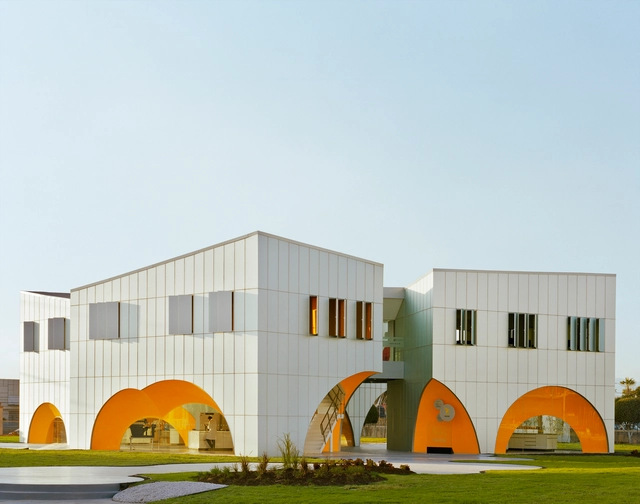
Nestle Application Group / Rojkind Arquitectos . Image
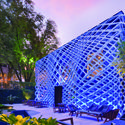
Born in 1969 in Mexico City, Michel Rojkind was educated in the 1990s at the Universidad Iberoamericana, while also performing as a drummer in Aleks Syntek’s popular rock band la Gente Normal. He opened his practice Rojkind Arquitectos in 2002. Among his most representative built works are Foro Boca for the Boca del Rio Philharmonic Orchestra in Veracruz, a newly expanded film complex Cineteca Nacional in Mexico City, a pair of factory additions for the Nestlé Company in Queretaro, and the Nestlé Chocolate Museum in Toluca, all in Mexico. We spoke about how his architecture engages with people, why architects should assume roles that extend beyond architecture, and the importance of generosity and not worrying about designing everything 100%.