

-
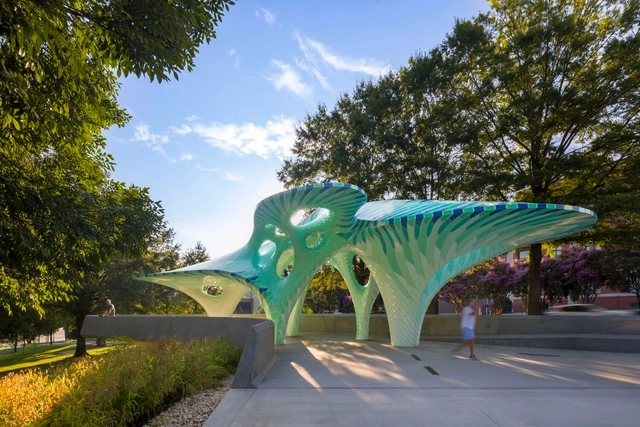
Architects: MARC FORNES / THEVERYMANY
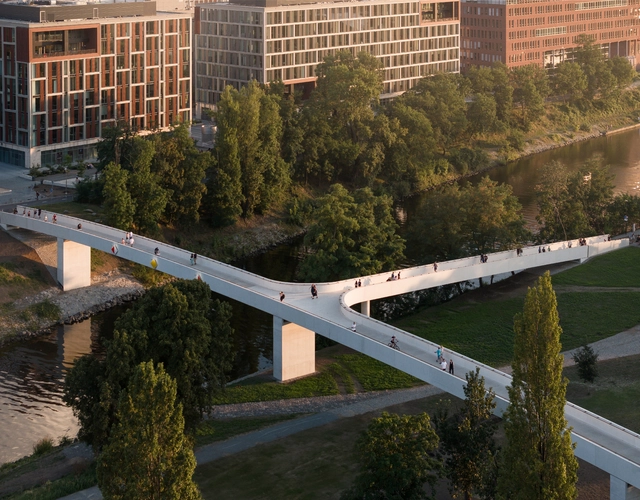
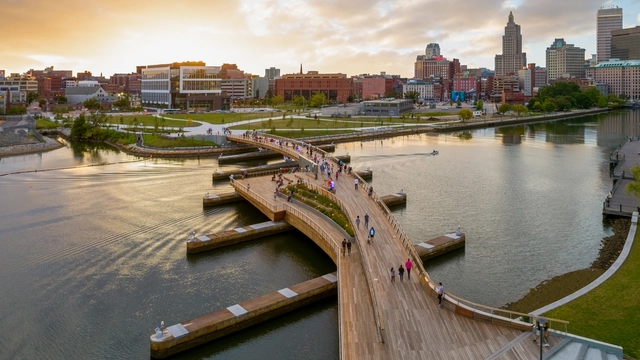
There is growing awareness of the importance of developing pedestrian infrastructure. Bridges and elevated structures enhance the quality of cities by connecting spaces and reducing distances. Their use benefits pedestrians and the thousands of cyclists seeking a more sustainable mode of transportation.
Pedestrian infrastructures, such as bridges, walkways, and widened sidewalks, not only promote sustainable mobility but also contribute to the revitalization of urban areas. Their design can transform underused spaces into active, safe, and accessible places for everyone, enhancing social cohesion and fostering community. By incorporating elements such as greenery, smart lighting, and urban furniture, these structures become more than just thoroughfares: they transform into meeting points and spaces for social interaction.

The technical needs of the construction of bridges many times guide the development of the design itself. However, architecture is never put aside, rather the opposite. The aesthetics of bridges that we collect in this article are the result of an intense, demanding, and stimulating dialogue between architecture and engineering, where the search for solutions only ends when both disciplines are fully satisfied.