

-
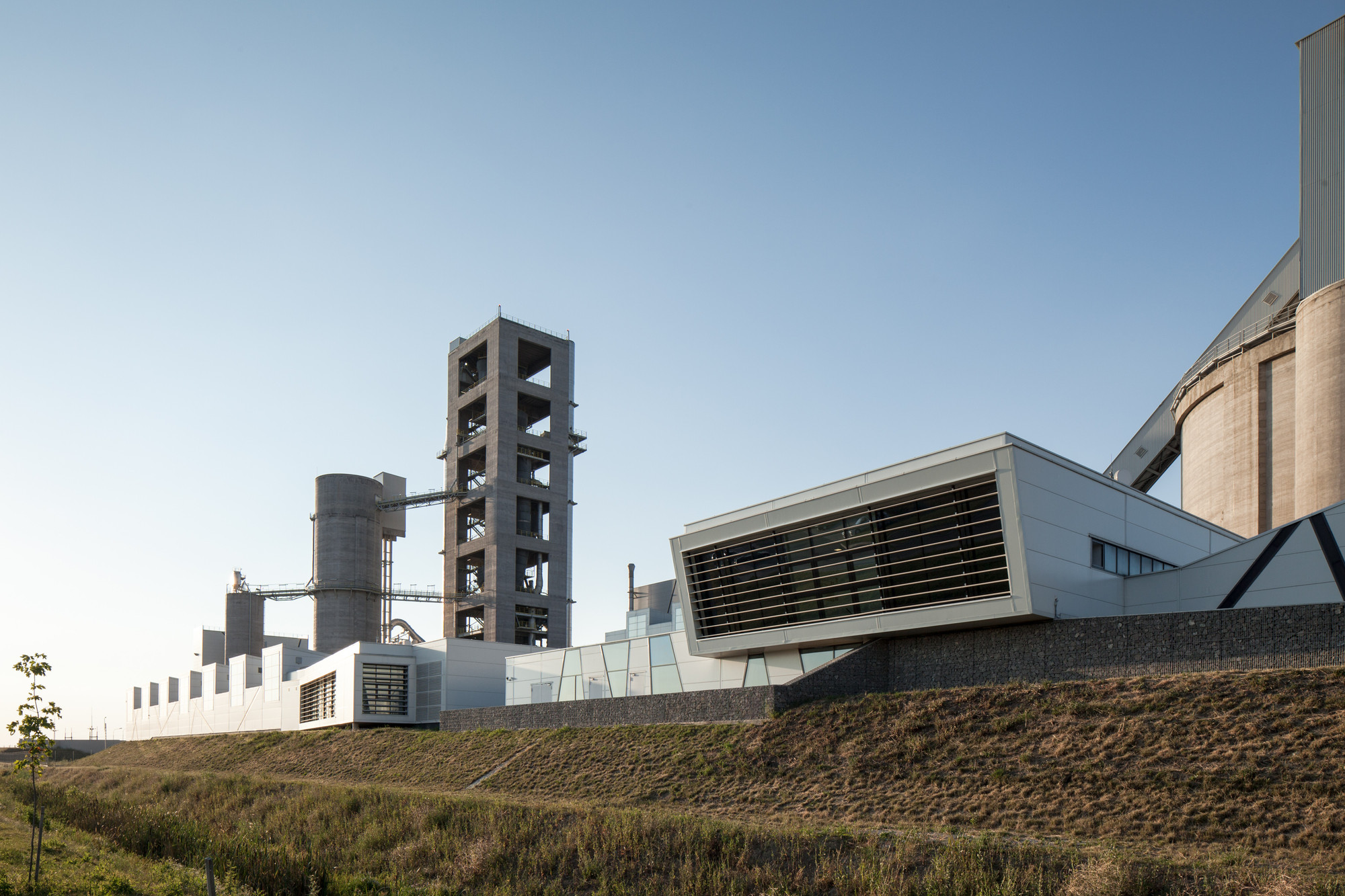
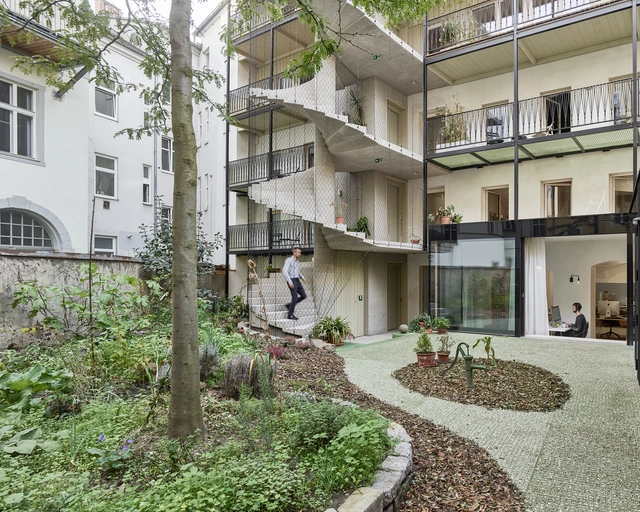
Architects: mia2/Architektur
- Area: 1275 m²
- Year: 2021
-
Professionals: Kotlaba Ziviltechniker GmbH, SIMADER, Baumeister und Zimmermeister GmbH
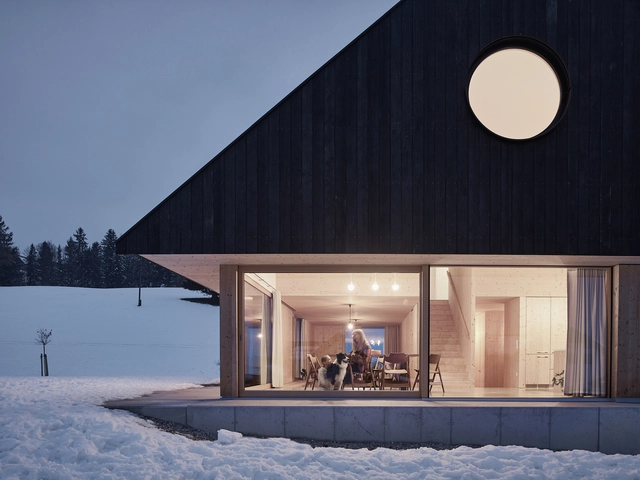
Minimalism has shaped architecture for over a century. Embracing new materials and rejecting ornament, the modernist movement grounded minimalist architecture through rational use and function. Throughout the 20th century, architects returned to minimalism as they worked with glass, steel and reinforced concrete. Over time, minimalist and modernist designs became more closely tied to cost, construction and aesthetic.

When talking about energy efficiency in buildings, it is inevitable to mention thermal insulation. We rarely see it in a finished building and, even in the technical drawings, the insulating layer appears as a thin hatch. But this is an element that is of vital importance, as it acts as a barrier to the flow of heat, hindering the exchange of energy between the interior and the exterior, reducing the amount of heat that escapes in winter and the thermal energy that enters in the summer. In a building with good thermal insulation, there is less need for heating to keep the house at a pleasant temperature, also reducing its carbon footprint. Currently, there are many countries that require a minimum level of thermal insulation for buildings, with increasingly strict parameters. But how should this issue be dealt with in the near future, with the worrying climate crisis forecast?
Between 1950 and 2011, the world's urban population increased fivefold. In 2007, for the first time, the number of people living in cities surpassed the number of people living in the country. In 2019, the urban population had already reached 55% of the total population, and by 2050, it is estimated that just over two thirds of the population will live in urban areas. However, this growth is not constant in all parts of the world: according to the UN World Urbanization Prospects 2018 Report, the global urban population is expected to grow by 2.5 billion inhabitants between 2018 and 2050, with almost 90% of this increase concentrated in Asia and Africa. As populations in these areas increase, so will the demand for energy, food, and water, making resources more scarce. This scarcity will be compounded by the negative impact of urbanization on the climate and the environment.
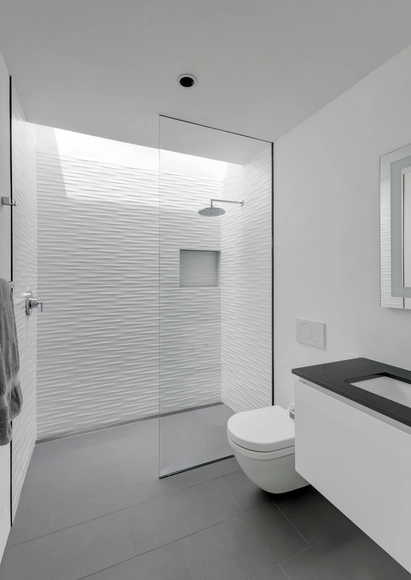
Because it doesn't include a bathtub, or require doors, screens, or curtains, the walk-in shower often makes bathrooms appear larger, cleaner, and more minimalist.
However, some precautions must be taken when designing them. Most importantly, the shower cannot be left completely open, even if it appears to be at first glance. Most designs incorporate a tempered glass that prevents water from "bouncing" out of the shower space, subtly closing the area. When this transparent division doesn't have a frame, the appearance of fungi due to accumulation of water and moisture becomes less likely.


.jpg?1380769649&format=webp&width=230&height=230&crop=true)