James Leng

BROWSE ALL FROM THIS PHOTOGRAPHER HERE
↓

What Textiles and Translucency Bring to Public Space: 5 Lightweight Interventions

Audio available

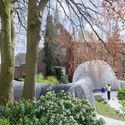
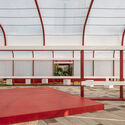
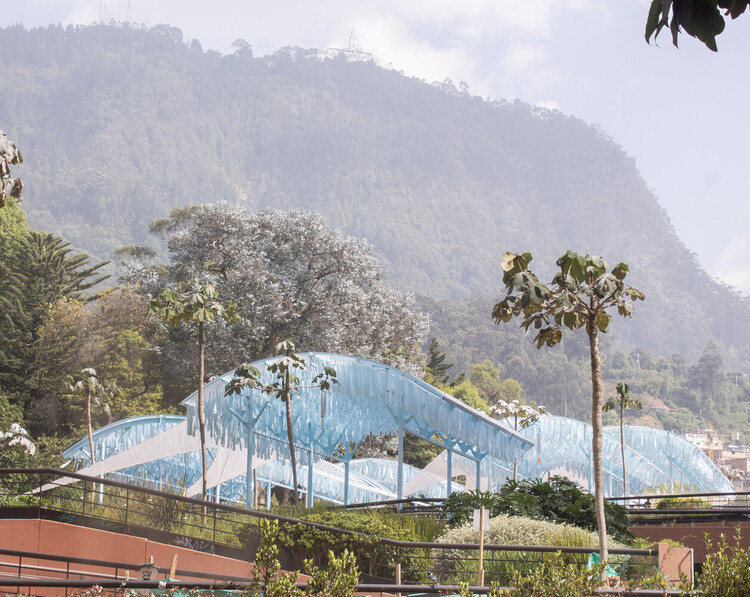
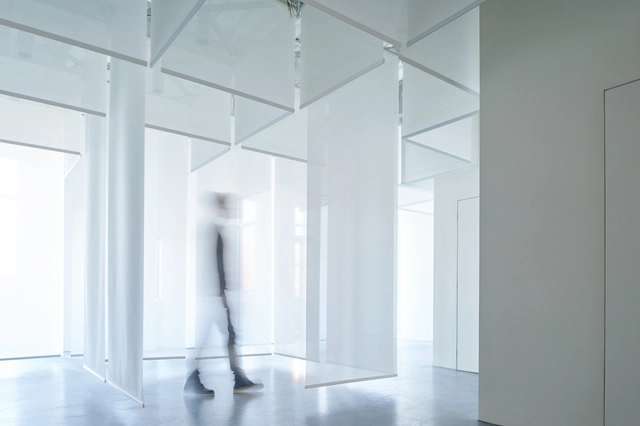
What do lightweight materials bring to public space with an ethical, ecological, and non-extractive design principle? Various textile textures offer a point of entry, being closer to the body than heavy conventional structural materials. Through its flexibility and responsiveness, it enables a form of soft enclosure rather than a fixed boundary in architectural space. Responding to minimal environmental stimuli, the fabric brings continuous movements into space. When layered or assembled, it produces gradations of density, depth, and enclosure, while recent innovative fabrication technologies extend the possibilities of its form and structural durability.

Semi-transparent materials further mediate the conditions of visual permeability and bodily experience of the space. By transmitting and filtering light, they blur clear separations between interior and exterior, solid and void, creating thresholds that are neither fully open nor fully enclosed, but constantly in negotiation. Reinterpreting structure in urban space through lightweight, translucency, and softness opens up alternative modes of spatial perception and bodily engagement.
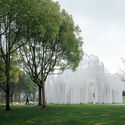
What Textiles and Translucency Bring to Public Space: 5 Lightweight Interventions - Image 1 of 4What Textiles and Translucency Bring to Public Space: 5 Lightweight Interventions - Image 2 of 4What Textiles and Translucency Bring to Public Space: 5 Lightweight Interventions - Image 3 of 4What Textiles and Translucency Bring to Public Space: 5 Lightweight Interventions - Image 4 of 4What Textiles and Translucency Bring to Public Space: 5 Lightweight Interventions - More Images+ 15

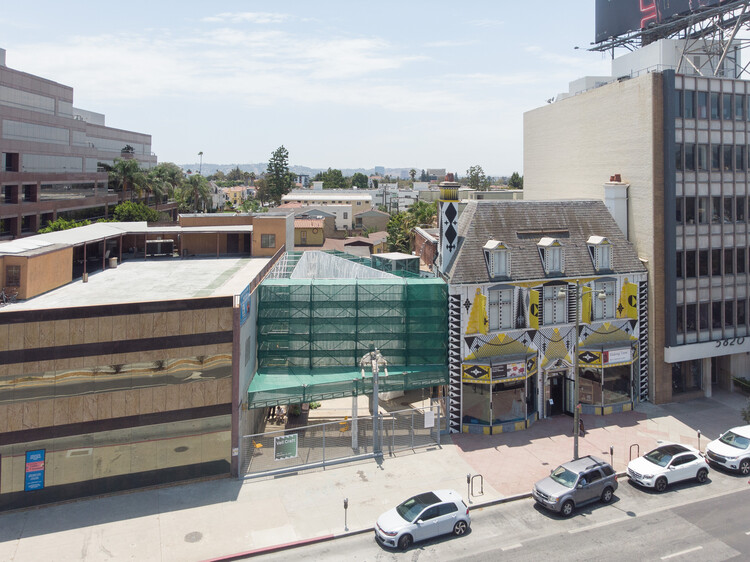
Veil Craft Installation / Figure

Veil Craft Installation / Figure - Exterior Photography, Cultural Architecture, Facade, Cityscape
© James Leng

Veil Craft Installation / Figure - More Images+ 21

  • Architects: Figure
  • Area Area of this architecture project Area:  2440 ft²
  • Year Completion year of this architecture project Year:  2021

Open Question: How equitable is architecture?

Subscriber Access | 

This September marks the 4th edition of the Chicago Architecture Biennial under the title The Available City. It is a perfect opportunity to open up the debate on the role of architecture in urban equity.
How equitable is architecture?

Subscriber Access | 

This September, the 4th edition of the Chicago Architecture Biennial opens under the title The Available City—a perfect opportunity to spark discussion on the role of architecture in urban equity.

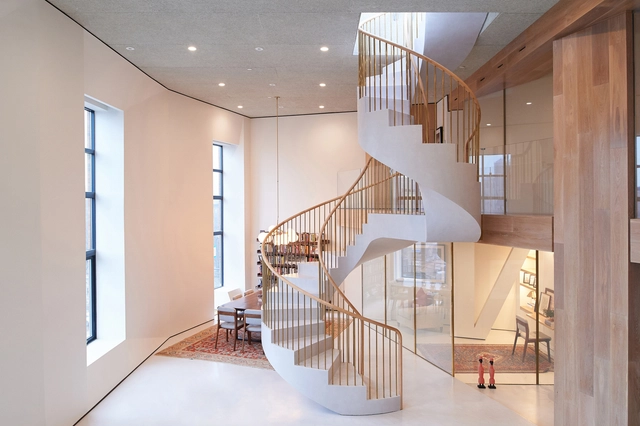
Oblique Figures Apartment / J.Roc Design

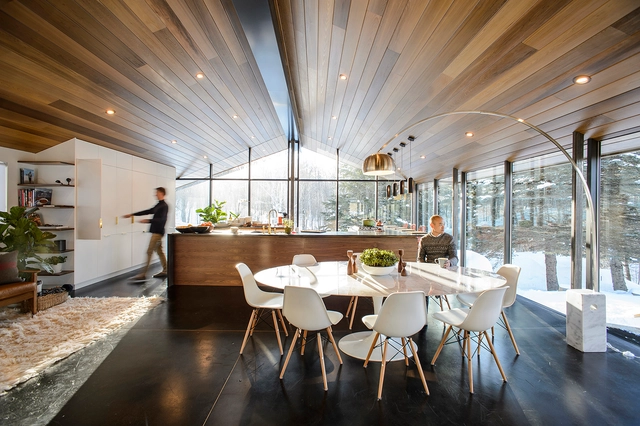
Oblique Figures Apartment  / J.Roc Design - More Images+ 13

  • Architects: J.Roc Design
  • Area Area of this architecture project Area:  1800 ft²
  • Year Completion year of this architecture project Year:  2020
  • Manufacturers Brands with products used in this architecture project
    Manufacturers:  Duravit, Duraamen, Tectum, VARIO, Waterworks

Transforming Gallery / J.Roc Design

Transforming Gallery / J.Roc Design - More Images+ 6

  • Architects: J.Roc Design
  • Area Area of this architecture project Area:  1100 ft²
  • Year Completion year of this architecture project Year:  2020
  • Manufacturers Brands with products used in this architecture project
    Manufacturers:  Hansgrohe, Lutron, Duravit, Signify, Hunter Douglas, +2

Architecture Has Limits to Achieve Urban Equity. What Should We Do?

Accessibility and mobility. When perceived through the architectural lens, these terms often evoke a range capped by two extremes. On the one end, the flexibility of circulation systems; the universality of egress networks; and the technicalities of minimums and maximums. On the other end, a project’s capacity to support broad ranges of socioeconomic narratives; its malleability in the face of rapid fluctuations of program and function; and its reactivity in maintaining a productive role amidst the ebbs and flows of societal dynamics. 

Temporary Plazas: 13 Public Spaces that Activate the City

Temporary Plazas: 13 Public Spaces that Activate the City - More Images+ 9

Normally the efforts of the construction industry are aimed to design permanent and durable spaces. However, on some occasions creating temporary spaces can be of great help, not only when providing fast assembly infrastructure after the effects of a natural disaster, but also when activating residual or abandoned spaces in our cities. To exemplify the potential of these interventions, we present thirteen successful temporary public spaces.

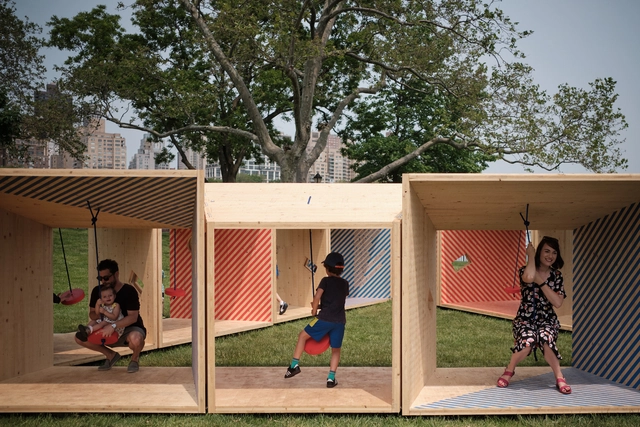
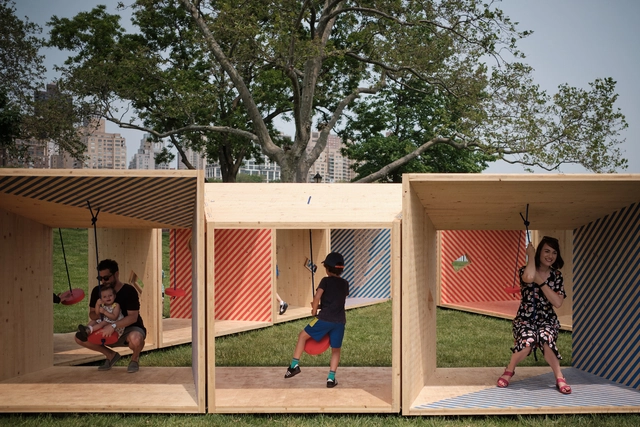
Salvage Swings City of Dreams Pavilion / Somewhere Studio

Salvage Swings City of Dreams Pavilion / Somewhere Studio - More Images+ 19

Trefoil Glass House / J.Roc Design

Trefoil Glass House / J.Roc Design - More Images+ 13