


-
Architects: Archermit
- Area: 2210 m²
- Year: 2021
-
Professionals: BPI, ten space design, Sichuan Xinding Construction Engineering Co., LTD
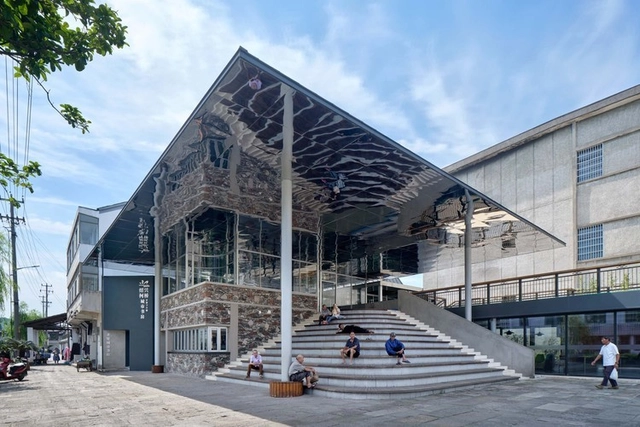
Democracy’s essence is the people's self-government and autonomy based on their own rights, and its characteristics are demonstrated through equality and participation. If democracy means a more equitable way of public life in architecture, then, this way of life is dependent on the homogenization of the building's spatial structure, with open, transparent, and functionally diverse public spaces. It is also possible to argue that the birth, maintenance, and demise of democracy all occurred in public space.
The democratic regime of Athens began in the sixth century B.C. The square became a meeting place, a symbol of architecture's democratic politics. Although people's access to assembly has become more widespread and convenient as technology has advanced, the existence of public space in the city remains critical, representing the spatial demands of citizens' public rights beyond the basic conditions of survival and serving an important spiritual function of expressing democracy. So, how architecture be democratic? How can we realize the public nature of architecture?

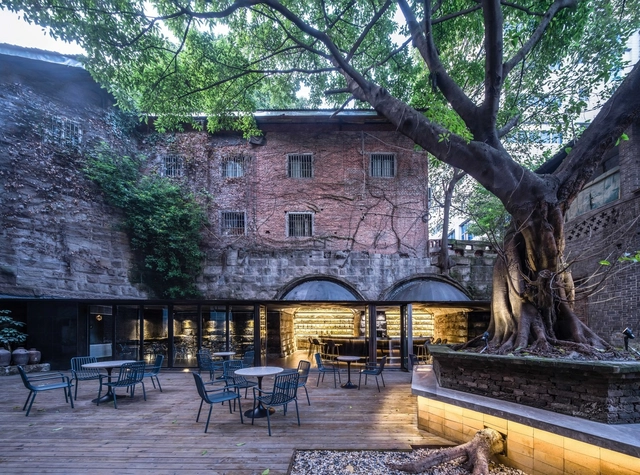
Both tea and alcohol in traditional China were similarly aestheticized, and both influenced the language of literature and art. People used to exchange alcohol as a gift in a way that they later would with tea. Today, more and more cities in China have embraced this drinking culture that passed down from generation to generation, and reinterpreted with a new contemporary fashion, which is constantly evolving in the urban cafes and bars.

In April 2021, the A8 Design Center at Luxe Lakes in Chengdu presented the exhibition "2 Kilometers of Lakeshore: Southwest Independent Architects 2021 Luxe Lakes Cross-Disciplinary Joint Exhibition." **Thirty-one independent architects** were invited to create installations along the Luxe Lakes waterfront. Working within a **budget of 30,000 RMB**, and drawing on self-reflection and their understanding of public space, they built **experimental, interactive, and experiential micro-spaces, presenting 31 unique perspectives on the world.** Through dialogue among the architects and with the public, the exhibition sought to further stimulate public engagement in design.
Following the exhibition visit, the A8 Design Center organized a hotpot gathering under a bridge with Chengdu's independent architects, sparking this dialogue. **We wanted to delve deeper into what this new generation of independent firms in non-first-tier cities is doing, how they are growing, and what they are thinking.**
Interviewer: Shuangyu Han
Part 1 Interviewees: Yun Lu (MUDA Architects), Youcai Pan (Wray Architecture), Hongduo Jin (Xd-Architects)
Part 2 Interviewees: Kefei Cai (Menkou Architects), Xiang Wang (TeKtonn Architecture), Yuejiu Li (a9a rchitects), Tang Zhang (YI JIE Atelier)


