-
Architects: Andres Francesconi, Carlos Di Napoli, Sebastian Stechina
- Area: 9013 m²
- Year: 2025


We walk on "flat" ground every day and rarely think twice—but how flat is it, really? In the city, curbs are chamfered, sidewalks pitch toward grates, and roadways are crowned to shed water into shallow gutters. In suburbs and on unpaved paths, irregular terrain is the norm. Inside buildings, by contrast, we pursue near-perfect horizontality—structural frames, slabs, and finishes are all disciplined to create level walking surfaces in the name of safety and accessibility. Yet flatness is inherently at odds with water. A closer look reveals a quiet repertoire of accommodations: slight falls at entries, thresholds raised a few millimeters, wet areas with barely perceptible pitches. The floor is read as flat, but it is in fact carefully tuned—micro-topographies masquerading as plane—to manage water without calling attention to themselves.
What are the common ways architects "keep things flat" while actually managing water—the perennial enemy of buildings? A useful way to look at it is by zooming into three recurring conditions: exterior or roof decking, bathrooms and other wet rooms, and exterior ground planes. Each relies on a slightly different toolkit—pedestal systems over sloped waterproofing, micro-gradients to floor traps, hidden perimeter drains, split slopes—to maintain the illusion of a seamless, level surface. Studying these situations side by side reveals just how much design effort goes into reconciling perceptual flatness with the messy reality.
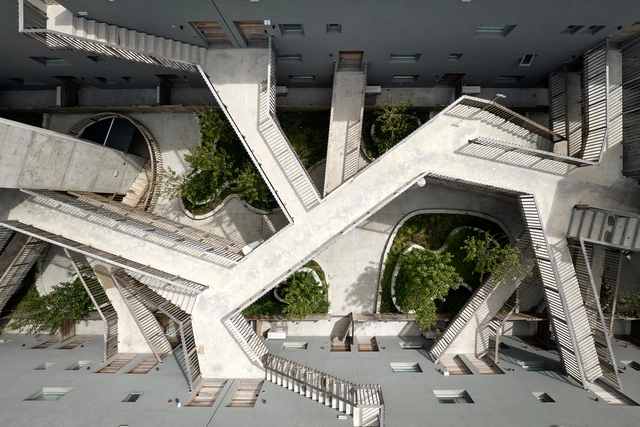
Combining experience, knowledge, tradition, innovation, and experimentation, Estudio Planta, based in Buenos Aires, Argentina, focuses on fostering the relationship between architecture and nature by using vegetation as a building material and integrating outdoor spaces into daily life. Addressing the unique characteristics of each site, programmatic innovation, sustainability, care for noble materials, and construction details, the practice defines its identity by proposing ways of living in harmony with its inhabitants and understanding the legacy that architecture can leave for society.