Throughout history, people from all walks of life with little in common have found ways to unite in neighborhood parks and filled stadiums to put those differences aside for the sake of the sports they love. Sports, and sports fandom, is a source of global unity, and perhaps fewer events in the world can generate such a wide range of emotions quite like a live match.
On April 16, a ground-breaking ceremony was held in the city of Guangzhou, China, for what is to be the world’s largest soccer stadium. The most controversial aspect of the project was not its $1.7 billion price tag, but its bold lotus shape causing a backlash from the local architectural community but praise from the general public.
https://www.archdaily.com/939211/forecasting-the-future-of-sports-architecture-with-10-newly-built-stadiums-around-the-worldMilly Mo
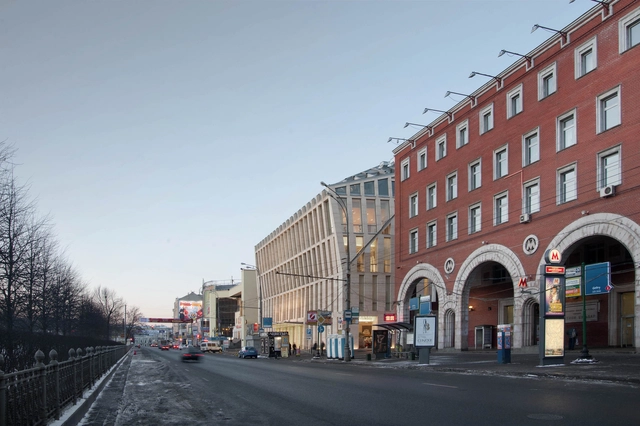
Yuri Grigoryan founded Project Meganom in 1999 in Moscow with his partners Alexandra Pavlova, Iliya Kuleshov, and Pavel Ivanchikov. Together, the group all graduated from Moscow’s Architectural Institute, MArchI in 1991, the year of the Soviet Union’s collapse, and then practiced at the studio of Moscow architect Alexander Larin. Today Project Meganom is headed by Grigoryan, Iliya Kuleshov, Artem Staborovsky, and Elena Uglovskaya, and keeps in close contact with the theoretical side of architecture: Grigoryan teaches at his alma mater and until recently he was the Director of Education at Strelka Institute, founded in 2009 under the creative leadership of Rem Koolhaas, while in 2008 the practice was involved in the Venice Architecture Biennale with their San Stae project for curator Yuri Avvakumov's “BornHouse” exhibition. All of this gives Grigoryan an interesting overview of Russia's unique architectural context. In this interview from his “City of Ideas” column, Vladimir Belogolovsky speaks with Grigoryan about the issues facing Russian architecture and how Project Meganom has responded to those challenges.


.jpg?1543230819&format=webp&width=230&height=230&crop=true)





.jpg?1470952641&format=webp&width=230&height=230&crop=true)
.jpg?1470952609&format=webp&width=230&height=230&crop=true)