Our experience of information is changing. We now consume more and more information digitally, with much of this being non-textual. Videos, photos and GIFs have become commonplace, with technology allowing these mediums to be as easily shareable as text. This gives way to another trend: the increase in the number and accessibility of online platforms. Not only is more information being digitized, but more dynamic ways of digitization are being developed; multimedia articles and online exhibitions, for example, hope to provide a more engaging way of sharing information.
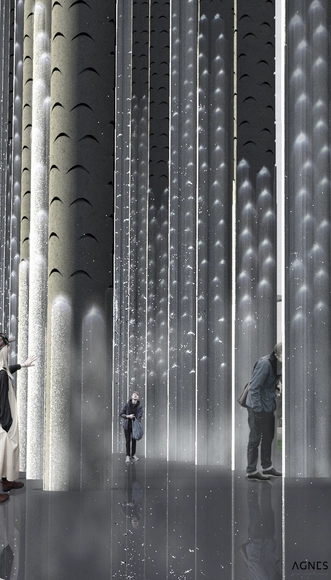
The Pillars is a new monument in the heart of Copenhagen dedicated to informing the public through a combination of national data and artistic beauty. Inspired by other nationally recognized works such as the 10,000 Year Clock in Texas; Mount Rushmore in South Dakota; and the Fühlometer (Feel-o-Meter) in Lindau, Germany, The Pillars encourages both citizens and leaders to understand the facts of their national development.
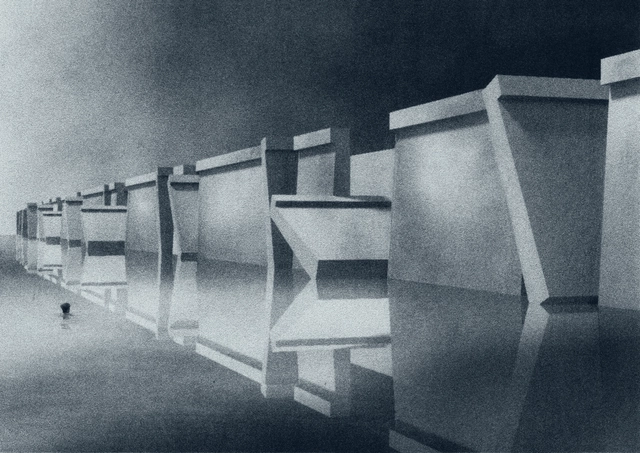
Amsterdam-based Rietveld-Architecture-Art-Affordances (RAAAF) and Atelier de Lyon have revealed designs to reimagine one of The Netherland's monumental "tribute[s] to the majesty, and seemingly indestructible power, of the Dutch Delta Works." The works themselves—a network of dams, sluices, locks, dykes, levees and storm surge barriers in South Holland—have collectively been described as one of the Seven Wonders of the Modern World. Deltawerk 1:1 is an intervention examining the practice of the preservation of cultural heritage by inserting a new structure within Waterloopbos, the former Dutch Hydrodynamics Laboratory.
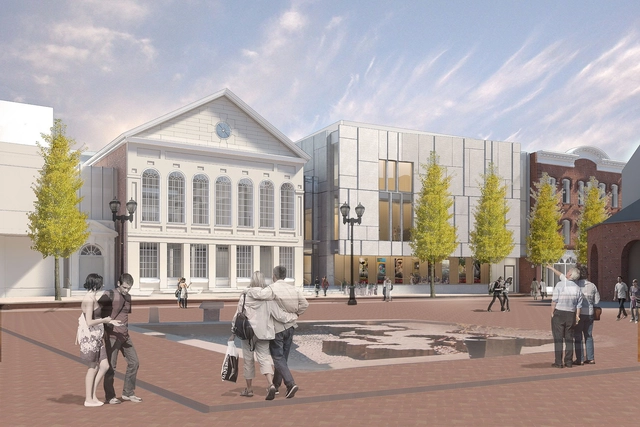
Street Plaza View. Image Courtesy of Ennead Architects
Ennead Architects has broken ground on the construction of an addition to the Peabody Essex Museum (PEM) in Salem, Massachusetts, the country’s oldest continuously operating museum (since 1799).
The expansion project includes a new 40,000 square foot wing and 17,500 square feet of renovation to adjacent structures. Upon completion, total gallery space will be increased by 15% for a total of 100,000 square feet, making the Peabody Essex into one of the top 20 art museums in the country.
“The good news is that if we have the power to radically transform our planet by accident, imagine what we can do if we are actually trying to do it. Once you’ve accepted that there is no way we can be here without having a very, very significant influence on our planet, you just have to take it as a positive.”
The European Commission and the Fundació Mies van der Rohe has announced the 355 projects from 36 countries which have been nominated for the 2017 European Union Prize for Contemporary Architecture – Mies van der Rohe Award. Among the countries included, France and Spain are represented the most among the selected projects, with each country featuring 28 times. Meanwhile, Georgia, Moldova and Ukraine appear in the prize for the first time, with Georgia offering a commendable 7 listed projects.
Among the building types included on the list, as in the 2015 Prize housing and cultural buildings dominated. However, the 2017 Prize sees an increase in the number of educational buildings and mixed use buildings compared to two years ago.
The list will be narrowed to a shortlist of 40 projects in late January, with the winner announced in April 2017. In addition to the main prize, the Fundació Mies van der Rohe is once again running a special mention award for emerging architects, with winners of this award receiving a €20,000 prize.
Read on for the full list of 355 selected projects.
You are walking through an elegant house, admiring the large living-room windows, the paintings on the wall, and the spacious kitchen. Pendant lights cast a soft glow, the terrazzo flooring gleams beneath your feet, the furnishings feel inviting. Then you take off the virtual-reality goggles and resume your meeting.
This scenario is becoming increasingly common as more architects incorporate virtual reality (VR) into their practices. Along with its cousins—augmented reality (AR) and mixed reality (MR)—virtual reality allows designers to push the boundaries of visualization, giving colleagues and clients new ways to experience and understand a building or space long before it is actually built. With VR, architects can transmit not just what a building will look like, but also what it will feel like.
https://www.archdaily.com/802035/4-tips-to-get-started-with-virtual-reality-in-architectureKim A. O'Connell












_Bruno_Klomfar.jpg?1481849594&format=webp&width=640&height=580)
_Bruno_Klomfar.jpg?1481849835 "© Bruno Klomfar")
_Bruno_Klomfar.jpg?1481849609 "© Bruno Klomfar")
_Bruno_Klomfar.jpg?1481849814 "© Bruno Klomfar")
_Bruno_Klomfar.jpg?1481849686 "© Bruno Klomfar")
_Bruno_Klomfar.jpg?1481849594)