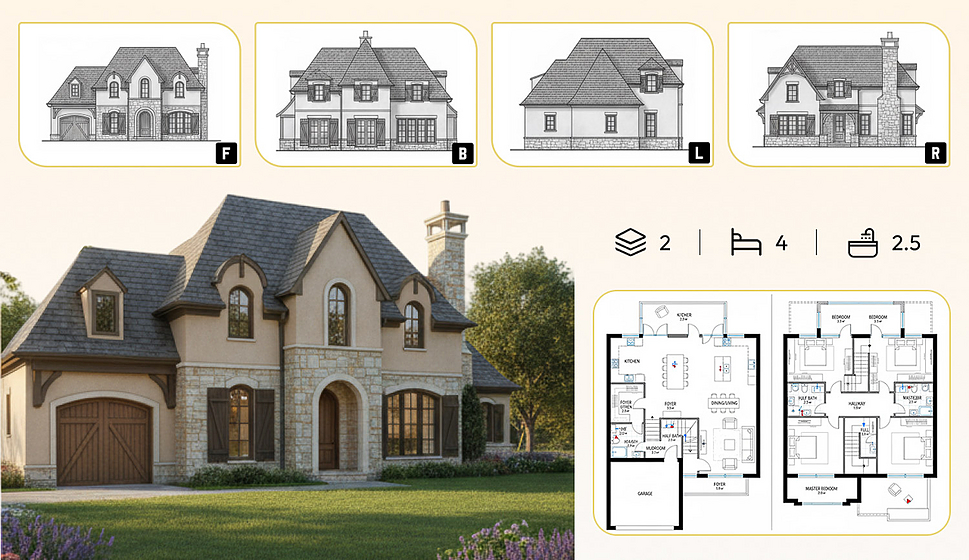
This guide covers a workflow that moves from project parameters to generated floor plans, 3D perspective views, exterior design exploration, and site context visualization, using AI tools in place of preliminary CAD and rendering work.
This guide covers a workflow that moves from project parameters to generated floor plans, 3D perspective views, exterior design exploration, and site context visualization, using AI tools in place of preliminary CAD and rendering work.
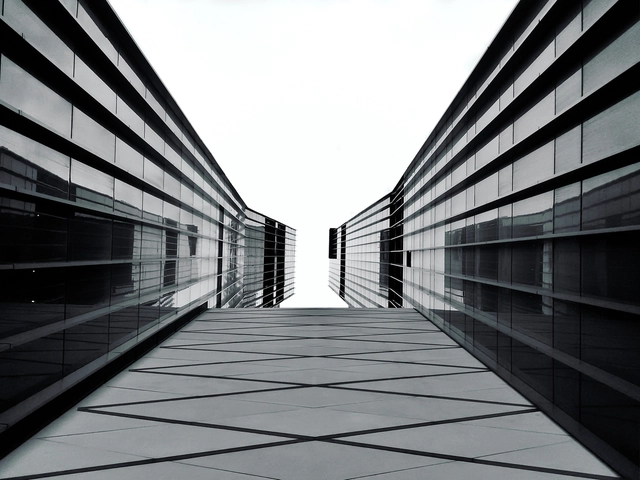
This month, we continue to celebrate the 6th anniversary of ArchDaily Mexico, an achievement made possible thanks to the hard work of our great team, as well as the relationships we have built over the years with the local architectural community and our readers.
With this in mind, this year we decided to celebrate with a contest that involved all of our readers. We wanted to discover their favorite projects in Mexico, whether classic or contemporary. We asked our readers to follow the @ArchDailyMx account on Instagram and share their favorite project with us using the hashtags #ConcursoArchDailyMx and #6AñosArchDailyMx.
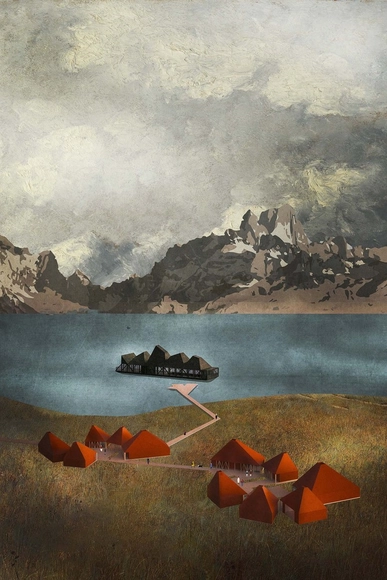
After reviewing 94 undergraduate student projects from 20 architecture schools across 8 regions of Chile, the jury of the Concurso Arquitectura Caliente 2018 has announced the winning projects of its latest edition.
The submissions span the entire country and cover diverse typologies, ranging from urban planning and student housing to landscape designs and structural emergency initiatives.
Below, we present the award-winning second-year projects:
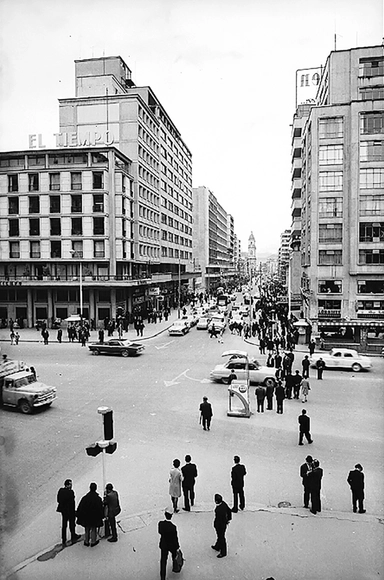

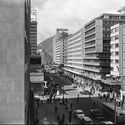
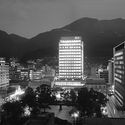
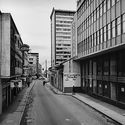
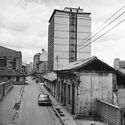
The modernization of Bogotá between 1940 and 1970, captured in urban and architectural photographic essays, has been documented in various books, magazines, and photobooks of the era, as well as in images from the city's public and private archives. These photographs reveal a deliberate, and even critical, approach to how modern architecture reconfigured city centers, bringing new buildings and urban spaces into relation with the existing cityscape.
When analyzing the impact of street photography, it is essential to discuss Leo Matiz, Armando Matiz and Hernán Díaz. These three photographers captured the people, events, and daily urban life of Bogotá. From their extensive bodies of work, we have selected shots of streets, plazas, intersections, and representative buildings—both iconic and anonymous spaces that, through photography, anchor modern heritage in the collective memory, with architecture and urban spaces taking center stage.
In this edition of Bogotá in the Eyes of 10 Photographers we explore the legacy of Armando Matiz:
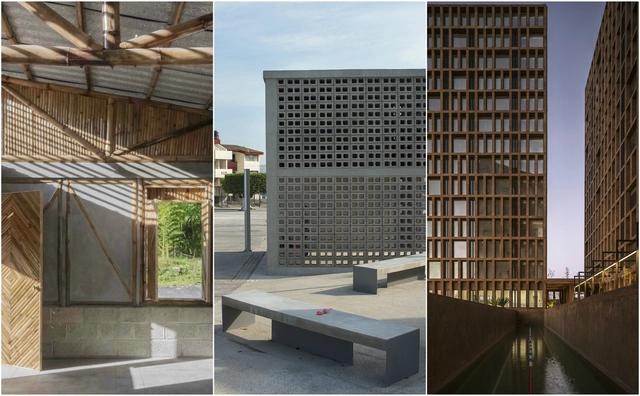
The Architectural League of New York is an independent architecture forum that aims to "stimulate thinking and debate about the critical design and architectural issues of our time." Each year, through the 'Emerging Voices' competition, they recognize the work of various North American architectural practices with the potential to positively influence how architecture is conceptualized and built across the continent.
This year, they highlight the work of three Mexican firms: Comunal Taller de Arquitectura, Fernanda Canales, and Luis Aldrete. Learn more about their work below:

This year marks the bicentennial of the Battle of Maipú, the decisive clash that secured Chile's independence. 1818 also marks the vow made by Chilean liberator Bernardo O'Higgins to erect a votive temple in honor of the Virgin of Carmen, Chile's patron saint, to whom local troops prayed for the victory that ultimately freed them from the Spanish Empire.
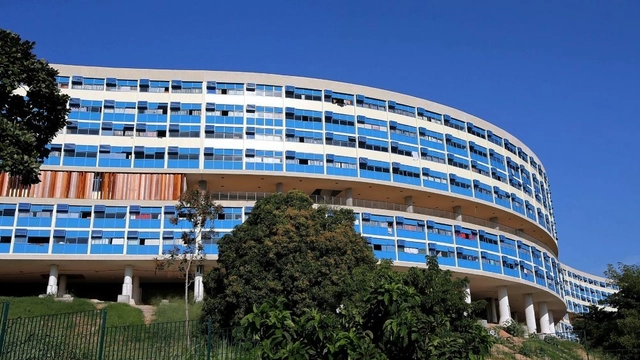
Days after the tragic fire and collapse of the Wilton Paes de Almeida building in downtown São Paulo, which left fatalities and hundreds homeless, it is impossible not to question the future of social housing in Brazil.
Historically, most social housing programs have focused on constructing new housing units. However, according to urban planning and housing specialist Elisabete França, this approach is often detrimental to the social development of low- and middle-income citizens.
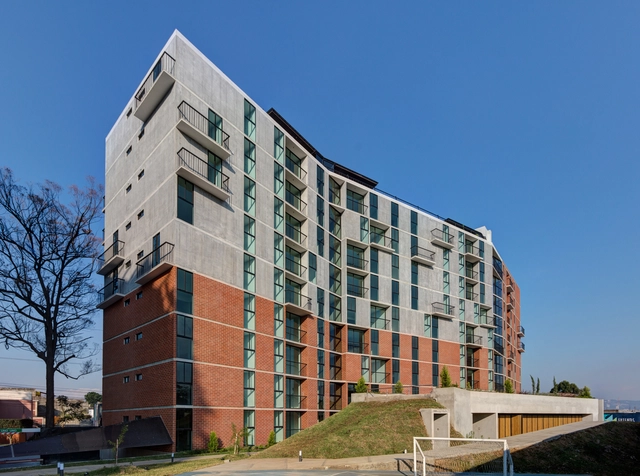
Alongside the activities and lectures held over three consecutive days at the Lux Theater in Guatemala City's historic center, the Guatemala Architecture Biennale (BAG) presented the winning works and projects of the Danta Awards on Wednesday, May 30, and Thursday, May 31.
For this edition, the organization proposed that architecture "is approached as a commitment to the public and private spheres and the power to negotiate individual or collective change to build dreams and aspirations, and even to express utopian ideals." Within this context, the jury evaluated more than 100 submitted projects from across Guatemala and the rest of Central America, recognizing parks, collective housing, gymnasiums, and renovations, among other typologies, that address the vision outlined by BAG 2018.
All winning projects in the professional category will be registered and sponsored to participate in the XXI Pan-American Architecture Biennale of Quito 2018, where they will be exhibited alongside projects from across the Americas and evaluated by the Biennale's jury.
.jpg?1533572922&format=webp&width=640&height=580)
An affordable, eco-friendly housing research project is being developed in Maputo, the capital of Mozambique, one of the poorest countries in the world. Named "Casas Melhoradas" (Improved Houses), the project is a partnership between the KADK (Royal Danish Academy of Fine Arts) School of Architecture, the Mozambican NGO Estamos, and Architects Without Borders. The goal is to develop low-cost, dignified housing with minimal environmental impact.
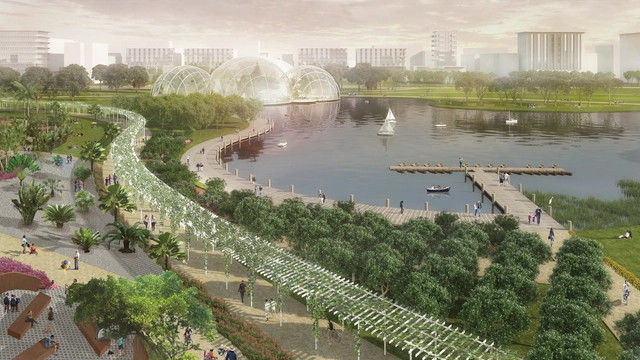
José Joaquín de Olmedo Airport—Ecuador's second busiest—will relocate to the outskirts of Guayaquil in 2022, freeing up 240 hectares in the city center. In response to the unprecedented urban opportunity presented by this relocation, the firm Perkins Eastman has revealed the first images of Nueva Ciudad, a 2-million-square-meter master plan in Guayaquil.
Stephen Forneris, head of the Ecuador office, explained that the project "can be a catalyst for economic growth, cultural activities, and entertainment; it will be the spark that begins Guayaquil's journey to becoming the city of the future."
In conversation with ArchDaily en Español, the founders of the Paraguayan firm Gabinete de Arquitectura, Solano Benítez and Gloria Cabral, spoke about their involvement in Cuatro Cuatros, an ambitious Mexican project led by Mauricio Rocha y Gabriela Carrillo in Ensenada, Baja California.
For a decade, Rocha and Carrillo have worked on the 860 hectares comprising the Cuatro Cuatros project. In this new phase, a group of Mexican and international architects has created a manifesto explaining their collaborative involvement in a 500-home development within the 360 permitted hectares.

Projections for the urban world have been updated. In May, the United Nations released a new edition of the World Urbanization Prospects, a report that takes an in-depth look at the planet's urban centers, concluding that 68% of the world's population will live in cities by 2050. This estimate is 2% higher than the previous study published in 2014, which is part of the series produced by the United Nations Department of Economic and Social Affairs (DESA).
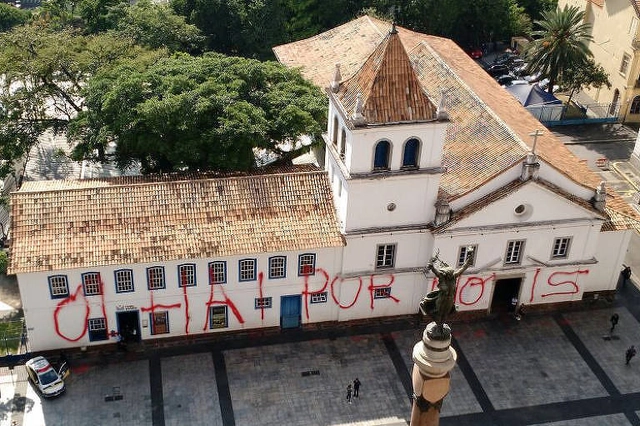
One of São Paulo's primary historical and tourist landmarks, the Pateo do Collegio—the founding site of the state capital—awoke with its facade covered in graffiti. "Olhai por nois" [Look out for us] is the phrase that, in red letters, covers the facade of the Museum of Sacred Art and the chapel of the complex, which belongs to the Society of Jesus.
Under Brazil's environmental crimes law, defacing monuments is a crime, and perpetrators can face up to one year in prison. At the time of publication, those responsible for the act had not been identified by the Metropolitan Civil Guard.
.jpg?1527695634&format=webp&width=640&height=580)
It is another freezing night in Chucuito, and in the restaurant where all the participants of the XV TSL Puno are dining, Jhony Chaves—better known as "El Gato"—tells us stories about impossible places, like Cerro de Pasco, a Peruvian mining settlement even higher, colder, and harsher than Chucuito. He then recalls a village lost in the Peruvian jungle that can only be reached by boat, where the mosquitoes seem as large as birds. Next, he jumps to describing Andean villages that flood and freeze almost year-round, until the weather finally gives a few months of respite to the families who live there simply in houses made of mud.
As El Gato goes through his inventory of Peruvian towns, it is impossible not to think of the magical realism of Macondo. Is all of this real? Indeed, it fits perfectly that this is also a concept coined decades ago, before García Márquez, by a European, for whom his own continent's nature had been entirely domesticated. Of course, Latin America remains a landscape, and our great victory is that we manage to live within it, despite nature and its disasters. Thus, the villages El Gato evokes bring a certain comfort to our shared table, even as the cold and altitude threaten to take their toll on us. "It could be worse," we think before spooning the steaming soup in front of us.
How, then, can we intervene and propose public space in rural, predominantly Aymara settlements like Chucuito, where nature constantly reminds us that it is the main protagonist?
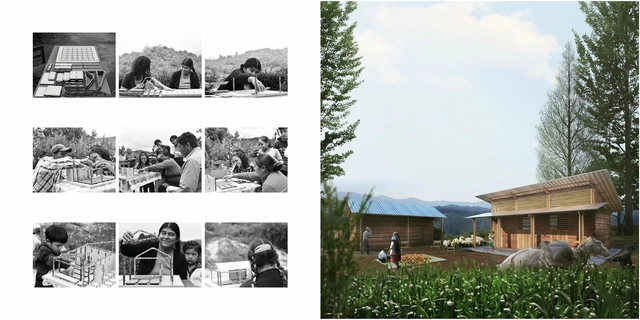
Until a few years ago, childbirth was the leading cause of death for women in the municipality of Tenejapa, located in the Highlands region of Chiapas (Los Altos de Chiapas). Faced with this situation, coupled with a lack of medical services in the region, traditional midwives from 22 communities joined forces to combat the issue. They formed the “Un solo corazón A.C.” Midwives Network, an organization that has succeeded in reducing maternal and infant mortality rates to zero while attending 98% of births in the area.
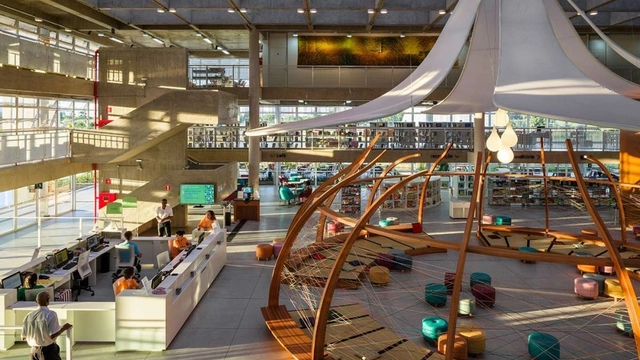
The Villa-Lobos Park Library (BVL), in the western zone of São Paulo, is one of five finalists for the best public library award from the International Federation of Library Associations and Institutions (IFLA), the industry's most prominent international organization. The Villa-Lobos Park Library was built on the site of a former open-air landfill. The revitalization of the area led to the creation of a free-entry, open-access reading space, modeled after the São Paulo Library in Youth Park (Parque da Juventude), which has also competed for another international award.
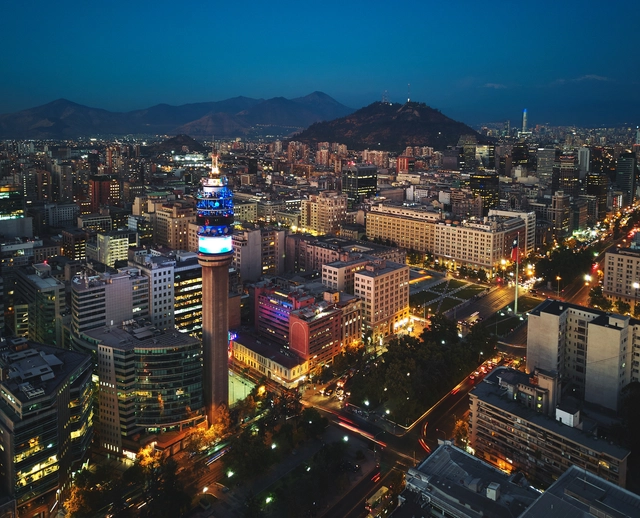
Public attention turned to the protests in Puchuncaví and Quintero, municipalities designated as a "sacrifice zone" due to the presence of 15 major energy, chemical, and fuel companies, while Santiago works on the opening of a new green lung in the city center. This week is dedicated to the environment in this edition of La ciudad chilena en la prensa, the ArchDaily section where we cover what is happening in Chilean cities.
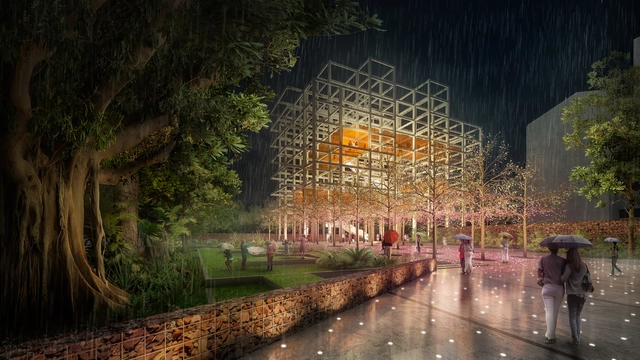
Through the Urban Development Corporation (EDU) and the Colombian Society of Architects (SCA), last November Medellín launched an international call for proposals to design a space for memory and reflection on the period between 1983 and 1994 at the site of the demolished Monaco Building, the former residence of drug lord Pablo Escobar.
Here, we present the proposal by Taller Síntesis, which outlines a new way of telling history through space, inviting reflection on the past while honoring the lives of the victims of drug trafficking. According to the designers, "over time, this building has become a tourist destination for visitors arriving in Medellín who want to learn about the figure behind television shows that fail to faithfully reflect the reality of this era of drug trafficking."
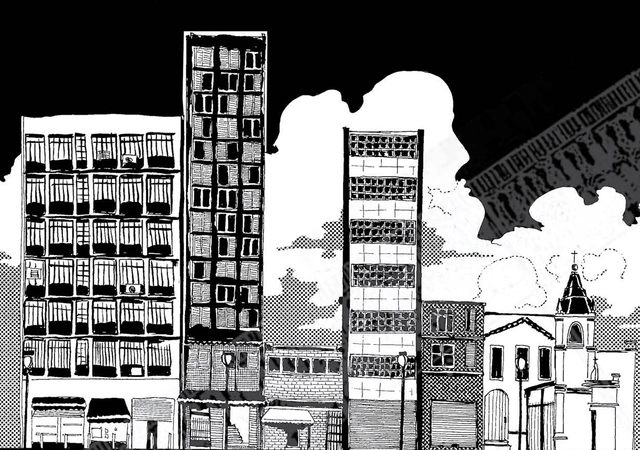
Indivisível (Indivisible) is the title of the graphic novel created by Marília Marz as her final thesis project at Escola da Cidade – Faculty of Architecture and Urbanism. The project aims to identify and analyze the narrative possibilities intrinsic to the architectural and urban elements of the Liberdade neighborhood in São Paulo across two distinct historical periods.
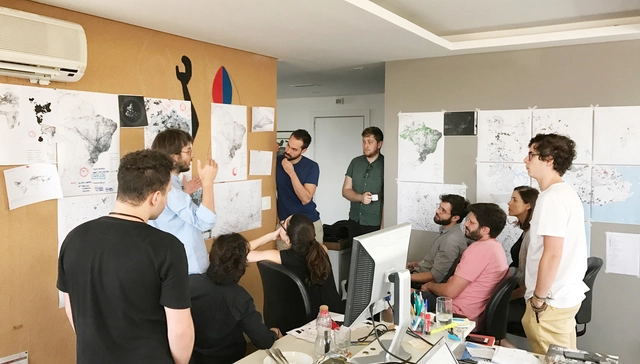
With the 2018 Venice Architecture Biennale approaching, ArchDaily Brasil interviewed the curators of the Brazilian pavilion – Laura González Fierro, Sol Camacho, Gabriel Kozlowski, and Marcelo Maia Rosa – to better understand their curatorial proposal and clarify details of public participation in this endeavor.
Read the interview below:
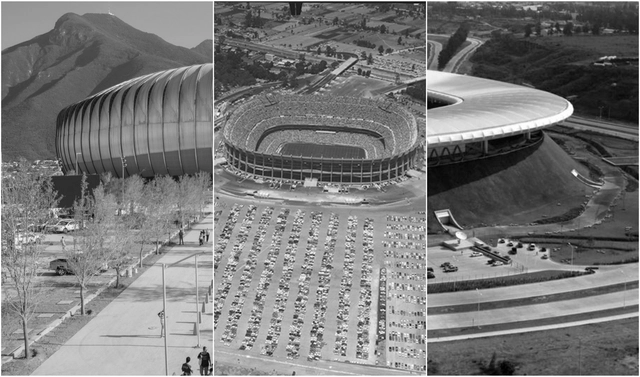
A few days ago, FIFA announced that Mexico, the United States, and Canada will host the 2026 World Cup. The news came as a surprise to some, as it will be the first World Cup to be played across three countries, featuring a new format with 48 teams divided into 16 groups of three. Consequently, further details on the organization will not be available until 2020, when FIFA is scheduled to announce the event's logistics.
Knowing that many of our readers are fans of both soccer and Mexican architecture, we present this special feature on the three Mexican stadiums that will host the 2026 World Cup. Don't miss it!
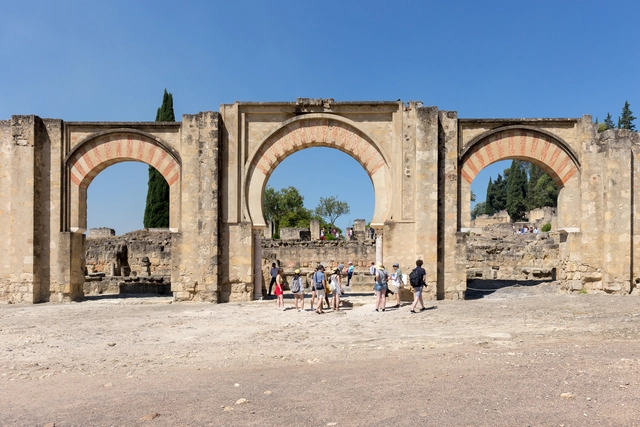
UNESCO has added 19 new sites to the World Heritage List, including the Caliphate City of Medina Azahara (Córdoba, Spain) during its recent 42nd session held in Manama, the capital of Bahrain.
The report prepared ahead of the session includes the evaluation and final conclusions of the International Council on Monuments and Sites (ICOMOS). Following a comparative analysis conducted both nationally and internationally, the council concluded that, alongside Medina Azahara, only Samarra (Iraq) stands as a well-preserved example of a caliphate city. Furthermore, among all caliphate cities, Medina Azahara is the only one that provides evidence of the culture and knowledge of the Islamic civilization that reached Europe.
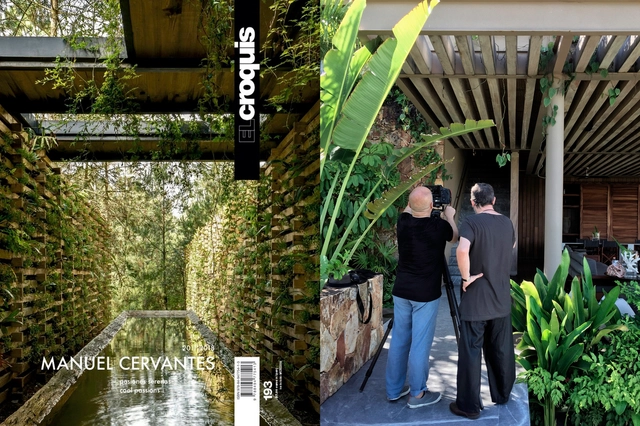
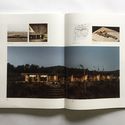
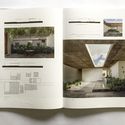
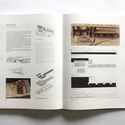
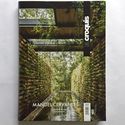
'El Croquis' is one of the most prestigious international architecture magazines, edited by architects Fernando Márquez Cecilia and Richard Levene. Published as carefully curated monographs, the magazine analyzes the work of architects whose careers feature some of the most influential and prestigious projects globally, such as OMA Rem Koolhaas, Kazuyo Sejima, Herzog & de Meuron, Álvaro Siza or Rafael Moneo. Every two months, a new issue is published with a print run of 35,000 copies, distributed to specialized bookstores in Europe, the Americas, and Asia.
The magazine is published in English and Spanish from El Escorial in Madrid, Spain, and is currently a member of ARCE (Asociación de Revistas Culturales de España) and the Asociación de Editores de Madrid. To date, only 193 issues have been published, the latest of which is dedicated to the career of architect Manuel Cervantes—the first Mexican architect to be featured in 'El Croquis' and the second from Latin America, following Smiljan Radic.
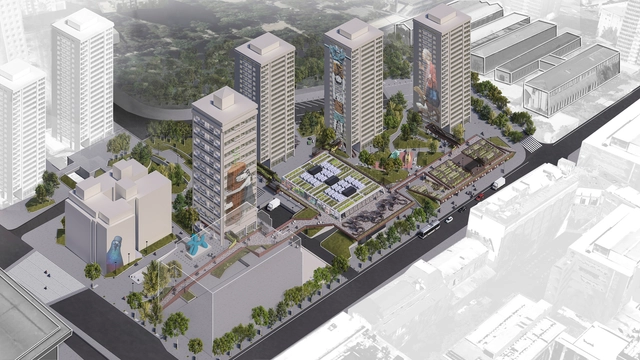
The Ensamble San Borja proposal was awarded second place in the Pasarelas San Borja competition in Chile. The main objective of the competition was to recognize "the best urban design ideas that help define intervention criteria and generate proposals for the San Borja Neighborhood."
According to the authors, the second-place winning proposal aims to create "a living space that mutates according to needs and adapts to demands."
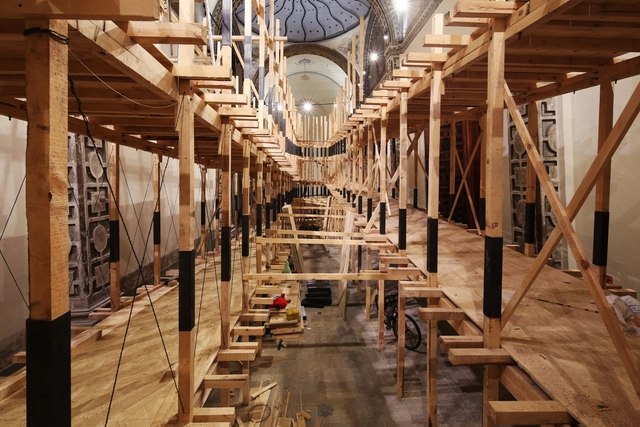
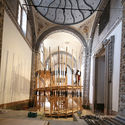
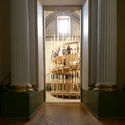
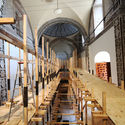
As part of the acoustic exhibition "Modos de Oír," Mexican architect Mauricio Rocha built an architectural and sculptural structure designed to unfold the space of the central nave, creating an ascending path that evokes the cochlear shape of the ear.
The exhibition is spread across the various spaces of the Convento de San José and the Templo de Santa Teresa la Antigua, currently Ex Teresa Arte Actual. Built in the early 17th century, this venue is renowned for hosting numerous events, exhibitions, and sound showcases due to its unique acoustics. Sound art has experienced a significant boom in Mexico in recent decades, with specific links to other historical periods where sonic thinking was also present. Driven by the unique character of this venue and its rich history, Laboratorio Arte Alameda and Ex Teresa Arte Actual sought to create a comprehensive exhibition featuring works that spark a collective reflection echoing the richness, complexity, and significance of the sound art scene.