

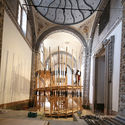
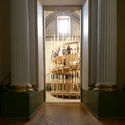
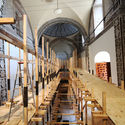

As part of the acoustic exhibition "Modos de Oír," Mexican architect Mauricio Rocha built an architectural and sculptural structure designed to unfold the space of the central nave, creating an ascending path that evokes the cochlear shape of the ear.
The exhibition is spread across the various spaces of the Convento de San José and the Templo de Santa Teresa la Antigua, currently Ex Teresa Arte Actual. Built in the early 17th century, this venue is renowned for hosting numerous events, exhibitions, and sound showcases due to its unique acoustics. Sound art has experienced a significant boom in Mexico in recent decades, with specific links to other historical periods where sonic thinking was also present. Driven by the unique character of this venue and its rich history, Laboratorio Arte Alameda and Ex Teresa Arte Actual sought to create a comprehensive exhibition featuring works that spark a collective reflection echoing the richness, complexity, and significance of the sound art scene.

A multigenerational team of practitioners dedicated to the study, development, and circulation of art and sound practices in Mexico was assembled to develop a project based on two main goals: first, to build an archive of these practices in the country, and second, to produce an exhibition that, while not exhaustive, is representative of this initial research phase. This collective process fostered critical exploration and discussion, allowing the curatorial team to map out diverse, open-ended pathways.

With this in mind, and drawing on the previous experience of building an Acoustic Pavilion in collaboration with Manuel Rocha in San Luis Potosí, the Phonetic Pavilion was conceived. This guided listening journey invites visitors to encounter different types of sounds: phonographic archaeologies, lesser-known works in the history of sound experimentation in Mexico, improvisations from different eras and authors, works exploring language, electroacoustic pieces by musicians collaborating with poets, conceptual writing, and pop music venturing into experimental territory.
This article was written by Mónica Arellano. The translation is powered by AI.


