In celebration of São Paulo's 467th anniversary, street artist Criola gifted the Liberdade neighborhood with a massive mural. Produced in partnership with Instagrafite, the work was funded by a special edition of the Street Art Museum (MAR) and prompts a deep reflection and reclaiming of a long history as a stronghold of Black resistance in the city, starting with the neighborhood's very name.
The year 2020 brought with it a whirlwind of challenges, calling many aspects of daily life into question. Marked by the pandemic, we all had to reinvent ourselves in some way to weather this unprecedented moment. It was no different for the city. COVID-19, like other infectious diseases (the Black Death, the Spanish flu, etc.), laid bare the relationship between its spread and urbanization. This is an easy analysis to make when data shows that the spread of the virus has been far greater in large urban centers.
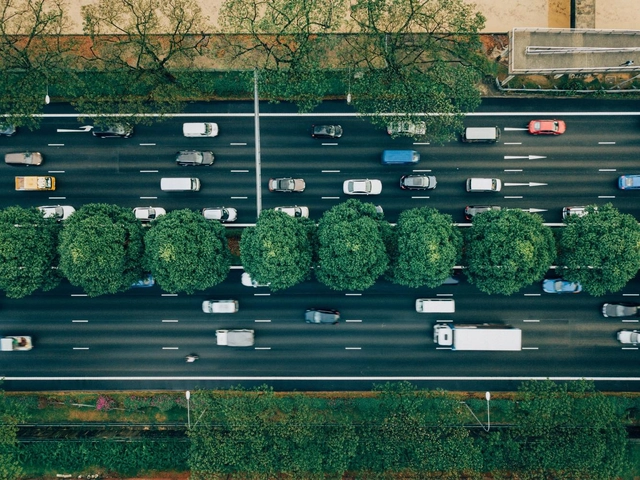
In this regard, the health crisis has sparked discussions about the urbanization model to which our cities are subjected—a model of dispersed sprawl that prioritizes automobile mobility. Wilson Ribeiro dos Santos, a professor at the Faculty of Architecture and Urbanism at PUC-Campinas, in an article co-authored with Sidney Piocchi Bernardini and Gabriela Celani, states that this urbanization model—where commerce and services are concentrated in the city center, while strictly residential areas and gated communities are located on the periphery—ended up accelerating the spread of the virus. This is because people from all parts of the city must travel daily to the same central area to work, study, visit the doctor, shop, and so on.
Promoting homeownership as an investment strategy is a risky proposition. No financial advisor would recommend taking on debt to put such a large portion of your savings into a single financial asset, whatever it may be, as it represents a major concentration of risk.
Worse still, this risk is not random: it falls most heavily on low-income buyers, who receive worse financing terms and whose neighborhoods are systematically more likely to have lower or even declining home values, leading to devastating consequences for the racial wealth gap.
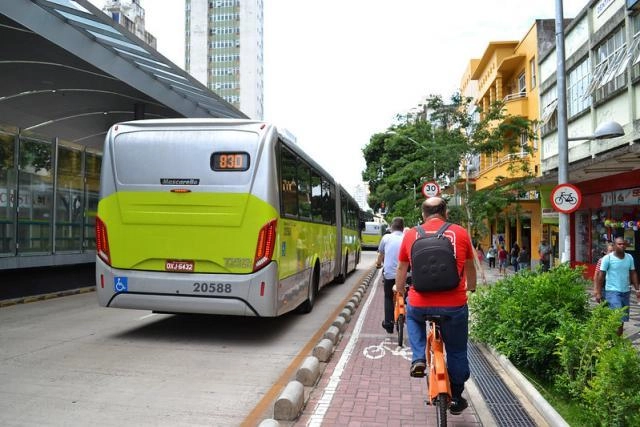
Providing quality infrastructure for sustainable modes is an opportunity to encourage behavioral change. Photo: Luísa Zottis/WRI Brasil
Cities are changing in many ways—some, fortunately, for the better. More Brazilians have come to see the bicycle as the best choice for urban mobility, and 67% of people would swap their cars or motorcycles for cleaner transit alternatives. While public perception of air quality is discouraging, awareness of climate change has grown, and 92% of people want electric buses in their cities.
https://www.archdaily.com/1128361/brazilians-would-give-up-their-cars-for-sustainable-transportation-but-want-comfort-and-convenienceFernando Corrêa, Cristina Albuquerque e Ariadne Samios
On January 26, 2021, the Institute of Architects of Brazil celebrates 100 years of history. Since its inception, the IAB has worked to promote architecture and advocate for public design competitions, actively participating in major artistic, political, and social movements in the country's history, always striving to advance professional practice. Since then, global changes and urgent social crises have made it even more critical for the profession to remain conscious of its role in transforming our cities—and for the public to recognize architects as strategic agents in addressing the challenges of the new millennium.
A study conducted by Fundação Espaço ECO and Instituto Akatu seeks to understand the impact of urban mobility based on Brazilian conditions. The research used the Life Cycle Assessment (LCA) methodology to analyze the different modes of transportation used in cities across their entire chain: equipment production, transport across the chain, use, maintenance, and disposal.
The city of São Paulo was chosen as the focus due to its diverse transit options and population consumption habits, along with access to existing and secondary databases to gather the information that enabled the analysis.
Excerpt from a comic strip. Original work by Bárbara Garcia Souza Bravo
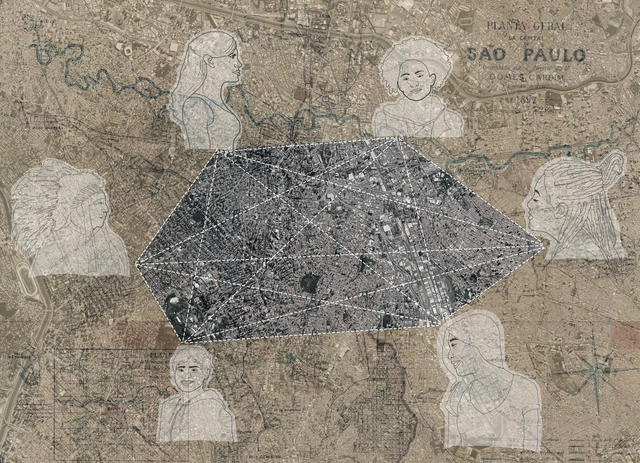
TEIA re(p)resents the city of São Paulo through a comic book narrative. The characters were developed as protagonists based on an empirical selection of twelve neighborhoods key to the city's history, whose residents served as the foundation for the character archetypes in the script. The graphic novel format provided the ideal medium to develop a language that allows for spatial thinking about the urban context and the observation of human relationships within this created and illustrated universe, highlighting its role as a communicative medium. Beyond experiencing and understanding the neighborhoods, the project aimed to explore the notion of belonging. The in situ experience in the neighborhoods and spontaneous conversations with residents—who served as references for the protagonists—allowed the narrative to reflect on the difference between being (of a place) and existing (in a place) in Brazil's most populous and diverse metropolis.
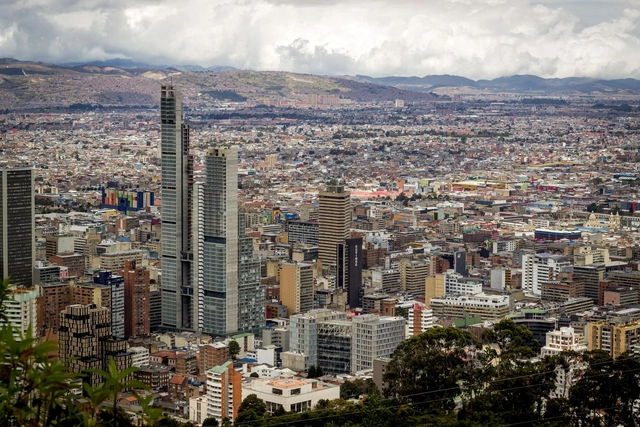
Shortly before taking office in January 2020, Mayor Claudia López committed to redesigning a major arterial road in Bogotá, aiming to transform it into a green corridor for active and sustainable mobility. To do so, the mayor also pledged to promote a planning process with broad public participation—a rather daunting task in a city of nine million people.
Known since the 16th century as Calle Real, Avenida Séptima is widely considered Bogotá's most important thoroughfare, stretching 23 kilometers and traversing the city's eastern zone. It is perhaps the only road that runs through every income bracket in the municipality, from the poorest to the very wealthy. It is also the most hotly debated space in the Colombian capital.
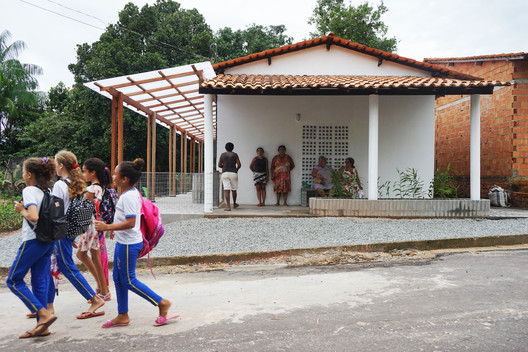
Renovation and Expansion of the Babassu Flour House. Serra - MA, February 2020. Photo by Noelia Monteiro
It is easier said than done, and when it comes to the practice of architecture—an activity heavily conditioned by countless external factors—this statement carries even more weight. Few professionals are willing to help solve problems in remote, relatively isolated communities facing social and environmental vulnerabilities. However, this is precisely the focus of Noelia Monteiro, an Argentine architect working in Brazil who, along with Christian Teshirogi, founded Estúdio Flume in 2015.
Developing projects alongside multidisciplinary teams that include professionals from architecture, engineering, social sciences, geology, and anthropology, the architect's approach is, nonetheless, deeply personal. In fact, it requires a significant degree of community engagement, bringing people close to the design process from the very beginning to completion. The results of this practice have been recognized with major national awards, and more recently, ArchDaily selected Noelia for its list of Best New Practices of 2020.
In a past life, I completed a master's degree in semiotics, where I learned to pay attention to the words we choose. For example, open any book on Brazilian architecture and you will find subtitles that help organize our built environment chronologically: Indigenous Architecture, Colonial Brazilian Architecture, Imperial Brazilian Architecture, Brazilian Modern Architecture, Contemporary Architecture in Brazil. Notice the subtle difference: the word *Brazil*, which names this land, appears in every post-colonial period, but is absent from the one representing the original way of building in this place.
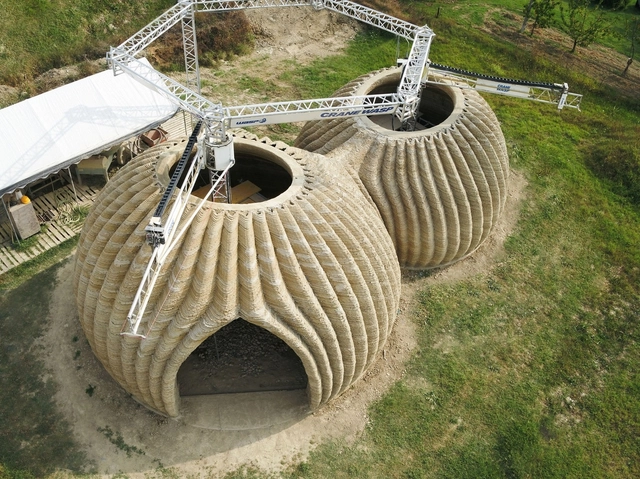
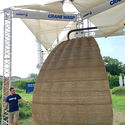
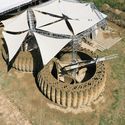
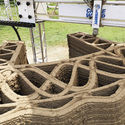
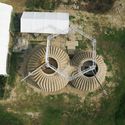
Exponential population growth versus a lack of affordable housing is a challenge affecting urban areas worldwide. To address this issue, the Italian firm Mario Cucinella Architects proposes a new circular housing model: a 3D-printed home made from organic materials.
The prototype uses regionally sourced materials, such as local clay, making it the first printed house of its kind. This reduces emissions from transporting materials and also ensures the building process is zero-waste.
Photo: Programa de Aceleração do Crescimento (PAC), via VisualHunt.com / CC BY-NC-SA
How is the housing deficit calculated? Did the Minha Casa Minha Vida program improve housing affordability? What is the Onerous Grant of the Right to Build? To answer these and other questions, Caos Planejado hosted Tainá Pacheco and Vanessa Nadalin for a conversation.
In recent years, public agencies, architects, and urban planners worldwide have increasingly debated the future of cities, reflecting on the directions contemporary urban planning must take to address a complex web of urban and social challenges. However, one question continues to dominate professional discourse: how can we create spaces capable of improving quality of life and health in the public realm without relying on large-scale infrastructure projects?
In response, several movements have emerged, attempting to implement simple actions that foster the development of “new” public spaces to meet the immediate demand for high-quality urban environments. These initiatives suggest that future cities will become increasingly inviting, championing a closer relationship between pedestrians and the street. Examples of these interventions include the implementation of parklets; the temporary closure of avenues to vehicular traffic, opening them to pedestrians and turning them into open areas like temporary urban parks; the installation and expansion of bike lanes; urban vertical gardens; and pocket parks.
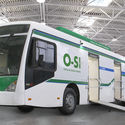
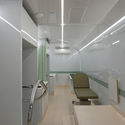
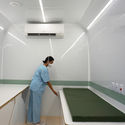
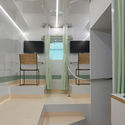
Developed by the Brazilian studio Democratic Architects, the O-SI - Immediate Health Bus (Ônibus de Saúde Imediata) was conceived by designers and doctors focused on creating a modular platform to provide public healthcare services in a modern, safe, and efficient way, based on cutting-edge technology and contemporary concepts of mobile healthcare, sustainable reuse, and social inclusion.
To live in the city and to experience the city is to be open to any and every event. Within a single day, we pass through different places and spatialities, with distinct compositions and tempos. No day is like another, as we are in constant motion, facing a random combination of events that affect both objects and subjects—shaping the spaces we traverse and the perceptions we experience. In light of this reflection, a discussion emerges on the effects of architecture and urbanism beyond the visual realm, linked to the individual's sense of belonging to space and based on urban form and dynamics. How can we grasp the effects of the object on the subject and vice versa? What is the materialized reading of the city as a reflection of societal actions?
https://www.archdaily.com/1127912/urban-fabrics-sao-paulo-society-as-a-reflection-and-extensionCamila Yumi de Campos
A brief preview of Uncertainty, the Spanish Pavilion for the 17th International Architecture Exhibition at the Venice Biennale, which will take place from May 22 to November 21.
As an overwhelmingly hegemonic field in which cisgender white men have historically held, and continue to hold, the majority of prestigious positions—from the leadership of major firms to international accolades like the Pritzker Prize—architectural practice has traditionally rendered invisible the careers and professional experiences of many women architects.
Motivated by the enrollment of a classmate with a disability at the Dona Escolástica Rosa State Technical School (Etec), logistics students at the institution developed a project that could transform public transit in the city of Santos, São Paulo. The project consists of an audio system designed to assist and offer autonomy to passengers who face mobility challenges.
The latest episode of Arquicast features Gabriela de Matos, who was named 2020 “Architect of the Year” by the Institute of Architects of Brazil – Rio de Janeiro Department (IAB-RJ). She is also one of the invited speakers at the 27th World Congress of Architects, organized by UIA2021 RIO.
Videos
Still from "Meu negro", by Ricardo Aleixo. Image: YouTube reproduction
The Terra Preta Cidade collective has published an excerpt of an interview conducted by Natália Alves with Ricardo Aleixo—who is a poet, visual and sound artist, performer, researcher of intermedia poetics, singer, songwriter, essayist, and editor. In this special encounter, Ricardo shared his entanglements with the city, urban space, the body, performance, and racial issues, among other themes.
https://www.archdaily.com/1128208/performancity-interview-with-ricardo-aleixoTerra Preta Cidade
Paraty, Rio de Janeiro. Photo by Angus McIntyre. License CC BY-NC 4.0
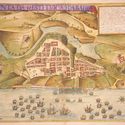
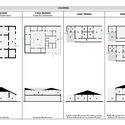
The period between the 16th century and the early 19th century in Brazil, known as Colonial Brazil, began when the Portuguese invaded Brazilian territory and imposed the colonization process. In architecture and urbanism, this process established a series of standards that, over the centuries, shaped the country's architecture and cities.
With the arrival of the Portuguese, the first settler installations emerged in Brazilian territory, characterized primarily by their precariousness and inability to defend against other invaders. Following the Portuguese Crown's decision to divide the land into hereditary captaincies administered by donatary captains, villages and urban settlements began to emerge.
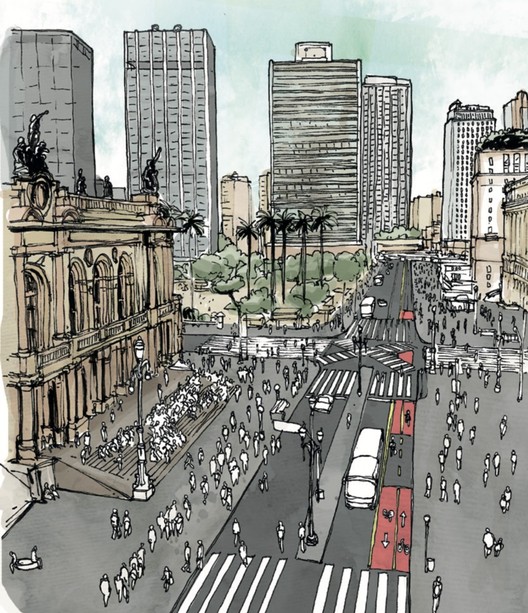
Urban Design and Road Works Manual. Image: Courtesy of WRI Brasil
Cities are constantly changing. When guided by biased or outdated premises, changes to urban spaces tend to imprint these mistakes onto the territory. However, when guided by a shared vision that prioritizes safety and active mobility, these interventions can guide the transformation of the city into a more democratic, welcoming, walkable, and safe place. The new São Paulo Urban Design and Road Works Manual points toward exactly this kind of city.
https://www.archdaily.com/1128278/5-innovations-in-sao-paulos-new-urban-design-and-road-works-manualDiogo Lemos, Andressa Ribeiro e Fernando Corrêa
The Federal University of Rio de Janeiro (UFRJ), through its Library and Information System (SiBI), has conducted a detailed survey of academic publishers across Brazil's leading universities, compiling a list of 2,650 titles available for free download.
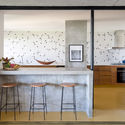
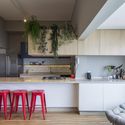
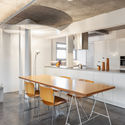
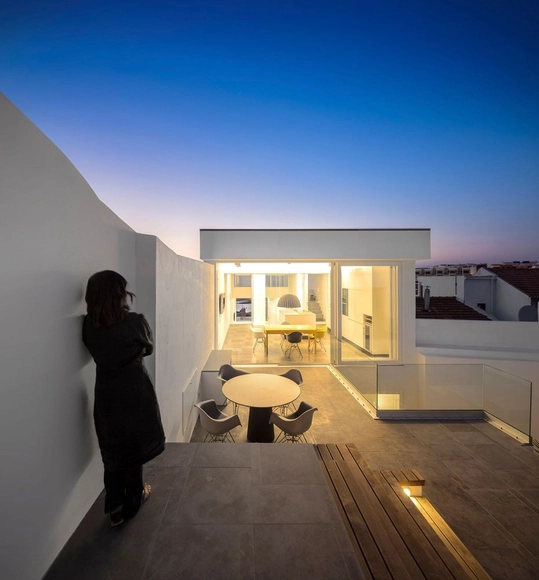
Once seen as a strictly utilitarian service area, the kitchen has increasingly integrated into daily family life, establishing itself as one of the most used spaces in a home. To seamlessly connect it with the rest of the residence, especially in small apartments, open-plan kitchens have become a favorite choice among clients.
.jpg?1611255930)





.jpg?1612451460)
.jpg?1612365973 "Barraca do Bem Viver. Image © Wanny Melo")
.jpg?1612365999 "Barraca do Bem Viver. Image © Wanny Melo")
.jpg?1612366021 "Barraca do Bem Viver. Image © Wanny Melo")
.jpg?1612366053 "Barraca do Bem Viver. Image © Wanny Melo")
.jpg?1612451460)





.jpg?1612895539 "Vale de Margem House / Marlene Uldschmidt. Image: © Fernando Guerra | FG+SG")