
Exponential population growth versus a lack of affordable housing is a challenge affecting urban areas worldwide. To address this issue, the Italian firm Mario Cucinella Architects proposes a new circular housing model: a 3D-printed home made from organic materials.
The prototype uses regionally sourced materials, such as local clay, making it the first printed house of its kind. This reduces emissions from transporting materials and also ensures the building process is zero-waste.
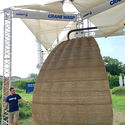
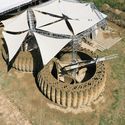
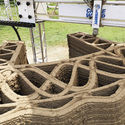
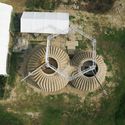

In addition to being biodegradable and 100% recyclable, the house can be adapted to different contexts and situations.
3D Printing
Developed by the engineering and construction company WASP, the first housing unit has already been printed in a town near Bologna, Italy, and is now in the structural finishing phase. Inspired by a wasp nest, the prototype was built using multiple 3D printers operating simultaneously.

Each printer unit has a printing area of 50 square meters, allowing for the construction of independent housing modules of any shape in just a few days.

“We need a paradigm shift in the field of architecture that brings us closer to people's needs, thus finding an answer for the ‘earth’ within the ‘earth.’ A collaboration that unites empathetic architecture with the application of new technologies,” says architect Mario Cucinella. The goal is to build printed homes in the shortest time possible and in the most sustainable way.
Concept
The house is named TECLA – a tribute to one of the Invisible Cities described by writer Italo Calvino.
The project was developed with the support of students and researchers from the Sustainable Environmental Design program at the Architectural Association School of Architecture in London under the guidance of Mario Cucinella – bringing together education, research, and practice.

The researchers sought to develop construction solutions that would enable the model to withstand different climatic conditions, resulting in a highly adaptable, resilient, and low-cost option. Additionally, the research explored the causes and effects of housing shortages.
“The completion of the structure is an important milestone and shows that, thanks to the design and technologies used, TECLA is no longer just a theoretical idea, but can be a real and viable response to the needs of living today and in the future,” Cucinella believes.
The printed house is scheduled to open in the first half of 2021.
Via CicloVivo.
This article was written by Marcia Sousa. The translation is powered by AI.


