In 2017, Escola da Cidade—through its Seminar on Culture and Contemporary Reality course, then coordinated by Professor José Guilherme Pereira—welcomed anthropologist and PhD in Social Sciences Manuela Carneiro da Cunha to discuss the history, spatialization, and daily life of Indigenous peoples in Brazil, highlighting issues from not only a cultural standpoint, but also a legal and environmental one.
By no means does this text intend to refute or disparage the recently published article The Life and Death of Tiny Houses, but rather to offer the reader alternative perspectives and an expansion on the theme—one of the core principles of architectural criticism. To this end, the text is structured around two axes that analyze several points raised by the original author.
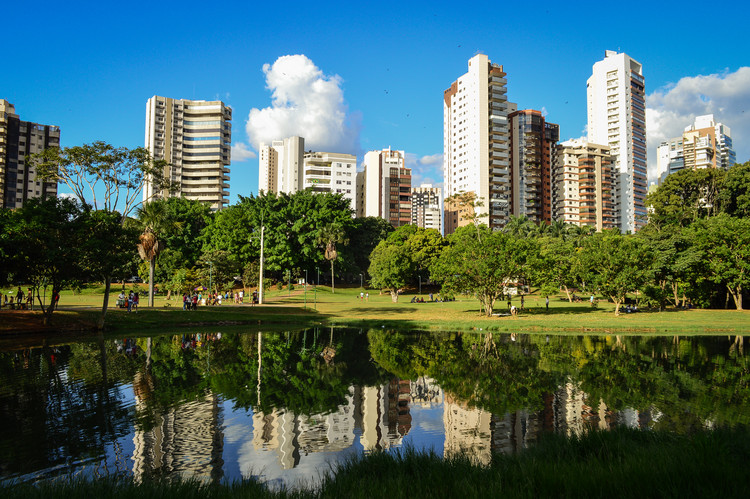
Lago das Rosas, in Goiânia. Image: Jean Carlos Faleiro, via Wikimedia Commons
Just as urban infrastructure can be defined as the network of structures and services required for cities to function efficiently, green infrastructure can also be understood as an interconnected network of areas and elements that preserve the value and function of natural ecosystems. One of the many definitions of green infrastructure posits that this constituent network enhances water and air quality, in addition to providing a range of benefits for both people and wildlife.
Architecture carries a strong archetype, one in which its purpose seems larger than the discipline itself. Embellished by a poetic image, its practitioners embody the symbol of great inventors who conceive space and establish new ways of living in society. It is undoubtedly an alluring trade, and one that certainly shapes the daily life of any culture. Yet it is increasingly marked by illusion and disappointment in a market that seems to gradually distance itself from theory and close itself off in niches of its own creation. Under ever-growing competition that fails to yield a significant improvement in the quality of what is produced, working in architecture gradually translates into frustration and insecurity.
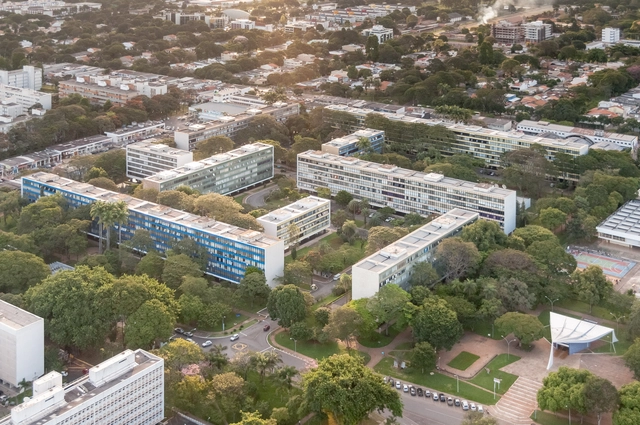
The orthogonal grid is the manifestation of a principle of order, a condition reinforced by the repetition of elements that express the structural rationality embedded in an aesthetic system. There is also a sense of freedom celebrated by decoupling structure from walls which, combined with pragmatic efficiency, keeps structural grids a constant presence in buildings of various scales both in Brazil and around the world.
In technical terms, structural grids are composed of linear elements—specifically beams—situated on a single plane to form a mesh capable of resisting structural loads. Typically, they feature regular spacing crossing at right angles, with dimensions that vary depending on the material used.
Jesuit-Guarani Missions Trail in Rio Grande do Sul. Photo by Halley Pacheco de Oliveira, via Wikipedia. License CC BY-SA 3.0
Iphan has announced the winners of the 33rd edition of the Rodrigo Melo Franco de Andrade Award (2020 Rodrigo Award). The 12 selected initiatives will each receive R$ 20,000 in funding from the National Institute of Historic and Artistic Heritage, while five others were recognized with honorable mentions. Organized by the institute, the awards program has been held since 1987 and is the largest in the field of Cultural Heritage in the country, recognizing exemplary initiatives of excellence.
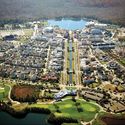
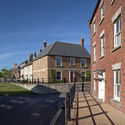
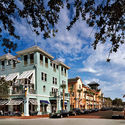
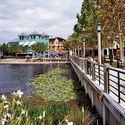
Self-described as a movement united around the idea that the physical environment can directly impact the creation of more prosperous and happier lives for its inhabitants, New Urbanism emerged as a concept in the United States in the 1990s and became consolidated through the Congresses for the New Urbanism (CNU), held annually since 1993.
In 1996, three years after the First Congress for the New Urbanism, the Charter of the New Urbanism was launched with the goal of establishing the guiding ideals and principles of the movement and, in doing so, exploring the possibilities for the development of American cities.
In celebration of São Paulo's 467th anniversary, street artist Criola gifted the Liberdade neighborhood with a massive mural. Produced in partnership with Instagrafite, the work was funded by a special edition of the Street Art Museum (MAR) and prompts a deep reflection and reclaiming of a long history as a stronghold of Black resistance in the city, starting with the neighborhood's very name.
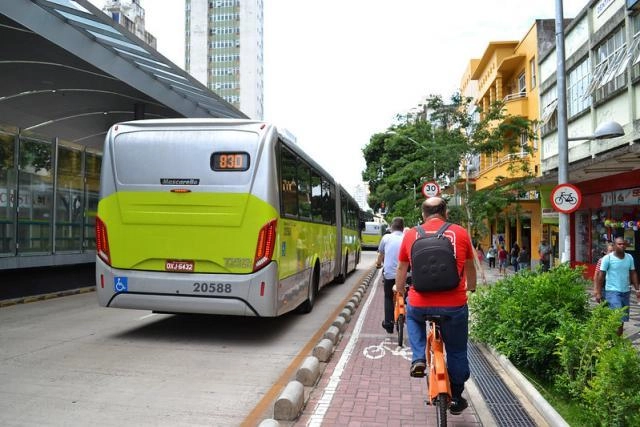
Providing quality infrastructure for sustainable modes is an opportunity to encourage behavioral change. Photo: Luísa Zottis/WRI Brasil
Cities are changing in many ways—some, fortunately, for the better. More Brazilians have come to see the bicycle as the best choice for urban mobility, and 67% of people would swap their cars or motorcycles for cleaner transit alternatives. While public perception of air quality is discouraging, awareness of climate change has grown, and 92% of people want electric buses in their cities.
https://www.archdaily.com/1128361/brazilians-would-give-up-their-cars-for-sustainable-transportation-but-want-comfort-and-convenienceFernando Corrêa, Cristina Albuquerque e Ariadne Samios
A study conducted by Fundação Espaço ECO and Instituto Akatu seeks to understand the impact of urban mobility based on Brazilian conditions. The research used the Life Cycle Assessment (LCA) methodology to analyze the different modes of transportation used in cities across their entire chain: equipment production, transport across the chain, use, maintenance, and disposal.
The city of São Paulo was chosen as the focus due to its diverse transit options and population consumption habits, along with access to existing and secondary databases to gather the information that enabled the analysis.
The year 2020 brought with it a whirlwind of challenges, calling many aspects of daily life into question. Marked by the pandemic, we all had to reinvent ourselves in some way to weather this unprecedented moment. It was no different for the city. COVID-19, like other infectious diseases (the Black Death, the Spanish flu, etc.), laid bare the relationship between its spread and urbanization. This is an easy analysis to make when data shows that the spread of the virus has been far greater in large urban centers.
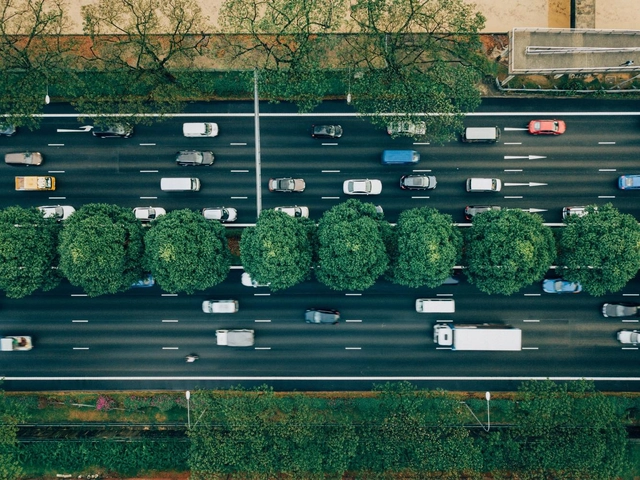
In this regard, the health crisis has sparked discussions about the urbanization model to which our cities are subjected—a model of dispersed sprawl that prioritizes automobile mobility. Wilson Ribeiro dos Santos, a professor at the Faculty of Architecture and Urbanism at PUC-Campinas, in an article co-authored with Sidney Piocchi Bernardini and Gabriela Celani, states that this urbanization model—where commerce and services are concentrated in the city center, while strictly residential areas and gated communities are located on the periphery—ended up accelerating the spread of the virus. This is because people from all parts of the city must travel daily to the same central area to work, study, visit the doctor, shop, and so on.
Promoting homeownership as an investment strategy is a risky proposition. No financial advisor would recommend taking on debt to put such a large portion of your savings into a single financial asset, whatever it may be, as it represents a major concentration of risk.
Worse still, this risk is not random: it falls most heavily on low-income buyers, who receive worse financing terms and whose neighborhoods are systematically more likely to have lower or even declining home values, leading to devastating consequences for the racial wealth gap.
On January 26, 2021, the Institute of Architects of Brazil celebrates 100 years of history. Since its inception, the IAB has worked to promote architecture and advocate for public design competitions, actively participating in major artistic, political, and social movements in the country's history, always striving to advance professional practice. Since then, global changes and urgent social crises have made it even more critical for the profession to remain conscious of its role in transforming our cities—and for the public to recognize architects as strategic agents in addressing the challenges of the new millennium.
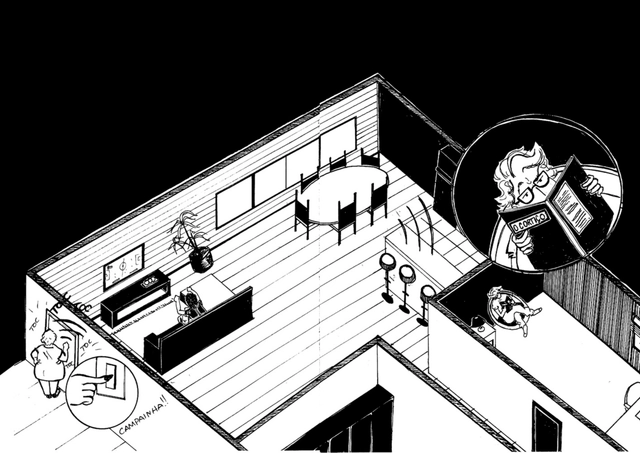
Excerpt from a comic strip. Original work by Bárbara Garcia Souza Bravo
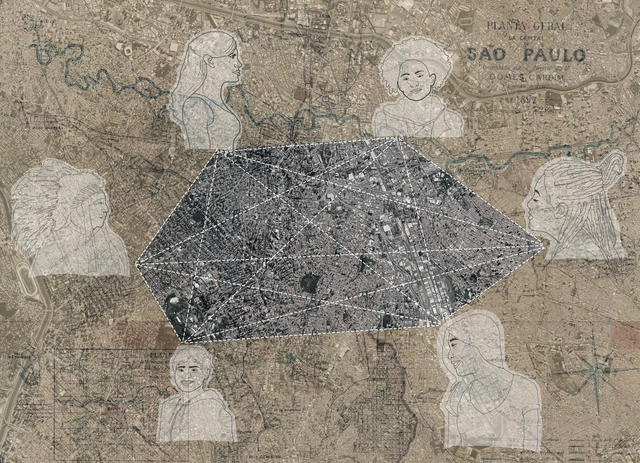
TEIA re(p)resents the city of São Paulo through a comic book narrative. The characters were developed as protagonists based on an empirical selection of twelve neighborhoods key to the city's history, whose residents served as the foundation for the character archetypes in the script. The graphic novel format provided the ideal medium to develop a language that allows for spatial thinking about the urban context and the observation of human relationships within this created and illustrated universe, highlighting its role as a communicative medium. Beyond experiencing and understanding the neighborhoods, the project aimed to explore the notion of belonging. The in situ experience in the neighborhoods and spontaneous conversations with residents—who served as references for the protagonists—allowed the narrative to reflect on the difference between being (of a place) and existing (in a place) in Brazil's most populous and diverse metropolis.
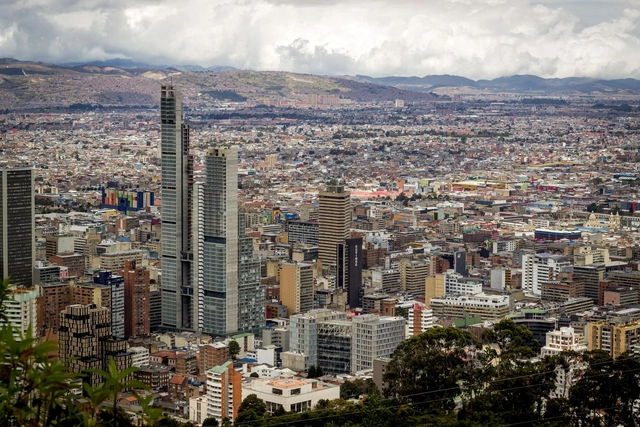
Shortly before taking office in January 2020, Mayor Claudia López committed to redesigning a major arterial road in Bogotá, aiming to transform it into a green corridor for active and sustainable mobility. To do so, the mayor also pledged to promote a planning process with broad public participation—a rather daunting task in a city of nine million people.
Known since the 16th century as Calle Real, Avenida Séptima is widely considered Bogotá's most important thoroughfare, stretching 23 kilometers and traversing the city's eastern zone. It is perhaps the only road that runs through every income bracket in the municipality, from the poorest to the very wealthy. It is also the most hotly debated space in the Colombian capital.
In a past life, I completed a master's degree in semiotics, where I learned to pay attention to the words we choose. For example, open any book on Brazilian architecture and you will find subtitles that help organize our built environment chronologically: Indigenous Architecture, Colonial Brazilian Architecture, Imperial Brazilian Architecture, Brazilian Modern Architecture, Contemporary Architecture in Brazil. Notice the subtle difference: the word *Brazil*, which names this land, appears in every post-colonial period, but is absent from the one representing the original way of building in this place.
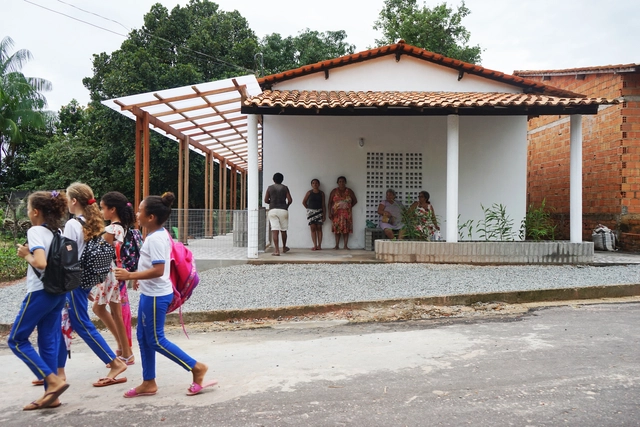
Renovation and Expansion of the Babassu Flour House. Serra - MA, February 2020. Photo by Noelia Monteiro
It is easier said than done, and when it comes to the practice of architecture—an activity heavily conditioned by countless external factors—this statement carries even more weight. Few professionals are willing to help solve problems in remote, relatively isolated communities facing social and environmental vulnerabilities. However, this is precisely the focus of Noelia Monteiro, an Argentine architect working in Brazil who, along with Christian Teshirogi, founded Estúdio Flume in 2015.
Developing projects alongside multidisciplinary teams that include professionals from architecture, engineering, social sciences, geology, and anthropology, the architect's approach is, nonetheless, deeply personal. In fact, it requires a significant degree of community engagement, bringing people close to the design process from the very beginning to completion. The results of this practice have been recognized with major national awards, and more recently, ArchDaily selected Noelia for its list of Best New Practices of 2020.
Photo: Programa de Aceleração do Crescimento (PAC), via VisualHunt.com / CC BY-NC-SA
How is the housing deficit calculated? Did the Minha Casa Minha Vida program improve housing affordability? What is the Onerous Grant of the Right to Build? To answer these and other questions, Caos Planejado hosted Tainá Pacheco and Vanessa Nadalin for a conversation.
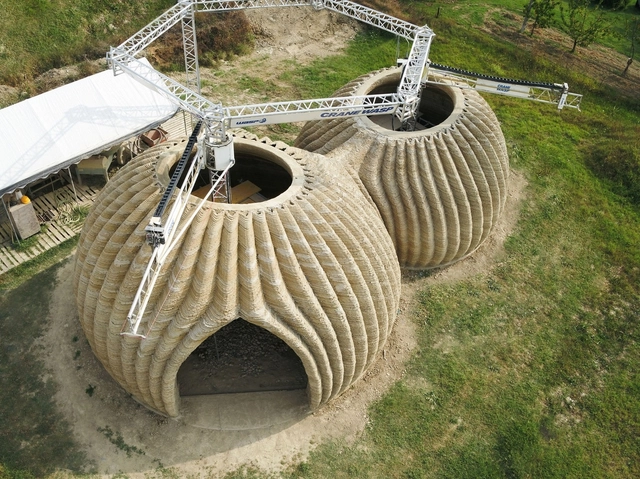
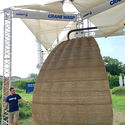
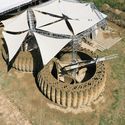
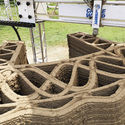
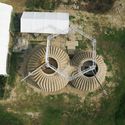
Exponential population growth versus a lack of affordable housing is a challenge affecting urban areas worldwide. To address this issue, the Italian firm Mario Cucinella Architects proposes a new circular housing model: a 3D-printed home made from organic materials.
The prototype uses regionally sourced materials, such as local clay, making it the first printed house of its kind. This reduces emissions from transporting materials and also ensures the building process is zero-waste.
To live in the city and to experience the city is to be open to any and every event. Within a single day, we pass through different places and spatialities, with distinct compositions and tempos. No day is like another, as we are in constant motion, facing a random combination of events that affect both objects and subjects—shaping the spaces we traverse and the perceptions we experience. In light of this reflection, a discussion emerges on the effects of architecture and urbanism beyond the visual realm, linked to the individual's sense of belonging to space and based on urban form and dynamics. How can we grasp the effects of the object on the subject and vice versa? What is the materialized reading of the city as a reflection of societal actions?
https://www.archdaily.com/1127912/urban-fabrics-sao-paulo-society-as-a-reflection-and-extensionCamila Yumi de Campos
As an overwhelmingly hegemonic field in which cisgender white men have historically held, and continue to hold, the majority of prestigious positions—from the leadership of major firms to international accolades like the Pritzker Prize—architectural practice has traditionally rendered invisible the careers and professional experiences of many women architects.
Motivated by the enrollment of a classmate with a disability at the Dona Escolástica Rosa State Technical School (Etec), logistics students at the institution developed a project that could transform public transit in the city of Santos, São Paulo. The project consists of an audio system designed to assist and offer autonomy to passengers who face mobility challenges.
The latest episode of Arquicast features Gabriela de Matos, who was named 2020 “Architect of the Year” by the Institute of Architects of Brazil – Rio de Janeiro Department (IAB-RJ). She is also one of the invited speakers at the 27th World Congress of Architects, organized by UIA2021 RIO.
Videos
Still from "Meu negro", by Ricardo Aleixo. Image: YouTube reproduction
The Terra Preta Cidade collective has published an excerpt of an interview conducted by Natália Alves with Ricardo Aleixo—who is a poet, visual and sound artist, performer, researcher of intermedia poetics, singer, songwriter, essayist, and editor. In this special encounter, Ricardo shared his entanglements with the city, urban space, the body, performance, and racial issues, among other themes.
https://www.archdaily.com/1128208/performancity-interview-with-ricardo-aleixoTerra Preta Cidade






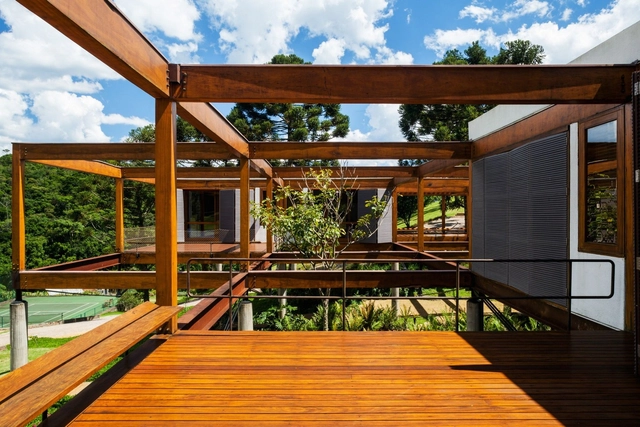
.jpg?1611190059 "Flamboyant House / Perkins+Will. Image © Nelson Kon")



.jpg?1611255930&format=webp&width=640&height=580)


.jpg?1612451460&format=webp&width=640&height=580)
.jpg?1612365973 "Barraca do Bem Viver. Image © Wanny Melo")
.jpg?1612365999 "Barraca do Bem Viver. Image © Wanny Melo")
.jpg?1612366021 "Barraca do Bem Viver. Image © Wanny Melo")
.jpg?1612366053 "Barraca do Bem Viver. Image © Wanny Melo")
.jpg?1612451460)




.jpg?1612895539 "Vale de Margem House / Marlene Uldschmidt. Image: © Fernando Guerra | FG+SG")