1. ArchDaily
  2. News

News

What is bioconstruction?

Subscriber Access | 

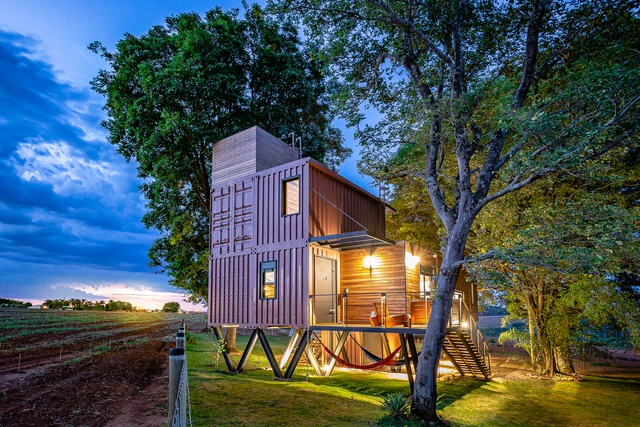
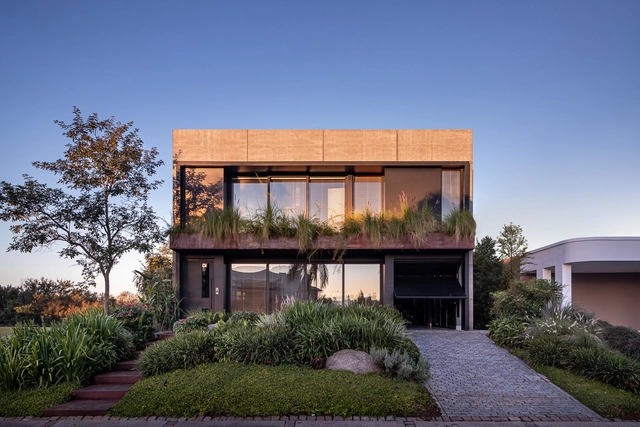
As concerns grow regarding the consequences of human activity on a global scale, the search for lower-impact environmental alternatives across various fields has also become more common. In civil construction—a sector where buildings alone account for 33% of global energy consumption and 39% of greenhouse gas emissions—practices such as bioconstruction point toward a different approach, addressing human needs in a way that is inseparable from nature.

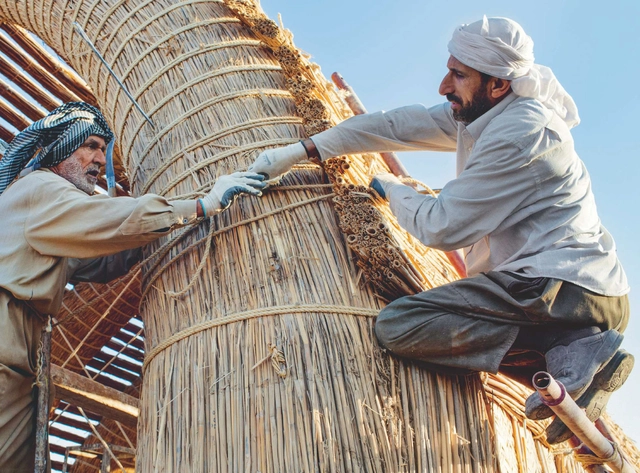
Generally speaking, bioconstruction is understood as the design of sustainable environments using low-impact materials and building techniques, taking into account parameters such as adaptability to local conditions and waste management.
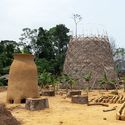
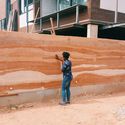
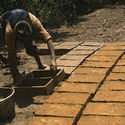
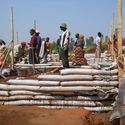
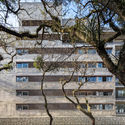
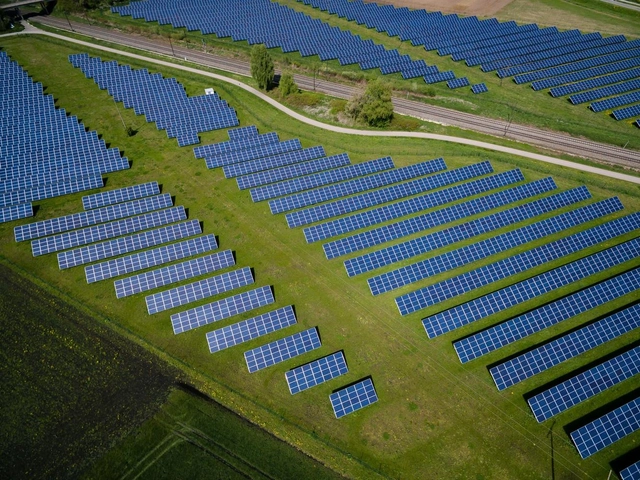
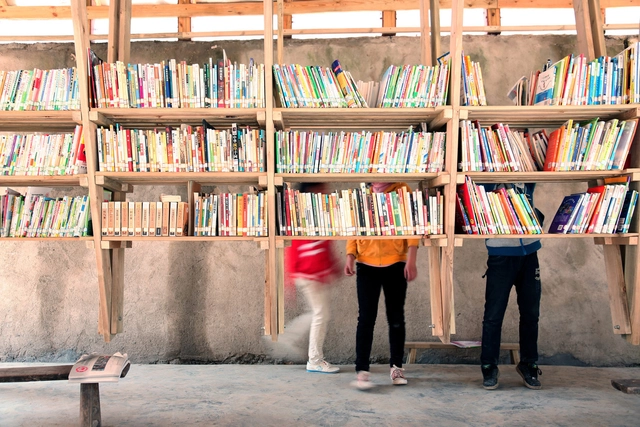
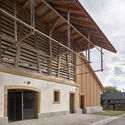
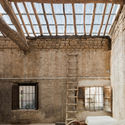
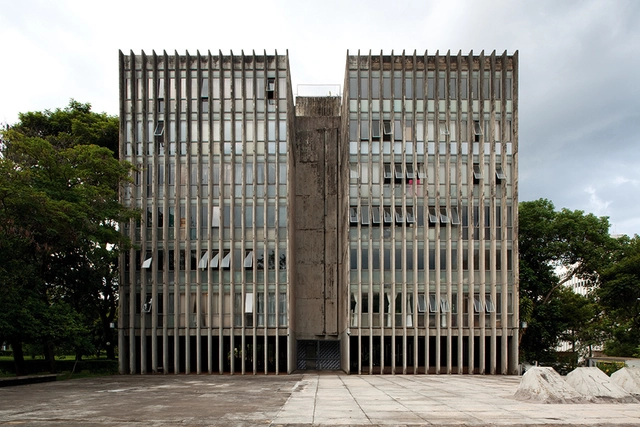
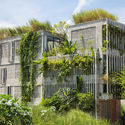
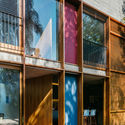
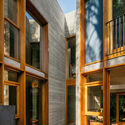
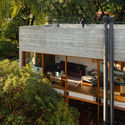
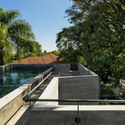
What is bioconstruction? - Image 1 of 4What is bioconstruction? - Image 2 of 4What is bioconstruction? - Image 3 of 4What is bioconstruction? - Image 4 of 4What is bioconstruction? - More Images

Pro-Reforma, a free app to quantify and estimate renovation projects

Small-scale renovations are among the most common projects in Brazil, but that does not mean they are immune to budgeting and specification issues. A useful tool to avoid these headaches is Pro-Reforma, a free web app that automatically specifies, quantifies, and estimates the products and services needed for a renovation project.

ABDI launches free online course on BIM

In October, the Brazilian Agency for Industrial Development (ABDI) launched a free basic online course on BIM (Building Information Modeling). Divided into two modules, the Democratizando BIM course is aimed at all professionals in the architecture, engineering, and construction (AEC) sectors. To register, simply visit the website and fill out the form.

COPAN Renovation: Results of the 5th {CURA} Award

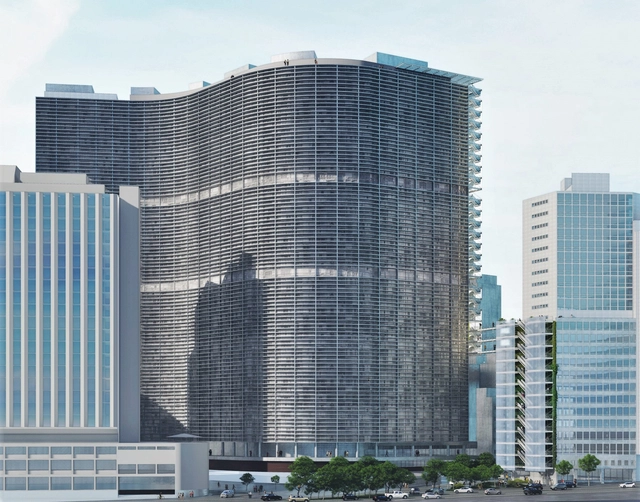
The 5th edition of the {CURA} Award continues its proposal of hosting ideas competitions with themes aligned with current discussions on architecture, the city, and society, always understanding that architecture is an action-based profession. This time, participants were challenged to design the renovation of an apartment in the iconic Copan Building, designed by Oscar Niemeyer in downtown São Paulo.

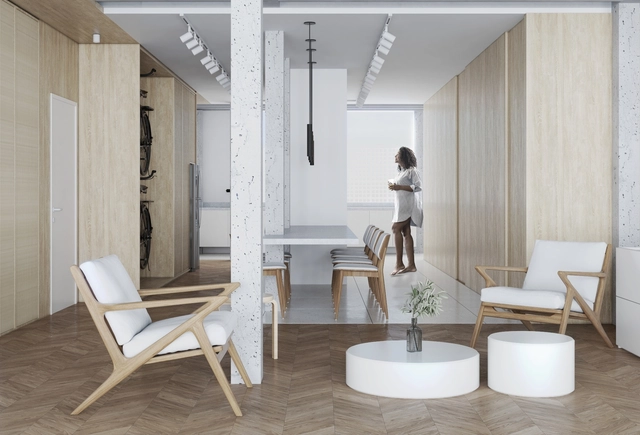
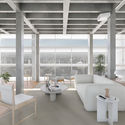
COPAN Renovation: Results of the 5th {CURA} Award - Image 1 of 4COPAN Renovation: Results of the 5th {CURA} Award - Image 2 of 4COPAN Renovation: Results of the 5th {CURA} Award - Image 3 of 4COPAN Renovation: Results of the 5th {CURA} Award - Image 4 of 4COPAN Renovation: Results of the 5th {CURA} Award - More Images+ 12

The ephemerality of the body and space: an invitation to surrender

Subscriber Access | 

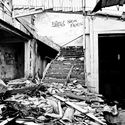
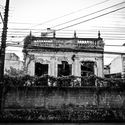
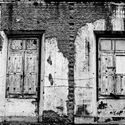
The abandoned city is a classic suspense setting, a place of terror and degeneration, a stimulating blend of danger and freedom. An ambience that ambiguously incites both repulsion and curiosity. A dark, hidden, and marginal space that seems to mourn, in its haunting silence, the void left by those who once lived there. Among its fragments scattered across the floor, fear, discovery, and the inevitable nostalgia for a past that is not necessarily one's own recreate stories of abandonment. Spaces that once had names, dates, and functions, now slowly decomposing in the solitude of the present.

The ephemerality of the body and space: an invitation to surrender - Image 1 of 4The ephemerality of the body and space: an invitation to surrender - Image 2 of 4The ephemerality of the body and space: an invitation to surrender - Image 3 of 4The ephemerality of the body and space: an invitation to surrender - Image 4 of 4The ephemerality of the body and space: an invitation to surrender - More Images+ 2

What the diary of a favela resident reveals about urban poverty in Brazil

Subscriber Access | 

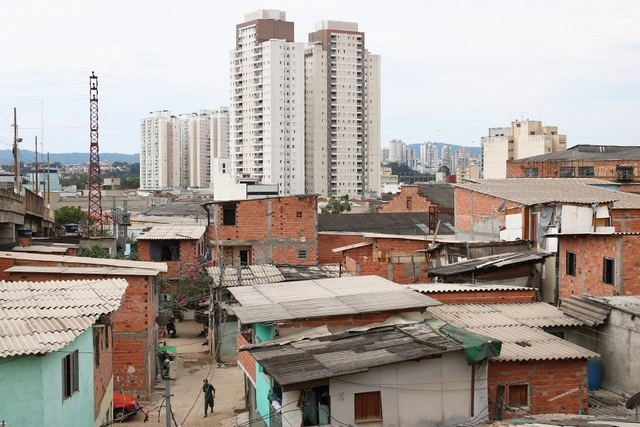
In the book “Quarto de Despejo – Diário de Uma Favelada” (published in English as Child of the Dark), Carolina Maria de Jesus recounts, in poetic and dramatic everyday language, the harsh reality of life as a waste picker living in the former Canindé favela in São Paulo, which at the time had about 50,000 residents.

Published in 1960, her text is considered a milestone in Black women's writing in Brazil and has been translated into more than thirteen languages. Carolina's entries offer a unique perspective on the extremely precarious living conditions of a favela resident in late-1950s Brazil—a narrative previously ignored or simply unknown to the general public, let alone to policymakers.

Ícaro Jardins da Graciosa Building by Studio Arthur Casas Receives the Rethinking The Future Award

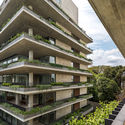
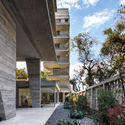
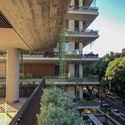
The Ícaro Jardins da Graciosa Building, designed by Studio Arthur Casas, was recognized in the Rethinking The Future Awards, an initiative that honors architecture and design projects from around the world across more than 40 categories. Located in Curitiba, the building features 21 apartment units distributed among three exposed concrete towers.

Competing in the residential (over five floors) category, the building designed by Casas features a facade defined by circulation pathways that double as balconies, emphasizing the towers' horizontality. With landscaping by Renata Tilli, these horizontal lines are accentuated by the lush greenery of plants grown in planters along the perimeter of each floor.

Ícaro Jardins da Graciosa Building by Studio Arthur Casas Receives the Rethinking The Future Award - 1 的图像 4Ícaro Jardins da Graciosa Building by Studio Arthur Casas Receives the Rethinking The Future Award - 2 的图像 4Ícaro Jardins da Graciosa Building by Studio Arthur Casas Receives the Rethinking The Future Award - 3 的图像 4Ícaro Jardins da Graciosa Building by Studio Arthur Casas Receives the Rethinking The Future Award - 4 的图像 4Ícaro Jardins da Graciosa Building by Studio Arthur Casas Receives the Rethinking The Future Award - More Images

Solar power is the cheapest source of electricity in history

Solar energy is officially the cheapest way to generate electricity today, according to the International Energy Agency (IEA) in its newly released annual World Energy Outlook 2020 report. “With sharp cost reductions over the past decade, solar PV is consistently cheaper than new coal- or gas-fired power plants in most countries, and solar projects now offer some of the lowest electricity costs ever seen,” the document states.

The Black movement and the Black women's movement in Brazilian cities

Since colonial times in Brazil, Black people have organized in resistance to the slave-owning and colonial regime. Brotherhoods, quilombos, famílias de santo. The Black press, domestic workers' associations, the Brazilian Black Front, and the Black Experimental Theater. Blocos-afro, the Unified Black Movement (MNU), literary groups, Black women's organizations, and international fronts. A political activism interwoven with the arts and spirituality that has brought us to where we are today.

Guilherme Wisnik talks with Bianca Santana, a journalist, writer, PhD in information science, and holder of a master's degree in communication from the University of São Paulo. Santana is the author of Quando me descobri negra, a columnist for ECOA-UOL and Gama magazine, and a member of UNEafro, one of the organizations that make up the Black Coalition for Rights.

Recommended reading for anti-racist professional practice

Subscriber Access | 
Recommended reading for anti-racist professional practice - Image 7 of 4

Following the digital panel “How to be anti-racist in professional practice,” the collective Arquitetas inVisíveis released a short guide outlining fundamental points for building an equitable and anti-racist profession. The guide includes a selection of texts that help navigate the social landscape and offer ways to address racism, not only within architecture and urbanism but in life as a whole.

Decentralizing São Paulo: A Difficult Promise to Keep

Subscriber Access | 

São Paulo is immense and full of challenges. With twelve million inhabitants, Latin America's largest city struggles to provide a good quality of life for its residents. Traffic congestion is relentless. Public transit is still far from ideal. The Expanded Center concentrates a volume of jobs disproportionate to its population. Unsurprisingly, the daily commute is one of the main complaints of paulistanos.

Decentralizing São Paulo: A Difficult Promise to Keep - 1 的图像 4Decentralizing São Paulo: A Difficult Promise to Keep - 2 的图像 4Decentralizing São Paulo: A Difficult Promise to Keep - 3 的图像 4Decentralizing São Paulo: A Difficult Promise to Keep - 4 的图像 4Decentralizing São Paulo: A Difficult Promise to Keep - More Images+ 5

From Barns to Homes: Adaptive Reuse Projects in Europe's Rural Landscapes

Subscriber Access | 

From Barns to Homes: Adaptive Reuse Projects in Europe's Rural Landscapes - 1 的图像 4From Barns to Homes: Adaptive Reuse Projects in Europe's Rural Landscapes - 2 的图像 4From Barns to Homes: Adaptive Reuse Projects in Europe's Rural Landscapes - 3 的图像 4From Barns to Homes: Adaptive Reuse Projects in Europe's Rural Landscapes - 4 的图像 4From Barns to Homes: Adaptive Reuse Projects in Europe's Rural Landscapes - More Images+ 36

The barn, closely related in nature to silos and sheds, is an essential building typology in rural and agricultural landscapes. Featuring highly simple and functional design solutions, barns serve specifically as storage spaces for large volumes of livestock feed and are commonly characterized by high ceilings, generous spans, and relative spatial flexibility, protecting hay and grain from the sun, rain, moisture, and animals.

Betoneira, a podcast about architecture, people, and cities

What is comfort in living? How does the city serve as a stage for your life? How do gender and race issues influence the way you walk down the street at night? Why is the villain's house always cooler than the hero's? These are some of the topics discussed on Betoneira, a podcast hosted by architects André Scarpa, Marcelo Barbosa, and Paula Otto.

The core premise of Betoneira is to cover a bit of everything in order to speak deeply about architecture, people, and cities, blending a wide range of topics, guests, opinions, theories, and memes through the unique lens of each of the three hosts.

Altamira makes the e-book "Women Architects and Architectures in 20th-Century Latin America" available for free.

Altamira Editorial has made the book Arquitetas e arquiteturas na América Latina do século XX available for free download on its website. Authored by Ana Gabriela Godinho Lima, the publication features a "survey of the work of 20th-century Latin American women architects in the field of theoretical and practical building production."

Contemporary architecture in communist countries: projects in Cuba, Laos, Vietnam, and China

Subscriber Access | 

"The world is highly polarized." This is a phrase we have all heard recently. While this is an undeniable fact, there have been times when the planet was just as, if not more, polarized than it is today. In particular, the period between the end of World War II and the early 1990s was marked by intense tension between the capitalist and socialist blocs, leaving deep marks on many countries and societies. The dismantling of the latter, symbolically represented by the fall of the Berlin Wall, dissipated the tension but did not eradicate communism, which remains the political system in several countries today.

There are currently six countries under a communist regime: China, North Korea, Cuba, Laos, Vietnam, and Transnistria. Despite differences in their economic systems—China, for example, has an economy considered mixed by some experts, with regions regulated by a capitalist market system—these countries also clearly present social, cultural, and geographical particularities that are reflected in their cities and architecture.

Contemporary architecture in communist countries: projects in Cuba, Laos, Vietnam, and China - Image 1 of 4Contemporary architecture in communist countries: projects in Cuba, Laos, Vietnam, and China - Image 2 of 4Contemporary architecture in communist countries: projects in Cuba, Laos, Vietnam, and China - Image 3 of 4Contemporary architecture in communist countries: projects in Cuba, Laos, Vietnam, and China - Image 4 of 4Contemporary architecture in communist countries: projects in Cuba, Laos, Vietnam, and China - More Images+ 9

Brazilian students win Latin American steel construction award

Geared toward Latin American architecture students, the Acero Prize aims to promote and encourage initiatives that complement pedagogical models, fostering innovative architectural ideas that use steel as a raw material. This year's edition, themed "Sustainable Cities and Communities," awarded first place to a team of two Brazilian students from FAUUSP.

“Architecture that does not touch the ground” is the name of the proposal developed by Augusto Longarine and Luiz Sakata, advised by Professor Luciano Margotto. With the same project, they won the 13th CBCA Competition (Brazilian Center for Steel Construction), the national stage preceding the Alacero competition. See the project below, accompanied by the project description written by the students.

Brazilian students win Latin American steel construction award - Image 1 of 4Brazilian students win Latin American steel construction award - Image 2 of 4Brazilian students win Latin American steel construction award - Image 3 of 4Brazilian students win Latin American steel construction award - Image 4 of 4Brazilian students win Latin American steel construction award - More Images+ 25

Bamboo and mud community center built by women is awarded in Bangladesh

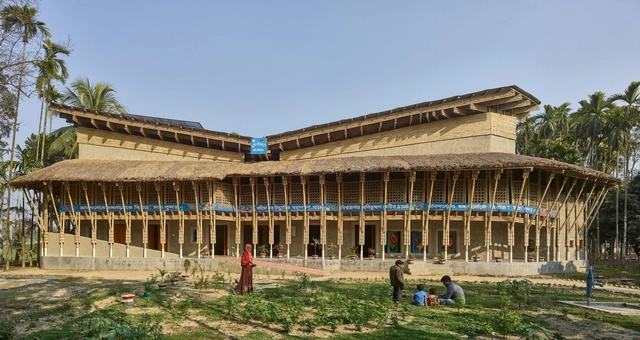
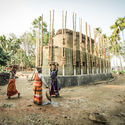
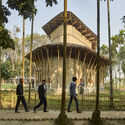
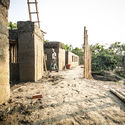
An impressive building has risen in Rudrapur, a village in northern Bangladesh. Local techniques and materials were used to shape a space designed to meet a critical need. Named the Anandaloy Center, its first floor functions as a care center for people with disabilities.

The project won the 2020 OBEL Award, an international prize that honors outstanding architectural contributions to human development worldwide.

Bamboo and mud community center built by women is awarded in Bangladesh - Imagem 1 de 4Bamboo and mud community center built by women is awarded in Bangladesh - Imagem 2 de 4Bamboo and mud community center built by women is awarded in Bangladesh - Imagem 3 de 4Bamboo and mud community center built by women is awarded in Bangladesh - Imagem 4 de 4Bamboo and mud community center built by women is awarded in Bangladesh - More Images+ 5

Casa 239 by UNA Arquitetos Among the Finalists for the Pan-American Award of the 2020 Quito Biennial

Casa 239, designed by the São Paulo-based office UNA Arquitetos, has been selected as a finalist for the Pan-American Prize of the 2020 Quito Architecture Biennial. The only Brazilian project on the extensive shortlist, it was led by architects Fernanda Barbara and Fabio Valentim, now partners at UNA barbara e valentim, and is competing for the final award in the Single-Family Housing category.

Casa 239 by UNA Arquitetos Among the Finalists for the Pan-American Award of the 2020 Quito Biennial - Image 1 of 4Casa 239 by UNA Arquitetos Among the Finalists for the Pan-American Award of the 2020 Quito Biennial - Image 2 of 4Casa 239 by UNA Arquitetos Among the Finalists for the Pan-American Award of the 2020 Quito Biennial - Image 3 of 4Casa 239 by UNA Arquitetos Among the Finalists for the Pan-American Award of the 2020 Quito Biennial - Image 4 of 4Casa 239 by UNA Arquitetos Among the Finalists for the Pan-American Award of the 2020 Quito Biennial - More Images+ 2

Architecture of reuse: the advantages of building with shipping containers

Subscriber Access | 

The use of shipping containers as a design solution has emerged as a strong trend in contemporary architectural practice. Adapting this utilitarian object, originally designed for cargo transport, into habitable spaces capitalizes on features like its modular capacity, standardized dimensions, and an inherent industrial aesthetic, appealing to many market segments.

Brazilian Houses: 25 Projects with Front Gardens

Brazilian Houses: 25 Projects with Front Gardens - Image 1 of 4Brazilian Houses: 25 Projects with Front Gardens - Image 2 of 4Brazilian Houses: 25 Projects with Front Gardens - Image 3 of 4Brazilian Houses: 25 Projects with Front Gardens - Image 4 of 4Brazilian Houses: 25 Projects with Front Gardens - More Images+ 22

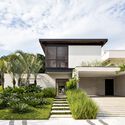
There are countless possibilities when designing the transition between public and private spaces. In residential architecture, the landscaping of the main facade plays a key role in this regard. By integrating different elements such as vegetation, paving, steps, and even artwork, it is possible to create a composition that not only highlights the architecture but is also generous to the public space.

MASP presents the preview of a documentary on the life of Álvaro Siza

Álvaro Siza, Portugal's first Pritzker Laureate, is undeniably a figure of major importance in the history of contemporary architecture, with projects that have reshaped the urban landscapes of numerous cities around the world. While his name and work are widely known, Siza is a highly private and introspective person who prefers to keep his personal life out of the spotlight.

Directed by producer and director Augusto Custódio, the documentary SIZA offers a more intimate and personal look at the renowned Portuguese architect. The film covers his childhood, his relationship with his wife, his passion for sculpture, and his admiration for classical music, exploring his influences and professional journey.

Eladio Dieste and the art of designing structures

Subscriber Access | 

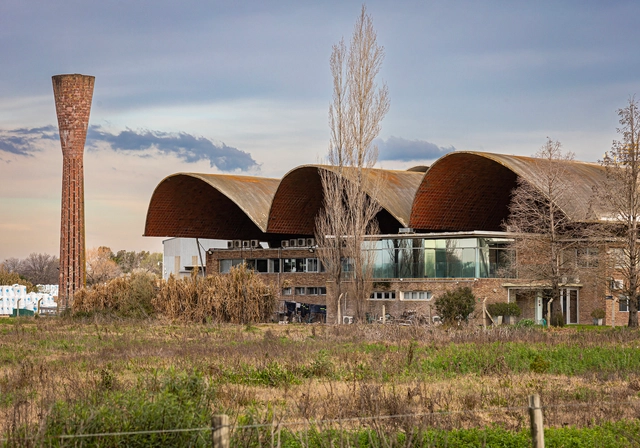
Far beyond the technical knowledge of his engineering background, Eladio Dieste (1917-2000) developed a rare architectural sensibility. He was a pioneer and master of reinforced masonry—essentially a relatively thin "shell" system in which ceramic blocks are compressed, steel bars are tensioned, and concrete binds the assembly together. Structural strength is enhanced through the design of complex spatial geometries that respond precisely to applied loads, thereby minimizing material use. This allows large spans and cantilevers to be achieved, while elegantly transferring loads to the ground.

Eladio Dieste and the art of designing structures - Imagem 1 de 4Eladio Dieste and the art of designing structures - Imagem 2 de 4Eladio Dieste and the art of designing structures - Imagem 3 de 4Eladio Dieste and the art of designing structures - Imagem 4 de 4Eladio Dieste and the art of designing structures - More Images+ 40

Sordo Madaleno Arquitectos Opens New Office in the Heart of London

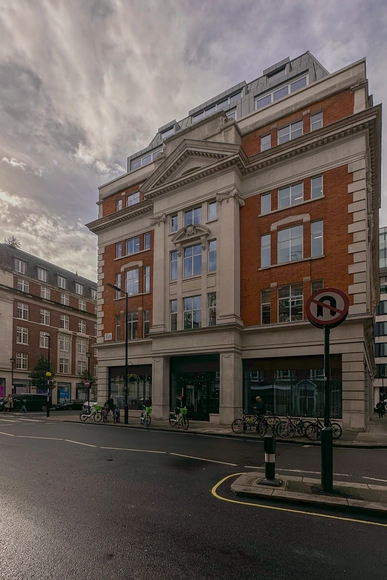
Mexican firm Sordo Madaleno Arquitectos has announced the opening of its new office in the heart of London. This strategic move for its global practice will establish an international presence in a global capital, bringing the firm closer to its clients worldwide.

Six in ten Brazilians fear heavy rain forecasts, survey shows

Subscriber Access | 

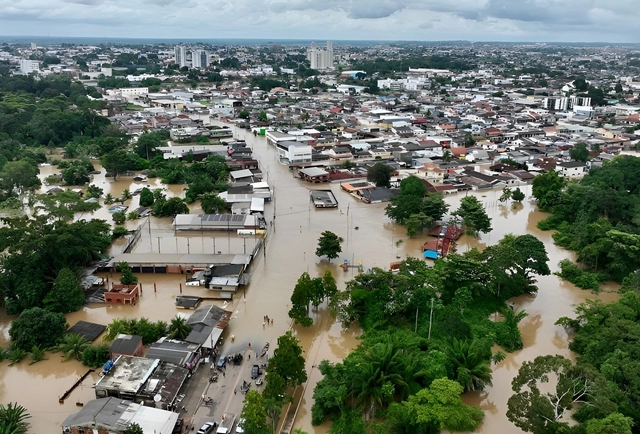
When heavy rains are forecast for their areas, 64% of Brazilians feel afraid. For 76% of those surveyed, cities are unprepared to face heavy rains, storms, or flooding. The data comes from a first-of-its-kind survey conducted by the Boticário Group Foundation for Nature Protection, in cooperation with UNESCO in Brazil, and with support from the National Association of Municipalities and the Environment (ANAMMA) and the Urban Bioconnection Alliance. The full results of the study will be presented on December 2 during the 28th UN Climate Change Conference, COP28, taking place in Dubai, United Arab Emirates.

Six in ten Brazilians fear heavy rain forecasts, survey shows - Image 1 of 4Six in ten Brazilians fear heavy rain forecasts, survey shows - Image 2 of 4Six in ten Brazilians fear heavy rain forecasts, survey shows - Image 3 of 4Six in ten Brazilians fear heavy rain forecasts, survey shows - Image 4 of 4Six in ten Brazilians fear heavy rain forecasts, survey shows - More Images+ 2

You've started following your first account!

Did you know?

You'll now receive updates based on what you follow! Personalize your stream and start following your favorite authors, offices and users.