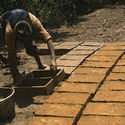
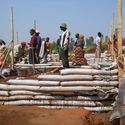
As concerns grow regarding the consequences of human activity on a global scale, the search for lower-impact environmental alternatives across various fields has also become more common. In civil construction—a sector where buildings alone account for 33% of global energy consumption and 39% of greenhouse gas emissions—practices such as bioconstruction point toward a different approach, addressing human needs in a way that is inseparable from nature.
Generally speaking, bioconstruction is understood as the design of sustainable environments using low-impact materials and building techniques, taking into account parameters such as adaptability to local conditions and waste management.