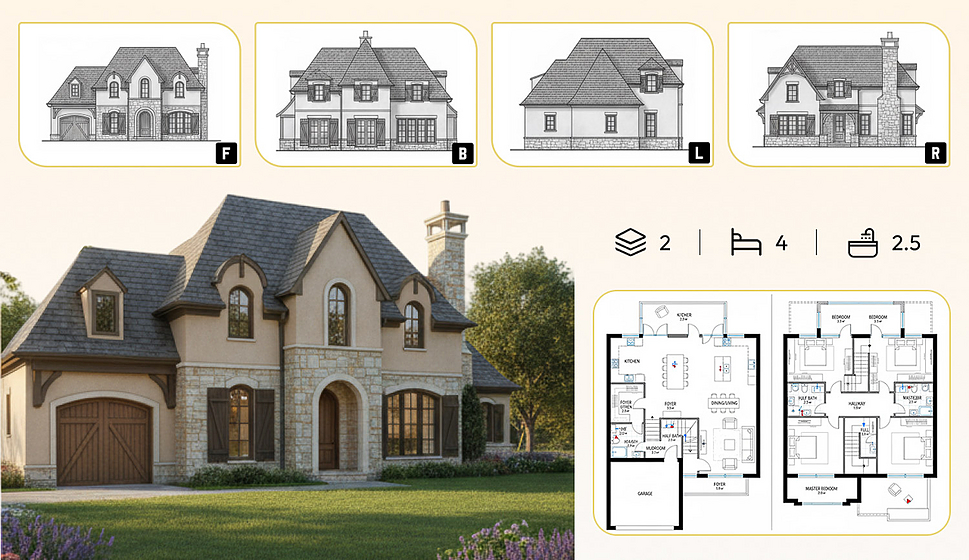
This guide covers a workflow that moves from project parameters to generated floor plans, 3D perspective views, exterior design exploration, and site context visualization, using AI tools in place of preliminary CAD and rendering work.
This guide covers a workflow that moves from project parameters to generated floor plans, 3D perspective views, exterior design exploration, and site context visualization, using AI tools in place of preliminary CAD and rendering work.
.jpg?1567697293&format=webp&width=640&height=580)
Cities that absorb rainwater and allow it to follow its natural course. It should be simple, yet we chose to channel our waterways, preventing nature from doing its part: absorbing and purifying. For Chinese architect Kongjian Yu, this is the key to solving one of the greatest challenges facing contemporary major urban centers: flooding.
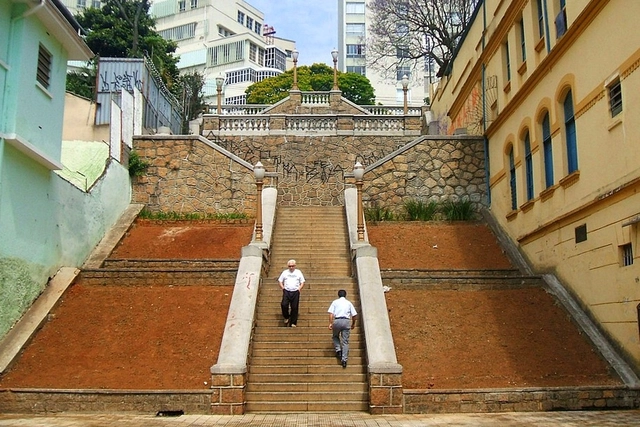
There is no doubt that preserving historical, artistic, and architectural heritage is a fundamental goal for building a just city. It is the right of all citizens, both present and future generations, to know and enjoy our collective memory and culture. However, for this to actually happen, both a discerning eye and a comprehensive vision of the city are essential.
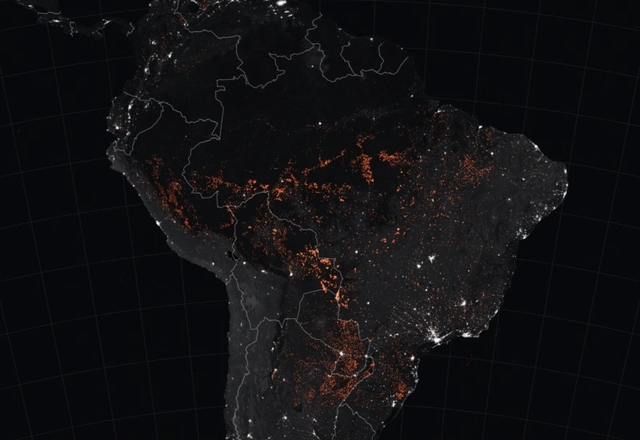
Over the past week, thousands of active fires in the Brazilian Amazon captured global attention in the press and on social media, where the hashtag #PrayForAmazonia was mentioned more than 150,000 times in a single day. But what can satellite data tell us about what is actually happening in Brazil's forests?
-U204285124265iRC-1200x800_GP-Web.jpg?1549280258&format=webp&width=640&height=580)
Brazilian architecture and urbanism organizations have published a technical note regarding the failure of the Vale mining company dam in the city of Brumadinho, Minas Gerais, on January 25 of this year. Released last Friday, the document outlines ten points that comprise a preventive action strategy aimed at avoiding further tragedies and "protecting and saving lives."

In this doctoral thesis, architect Luciano Margotto, advised by Prof. Dr. Mônica Junqueira de Camargo, presents five lessons from architecture: Austerity, Generosity, Freedom, Public, and Spatiality. In his work, the author investigates the works of architects such as Carlos Millan, Marcello Fragelli, Eduardo Souto de Moura, Oscar Niemeyer, Vilanova Artigas, Fábio Penteado, Lucio Costa, Lina Bo Bardi, Paulo Mendes da Rocha, Brasil Arquitetura, Gabriel Guarda, Martín Correa, and Alvaro Siza. Below is the abstract of the thesis defended at FAUUSP in 2016.

Starting tomorrow, April 8, the London city government will implement strict emission rules for pollutants and particulate matter in the central area of the city. The goal is to reduce air pollution levels. According to London Mayor Sadiq Khan, the measure could help reduce the incidence of lung disease and premature deaths related to air pollution. Official estimates suggest that around 9,000 people die annually in the city from pollution-related illnesses.
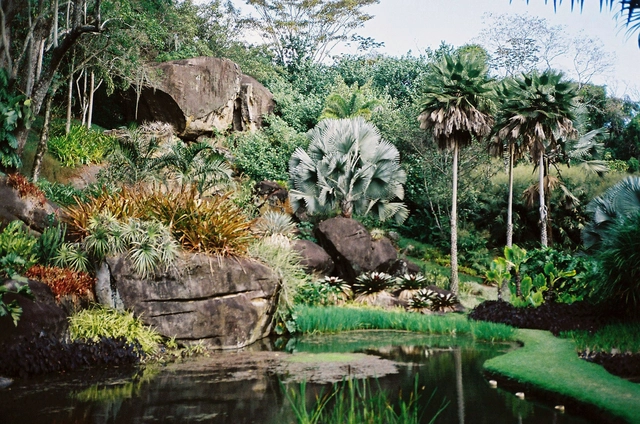
The curatorial team of the XII São Paulo International Biennial of Architecture, comprising architects Vanessa Grossman, Charlotte Malterre-Barthes, and Ciro Miguel, has been named a recipient of the competitive 2019 Grants to Individuals from the prestigious, Chicago-based Graham Foundation for Advanced Studies in the Fine Arts. The grant was awarded for the publication of the book Todo dia/ Everyday, the result of the work and research that culminated in the theme of the XII São Paulo International Biennial of Architecture. The bilingual volume will be published by Ruby Press, a Berlin-based publisher specializing in books on architecture, art, and other cultural practices engaged in the production of space in contemporary society.

As a tribute to Mexico's rich and diverse chromatic palette, the Museo del Objeto del Objeto (MODO) presents its new temporary exhibition: “Mexico in Color,” curated by Ana Elena Mallet and Mariano Marroquín. The exhibition offers a cultural review of color perception in Mexico and its impact on art and design. One of the first experiences visitors will encounter is the conceptualization of color in folk art to forge identity. Subsequently, this element is adopted as a defining feature in the arts and, ultimately, as a driving force for the country's modernization.

The Dr. Gutiérrez Hospital and the Specialty Outpatient Medical Center of Santa Fe (CEMAFE) recognize the work of Mario Corea and his team, having received the ex–aequo Award from the Central Society of Architects of Argentina, the First Prize ARQ FADEA 2018, and the ORO Gran Premio Nacional.
Utilizing a new typological system, the projects accommodate potential future transformations without altering the buildings' intrinsic characteristics, such as circulation and structure. Flexibility, sustainability, the rational use of resources, and environmental impact assessments are among the core design premises of these evolutionary hospitals.
Learn more about the projects in the authors' own words.

Felipe Camus, a photographer who has documented ELEMENTAL's project, shares his reflections on Ochoquebradas.
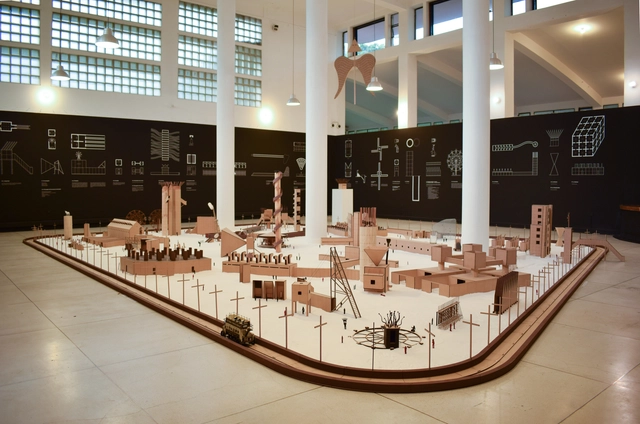
The exhibition Victims: A Work by John Hejduk materializes the unbuilt work of the New York architect, presented here for the first time by the Leopoldo Rother Architecture Museum at the National University of Colombia. Alongside the scale model of the project, the 67 figures are accompanied by narratives, illustrations, and a short film titled Structures of a Wound.

“On Growth and Form”, written by biologist and mathematician D’Arcy Wentworth Thompson [1860-1948], is considered the greatest work of prose in twentieth-century science, highlighting the role of physics and mechanics in determining the form and structure of organisms. The book immediately became a classic for exploring natural geometries in the dynamics of growth and physical processes. Thompson reveals himself to be a great scientist, sensitive to the fascination and beauty of the natural world, writing in a style that led the specialized press to call his work “as much good literature as science; a discourse on science as if it were a matter of humanity.”

The firms Bruno Cabral Arquitetura, RGB Estudio and Jakelyne Martins Arquitetura were awarded second place in the national competition for the new headquarters of the Association of Engineers and Architects of Sorocaba (AEAS). Discover the proposal below, accompanied by the project description.

Portuguese firm MASS lab, led by architects Diogo Rocha, Duarte Fontes, and Lourenço Rodrigues, has been announced as the winner of the Ideas Competition for the Former Monte Pedral Barracks, organized by the Porto City Council, Portugal. The winning design combines a new network of public spaces with a variety of housing typologies, forming a sort of archipelago in the middle of the city: a set of urban islands that structure the urban fabric, where the relationship of proximity prioritizes the space in-between—a space that will be filled by time and people.

Developed by researchers from the Federal Universities of Rio de Janeiro (UFRJ) and Bahia (UFBA), Cronologia do Pensamento Urbanístico is an online platform active since 2003 that brings together historical events, projects, key facts, and publications related to the history of urbanism in Brazil and worldwide.
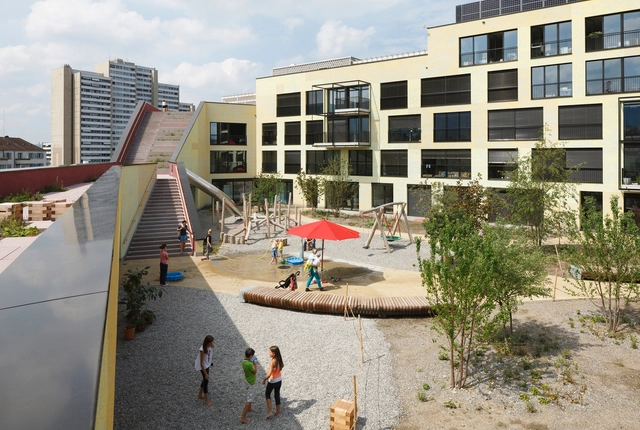
The magazine Solidarity Housing Production: An International Overview was launched on Monday, November 25, at the opening of the National Seminar on Technical Assistance for Social Interest Housing. The publication compiles the main contributions from the event of the same name, held in July 2018. Organized by architects and urban planners Luciana Ximenes and Thais Velasco, the magazine was produced by CAU/RJ and the Observatório das Metrópoles (Ippur/UFRJ).

The second edition of the award, a partnership between the Tomie Ohtake Institute and Leroy Merlin, has extended its registration deadline. Until October 15, university students from any field can submit design projects related to product, furniture, fashion, interiors, landscape, web, graphic, and service design, among others, under the theme CIRCULAR.
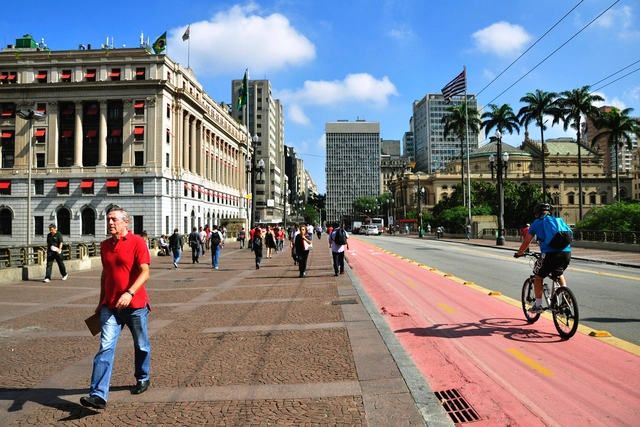
Five Brazilians die in traffic accidents every hour. While highly critical statistics like this can spark positive reactions, they are not always enough to change reality on their own. However, knowing that in the city of São Paulo intersections concentrate more accidents per kilometer, and that these rose by 5% from 2017 to 2018, provides decision-makers with the concrete data needed to implement measures to reduce these numbers. Acting on the most dangerous intersections will save lives.

In the popular imagination, *cortiços* (tenement houses) represented the worst of urban housing in Brazilian cities. Deeply rooted in the national culture and immortalized in Aluísio Azevedo’s classic novel, *cortiços* were depicted as unsanitary, dilapidated dwellings where disease proliferated, the margins of society lived, and landlords exploited tenants with extortionate rents.

A quality public transit system does not depend on buses alone: its overall quality is also directly linked to adjacent elements—such as bus stops. In all cities participating in the QualiÔnibus Benchmarking Group, bus stops were identified by the public as one of the most problematic components. But what can cities do to improve them?
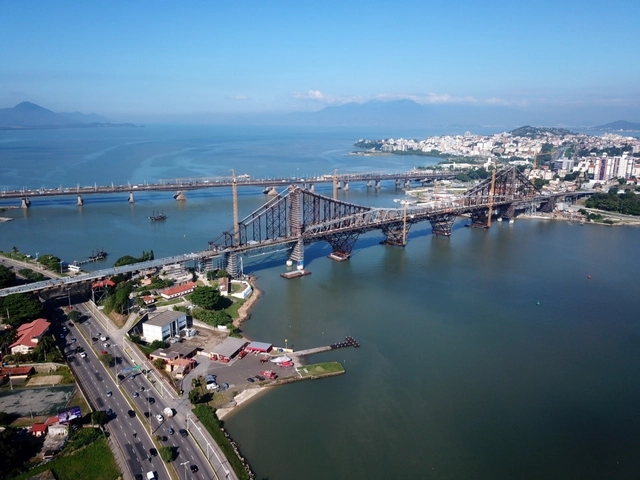
The City of Florianópolis and the Santa Catarina State Government plan to inaugurate the first phase of the urban redevelopment project for the famous Hercílio Luz Bridge and its surroundings by the end of the year. Named Ponte Viva: Hercílio Luz Para as Pessoas (Living Bridge: Hercílio Luz for People), the project encompasses not only the restructuring of the iconic landmark as road infrastructure, but also its activation for other uses, such as sports, leisure, and culture.

Quacquarelli Symonds (QS) has released the 2019 edition of its annual ranking of the world's top universities in the field of architecture. This year, UCL (University College London) took the lead, a position held by the Massachusetts Institute of Technology (MIT) in the United States for the past four editions.
In Latin America, institutions from Chile, Brazil, and Mexico occupy the top three spots, respectively. See the top 10 below:

The Reasons Offsite, an exhibition on modular and prefabricated architecture, was created in Portugal by the studio SUMMARY and is traveling around the world. The exhibition has been shown in Albania (at Tirana Architecture Week, in September 2018) and in the United States (at the Salt Gallery of the Boston Society of Architects, in March 2019). It now has two more editions confirmed for this year, in Edinburgh and Weimar, the latter as part of the Bauhaus centenary celebrations.
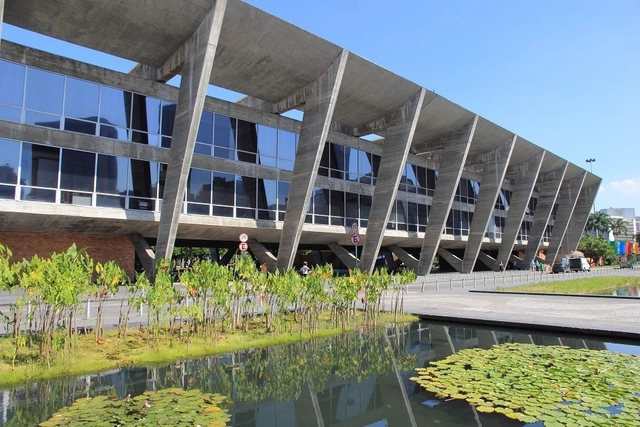
Rio is the World Capital of Architecture. The title was awarded by the United Nations Educational, Scientific and Cultural Organization (UNESCO) on Friday morning, January 18, during a ceremony held at the organization's headquarters in Paris, and stems from the hosting of the World Congress of Architects in Rio in 2020. This is the first time a city has received this designation—established last year through a partnership between UNESCO and the International Union of Architects (UIA).