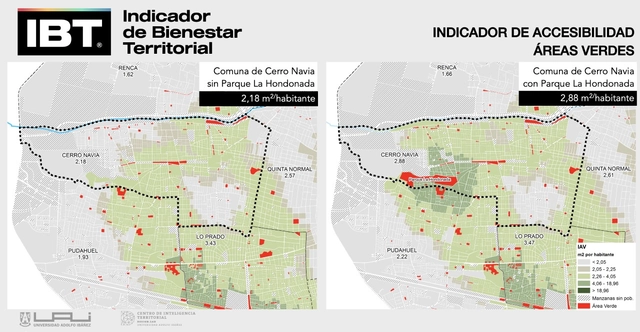
When we hear headlines like "the city must have fair density" or "15-minute neighborhoods," time and density are just numbers. However, it is essential to understand that they remain only numbers until they are contextualized within the lived experience of people in their territory. We can no longer postpone the obvious reality that a number, a standard, a benchmark, or a goal is merely a tool to facilitate the necessary conversations regarding the management and governance of our territorial environments.
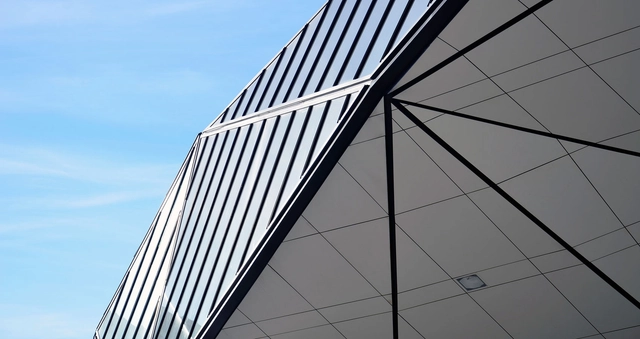
Fuel Station + McDonalds / Khmaladze Architects. Image Cortesía de Fundermax
The reality of an architectural project begins to take shape when the work is materialized. For this reason, the task of specifying the products to be used becomes highly relevant within the creative process. When starting a project, architects often conduct a study of references to find inspiration for both the conceptualization of the work and its aesthetic, taking advantage of the vast visual content available on digital networks, which allows them to explore various application cases. This research is useful for understanding the final image one wishes to achieve; however, it is necessary to seek guidance from technical support teams to select products that ensure such an end is reached.
After years of discussion, the fixed connection between the Isla Grande de Chiloé and the Chilean mainland is becoming a reality. Expected to be completed in 2025, the Chacao Bridge will be a 2,750-meter-long suspension structure spanning the Chacao Channel, specifically connecting Punta Coronel to Punta Gallán. Currently, crossing to the island takes approximately 20 minutes by ferry, a service often subject to delays due to weather conditions. The bridge will reduce this transit time to just 3 minutes, regardless of external factors.
The bathroom is an essential space for any type of construction. The Royal Spanish Academy defines it as "a room in a building with a sink, shower, bathtub, toilet, and other sanitary fixtures." This definition establishes that it is a functional space with a specific program, which, consequently, can be easily standardized. As these spaces have practically uniform dimensions, the installation of prefabricated bathrooms in various types of buildings is becoming increasingly common. These modular units serve as an excellent alternative when opting for a fast, cost-effective, and efficient construction method.
Founded by architect Marina Canhadas in 2018, the practice [entre escalas] emerged from the intersection of professional practice, academic research, and international experience. With a career shaped by competitions, collaborations, and tenures at firms in Brazil and Mexico, Marina has consolidated an approach that values context and building history, particularly in projects dealing with pre-existing structures—one of the firm's primary areas of focus.
[entre escalas]' work stands out for its sensitivity to time and building memory. Renovations of historic townhouses, such as Casa Saracura and Casa Apiacás, reveal a kind of architectural archaeology that seeks to recover original techniques, materials, and even natural flows, reinterpreting these elements to foster new possibilities of use and connection with the surroundings. The act of removing layers—both physical and symbolic—is seen as a way to reveal hidden histories, connecting past and future.
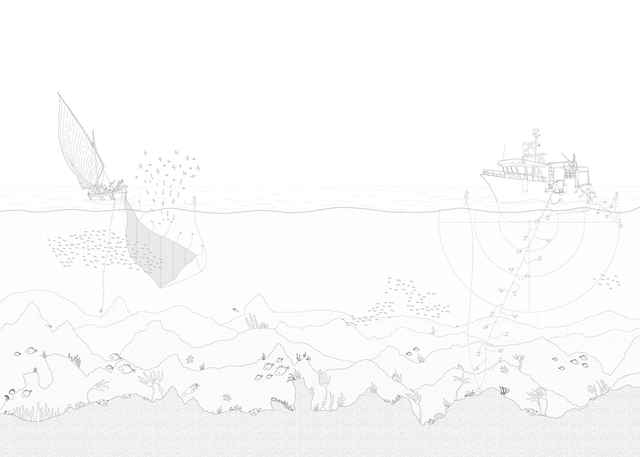
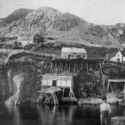
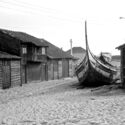
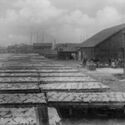
What can a cod offer to architecture? Or rather, what lessons about the environment and human settlements can we learn from the history of fishing? This unlikely question lies at the heart of the book Arquitetura do Bacalhau, by André Tavares and Diego Inglez de Souza, published by Dafne Editora and recently released in Brazil.
In the following interview, we speak with Tavares about the infrastructures linked to cod fishing and their relationship with territory, labor, and architectural production. Through an original approach—connecting architecture, ecology, fish physiology, and industrial history—, the authors propose a reading of the built environment anchored in the ecosystems that sustain it. Far from being a nostalgic look at the past, the research points to the urgency of rethinking architecture in the context of ongoing environmental transformations, showing how human constructions shape and are shaped by natural marine ecosystems.
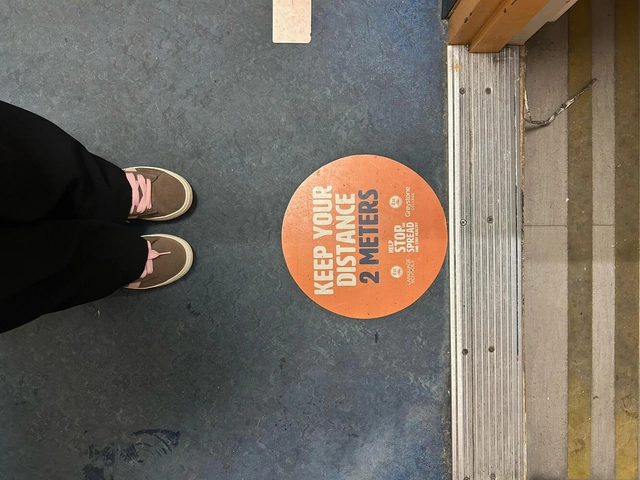
Social distancing sticker at a university in Canada. Source: Ana Laura Pavin, 2025
Today we live in a post-pandemic world, where human connections and our awareness of the fragility of existence have been subtly redesigned. More than just habits, it was urban and architectural space itself that learned to breathe differently, striving to accommodate an uncertain era. Today, we walk in the serenity of the "almost normal," yet the scars of that time still whisper through the streets, shapes, and silences—delicate survivors of a recent past that insists on remaining.
https://www.archdaily.com/1140949/the-scars-of-covid-19-on-collective-spacesEduardo Baptista Lopes e Maria Clara Stefanovicz do Prado
For millennia, clay has been the foundation of walls, facades, and claddings. There is likely no other human-made material with as extensive a history as the brick. Its enduring presence in architecture is explained not only by its technical attributes but also by its social impact, construction efficiency, and deep-seated cultural role in how cities are built.
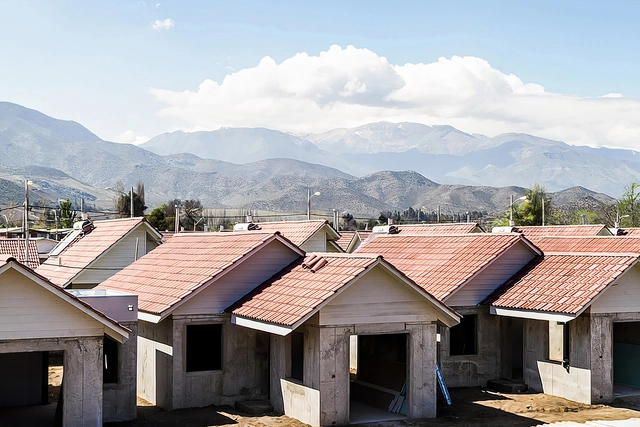
In Chile, the brick-making tradition has historically shaped residential development, becoming a material associated with stability, permanence, and security for families. Against this backdrop, Cerámica Santiago celebrates 45 years in business, establishing itself as a leading national benchmark in the development of ceramic building products, driven by a vision that recognizes the social role of housing in the country's urban development. Since its inception, the company has sought to integrate traditional ceramic craftsmanship with modern industrial processes, innovative design, and evolving technical demands.
Every regulation is born with a clear intention: to establish a starting point. It is a way of setting a minimum baseline, bringing order to what was perhaps previously assumed implicitly or lacked a common framework. However, like everything involving architecture—and especially our way of living—these frameworks also evolve: they expand, adjust, and become more detailed around new sustainable housing models. This is precisely the case with the new thermal regulations in Chile, which do not emerge from scratch but rather as part of an ongoing process that has steadily integrated new energy efficiency criteria within the General Ordinance of Urbanism and Construction (OGUC).
https://www.archdaily.com/1140951/insulation-and-energy-efficiency-in-housing-what-changes-with-the-new-thermal-regulations-in-chileEnrique Tovar
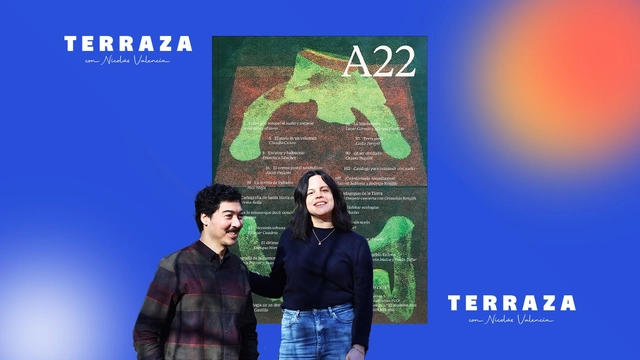
Nicolás Valencia speaks in Lima with Peruvian architects Mariana Jochamowitz and Nicolás Rivera about Revista A of the Pontificia Universidad Católica del Perú and their participation in the 2024 Ibero-American Biennial of Architecture and Urbanism with the workshop "Climax, Fanzine for a Community in Crisis."
https://www.archdaily.com/1140952/mariana-jochamowitz-and-nicolas-rivera-why-make-architecture-fanzinesArchDaily Team
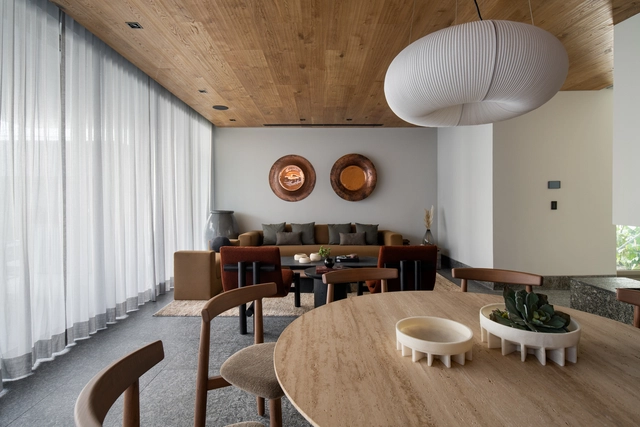
Casa Áurea is a project by Elías Rizo and Taller Elías Rizo Arquitectos, with interior design by Cristina Grappin. Located in Santa Catarina, in the state of Nuevo León, this home is part of Tecnológico de Monterrey's Líderes del Mañana Program, as part of the 218th Tradicional Sorteo Tec, whose objective is to support an initiative focused on change, social mobility, and the development of academically outstanding young people.
Surrounded by the formations of the Sierra Madre Oriental, the house is designed to prioritize privacy starting at its main entrance. Moving through the space, the transition between the ground-floor social areas and the upper levels establishes different hierarchies of privacy: the second floor houses more private spaces, while the rooftop gradually opens up to the mountainous environment, visually integrating with the landscape.
https://www.archdaily.com/1140953/architecture-is-a-second-skin-the-bubble-where-life-unfolds-casa-aureo-designed-by-elias-rizo-arquitectosEnrique Tovar
For many households in Latin America, fossil fuel- and biomass-based stoves and heaters, such as natural gas or wood, are an affordable and accessible option. However, these appliances present significant challenges: they are a source of greenhouse gas (GHG) emissions, contribute to indoor air pollution, and highlight the need for policies that promote a cleaner residential energy matrix. These challenges become even more urgent considering that 2024 was the hottest year on record, with a 1.5°C increase over pre-industrial levels driven by record GHG emissions from human activity, thereby underscoring the importance of adopting sustainable solutions across all sectors worldwide, including residential.
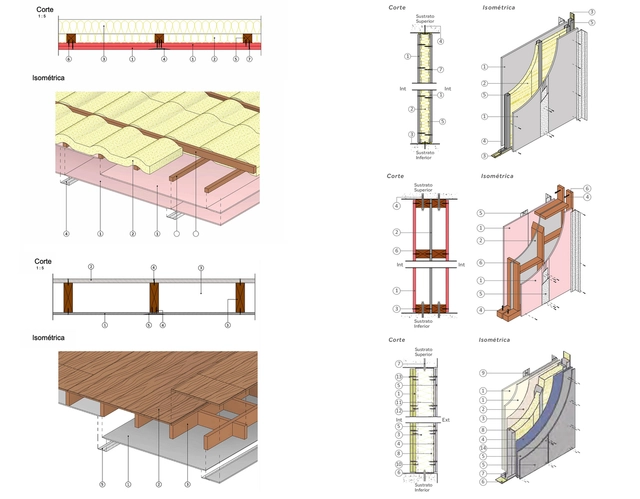
In construction, every task requires specific tools and every need calls for a unique solution. Factors such as building typology, construction requirements, waste generation, execution times, and context directly influence the quality and complexity of the work, making it essential to base specification decisions on these criteria. Traditional methods can hinder this process due to their rigidity and limitations, necessitating more efficient and flexible approaches that adapt to the specific demands of each project. This is especially common in residential, hotel, and hospital projects, where speed and performance are essential. In these cases, lightweight dry-construction solutions—using Volcanita boards or fiber cement over lightweight metal framing—offer an effective, high-performance alternative, enhancing functionality and, consequently, the user experience.
https://www.archdaily.com/1140945/guide-to-specifying-sustainable-construction-solutionsEnrique Tovar
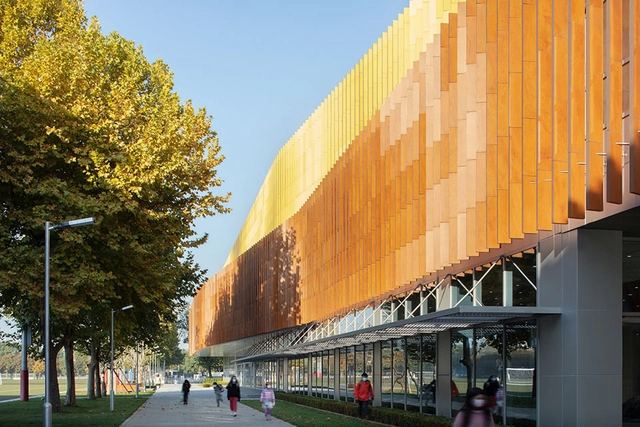
We invite you to participate in ArchDaily en Español's Building of the Year Award. In its sixteenth edition, we give our readers the responsibility of recognizing and rewarding the projects that have had the greatest impact on the profession. By voting, you become part of an unbiased network of jurors recognizing the most relevant projects built in Latin America and Spain over the past year. Only a few days remain before the closing of the nomination stage, which will select the 15 finalists for ArchDaily en Español's 2025 Building of the Year Award.
Over the past few decades, the Architecture, Engineering, Construction, and Operations (AECO) industry has been undergoing an unprecedented digital transformation. Since the days when designs were drawn exclusively on paper—a reality that lasted until the early 1980s—the field has passed significant milestones, first with the adoption of CAD (Computer-Aided Design) and, more recently, BIM (Building Information Modeling). Now, a new transition is underway, promising to be even more profound. Artificial Intelligence (AI), which until recently seemed confined to laboratories or futuristic concepts, is beginning to play a practical and strategic role in how we design, build, and manage our buildings and cities.
https://www.archdaily.com/1140959/beijing-jobs-he-li-architectural-practice-concept-designer-project-architect-interior-technical-designer-intern韩爽 - HAN Shuang
Architecture will never cease to pursue functionality, as it lies at the core of its essential principles. Alongside this condition are factors such as aesthetics and operability, which also influence how contemporary design is valued. Over time, the concept of functionality has evolved, extending beyond problem-solving and efficiency to connect with the creation of experiences. As a result, the quality of an environment depends as much on its design as on how its elements and systems articulate to generate an overall experience of inhabiting. In this sense, innovation means conceiving fluid and intuitive environments where every component helps make the experience natural and safe—something especially relevant in everyday spaces such as bathrooms.
https://www.archdaily.com/1140960/from-the-functional-to-the-sensory-how-do-you-design-a-touchless-bathroom-experienceEnrique Tovar
Nicolás Valencia talks with Chilean architect Romy Hecht, Dean of College UC and author of El alma del verdor de Santiago, (Orjikh Editores, 2025), where she explores the nature of the landscape in Chile's capital, examining its origins and identifying the key figures responsible for cultivating exotic species and designing planting geometries that, once rooted, shaped Santiago's identity and character.
https://www.archdaily.com/1140961/the-origins-of-santiagos-parks-according-to-romy-hechtArchDaily Team
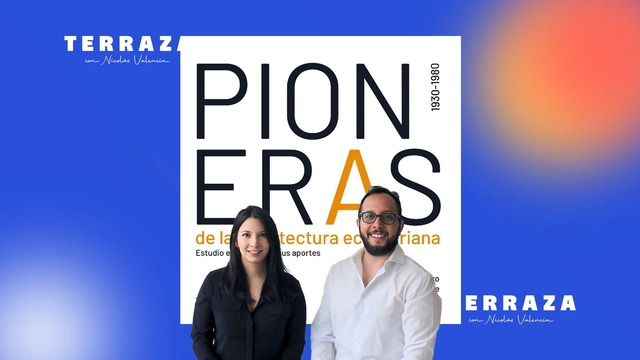
Nicolás Valencia talks in Quito with architects Verónica Rosero and Néstór Llorca, who, alongside María José Freire, co-authored Pioneras de la arquitectura ecuatoriana, published by Trama Ediciones in 2021 and winner of the publications category at the 2022 Pan-American Architecture Biennial of Quito.
https://www.archdaily.com/1140956/the-pioneering-women-of-ecuadorian-architecture-according-to-veronica-rosero-and-nestor-llorcaArchDaily Team
Videos
Cortesía de Cortesía de La Feria De Diseño Medellín
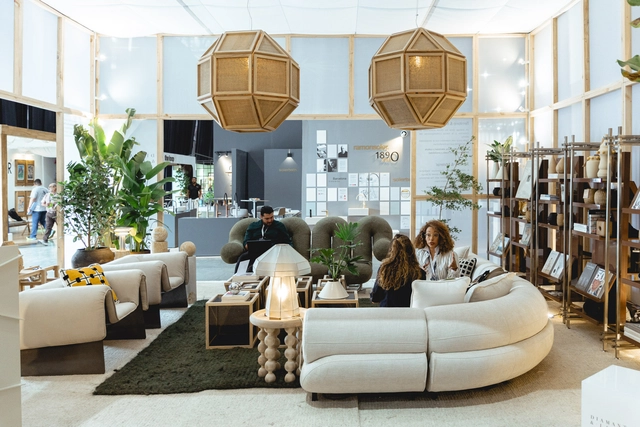
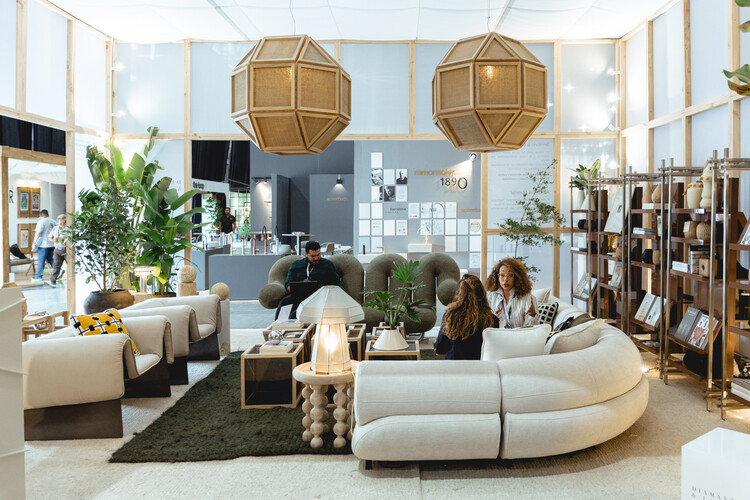
Asking questions is the first step toward challenging what we take for granted and opening new possibilities for planning and building. While valuable in themselves, these questions gain even greater force when shared and examined from different perspectives. By intersecting with the experiences of professionals and brands, they weave together insights that enrich the discussion. Design fairs and events worldwide have become spaces where these conversations gain momentum, fostering connections and collaborative dynamics. Within this landscape, Colombia has established itself as a meeting point, serving as a platform that drives architecture and design in Latin America and the Caribbean, while projecting the region's voice onto the global stage.
Videos
Solución estructural Termomuro. Image Cortesía de Melón Hormigones
In the quest to find innovative solutions to achieve carbon neutrality in construction, identifying, addressing, and managing emissions is of vital importance. Doing so enables a deeper understanding and analysis of each stage of the production process and the life cycle of materials. Optimizing construction processes, minimizing fossil fuel use, adopting renewable energy, and recovering recycled materials are just some of the many strategies available to advance this transformation. Melón has taken the initiative to develop a Product Carbon Footprint calculator to deliver more sustainable products and construction solutions, actively contributing to the fight against climate change.
Nicolás Valencia speaks with Spanish architect Marina Otero Verzier, winner of the 2022 Wheelwright Prize, about her research on the material and extractive cost of the digital cloud, a topic she explores in her book In the Depths of the Cloud, published in 2024 by Ediciones Asimétricas.
https://www.archdaily.com/1140964/data-centers-blind-boxes-and-digital-clouds-according-to-marina-otero-verzierArchDaily Team
An architectural award acts as a legitimizing mechanism, indicating which approaches, materials, and strategies are taking center stage in the discipline's discourse. By bringing together projects with diverse programs, scales, and constraints, these initiatives bring emerging priorities and directions in the field to light. Accordingly, the Shaw Contract Design Awards has established itself as a global platform of recognition in interior design and a barometer of the transformations sweeping the discipline, fostering reflection on the role of design in creating more responsible, inclusive, and sustainable environments.
In Lima, Nicolás Valencia speaks with Mexican architect Jesús López about ATEA10, the 2024 BIAU award-winning publication that celebrates the first ten years of Atea, a multidisciplinary production and experimentation platform in the La Merced neighborhood of Mexico City.
https://www.archdaily.com/1140943/atea-10-years-of-cultural-insistence-in-mexico-cityArchDaily Team

![From the object to the city, in search of possible poetics: interview with [entre escalas] - Featured Image](https://snoopy.archdaily.com/images/archdaily/media/images/686d/58dd/c677/407c/837f/55e8/slideshow/do-objeto-a-cidade-em-busca-de-poeticas-possiveis-entrevista-com-entre-escalas_1.jpg?1751996647&format=webp&width=640&height=580)
![From the object to the city, in search of possible poetics: interview with [entre escalas] - 1 的图像 4](https://images.adsttc.com/media/images/686d/5904/4b80/da16/0cde/9a24/thumb_jpg/do-objeto-a-cidade-em-busca-de-poeticas-possiveis-entrevista-com-entre-escalas_1.jpg?1751996690 "Saracura House | Townhouse Renovation in Bexiga / entre escalas. Image © Pedro Kok")
![From the object to the city, in search of possible poetics: interview with [entre escalas] - 7 的图像 4](https://images.adsttc.com/media/images/6871/751d/80e3/8f01/8731/6bbe/thumb_jpg/do-objeto-a-cidade-em-busca-de-poeticas-possiveis-entrevista-com-entre-escalas_9.jpg?1752266019 "Registro de obra da Casa Apiacás. Image Cortesia de [entre escalas]")
![From the object to the city, in search of possible poetics: interview with [entre escalas] - 3 的图像 4](https://images.adsttc.com/media/images/686d/5902/c677/407c/837f/55ec/thumb_jpg/do-objeto-a-cidade-em-busca-de-poeticas-possiveis-entrevista-com-entre-escalas_2.jpg?1751996688 "Saracura House | Townhouse Renovation in Bexiga / entre escalas. Image © Pedro Kok")
![From the object to the city, in search of possible poetics: interview with [entre escalas] - 4 的图像 4](https://images.adsttc.com/media/images/686d/58c1/c677/407c/837f/55e7/thumb_jpg/do-objeto-a-cidade-em-busca-de-poeticas-possiveis-entrevista-com-entre-escalas_1.jpg?1751996624 "First Place in LIGA Subsolanus Competition / Vão + Marina Canhadas. Image © LGM Studio - Luis Gallardo")
![From the object to the city, in search of possible poetics: interview with [entre escalas] - More Images](https://images.adsttc.com/media/images/686d/58dd/c677/407c/837f/55e8/newsletter/do-objeto-a-cidade-em-busca-de-poeticas-possiveis-entrevista-com-entre-escalas_1.jpg?1751996647)