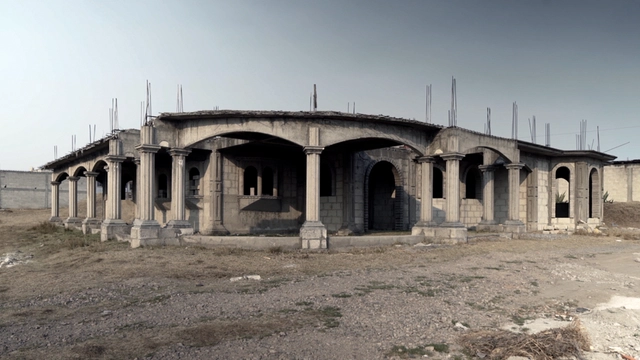
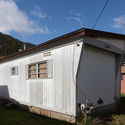
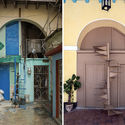
Over the years, driven by research that has brought once-neglected and marginalized issues to the fore, the debate surrounding self-construction and migratory processes has become increasingly vital for exploring the social phenomena reflected in the architecture of underserved, commonly termed "irregular" areas. While a clear polarization remains regarding what a living space should or should not be, we must observe what already exists—not only to contribute to the discussion but, above all, to listen and learn.
https://www.archdaily.com/1128287/self-construction-and-migration-on-resilience-and-local-knowledge-through-participatory-practiceArchDaily Team
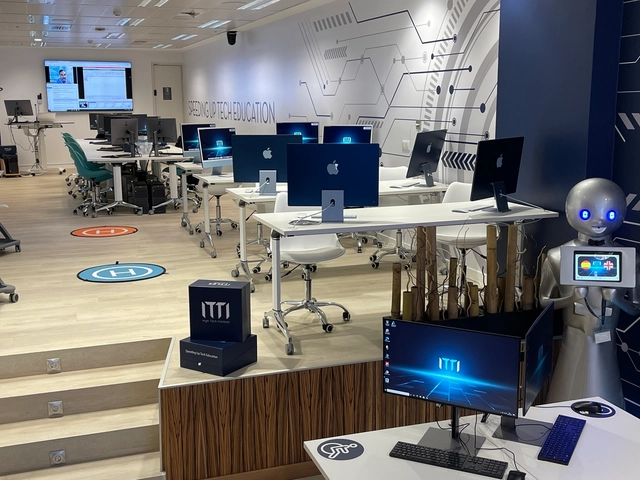
Sede en Madrid | ITTI High Tech Institute . Image Cortesía de Comunicación ITTI
ITTI | High Tech Institute aims to pioneer BIM specialization, providing the knowledge to manage projects through its renowned "Learning By Doing" methodology. Its training programs equip BIM managers with the necessary resources to address complex issues from an innovative and revolutionary perspective.
“What is the essence of ceramic craftsmanship in Pomaire?” asks Kengo Kuma of Rodrigo Veliz, a potter with a long family tradition, with whom he is collaborating on the Clay Route in Chile.
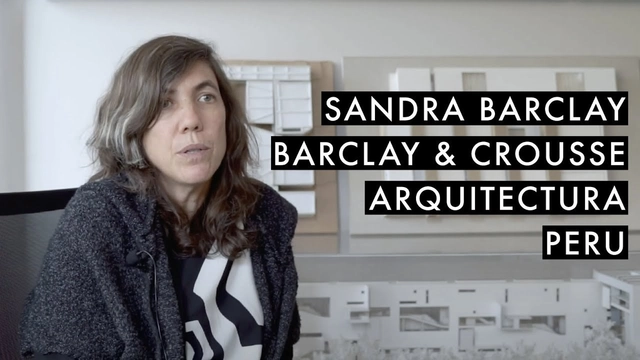
Archivo de Ideas Recibidas is an interdisciplinary research and dissemination project that seeks to document and connect the ideas of individuals who contribute to the contemporary creative ecosystem through art, design, and architecture. It is built on conversations between the team and various creators, delving into themes related to memory, academia, cultural context, their primary influences, and working methodologies.
In this installment, they introduce Sandra Barclay of Barclay & Crousse. Founded in Paris in 1994, the firm has been based in Lima since 2006. Their work is conceived, according to the architects themselves, as a design laboratory that explores the bonds between landscape, climate, and architecture, challenging notions of technology, use, and quality of life that, arising from the specific conditions of developing countries, can inform and remain relevant in a global context.
This article by Carlos David Montoya Valencia and Gloria Aponte García was originally published under the title "La naturaleza, sustrato del paisaje urbano. Propuesta de un Índice de Vínculo de las Ciudades con la Naturaleza" in the 24th issue of the Dearq journal on January 1, 2019 (DOI: https://doi.org/10.18389/dearq24.2019.01).
We present it below as part of a joint collaboration to contribute to the dissemination of research, analysis, and opinions developed by the national and international academic community on architecture, urban issues, and related fields.
https://www.archdaily.com/1128307/the-natural-systems-of-the-city-an-approach-and-analysis-through-landscape-perceptionCarlos David Montoya Valencia y Gloria Aponte García
With 'Heritage and Modernity’ as the central theme, curator José Ángel Medina Murua previously highlighted "Carme's ability to amplify all the values with which she acts, working with her surroundings in a way that benefits and improves all elements."
Ahead of the official opening, we present an interview with Carme Pinós discussing her participation in this year's biennial.
"Domingos Libro" is hosted by Carmelo from Enorme Studio, where every two weeks, he delves deeply into forgotten architectural publications, books, and architectural magazines from the '60s, '70s, and '80s that carry the most interesting stories behind them.
This latest episode focuses on the 1989 double issue 181/182 of the Catalan magazine QUADERNS, specifically examining an unfinished house by Paco Alonso, an architect from the Madrid School who never completed any of his works and was once dubbed "The Builder of Ruins" by a colleague.
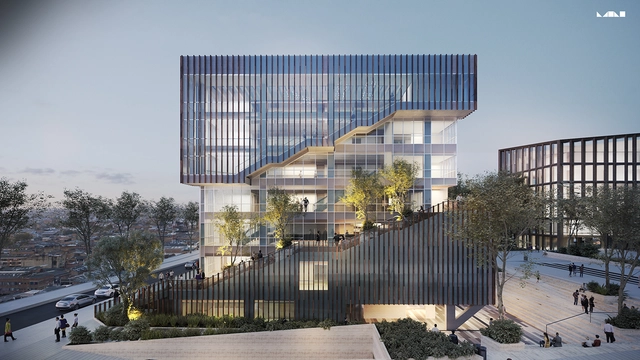
Located in the former heart of “El Bronx”—an area with approximately 100,000 residents—the proposal seeks to attract companies, consortiums, or builders with extensive experience in new construction. The new administrative building will benefit around 300 public servants while providing high-quality service to citizens in new, modern facilities. Designed by MC Arquitectos, the project also includes a plaza at the rear and already has detailed designs and construction permits in place.
How important is color in architecture? The choice of color for a facade or a space can have complex effects on people, directly influencing their sensations and perceptions. The possibilities are endless, ranging from bold contrasts to complete achromatism.
The following list is our index of articles, news, and projects covering everything you need to know about the importance of color in buildings—from design strategies and the latest trends to its application in projects and materials.
The 13th São Paulo International Architecture Biennale and the Vitruvius portal have launched Preâmbulo, an open call for articles, essays, drawings, and projects reflecting on the central theme of the 13th Biennale—Reconstruction—and its five thematic axes: democracy, bodies, memory, information, and ecology. Submissions are open until June 30.
Conceived by IABsp, the 13th edition of the Biennale, scheduled for 2022, uses the idea of Reconstruction to spark debates addressing the challenges arising from the crisis caused by the Covid-19 pandemic. It considers reflections and proposals pointing toward innovative social practices and urban-architectural arrangements, as well as the possibilities that emerge in this new scenario.
An active city is one that encourages its inhabitants to be physically active in their daily lives. This does not mean aiming to turn citizens into Olympic athletes, but rather providing safe spaces for cyclists and pedestrians to move around, as well as adequate infrastructure so that people of all ages can play sports, have fun, and relax outdoors. Consequently, physical activity, at varying levels of intensity, becomes a natural part of the population's daily routine.
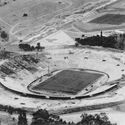
The Colombian plains city of Villavicencio ended the year with promising news. The new metropolitan park planned for its urban landscape is based on a proposal by Estudio Territorios, the winning entry in a competition commissioned by the Mayor's Office of Villavicencio and organized by the Colombian Society of Architects to create a metropolitan-scale green space for the region.
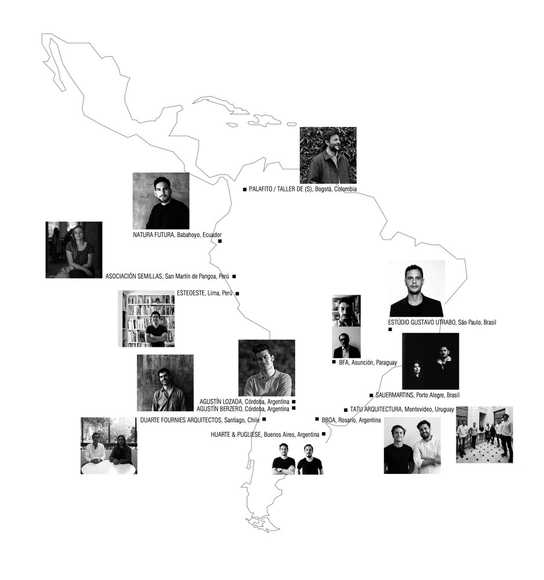
A new edition of the Latin American Architecture Biennial is set to begin on September 28 in Pamplona, Spain. Organized by the AREA association in collaboration with the City Council of Pamplona, the Basque-Navarrese Association of Architects, the University of Navarra, the Government of Navarra, and the Spanish Ministry of Development, this 7th edition will feature 13 emerging architectural practices representing Argentina, Brazil, Chile, Colombia, Ecuador, Peru, Paraguay, and Uruguay.
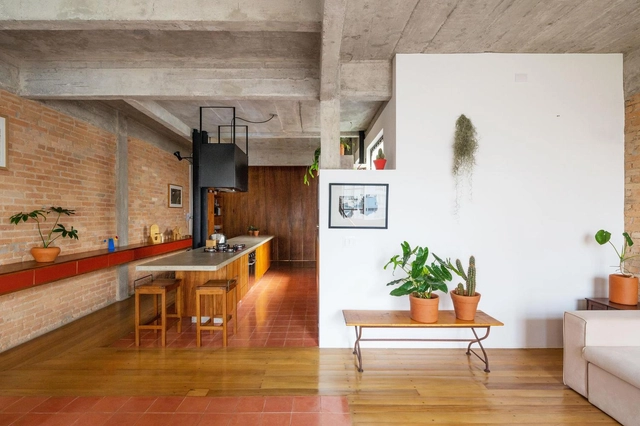
In 2020, the amount of time we spent inside our own homes increased significantly, and these changes undoubtedly impacted how we experience residential space. Reevaluating the quality of these places became essential, adding an extra layer of complexity to apartment design. Ensuring comfort in every room, expanding the sense of space in small areas, or making the home more versatile are some of the challenges imposed and solved in various ways.
Founded in 2005 by Wu Wei, Beijing IN.X Design Co., Ltd. is based in Beijing. Guided by its proprietary philosophy of "Strategy First, Design Second," the firm provides highly differentiated consulting and design services for food and beverage (F&B) brands. Over the years, IN.X has established long-term, stable strategic partnerships with leading industry brands such as Siji Minfu, Huda Restaurant, and Dayali. In addition to its focus on design, the company is deeply committed to supporting young designers, continuously providing open and equal opportunities for learning and practice, alongside ample room for professional development.
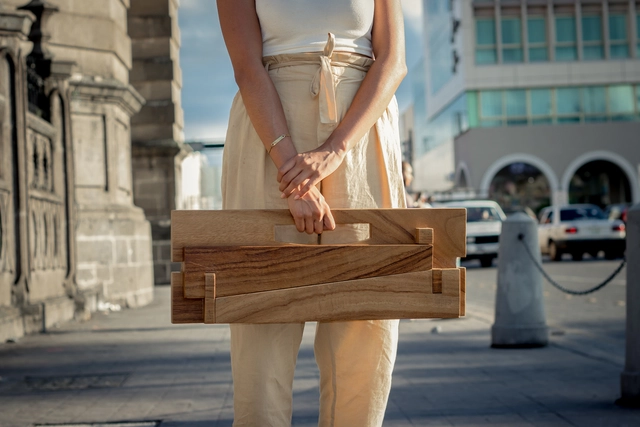
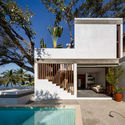
Luis Antonio Moreno Aguayo—architect and co-founder of Taller Matatipac in Tepic, Nayarit—presents his project: the Bípeda chair, which uses experimentation to simplify concepts to their elemental roots, employing critique as a tool to fuel creativity.
https://www.archdaily.com/1127907/taller-matatipac-presents-a-pre-hispanic-inspired-chair-in-mexicoArchDaily Team
ArchDaily is working with CityMakers to publish a series of articles, conversations, and interviews with the various city co-production stakeholders behind the Barcelona CityMakers Lab 2021, taking place from November 8 to 12.
CityMakers is a global platform of experts in city co-production best practices, aiming to connect city co-producers and influential leaders from around the world to inspire one another and drive transformation in their cities.
For this installment, Velislava Simeonova presents her article "The Return to the Post-COVID City: Reflections Toward Sustainable Urban Tourism."
As part of an investigation prompted by the September 19, 2017 earthquake in Mexico City, Mexican photographer Onnis Luque presents the book “Undercover,” published by the imprint The Velvet Cell (TVC) América Latina. The book features a series of photographs depicting damaged buildings shrouded in a kind of black veil, which was installed to prevent structural debris from collapsing. These images, in turn, are accompanied by texts that guide the reader, revealing diverse issues that extend beyond architecture to address social and political aspects from this unique vantage point.
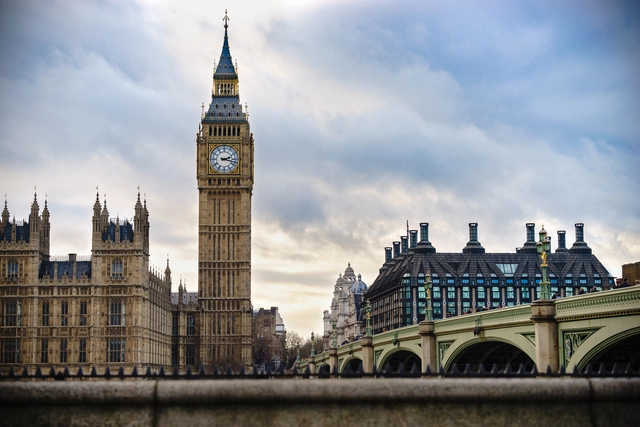
Big Ben, London, United Kingdom. Image by Pajor Pawel. Image via Shutterstock
As part of the Manchester International Festival (MIF), Argentine artist Marta Minujín set out to recreate London's iconic clock tower at half its original size. Relocated from London to Piccadilly Gardens in Manchester—the city that drove the Industrial Revolution during the 18th century—the replica is a 42-square-meter structure covered in 20,000 books related to British history. This cultural icon, representing the center of power in the United Kingdom, is symbolically laid on its side as a work of relational art where the public can enter, explore the installation, and, toward the end of the festival, take home the books that comprise it.
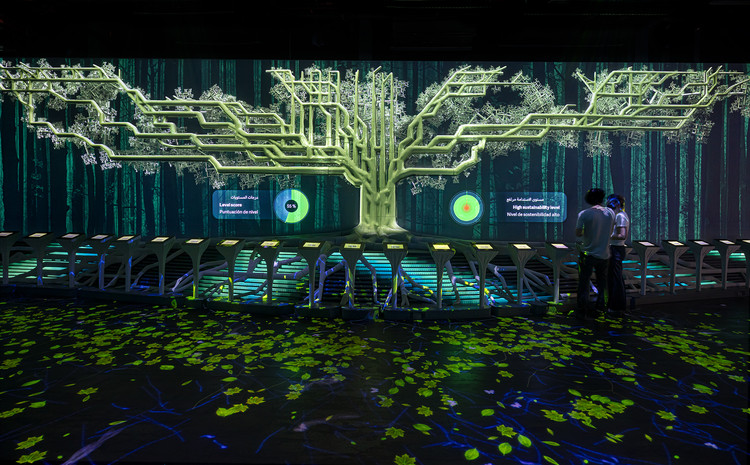
Under the theme “Connecting Minds, Creating the Future,” Expo Dubai 2020 —held from October 1, 2021, to March 31, 2022— is the first world expo hosted by an Arab nation and the Middle East region. The Spain Pavilion, under the slogan “Intelligence for Life,” synthesizes the idea of preserving a high quality of life on our planet for ourselves and future generations.
Designed by the firm amann cánovas maruri, the building is located in the expo's Sustainability District and stands out for its series of prominent truncated cones that rise above the landscape, evoking the feel of a traditional public square. Inside, the Pavilion houses two complementary thematic exhibition areas designed by the joint venture between External Reference and Onionlab. Here, the Barcelona-based firms have applied a striking blend of design, art, and technology to create a uniquely immersive experience.
Published in book format by Wustavo Quiroga and Juan Ruades, “Intermitencia. Diseño Mendocino” (Intermittence: Design from Mendoza) is an investigation that explores the development and trajectory of both architecture and other design disciplines in the province of Mendoza, Argentina. Spanning from the 1930s to the present, the book incorporates political events, pivotal moments, and intersecting histories that shed light on the evolution and cross-cutting connections linking industrial, graphic, product, and architectural design in the province, serving as a key resource for consolidating a federal narrative of Argentine design.
The Colón Towers in Madrid, designed by Spanish architect Antonio Lamela, will be renovated with four new floors and a new skin by 2022.
luis vidal + arquitectos, who are responsible for the intervention on behalf of the owner Mutua Madrileña, propose removing the "plug" structure created in the 1990s, aiming to relocate spaces while staying ahead of sustainability and accessibility legislation.
In the following interview, Luis Vidal discusses the project in detail.
Nayarit is a state located in western Mexico, bordered by the states of Sinaloa, Durango, Zacatecas, and Jalisco, and facing the Pacific Ocean. With an area of 27,815 km², it is the country's ninth-smallest state. Its capital and most populous city is Tepic. Other notable localities include Nuevo Vallarta, Valle de Banderas, Ixtlán del Río, San Blas, Santiago Ixcuintla, Acaponeta, Compostela, Jala, Santa María del Oro, Rosamorada, Xalisco, San Pedro Lagunillas, Tecuala, and Huajicori.
_page_6.jpg?1627570542 "\"Architecture without architects\". Image © Sandra Calvo")




.jpg?1634904973&format=webp&width=640&height=580)

























_luis_vidal___arquitectos_1_gsur_002_.jpg?1613562327&format=webp&width=640&height=580)
.jpg?1611240450&format=webp&width=640&height=580)

.jpg?1611240450)