Winter Stations is a single-stage international design competition held annually in Toronto, Ontario, Canada. Participants are tasked with designing temporary winter art installations which incorporate existing lifeguard towers spaced strategically across the city’s Kew and Woodbine beaches. The structures (not in use in the wintertime) are considered visual anchor points for the installations.
The 2nd International Congress on Traditional Construction, Architecture, and Urbanism: Timeless Architecture will take place on November 17 and 18 at the Conference Hall of the School of Architecture at the Technical University of Madrid.
City Square, Leeds City Centre. Photography: Carl Milner for Visit Leeds.
LEEDS 2023 has announced a once in a generation opportunity for an artist or creative team to design a striking large-scale temporary artwork at City Square, the major public space in the heart of Leeds city centre.
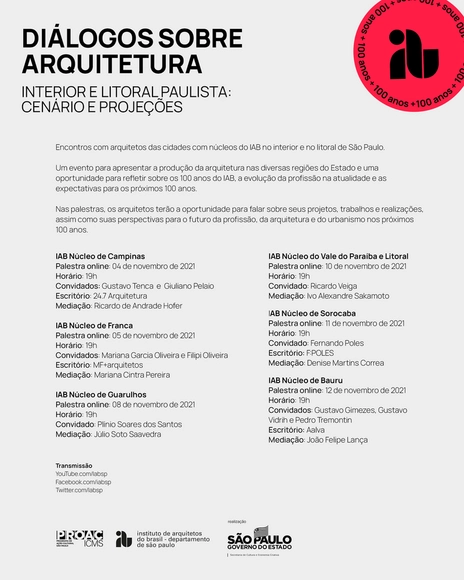
From social, racial, economic inequity to virtual, immersive environments, the COVID-19 pandemic is reshaping trends and pushing societies to discuss how we will live together in the future.
In this context, architecture has been navigating through sequential changes over the last decades with the rise and latter consolidation of new technologies, tools, formats, topics, scales, and interdisciplinary approaches, along with the emergence of the Internet that led towards a disruptive decentralization of the architecture production and discussion. Architects and designers from all over the world are embracing these challenges by pondering their roles and exploring their own practical approaches.
Research Seminar: Anastylosis of the Modern. Practices and Perspectives for the Recognition and Re-Signification of Abandoned Architecture and Landscapes.
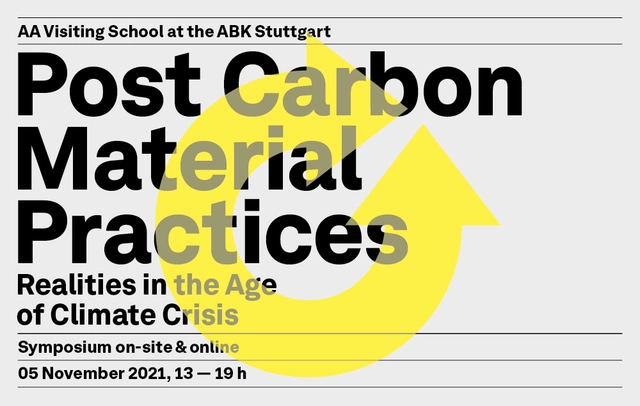
This international transdisciplinary symposium examines new material practices in architecture and design in the age of climate crisis. It takes place in hybrid form at the Stuttgart State Academy of Art and Design (ABK) situated adjacent to modernist icon and UNESCO World Heritage Site Weissenhof Estate and is open to a global audience. The event is organized by The Laboratory / AA Visiting School Stuttgart, a cross-disciplinary initiative of the AA at the ABK that brings together architects, artists, designers and researchers to speculate about our life in the future.
You're invited to attend an interactive lecture on Friday, November 12, featuring designer, performer, and educator Tereza Ruller from The Rodina. Lunch will be provided for watch party attendees that register - and please plan to bring your laptop.
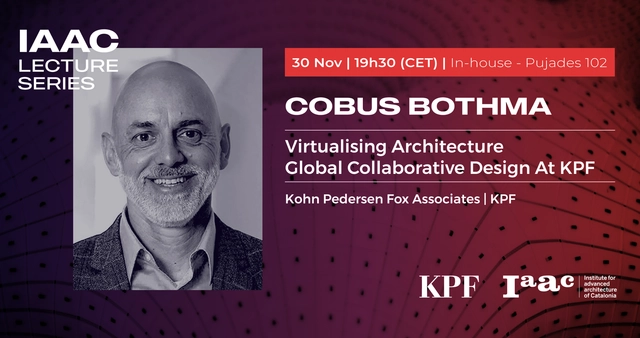
Join award-winning critic and author Alice Rawsthorn for "Design as Attitude", the first talk in the IE School of Architecture and Design lecture series, BEYOND SCALE.
Join The University of Texas at Austin School of Architecture for Plant Potential, an online conference that brings together an architect, a theorist, a scientist, an urban gardener, and an artist for a collective exploration of our relationship with plant life. Their investigative and creative initiatives vary in scope and character but all aim at helping human communities to reconnect with the ecological, cultural, and spiritual dimensions of the environment by embracing the nurturing potential of plants as food, material resource, environment makers, companions, and teachers.
Internationally acclaimed architect Chad Oppenheim, editor of Lair: Radical Homes and Hideouts of Movie Villains, examines the compelling and seductive abodes of movie villains. The villain’s lair is much more than where the megalomaniac goes to get some rest. Instead, the homes of the villains are places where evil is plotted and where, often, the hero is tested and must prove him/herself. In Lair, readers are invited to explore the architecture of villainy through rich content that includes in-depth visual and written material and a striking graphic design that features silver ink on black paper.
Photo: View of the Deutschlandsender III in Herzberg. At the time of its construction, the transmission tower was the tallest building in Europe. Operating time: 1939–1945.
Presenting sounds, archival drawings, and cartographic representations, the exhibition Radio-Activities aims to raise awareness of the contemporary role of the built environment by examining the time when the intricate worlds of politics, aesthetics, and information technologies began to populate the ether. The exhibition is the outcome of research conducted by the Chilean architect Alfredo Thiermann on the infrastructure built for radio in Berlin, starting in the Weimar Republic and running up to the Cold War period.
The national public competition for the preliminary urban, landscape, and architectural design of the Apartadó River Parks – Stage 2 "Ciudad Do" seeks to transform the Apartadó River into the municipality's primary natural asset, establishing it as the articulating axis of urban planning and the focal point of physical interventions that will achieve: "...a living river... and alive in the people!"
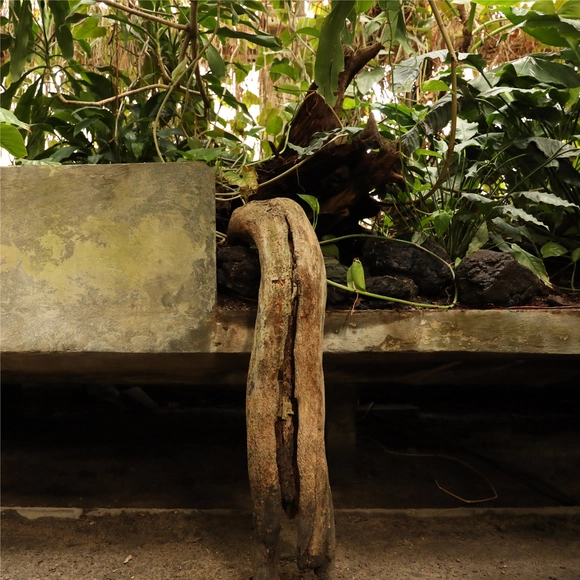
Unstable Infrastructures: Strange Ecologies, Discontinuous [De]growths, and Solidarity Energies
The ideas of progress, development, and growth-based models are being conceptually and materially affected by a series of environmental factors or new economies, which are being reprogrammed through a social and sociopolitical ecology.
The UNEB Urbanism Week is an annual event organized by the students and faculty of the Bachelor’s degree program in Urbanism—the only one of its kind in Brazil—offering participants the opportunity to attend, engage in dialogue, and debate topics relevant to contemporary urban issues. Its objective is to provide students, social movements, and experts in the fields of urbanism and urban-territorial planning, as well as scholars from cross-disciplinary areas, with a space to deepen and systematize their understanding of the urban phenomenon. In this year’s edition, we will take an introspective look at the 20 years since the enactment of the City Statute, examining its benefits and legal contradictions through the lens of the structural inequalities in Brazilian society regarding race, gender, class, sexual diversity, and more.








![Unstable Infrastructures: Strange Ecologies, Discontinuous [De]growths, and Solidarity Energies - Featured Image](https://snoopy.archdaily.com/images/archdaily/media/images/6181/33fc/f91c/818e/0200/001c/slideshow/open-uri20211102-5277-uj46n4.jpg?1635857390&format=webp&width=640&height=580)