Photo: View of the Deutschlandsender III in Herzberg. At the time of its construction, the transmission tower was the tallest building in Europe. Operating time: 1939–1945.
Presenting sounds, archival drawings, and cartographic representations, the exhibition Radio-Activities aims to raise awareness of the contemporary role of the built environment by examining the time when the intricate worlds of politics, aesthetics, and information technologies began to populate the ether. The exhibition is the outcome of research conducted by the Chilean architect Alfredo Thiermann on the infrastructure built for radio in Berlin, starting in the Weimar Republic and running up to the Cold War period.
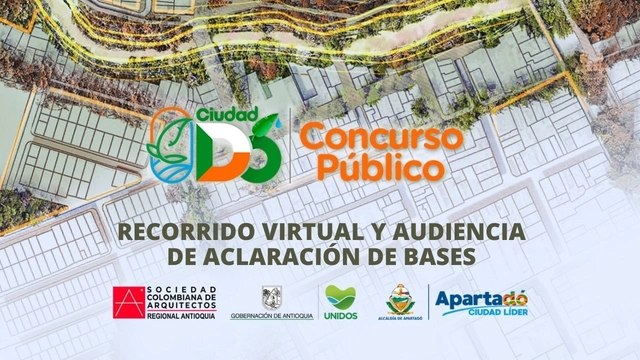
The national public competition for the preliminary urban, landscape, and architectural design of the Apartadó River Parks – Stage 2 "Ciudad Do" seeks to transform the Apartadó River into the municipality's primary natural asset, establishing it as the articulating axis of urban planning and the focal point of physical interventions that will achieve: "...a living river... and alive in the people!"
Unstable Infrastructures: Strange Ecologies, Discontinuous [De]growths, and Solidarity Energies
The ideas of progress, development, and growth-based models are being conceptually and materially affected by a series of environmental factors or new economies, which are being reprogrammed through a social and sociopolitical ecology.
The UNEB Urbanism Week is an annual event organized by the students and faculty of the Bachelor’s degree program in Urbanism—the only one of its kind in Brazil—offering participants the opportunity to attend, engage in dialogue, and debate topics relevant to contemporary urban issues. Its objective is to provide students, social movements, and experts in the fields of urbanism and urban-territorial planning, as well as scholars from cross-disciplinary areas, with a space to deepen and systematize their understanding of the urban phenomenon. In this year’s edition, we will take an introspective look at the 20 years since the enactment of the City Statute, examining its benefits and legal contradictions through the lens of the structural inequalities in Brazilian society regarding race, gender, class, sexual diversity, and more.
The Urbanism in Bahia Seminar - urbBA[21], in its 11th edition, proposes a discussion on the city and care.
The Urbanism in Bahia Seminar - urbBA[21], organized by the Lugar Comum Research Group (UFBA), proposes a discussion on the city and care in its 11th edition.
Sustainable construction in Brazil is growing every year. In 2020, despite the pandemic, there was a 28% increase, and this pace is expected to continue this year. In this context, the Green Building Council Brasil will host its 2021 International Conference starting November 22, which is expected to attract an audience of 10,000 professionals from various countries. Held virtually due to ongoing health restrictions, the event will feature 15 consecutive days of technical lectures, master series, expert interviews, and other activities.
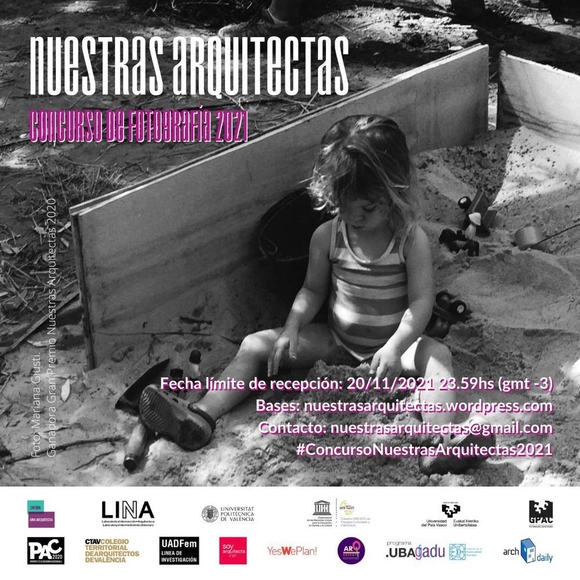
Nuestras Arquitectas. Photo: Mariana Giusti, winner of the 2020 Nuestras Arquitectas Grand Prize
'Nuestras Arquitectas' aims, through this second international photography competition, to focus and refocus on images that have been hidden or overshadowed, restoring the deserved recognition and prominence to women architects.
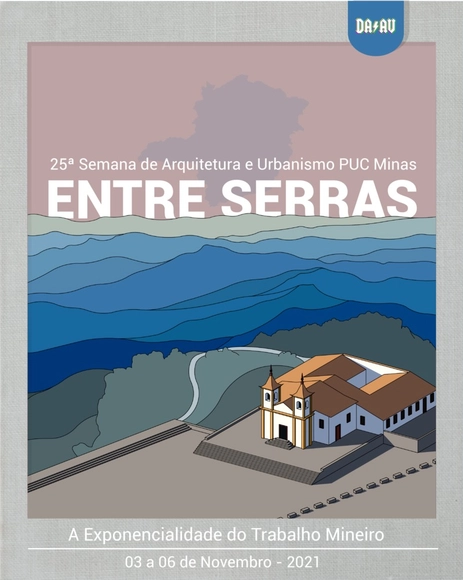
The Architecture and Urbanism Week is a non-profit event organized by the Architecture and Urbanism Academic Directory at PUC Minas. Held annually, the event is currently part of the university's second-semester academic calendar. Its primary objective is to highlight topics of regional and global relevance through lectures, workshops, and activities. By welcoming students from PUC Minas and other universities, as well as industry professionals, the event fosters an exchange of experiences among participants. Since 1996, the PUC Minas Architecture and Urbanism Weeks have stood out in the local scene as artistic and cultural events. Beyond architectural discussions, they host debates with social and political movements, meetings with renowned and street artists, exchanges with leading professionals, and a variety of workshops and activities.
What is a threshold to you? And how would you represent it graphically?
This is the challenge posed by the Alejandro de la Sota Foundation for the second edition of the International InstaFASota Competition, which will take place on Instagram.
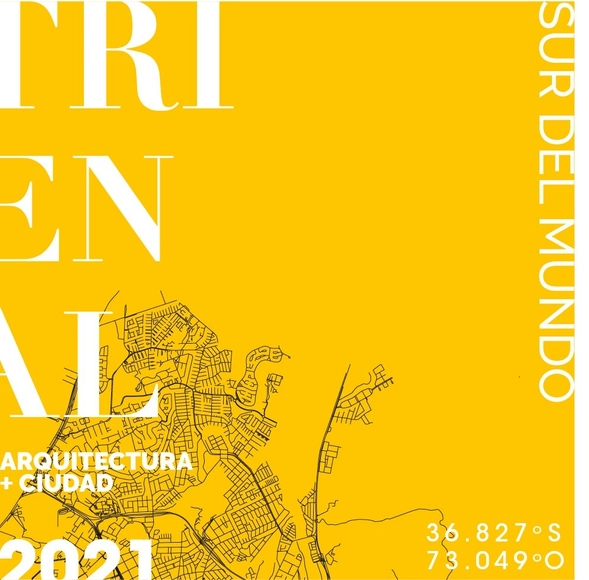
Creating a space for debate regarding the challenges of intermediate cities, their sustainable development, and the improvement of their inhabitants' living conditions is the primary goal of the Trienal Sur del Mundo, which will take place from November 26 to December 4 in the city of Concepción, Chile.
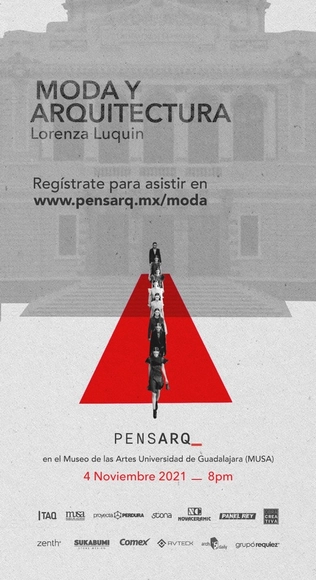
FASHION AND ARCHITECTURE is an event that will explore the close relationship between these disciplines, where both inform one another through volumes, proportions, forms, colors, textures, balance, and creativity.
Arquinema Colectivo, a space for dissemination and exchange that champions the relationship between architecture and cinema, is partnering with Cine Universitario throughout the month of November to present a series of eight films.
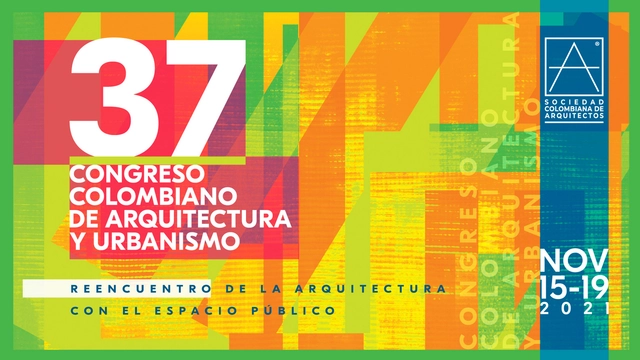
The Colombian Society of Architects will host the 37th Colombian Congress of Architecture and Urbanism in a hybrid format—both virtual and in-person—from November 15 to 19, 2021, in Bogotá.
The Art Omi: Architecture residency program is first of its kind in the nation, inviting 10 early- to mid-career architects from around the world to develop their work during a full two-week residency on Art Omi's campus. Architecture Residents are selected on the basis of their individual proposed project and portfolio. Completed projects are presented in an informal critique setting at the end of the residency period, with visitors invited to see the proceedings.
In recent months, we have witnessed one of the crises that has most profoundly challenged our "essence"—our ways of living, working, communicating, socializing, and even relating to one another. These issues, which transcend the health emergency and the pandemic, have prompted us to reflect on topics related to the environment, sustainability, the efficiency of segregating activities, the frantic mobility to which we had become accustomed, the need for flexible spaces in homes and cities, and the nature of public spaces when social distancing is mandatory.

![Unstable Infrastructures: Strange Ecologies, Discontinuous [De]growths, and Solidarity Energies - Featured Image](https://snoopy.archdaily.com/images/archdaily/media/images/6181/33fc/f91c/818e/0200/001c/slideshow/open-uri20211102-5277-uj46n4.jpg?1635857390&format=webp&width=640&height=580)


![Toward an art of cultivating and enacting hope in cities - urbBA[21] - Featured Image](https://snoopy.archdaily.com/images/archdaily/media/images/617a/ddcf/f91c/815a/6200/002a/slideshow/open-uri20211028-31407-3j56mn.jpg?1635442110&format=webp&width=640&height=580)
.jpg?1635421279&format=webp&width=640&height=580)
.jpg?1635360268&format=webp&width=640&height=580)