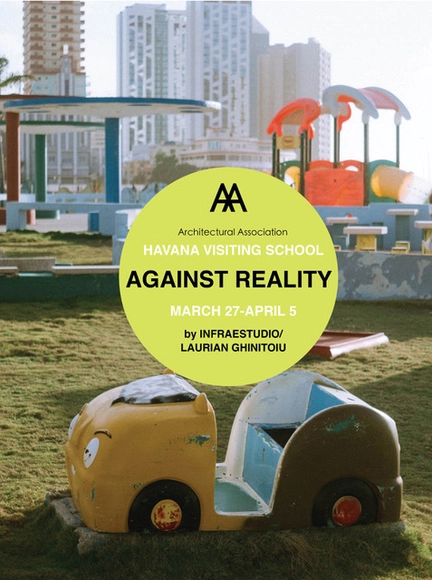
Havana seems to be frozen in time by centralized economic and political controls. Its inhabitants face constant material challenges in their lives. Cuban society responds by thriving with idealism, stoicism, and resilience. This dynamic interplay between myriad limitations and boundless creativity is the subject matter of our programme.
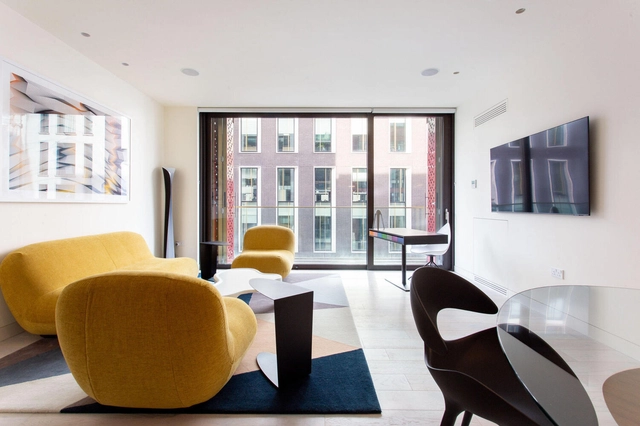
The living space of a brand-new timeshare apartment located in the centre of London, entirely designed and conceptualised by award-winning designer Karim Rashid. Image Courtesy of BoConcept
Contemporary and fresh, luminous and colorful, intriguing and surprising; the interior design of a newly finished apartment project in London speaks the visual language of its maker, award-winning designer Karim Rashid. Having spent the past four decades in the field of design and architecture, Rashid has manifested both his talent and approach with an always recognizable design DNA.
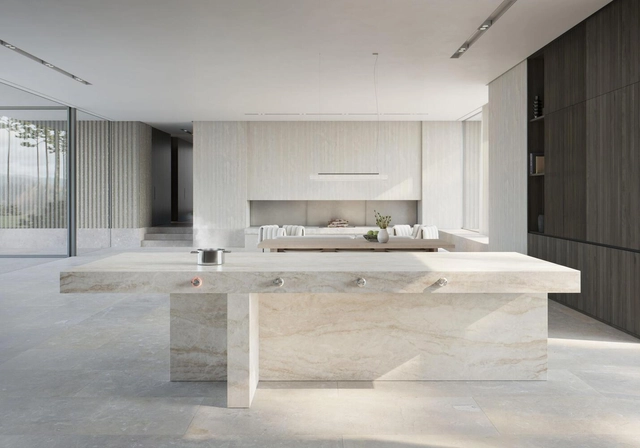
The new Essential Induction revolutionizes kitchen design with a hob that is all but invisibly integrated into a Dekton work surface, arming architects with total freedom of expression. Image Courtesy of Gaggenau
Gaggenau’s commitment to innovation and eye-soothing aesthetics in the kitchen is well known; its appliances aim to please the most demanding cook and meet the rigor of the dedicated minimalist. Its latest launch, however, turns the idea of appliance design on its head.
Credit: Insper / Arq.Futuro / Courtesy of the architects
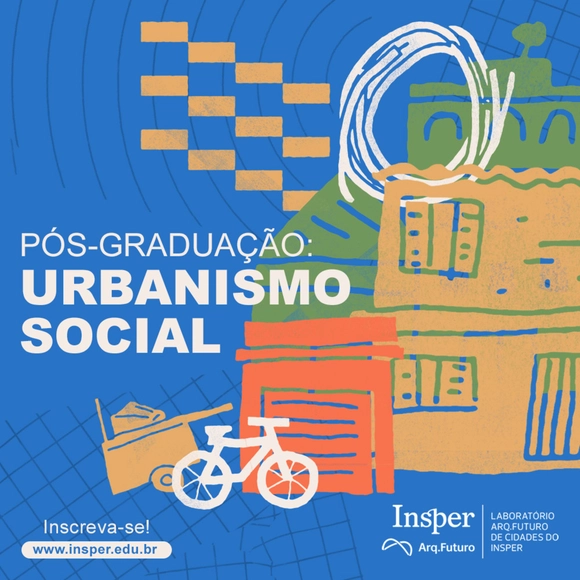
The fourth cohort of the postgraduate program in Social Urbanism at the Insper Arq.Futuro Cities Lab will begin its activities with an inaugural lecture on January 31. Applications are open until January 29. The hybrid program will hold classes on Wednesdays, Thursdays, and Fridays from 9:00 a.m. to 6:00 p.m., and on Saturdays from 8:00 a.m. to 5:00 p.m. Classes take place one week per month (with the exception of February, when they will be held during the first and last weeks).
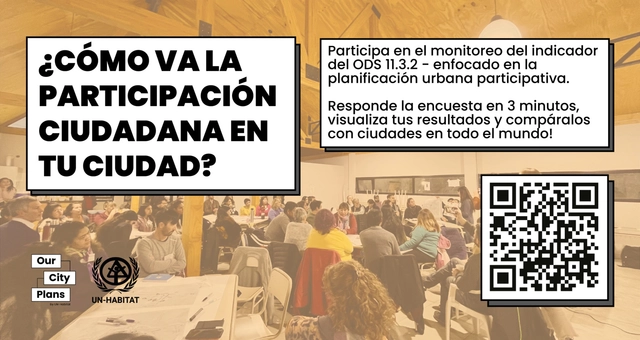
Today, more than ever, we need to safeguard one of the cornerstones of sustainable urban development: citizen participation in urban planning processes.
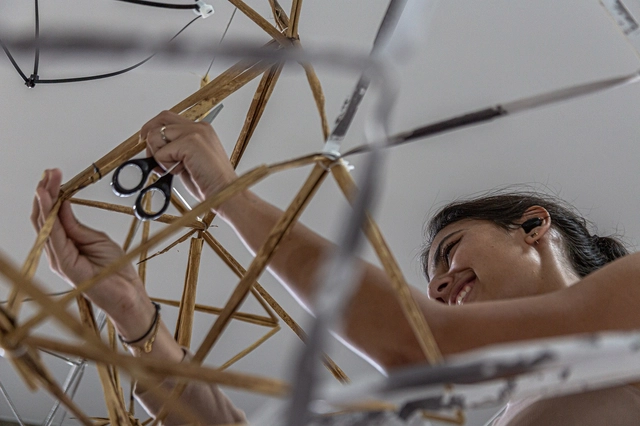
"Collective Reticulárea: Common Cartographies." Project with Architecture students from Taller X FAU. Central University of Venezuela. 2023. Photo: Jesús Briceño. Courtesy: LA ESCUELA___.
Aiming to rethink the legacy of the German-Venezuelan artist Gego and its historical significance within a contemporary context, LA ESCUELA___ invites participation in "Reticulárea colectiva: cartografías comunes" (Collective Reticulárea: Common Cartographies). This participatory project, conceptualized by artist Miguel Braceli, proposes building a space for encounter and learning centered on collaboration, networking, and the formation of affective bonds regarding art and territory, while addressing themes of diaspora and migration.
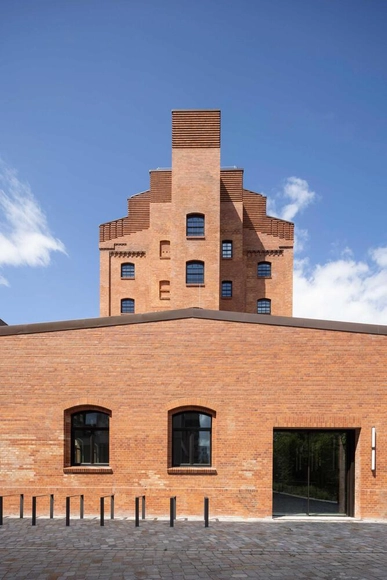
In order to secure the food supply for Berlin's rapidly growing population at the end of the 19th century, the Kornversuchsspeicher was built in 1898 on the former site of the Hamburger and Lehrter freight depots. A building with a scientific mission, it served to research new storage methods for grain. After years of vacancy and then interim use as a creative space, the brick building has been carefully renovated in recent years by AFF Architekten, extended with the addition of a seventh floor and transformed into a modern event, gastronomy and office building, with a focus on fully preserving its industrial charm. This was a project that called for great expertise in all areas, including from Solarlux, the specialist called upon for customized window and facade solutions.
It could've been so kitsch. When you hear that a former prison has been transformed into a hotel, you'd be forgiven for imagining an incarceration-themed novelty destination, replete with door handles in the shape of handcuffs and complimentary striped pajamas.
Grüntuch Ernst Architekten's sensitive adaptation of a women’s jail in Berlin-Charlottenburg is anything but, however. The landmark building, originally completed in 1896, has been carefully honed into a place of light and tranquility and has already managed, since its opening last year, to cultivate a loyal community of discerning –and returning– guests in search of restorativeness rather than restorative justice.
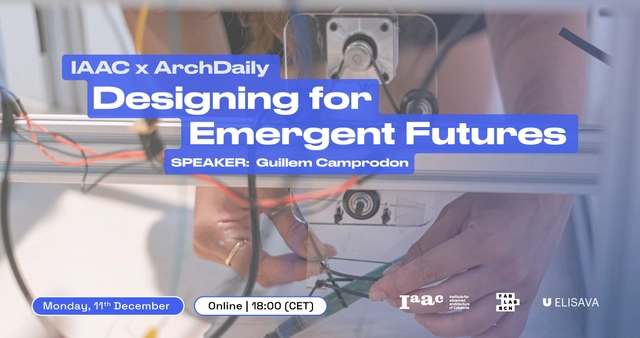
IAAC x ArchDaily - Designing for Emergent Futures. We are currently experiencing a moment of rapid transition. Moving forward, we will need to design for a different world than what we have known. It is crucial to incorporate new skills to navigate in this hyperlocal and hyper-connected world. By leveraging small-scale interventions, we can approach large-scale challenges and address wicked problems without relying solely on single moonshot solutions. Through an analysis of the current global state of affairs and societal challenges, we encourage the production of platforms, products, and deployments for emergent futures.
https://www.archdaily.com/1009611/iaac-x-archdaily-webinar-designing-for-emergent-futuresArchDaily Team
The need for natural materials to replace synthetics in our homes is driving innovation in all areas of design. Typically high on plastic and glass content, lighting is particularly up for scrutiny. While some have provocatively returned to the likes of animal bladders in search of organic translucency, others have looked to natural fiber favorites such as rattan, cane and linen. For others, it’s a choice of minerals such as alabaster, whose properties allow for beautiful ambient diffusion of light. And the search goes on.
Joining the quest for earth-friendly translucency is French designer Elise Fouin, a one-time member of Andrée Putman’s studio. Nebulis, her latest design for Paris-based lighting makers Forestier, follows her successful airy creations for the brand, the Papillon and Libellule collections, both inspired by ethereal nature. Nebulis, on the other hand, is made by nature in a gossamer-light yet solid form.
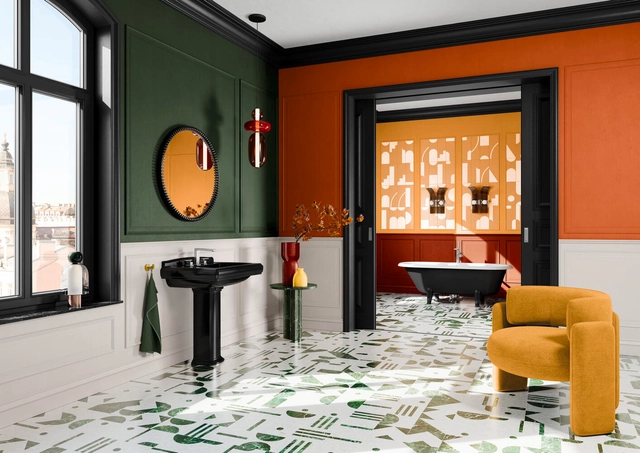
With Hommage, Villeroy & Boch has been recalling, for over two decades, the origins of the bathroom at the start of the 20th century. Now, the collection of washbasins, WCs and a freestanding bathtub is getting a color update in matte black. Image Courtesy of Villeroy & Boch
What if François Boch –a frustrated French cannonball foundryman who left it behind to instead found a pottery workshop with his sons in Audin-le-Tiche, France– had never existed? What might the modern bathroom look like today?
We can't answer that, of course, but we do know that Boch's decision in 1748 certainly laid one of the founding stones for it – even if they started out only making simple clay pots and jugs. The business quickly flourished and history took its course. This was also due to the fact that, with the help of some new formulas, the company succeeded in producing lighter earthenware and more elaborate shapes that were more affordable than expensive porcelain.
Videos
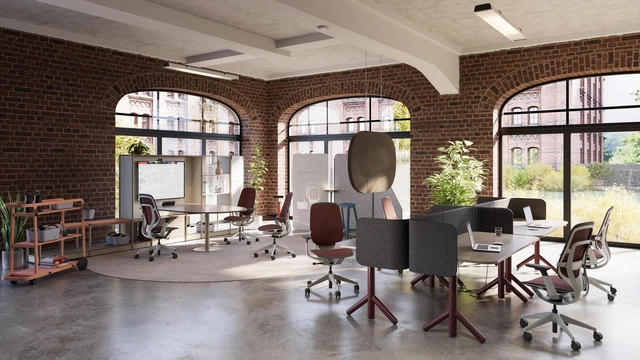
Aesthetically, Steelcase Karman is made to blend into a modern interior with soft technology that is not visible to the eye. It diminishes the style gap between office and living furniture. Image Courtesy of Steelcase
Essential design. I’ve found myself writing this phrase a lot lately. It can be applied to many new products put out by furniture brands who are aware of their role in preserving the environment’s resources, and of the changing, more mindful market. It has become in itself an aesthetic direction that acknowledges the need for restraint. It is performance with no excess, technology that’s invisible; functionality with economy of form. Today, if we are putting more stuff out there, it needs to justify its existence more than ever.
Take the office chair. It’s been designed and redesigned, had knobs put on, not to mention levers. It’s been made to look technical, it’s been made to look like an armchair. In effect, excessive detail and over-complicated adjustment systems have often made the seat’s ultimate performance unattainable for the majority of users. So what’s next for the task chair in this age of restraint?
https://www.archdaily.com/1010028/form-and-function-in-balance-the-essential-design-office-chairEmma Moore
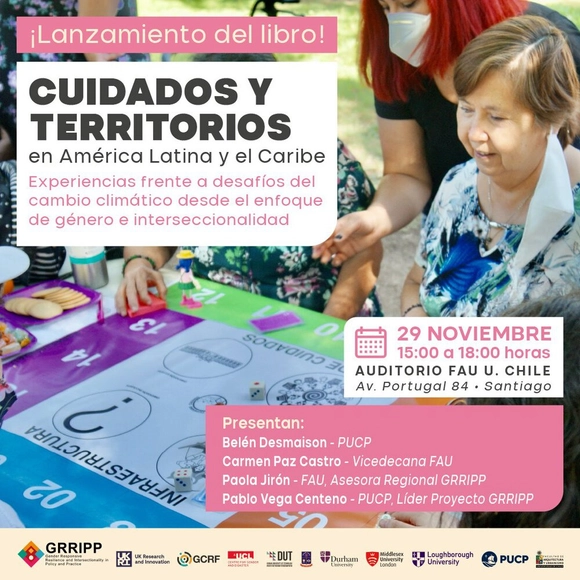
The Pontificia Universidad Católica del Perú (PUCP) will host the book launch event for "Care and Territories in Latin America and the Caribbean: Experiences Facing the Challenges of Climate Change from a Gender and Intersectionality Perspective," at the auditorium of the Faculty of Architecture and Urbanism (FAU) at the University of Chile.
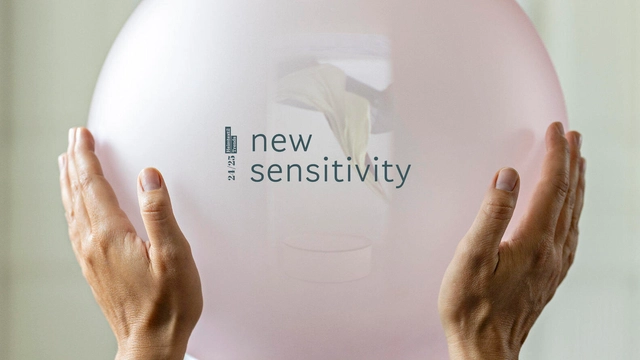
Winds of change continue to blow through the international textile sector. From 9 to 12 January 2024, when the exhibition halls in Frankfurt am Main will once again be full and bustling for Heimtextil, visitors will experience an omnipresent reorientation in the field of home and contract textiles: a move away from the classic trend concept as an economic driver, towards transformation in the direction of sustainable value creation.
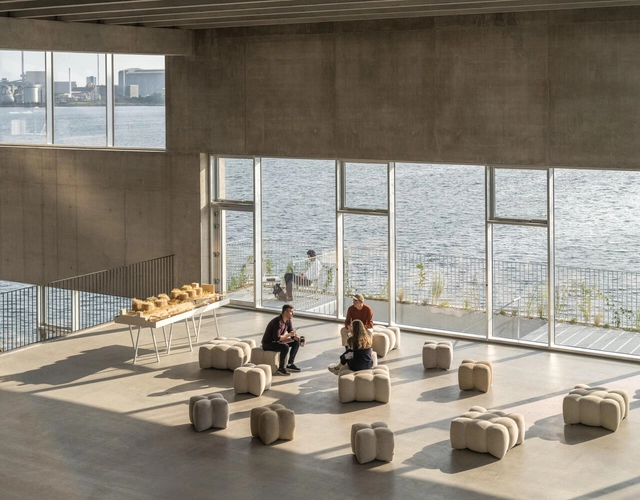
Surrounded by water and with a distinctly energetic vibe, Danish architecture studio BIG – Bjarke Ingels Group has based its new headquarters in Copenhagen's flourishing harbor district, Nordhavn. With its newly constructed office building, the design pioneers are striving to showcase the art of blending technology, innovation and creativity while also designing a space that nurtures inventiveness and fosters a sense of community in the workplace.
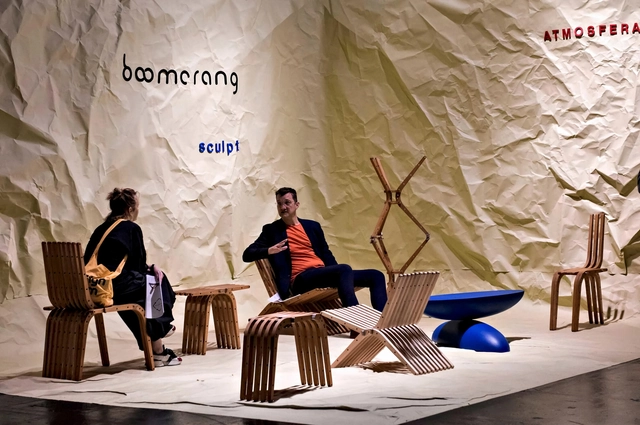
Let’s be honest. There’s been a certain amount of speculation over the past while about the future of imm cologne, the international furniture fair that’s traditionally kicked off the calendar year, acting as a compass to the design landscape of the following twelve months. Like every physical trade fair, it has had to navigate white waters: pandemic strictures, turbulent macroeconomics and the continued expansion of alternative channels.