Registration is now open for the third cohort of the Insper Executive Education short course, "Urban Innovation: New Ways of Shaping Cities," in partnership with Arq.Futuro. With a 40-hour curriculum starting on October 1st, the course aims to help train citizens capable of interpreting the reality of urban spaces and adopting a critical stance on the future of cities.
As part of the sustainable financing talk series by the ethical banking sector, the talk "Social Housing and Sustainable Cities" will be held on Wednesday, May 16, at 9 AM at the Doble Impacto offices, located at 727 Los Jesuitas, Providencia, Santiago, Chile.
The IABsp will host two debates as part of the programming for the curatorial competition for the 12th International Architecture Biennial of São Paulo. These debates aim to raise concerns and pose provocations that may be reflected in the proposals. The first, "Context: Brazil, Today," will be held on June 23rd and focuses on the national landscape.
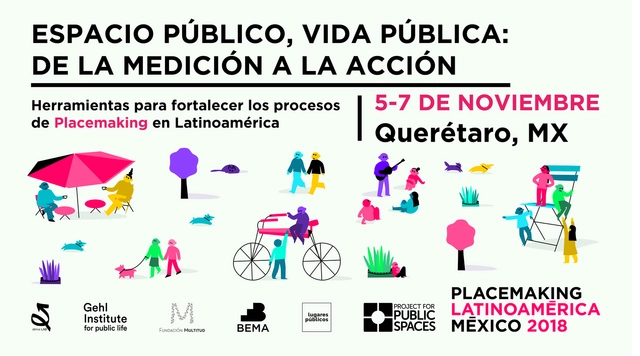
Public Space, Public Life: From Measurement to Action is a workshop organized by dérive LAB and the Gehl Institute, taking place from November 5 to 7 in Querétaro, Mexico. The event is held as part of the 2nd Placemaking Latinoamérica gathering, a movement launched in 2016 to bring together experiences in participatory urbanism across Latin America.
The 2nd "Art, Cities, and Urbanities" Meeting is a project organized by the URBANIDADES Research Group (PPGAV-UFBA) that aims to bring together researchers and artists in Salvador, Bahia, to discuss and explore artistic practices within urban contexts.
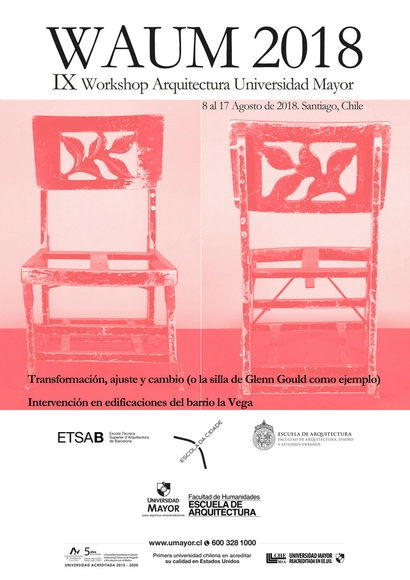
Since 2010, the School of Architecture at Universidad Mayor in Santiago has hosted an annual international workshop, inviting architecture schools from around the world to collaborate for nine days. In addition to the core work, related lectures are held, and the final results are presented to an external jury.
Architect and graphic artist Gilberto Tomé is launching the publication “Ó: Path, Road, Avenue” on February 17, 2018, from 11:00 AM to 8:00 PM, at 260 Carijós Street (at the corner of Avenida Santa Marina), in a warehouse located next to the CPTM Água Branca Station (Ruby Line 7).
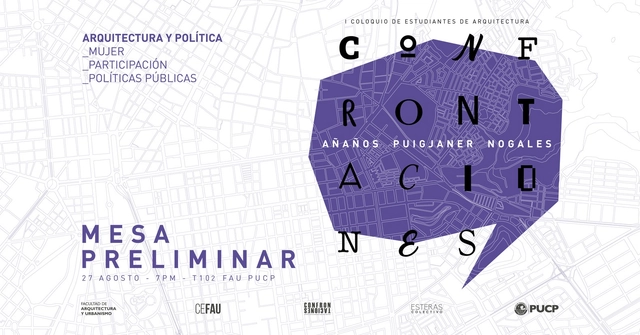
The Colectivo Esteras, in collaboration with the Centro Federado and the FAU PUCP, is organizing the 1st Architecture Student Colloquium 'CONFRONTATIONS'. The event will focus on the relationship between architecture and politics, featuring three panel discussions: gender, participation, and public policy. The speakers for these sessions will be Elizabeth Añaños, Lucía Nogales, and international guest Anna Puigjaner.
We are pleased to invite you to the inauguration of this colloquium, which we will be following closely on this platform. We believe in the ability of students to stir up debate from within the classroom and generate valuable knowledge on current issues where architecture plays a significant role by drawing from other fields. The first session is this Monday the 27th at 7:00 PM. Not to be missed.
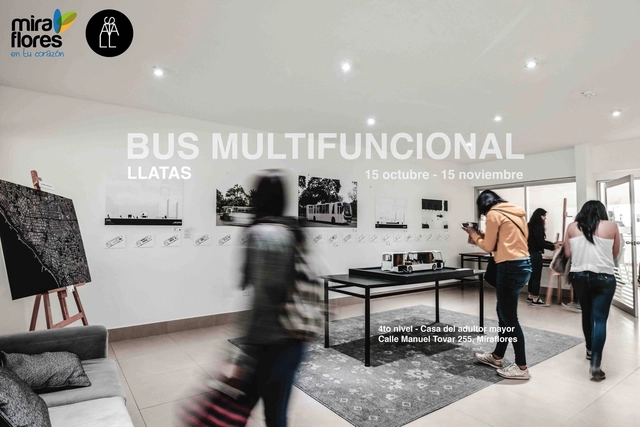
We are fascinated by mobile architecture. This exhibition is based on a multifunctional bus that will travel through the Miraflores district, allowing citizens to engage in multiple activities, ranging from paying taxes to hosting concerts. The exhibition, curated by the architecture firm LLATAS, features plans, images, interactive maps, models, and a space for citizens to draw and write down their ideas. It runs until November 15, Monday through Friday, from 10:00 AM to 8:00 PM. Don't miss the bus!
The Designia journal of the Faculty of Architecture, Design, and Urbanism at the Universidad de Boyacá extends a cordial invitation to the national and international academic community to submit research articles in the fields of architecture, design (graphic, industrial, fashion), visual arts, urbanism, heritage, and museology for publication in Volume 5, Number 2 of the journal.
Videos
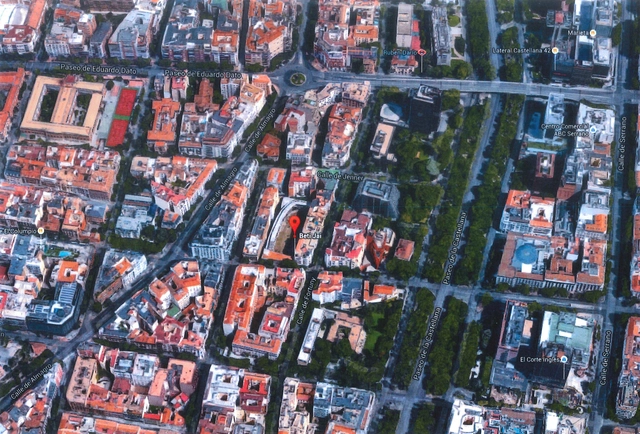
Ubicación de Beti Jai en Madrid. Image Cortesía de COAM
The Madrid City Council, in collaboration with the Official College of Architects of Madrid (COAM), has launched a competition for the adaptation and rehabilitation of the historic Beti Jai fronton (always party in Basque) in the Spanish capital.
This former sports facility for Basque pelota, which seats 4,000 spectators, was designed by Joaquín de Rucoba and inaugurated in 1894. It served various purposes after 1918, when it ceased to function exclusively as a sports venue, until it was completely abandoned in 1989. In 2015, the Madrid City Council acquired the site, following concerns over its uncertain future raised by local organizations such as Madrid, Ciudadanía y Patrimonio.
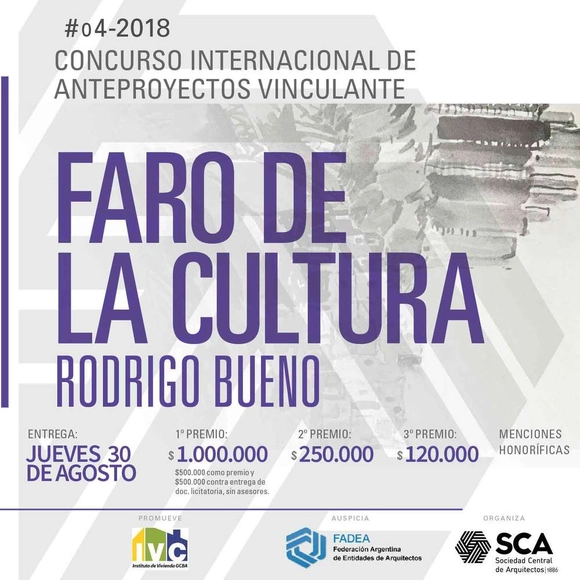
Organized by the Sociedad Central de Arquitectos, this international competition seeks the development of a preliminary design for the Faro de la Cultura (Lighthouse of Culture), a cultural center to be located in the Rodrigo Bueno neighborhood of Costanera Sur, between the ecological reserve and the former Boca Sports City.
The project’s primary objective is to stimulate integration and equitable access to facilities for all local residents, fostering community engagement.
Ideasforward is an experimental platform that seeks progressive ideas reflecting emerging themes. Ecological design, sustainable architecture, new materials, concepts, and technologies are pressing issues for the societies of the future, and the participation of the entire community is essential. In an era of globalization, where communication has been dominated by the technological revolution, there is a need to rethink cities and how humanity relates within a global world, as well as to reconsider the economic, social, and cultural patterns of contemporary societies.
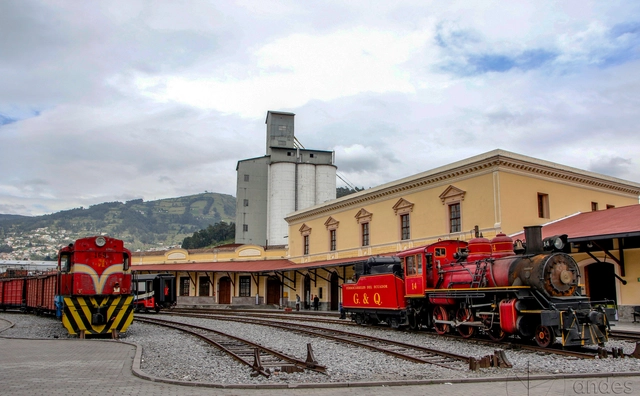
The Municipality of Quito, through the Metropolitan Institute of Urban Planning (IMPU) and the Pichincha Architects Association (CAE-P), invites architects, urban planners, and other professionals to participate in a competition aimed at the urban renewal of the railway corridor in southern Quito.
This competition seeks to reimagine the corridor, which currently only serves the tourist train, and whose spatial, environmental, economic, and social potential remains untapped. Consequently, the competition encourages the development of proposals that integrate and acknowledge this historic infrastructure within the city, highlighting its potential as an inclusive and connective public space. The goal is to create gathering spaces and incorporate facilities, retail, and services that enhance the current use and character of each sector. Participants may even rethink the role of this corridor for various urban functions, regardless of whether the train remains in operation. The corridor spans approximately 13 kilometers and traverses areas with a significant diversity of dynamics, land uses, and levels of urban consolidation.
The journal Designia invites the national and international academic community to submit research-based articles in the fields of Architecture, Urbanism, Design (graphic, industrial, and fashion), Heritage, Museology, and Visual Arts for publication in Volume 6, Issue 1.