

-
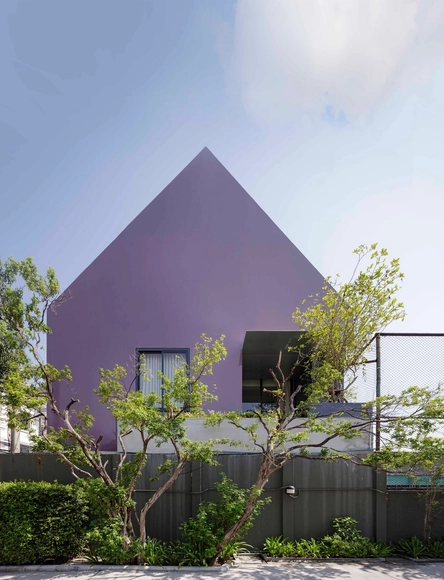
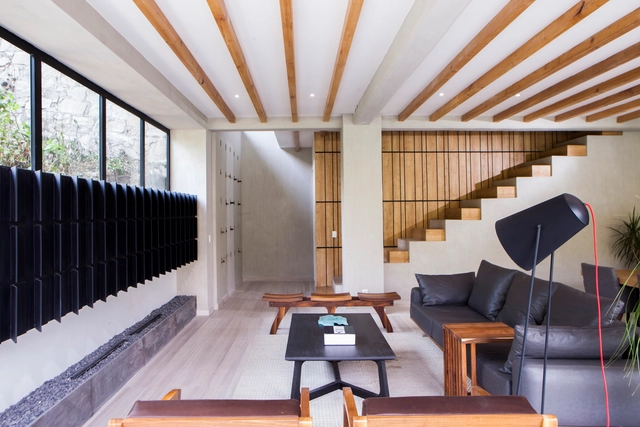
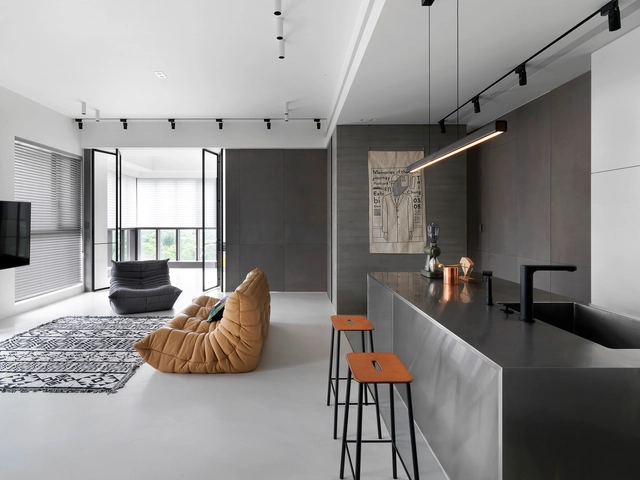
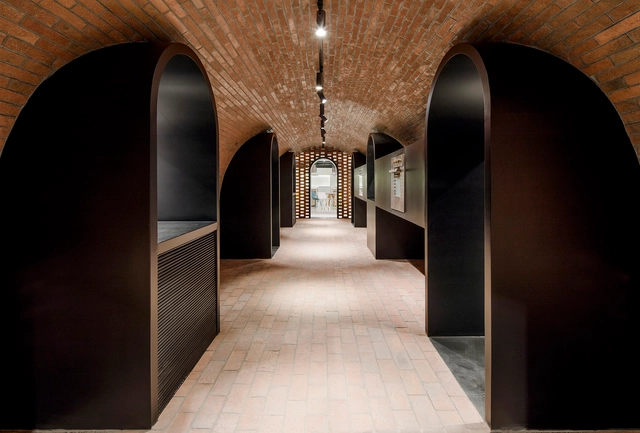
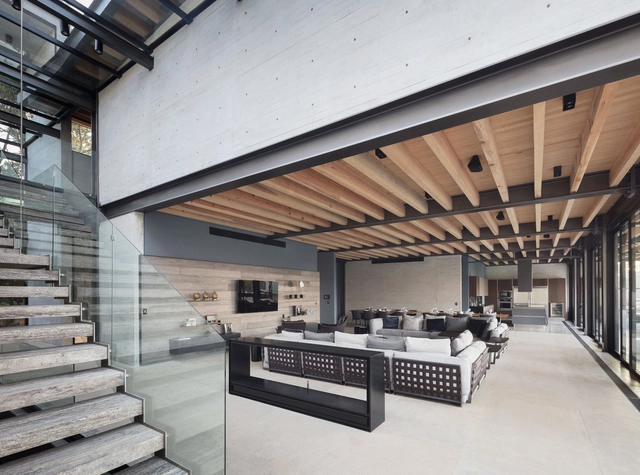
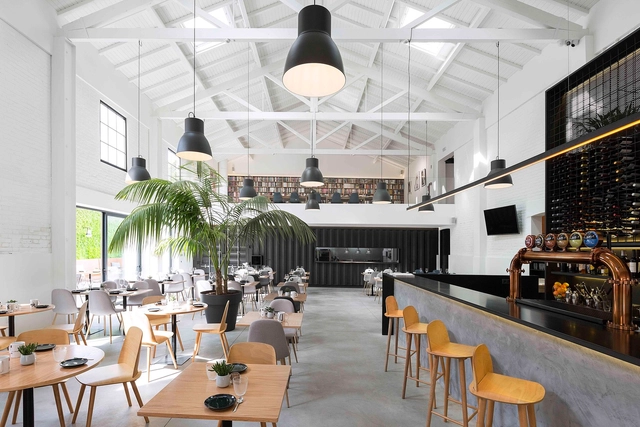
Architects: dongqi Design
- Area: 100 m²
- Year: 2017

How long-term should urban planning be?
Munich’s Oktoberfest, the Kumbh Mela pilgrimage in India (or the largest gathering of humans on the planet), the Burning Man Festival in Nevada, and other major events demonstrate that flexible architectural configurations are temporarily deployed around the globe to provide medium-term shelter, often to enormous crowds. Such structures fulfill a range of functional tasks and are used in religious and cultural festivals or can take the form of military camps, refugee camps, or even temporary mining towns. This show traces a global phenomenon that has become increasingly topical given today’s current state of mass migration triggered by climate change, political strife, and natural disasters.

As a point of entry and exit, a threshold has a dual coding in society as both a physical and symbolic marker of separation and connection. Thresholds are often explicitly hard-edged or even brutal in their expression, demarcating rigid boundaries, as in the definitive lines of walls, barricades, and security checkpoints in buildings, around cities, or across larger territories. Too often, thresholds also divide human activity or communities according to social, ethnic, national, or economic characteristics. Architecture and planning can unwittingly contribute to these different forms of physical separation, especially in ways made visible through their practitioners’ interpretations of culture, religion, or legislation. As the academic disciplines that inform spatial practices, architecture and planning are themselves often similarly separated by disciplinary thresholds, inhibiting porosity between fields of research. By definition, an individual discipline necessarily is organized around a self-referential center of discursive production, but this often happens at the expense of the richness found at the intersection of multiple disciplinary perspectives. Is architecture, in its compulsive drive to create the autonomous object, inherently hardening the thresholds separating it from other disciplines and, by extension, reproducing those schisms within the built environment? Can architecture and planning intentionally construct soft thresholds―lines that are easily traversed, even temporarily erased―thereby allowing for multiple perspectives across different modes of research and practice and catalyzing disciplinary and social connections? What, then, is the physical expression of a soft threshold―a space that is visually and physically porous, plural in spirit, encompassing of its context, and yet rigorous in its expression?

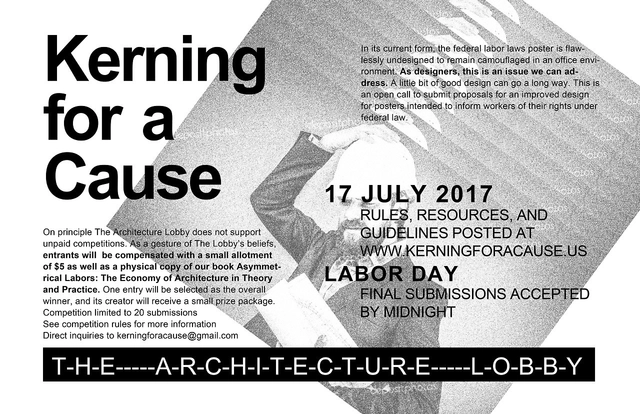
The Chicago Chapter of The Architecture Lobby announces its second annual design competition, Kerning for a Cause, beginning July 17, 2017.



The aim of the competition is to rejuvenate the land on the other side of the Taj Mahal, across the river; on the site of the Mehtab Bagh.