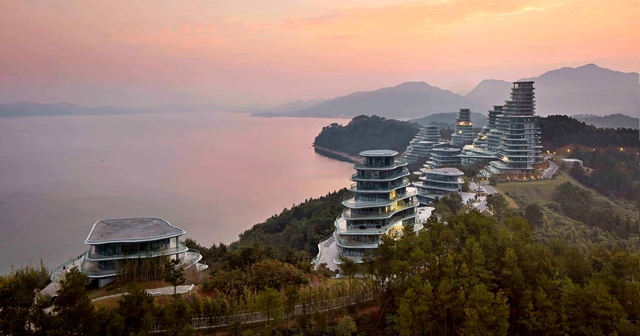
With the unconventional, undulating forms of his buildings—and the fact that his path to architectural success included a stint working for Zaha Hadid—Ma Yansong is often miscategorized as an architect of the latter generation of Deconstructivists, interested only in futuristic forms that push the boundaries of technology for the sake of innovation as an end in itself. But in fact Ma’s designs, especially those in his home country of China, are deeply rooted in nature and tradition, as he explains in the latest interview from Vladimir Belogolovsky’s “City of Ideas” series.
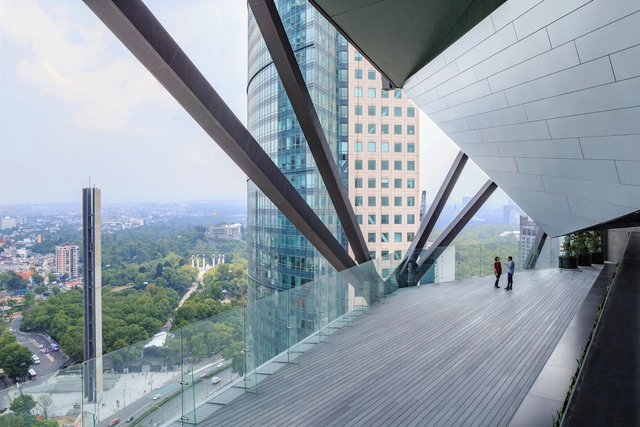
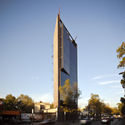
Visiting Mexico City several times in recent months enabled me to get to know a number of leading architects there. In the process, I was in turn directed to other architects that were new to me, whom I then discovered were, in fact, the leading and most revered architects in the country according to the local architectural community. I am particularly referring to Alberto Kalach and Mauricio Rocha, whose interviews were published in this column last year, and Benjamín Romano, whose name came up when I asked a number of architects to cite their favorite building from recent years in Mexico City. Along with the absolute favorite, Vasconcelos Library by Kalach, another structure stood out: Torre Reforma, a 57-story office tower, the tallest building in the city. The following conversation with Romano, its architect, took place inside this unusually powerful and inventive structure.
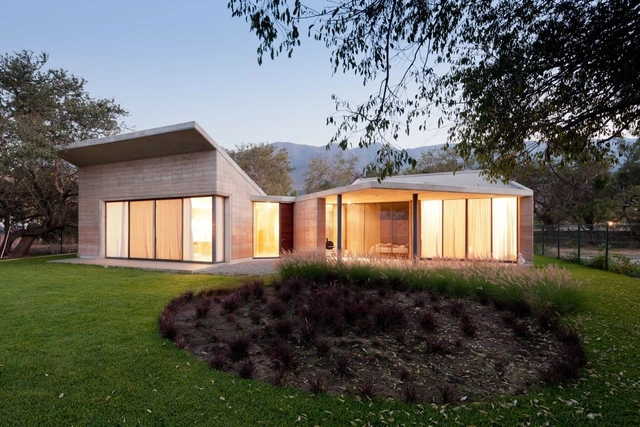
As part of a generation of designers that have, in recent years, put Mexico on the map, Tatiana Bilbao is an architect that is increasingly part of the profession’s global consciousness. But, while some Mexican architects have made their mark with spectacular architecture following the international trend of “iconic” architecture, Bilbao opted instead for a more people-focused approach. In this interview, the latest in Vladimir Belogolovsky’s “City of Ideas” series, Bilbao explains how she got into this type of community-building architecture, her thoughts on architectural form, and her ambitions for the future.
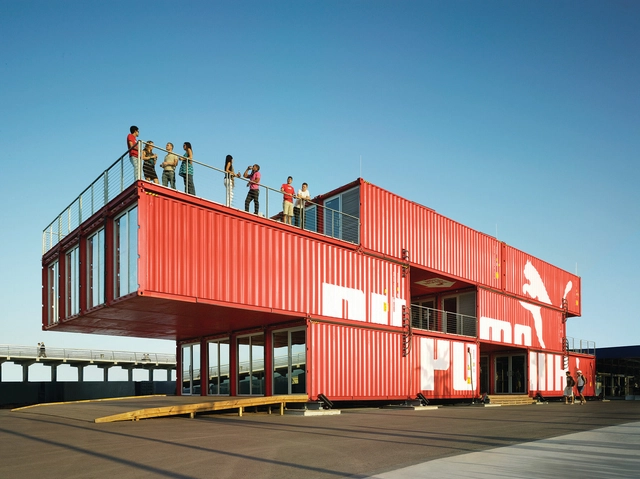
Shipping containers, once a darling of architectural upcycling, have received a lot of criticism recently, as architects are beginning to recognize that their perceived advantages—ready-made habitable space and structure, and an opportunity to recycle a widely available material—are based in little more than hopeful PR spin. But for one of the most prominent practices which regularly uses shipping containers in their work, LOT-EK, the attraction of these architectural ready-mades always went beyond the ecological and practical rationalizations provided by others. In this interview at the firm's New York studio, part of Vladimir Belogolovsky’s “City of Ideas” series, LOT-EK founders Ada Tolla and Giuseppe Lignano discuss the conceptual foundations of their fascination with shipping container architecture.
As the son of famed Mexican architect Ricardo Legorreta, and now the leader of the firm which he joined under his father in 1989, Victor Legorreta is one of Mexico’s most visible architects. In this interview, the latest in Vladimir Belogolovsky’s “City of Ideas” series, Legorreta discusses the complexities of following in the footsteps of his father and how, in his view, good architecture is made.
In the decade since the start of the financial crisis, there has been an explosion in the number of architectural practices that have pursued unusual and ingenious business models—among the most popular of which is the concept of the developer-architect, who serves as their own client. With his architecture firm and development company JSa, Javier Sanchez has been proving this concept since long before the financial crisis hit. In the latest interview of his City of Ideas series—and the third of his interviews with Mexican architects after Enrique Norten, Alberto Kalach and Mauricio Rocha and Gabriela Carrillo—Vladimir Belogolovsky speaks to Sanchez about the benefits of working as one’s own client and how JSa leverages its business model to improve the city.
In August I moderated a round table at UNAM in Mexico City in which I posed a provocative question: is architecture art? The participants, architects Mauricio Rocha, Gabriela Carrillo, and Victor Legorreta argued that despite architecture’s limitations, it is architects’ attempts to overcome them that makes it art. Meanwhile Gabriel de la Mora, an artist trained as an architect, drew a line, separating the two disciplines: “Art is art and architecture is architecture,” he insisted. Yet both sides were not quite satisfied with their initial assertions and the discussion continued, opening up to many interesting positions that pulled and pushed the interlocutors closer together and further apart with every attempt to give an explanation. I loved the discussion and I hoped we would not reach any definitive answers; the last thing we need in architecture is a consensus. It is our insistence on questioning that leads to new visions and unique solutions.
The following is my conversation with Rocha and Carrillo, as part of my City of Ideas column, in which we talked about their desire to make gravity feel light, seeing each project as a dialogue, their love for making decisions based on accidents, and their disinterest in being perfect. The architects strive to achieve a “meaningful silence” and they prefer to pay no notice to that line between architecture and art, the boundary that so few architects even dare to approach.
By God, don’t walk by me, I am an architect. I am trying to show you something. Look at it! - Morris Lapidus
Never before there were so many distinctive and original voices and visions in architecture. Multiplicity of voices is the defining feature of architecture’s current moment. Architecture of distinction and originality is being produced all around us. Our built environment is growing ever more diverse and complex. Is architecture oversaturated with ideas? How many architectures do we need? How can we remain critical by being exposed to such a proliferation of voices? Do architects need common ground? Should architects’ voices be amplified? Should architecture be ego-driven? Is iconic and signature-style architecture still relevant?
Last month I went on an enlightening trip to Mexico City, during which I had a chance to meet with half a dozen leading Mexican architects and critics. Those meetings included insightful conversations with Miquel Adrià, Tatiana Bilbao, Victor Legorreta, Mauricio Rocha, and Michel Rojkind among others (many of which will also feature in future installments of City of Ideas). I asked them many different questions, but two were consistent: “who would you name as Mexico’s best architect at this moment?” and “what one building built in the capital over the last decade is your favorite?” All of my interviewees pointed to Alberto Kalach (born 1960) and his Vasconcelos Library (2007). My Conversation with Kalach took place the next day after visiting the library on the rooftop of another one of his iconic buildings, Tower 41 overlooking Bosque de Chapultepec, Mexico City’s Central Park. We spoke about books, libraries, and his idea of buildings as inventions.
Of the Pritzker Prize’s illustrious list of laureates, the 1994 winner Christian de Portzamparc is perhaps the least covered by the media. However, this relatively low profile belies the subtle and insightful understanding of architectural and urban issues that in many ways puts him decades ahead of the curve – with the sociologically-led principles he has been developing since the early 1980s now becoming widely popular in architectural circles. In this interview, the latest in Vladimir Belogolovsky’s “City of Ideas” column, Portzamparc explains the journey that led to this unique take on architecture.
For many observers, Thom Mayne might easily be considered the most unpredictable personality in architecture. Once labeled the “bad boy of architecture” by critics—a moniker which he has, at times, enthusiastically adopted and even encouraged—Mayne's actions in the architecture world can range from something as responsible as designing one of the United States' most sustainable university campuses to something as outrageous as proposing one of the world's tallest towers in a revered Austrian mountain town. In this interview, the latest from Vladimir Belogolovsky's “City of Ideas” series, Mayne discusses his ideas, his past statements on architecture, and where he thinks the profession will go next. The interview was originally published by the Berlin-based SPEECH Magazine.
Soori Bali, Indonesia, 2005. Image Courtesy of SCDA Architects
By combining such concepts as phenomenology, sustainability and formal exploration, which have become part of a particularly Singaporean conception of architecture, Soo Chan of SCDA Architects occupies an unusual niche within the architecture profession. To complement this wide range of interests, his firm also engages in a wide range of activities, working on architecture, landscape, and interiors projects, and even acting as its own developer on a number of occasions. In this latest interview from Vladimir Belogolovsky's “City of Ideas” column, Chan discusses the early experiences that led to his current understanding of architecture, and how the context of Singapore has affected his designs.
Vladimir Belogolovsky:Was architecture on your mind from an early age? What was it that first attracted you to the discipline?
Soo Chan: I was deeply influenced by the house I grew up in, the Khoo Kongsi compound in Penang, an island off the west coast of Malaysia. Khoo Kongsi was planned around a central communal courtyard where many generations of my extended family lived, and it is a UNESCO World Heritage site today. I can still picture the spatial and light qualities of the long and narrow house I grew up in, punctuated with open air wells. I remember the smell of fresh rain coming deep into the house on to the sunken courts, and the pockets of light and darkness in the house.
For 40 years, Paul Andreu was among the world's foremost airport design experts. Reflecting on this before the turn of the millennium, he stated that architectural historians of the future might consider the 1990s as “the age of the air terminal.” But shortly after this, he left the arena of airport design to focus on other large projects, many of them in China. In this interview, the latest of Vladimir Belogolovsky's “City of Ideas” series, Andreu explains why he made the switch and shares his thoughts on how good architecture is made—saying it often depends more on what you don't tell your client than what you do.
Casa de Retiro Espiritual. Image Courtesy of Emilio Ambasz
While many of the pioneers of green architecture could arguably be criticized as technocratic and dry, this has never applied to Emilio Ambasz. His concept of “green over gray” has been pushing the debate around sustainability forwards since the 1970s, but alongside this concept he has developed a critical approach to architectural meaning and form-making which competes with many of architecture's more poetic practitioners. Ahead Vladimir Belogolovsky's upcoming exhibition of Ambasz's work, “Emilio Ambasz: Architecture Toward Nature,” which is on show at the Singapore's Urban Redevelopment Center from February 6th – 28th, here Belogolovsky shares his interview with the architect – the latest interview in his “City of Ideas” column.
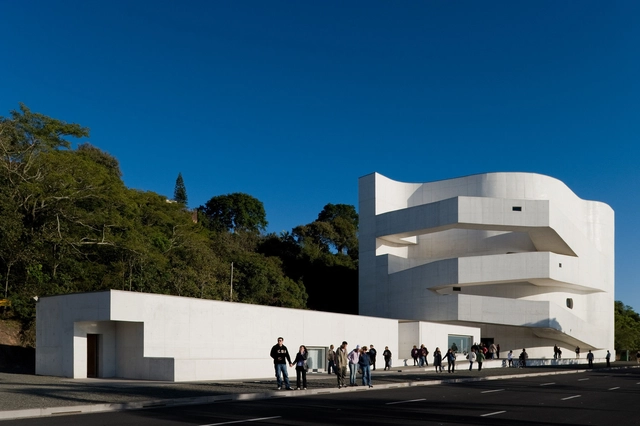
Throughout the 60-year career of Álvaro Siza, his work has continuously defied categorization--having variously been described as “critical regionalism” and “poetic modernism,” with neither quite capturing the true essence of Siza's intuitive architecture. In this interview, the latest in Vladimir Belogolovsky's “City of Ideas” series, Siza discusses those attempts to categorize his work, his design approach and the role of beauty in his designs.
Vladimir Belogolovsky:Your student, Eduardo Souto de Moura said, “Siza’s houses are just like cats sleeping in the sun.”
Álvaro Siza: [Laughs.] Yes, he meant that my buildings assume the most natural postures on the site. There is also a reference in that to the human body.
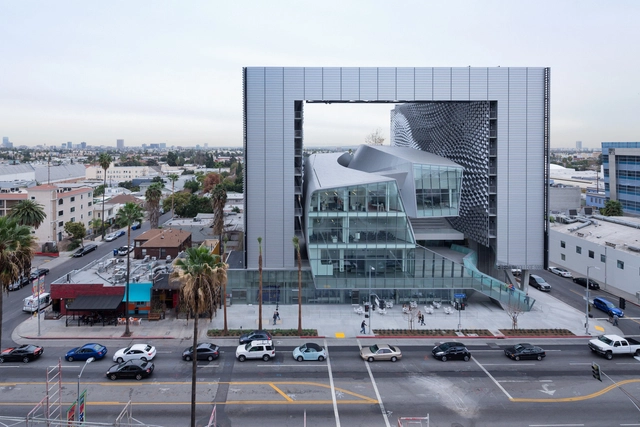
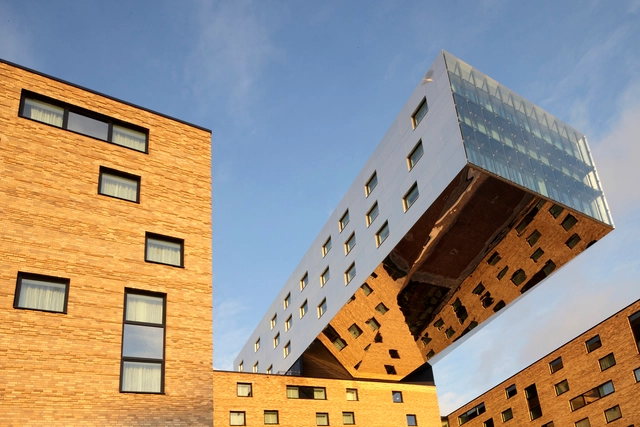
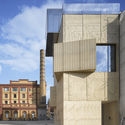
After receiving his education at the Repin Institute for Painting, Sculpture and Architecture in St. Petersburg, Sergei Tchoban moved to Germany at the age of 30. He now runs parallel practices in both Berlin and Moscow, after becoming managing partner of nps tchoban voss in 2003 and co-founding SPEECH with Sergey Kuznetsov in 2006. In 2009, the Tchoban Foundation was formed in Berlin to celebrate the lost art of drawing through exhibitions and publications. The Foundation’s Museum for Architectural Drawing was built in Berlin in 2013 to Tchoban’s design. In this latest interview for his “City of Ideas” series, Vladimir Belogolovsky spoke to Tchoban during their recent meeting in Paris about architectural identities, inspirations, the architect’s fanatical passion for drawing, and such intangibles as beauty.
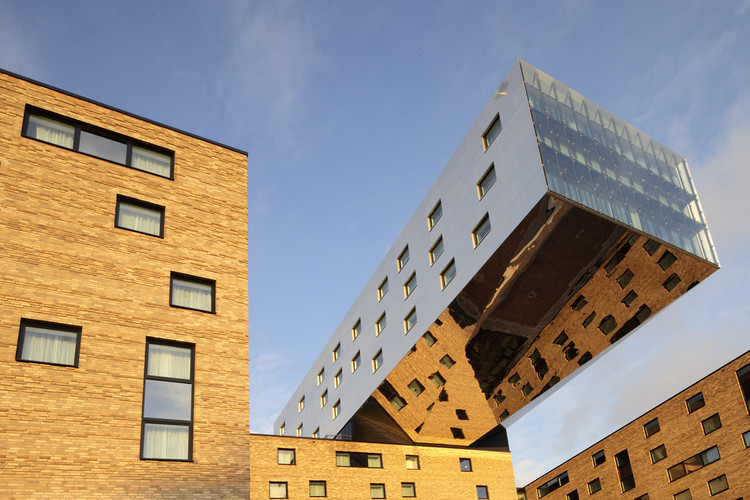
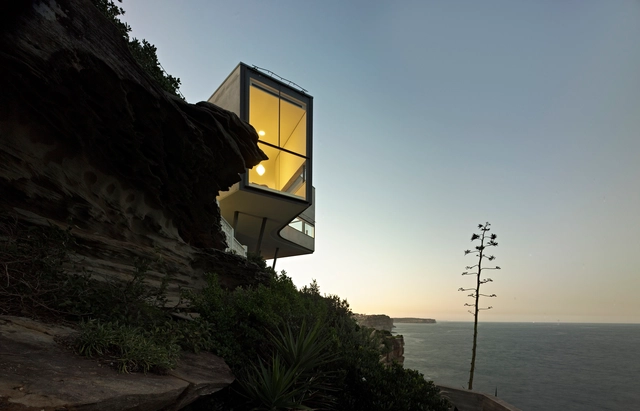
Alongside Camilla Block and David Jaggers, Neil Durbach of Durbach Block Jaggers has carved out a unique place in Australian architecture. Known primarily for their carefully sculpted modernist houses, the firm's architecture is simultaneously rich in architectural references and thoroughly original. In this interview, the latest in Vladimir Belogolovsky's “City of Ideas” series, Durbach explains the true inspirations behind their work, why these inspirations have little to do with the public descriptions of their projects, and why for him, the intention of all of his architecture “is to win Corb’s approval.”
Vladimir Belogolovsky:You came to Australia while the Sydney Opera House was still under construction. Does this mean you were here even before going to the US?
Neil Durbach: Yes, I first came to Australia as an exchange student while still in high school.
VB:So you have seen the Opera under construction then. How special was that? Did that building change anything in particular in you?
ND: Well, at that time I wanted to be an artist. A friend took me on a boat to see it. It was kind of staggering... And I thought – you know, this is much more interesting than art. And I felt – maybe architecture is what I should pursue.
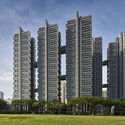
Driven by the hyper-density of the city-state from which they operate, WOHA have emerged as Singapore's quintessential architects. Combining a locally-specific approach to climate control and spatial planning with an international approach to form and materials, their work holds lessons that can be instructive to architects in all climates. In this interview, the latest in his “City of Ideas” column, Vladimir Belogolovsky speaks to WOHA founders Wong Mun Summ and Richard Hassell about their environmental approach and the future of our global cities.








Wade_ZIMMERMAN_15nb_p325.jpg?1499405889&format=webp&width=640&height=580)