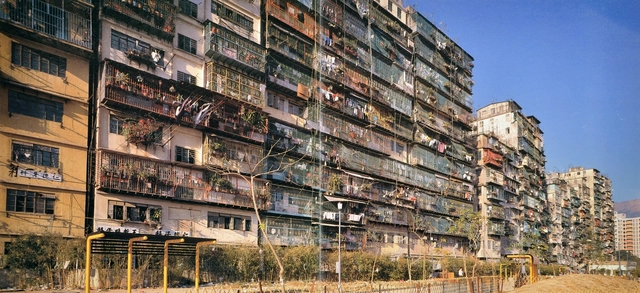
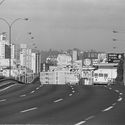
Kowloon Walled City, Hong Kong. Image Courtesy of 'City of Darkness Revisited’
Cities are growing, and they are growing upwards. This is far from just being a contemporary phenomenon of course – for more than a century, high-rises have been an integral part of urban settlements worldwide. This growing of cities encompasses a complex web of processes – advancements in transport links, urbanisation, and migration to mention a few. This growth of cities, however, is all too often linked with governmental failure to adequately support all facets of the urban population. Informal settlements are then born – people carving out spaces for themselves to live amidst a lack of state support.
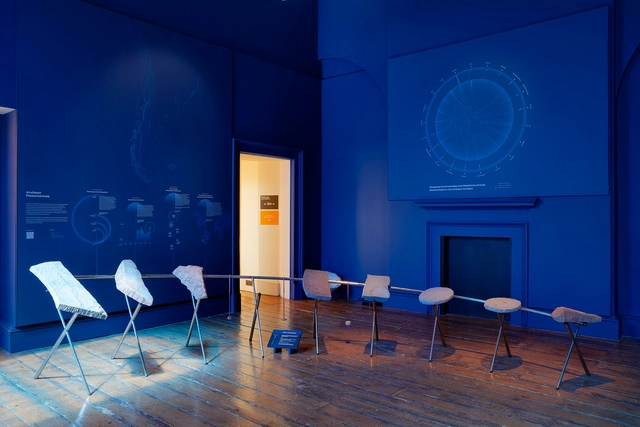
London Design Biennale 2021 Medal: Chile - Tectonic Resonances. Image Courtesy of ER
The jury of the London Design Biennale 2021 has announced today June 24 the winning pavilions to the third edition. Responding to artistic director and curator Es Devlin's theme ‘Resonance’, the Biennale brings together over 30 pavilions to showcase how design can provide solutions to the challenges of our times, from sustainability to globalization, to migration to the future of humanity.
“The winners of the 2021 London Design Biennale Medals truly illustrate the importance of design thinking to help bring social change and economic growth across the world," said John Sorrell, President of the London Design Biennale. While Victoria Broackes, Director of the London Design Biennale, stated the winners "clearly demonstrate how brilliant design can be in telling complex stories that communicate directly to hearts and minds."
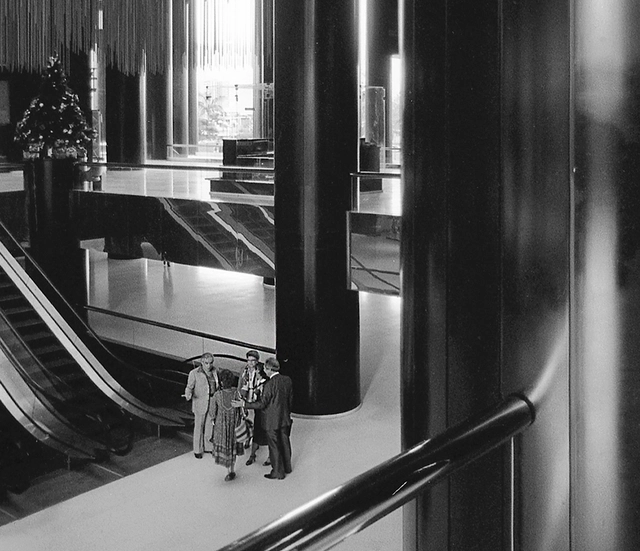
"Volumen virtual suspendido" de Jesús Rafael Soto, Centro Benaven, Chuao, Caracas, 1984. Image Cortesía de ArchivoFotografíaUrbana | Fotografía de Ramón Paolini del fotolibro "Caracas. A doble página"
Through a visual survey, architect and photographer Ramón Paolini explores the evolution of Caracas (Venezuela). The photographs capture the capital's transformation throughout the past forty years, giving viewers an in depth look at one of Latin America's most tumultuous regions, its urban development, and the socio-political aspects behind it. Most importantly, Paolini illustrates his personal vision for this urban space that builds, destroys, and rebuilds with an astounding tenacity.
In Asunción (Paraguay), the XI Ibero-American Architecture and Urbanism Biennial (XI BIAU) have presented the winners of the Panorama de Obras section (Projects Panorama) of this contest edition, "all faithful to the spirit of the XI BIAU: living, the inhabitant," according to the organization.
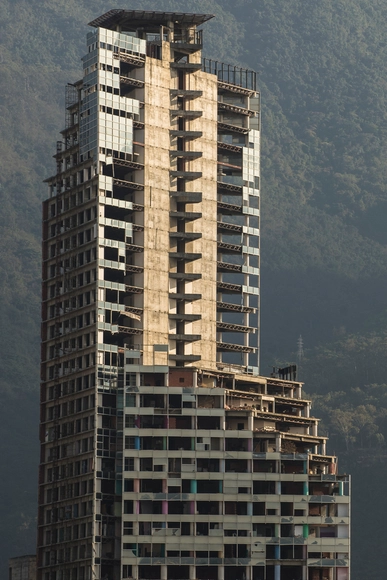
The last five stories of the Torre de David in Caracas have tilted 25 degrees following the largest earthquake to hit Venezuela in 100 years. The well-known building gained infamy as an unprecedented vertical "slum" when its construction was abandoned and squatters began to inhabit the unfinished structure.
The 190-meter skyscraper with 45 stories became Latin America's 8th tallest tower in the 1990s, but it was never completed. Officially known as the Centro Financiero Confinanzas when construction began in 1990, the project succumbed to Venezuela's 1994 banking crisis.
The CA’ASI association is organising an architectural competition highlighting the dynamics of the young Latin-American architecture. The best projects of this international competition open to young Latin-American architects will be exhibited in 2018 at the CA’ASI during the International Architecture Exhibition. This competition is a unique opportunity to underline the important role played by these countries today, reflected by the renewal of their architecture.
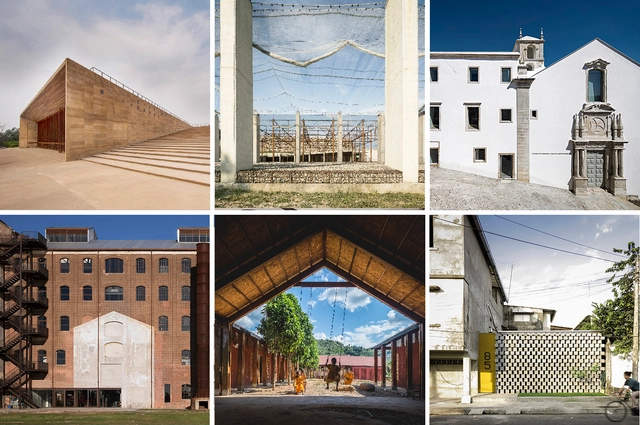
After four months of research identifying works in Latin America and the Caribbean that met the eligibility criteria of the 'Latin American Architecture Prize Rogelio Salmona: open / collective spaces' a list of finalist has been compiled. Members of the International Curatorial Committee, architects Ana Maria Duran (Andean Region), Ruth Verde Zein (Brazil Region) and Fernando Diez (Southern Cone Region), and Art History background Louise Noelle Gras (Mexico, Central America, and the Caribbean Region), postulated a total of 62 works covering the four regions.
On the 5th of August, upon completion of a shortlist the International Curatorial Committee selected 20 works whose authors will be invited by Rogelio Salmona Foundation to participate in the second round of this award.
Here are the 20 Finalists of the Latin American Architecture Prize Rogelio Salmona.
https://www.archdaily.com/793516/these-are-the-20-finalists-of-the-latin-american-architecture-prize-rogelio-salmonaArchDaily Team
Felipe Correa’s latest book “Beyond the City: Resource Extraction Urbanism in South America” takes us to a region that architects and urban designers typically have neglected—the hinterland. The South American hinterland provides a unique subject of analysis as it has typically been urbanized for its natural resources, which are tethered back to the coastal cities where these resources are either consumed or distributed to global markets. Within this context, the hinterland is viewed as a frontier whose wilderness is to be tamed, put to work, and territorialized through infrastructure and urban design. Beyond the City provides an insightful look into these processes and the unique urban experiments that emerged in South America. Organized by five case studies, Beyond the City is tied together by what Correa has termed “resource extraction urbanism,” which he links to “new and experimental urban identities in the context of government-sponsored resource extraction frontiers.” Written as a lucid historical account that anchors the discussion within the political, economic, and social context, as well as within global design discourse, the book is also projective—setting the table for a series of questions on how design can act in these landscapes.
There is an enormous intensity of information, knowledge and ideas on display at this year's Venice Architecture Biennale, Reporting From the Front. With all the Executive Editors and Editors-in-Chief of ArchDaily's platforms in English, Spanish and (Brazilian) Portuguese in Venice for the opening of the 2016 Venice Architecture Biennale—plus co-founder David Basulto and European Editor-at-Large James Taylor-Foster, who curated this year's Nordic Pavilion—we've pooled together twelve of our initial favourite exhibitions and must-see shows.
https://www.archdaily.com/788809/12-things-you-need-to-see-at-the-2016-venice-biennale-reporting-from-the-front-selection-oneAD Editorial Team
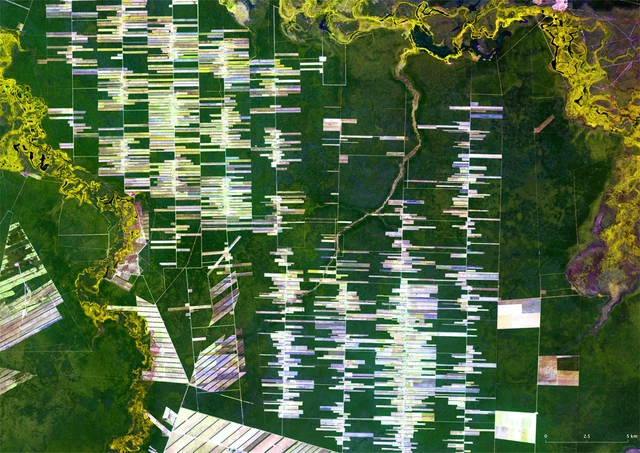
The Project of a Collective Line: Santa Cruz in Bolivia is an agro-export region dominated by transnational corporations. Image Courtesy of USGS
The following article was first published by Volume Magazine in their 47th issue, The System*. You can read the Editorial of this issue, How Much Does Your System Weigh?, here.
In 2006 Venezuelan President Hugo Chávez, Brazilian President Lula da Silva and Argentinean President Néstor Kirchner proposed the construction of a gas pipeline connecting Venezuela to Brazil and Argentina, called the Gran Gasoduto del Sur. Although the project was never built, its path through the Amazon rainforest foregrounds the violent nature of resource extraction. At the same time, the project raised unique questions regarding the architecture of collective politics, particularly if understood in the context of the last fifteen years of political transformations throughout Latin America.
Continuing with our coverage of Espacios de Paz 2015 (Spaces for Peace) in Venezuela, Plataforma Arquitectura Editor José Tomás Franco reflects on the crisis of the architect who approaches his work abstractly -- without taking into consideration the unique problems and issues of the territory -- and on the strengthening of a collective architecture, that is honest and efficient, not only benefitting the affected communities but also, indirectly, revolutionizing the way we architects do our jobs.
In times of crisis, the need for progress forces us into action. While pressing issues in Latin America generate instances to improve the quality of life in the most vulnerable neighborhoods, architects, which are plentiful in the region, seem pressured to broaden their scope and search for new fertile spaces to work in. This meeting of forces not only translates into a real contribution to a particular community, but also subtly reveals a change in the way in which we practice architecture.
Faced with the highly complex task of meeting the urgent needs of people with limited resources, Latin American architects have been obliged to work based on efficiency and teamwork, recovering key skills and using them to help other human beings. Skills that are essential for showing that our work is fundamental, and not only in the cities' forgotten neighborhoods.
Why do Latin American architects seem to be returning to their roots?
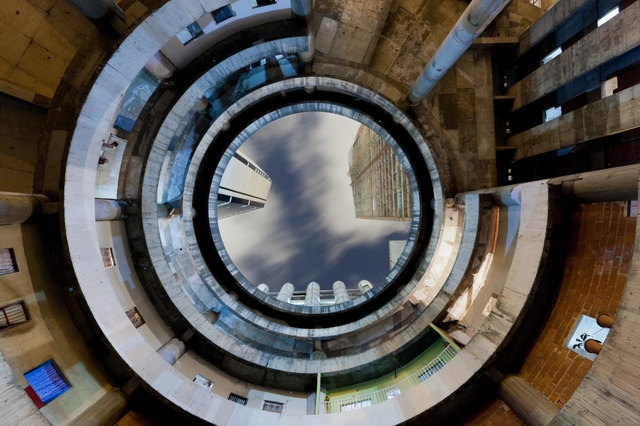
In 1994, after the death of its main investor and a national banking crisis that left Venezuela's economy stagnated, the construction of Caracas' Centro Financiero Confinanzas - known popularly as the Tower of David - was paralyzed, leaving the building completely abandoned and on 70 percent complete.
Neglected for more than a decade, the 45-story, 190-meter-tall skyscraper became the makeshift home for a community of more than 800 families, becoming the world's tallest "vertically organized favela," with basic services to the 22nd floor and including even barber shops, kindergartens and dentists.
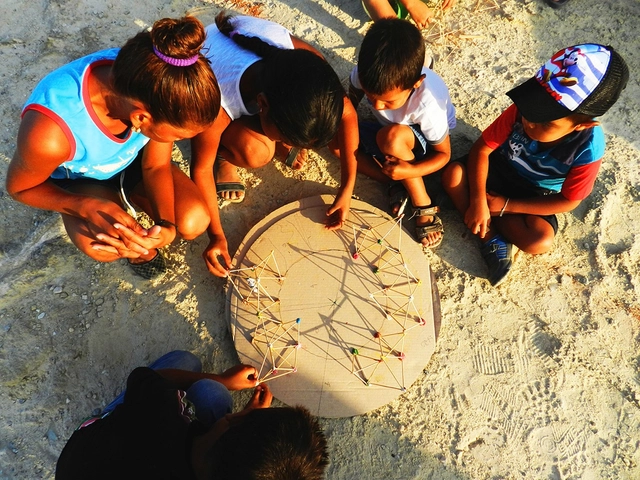
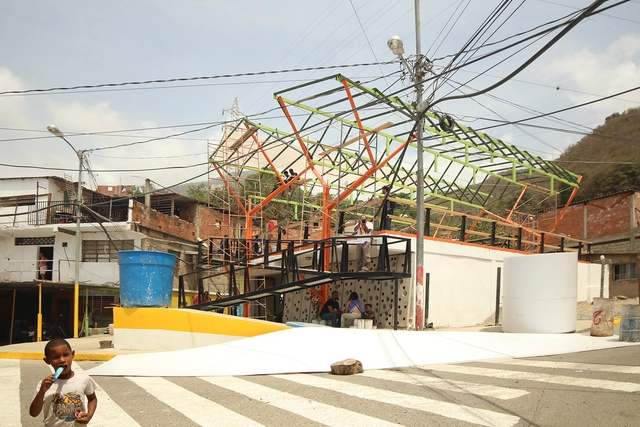
Between Sunday, May 17 and Monday, May 18 projects developed under the second phase of Espacios de Paz (Spaces of Peace) were inaugurated in five cities across Venezuela. A genuine exercise in participative design, 20 Latin American architecture groups worked for five weeks with communities in neighborhoods dominated by violence, high dropout rates and crime to convert deteriorated and abandoned spaces into public places of peace.
For each project, four groups of young architects worked together to carry out a process of dialogue, research, design, and ultimately the construction of either an athletic, social or educational facility to be administrated by the local community. Espacios de Paz is coordinated by the local office of PICO Estudio, with guidance from public institutions and under the leadership of Isis Ochoa, the High Presidential Commissioner for Peace and Life.
ArchDaily en Español Editors, Nicolás Valencia M. and José Tomás Franco, were invited by PICO Estudio to document and view the five projects in their final phase of construction and speak with the architects and community representatives about the development of the projects and some of the challenges faced in the process.
Learn more about each of the five projects after the break.
https://www.archdaily.com/640577/espacios-de-paz-2015-5-cities-5-communities-20-architecture-collectivesArchDaily Team
Frank Gehry presents the National Center for Social Action Through Music project
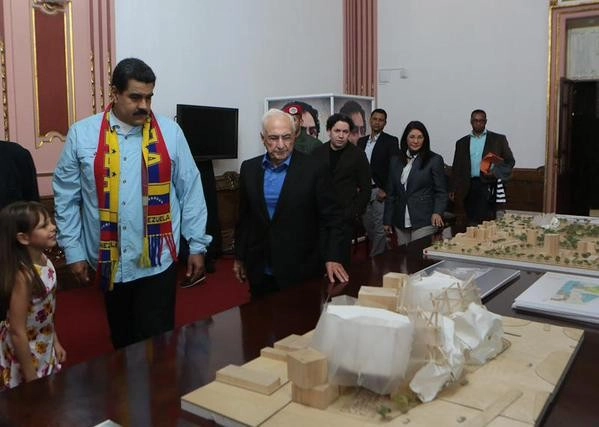
With Venezuelan President Nicolás Maduro in attendance, Frank Gehry presented the model for the future National Center for Social Action Through Music building in Lara state. The project is Gehry’s second in Latin America, following the recently inaugurated Biomuseo in Panamá.
To be located in Barquisimeto, Venezuela’s fourth most populated city, the National Center for Social Action Through Music forms part of the National Network of Youth and Children’s Orchestras and Choirs of Venezuela, more commonly known as “El Sistema.” Founded in 1975 by orchestra director José Antonio Abreu, El Sistema is now funded by the government and provides musical training and education for children from impoverished backgrounds. The Adjkm-designed Simon Bolivar Complex for Social Action is also part of El Sistema.
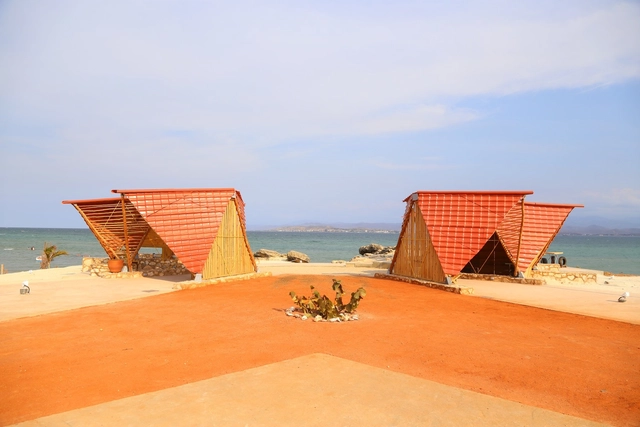
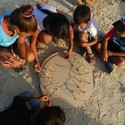
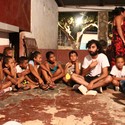
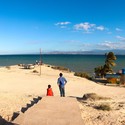
The Espacios de Paz (Spaces for Peace) project in Venezuela is turning “zones of danger” into “zones of peace” through participatory design in violent areas of the country. Led by Venezuelan firm PICO Estudio, Espacios de Paz was a six-week long workshop that involved five groups of architects from both Venezuela as well as internationally. Each group focused on developing a project in a community with a high presence of violence. By transforming unused spaces such as empty plots and unregulated landfill areas, the projects sought to create “social dynamics that invite new ways of living in communities, transforming categories that rule the daily life: the use of time and space.” Community involvement in project development was also key to the Espacios de Paz initiative, which sought to create “a space built not only "for" the community but "by" the community.”
Read on after the break to see the projects that were implemented…
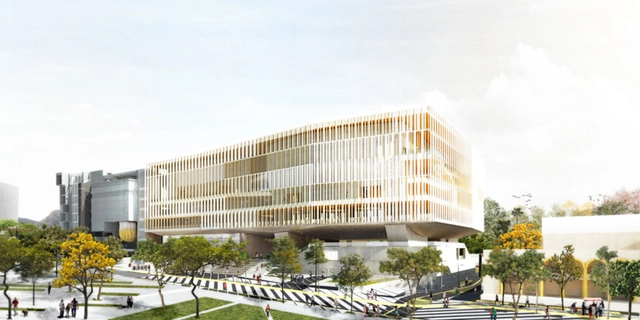
CASMSB - View from Boulevard. Image Courtesy of adjkm
In 2011, adjkmwon an international competition to design the Simon Bolivar Complex for Social Action through Music (CASMSB - Complejo de Acción Social por la Música Simón Bolívar) in Caracas. Now, almost four years later, the Venezuelan practice has released their updated design for the “Caracas Symphony” in preparation for its groundbreaking at the end of this year.
The building is being constructed for the El Sistema project, an internationally distinguished program based on the premise that musical training can create great musicians and completely alter the expected life paths of children born into extremely impoverished circumstance.