1. ArchDaily
  2. KROKI

KROKI: The Latest Architecture and News

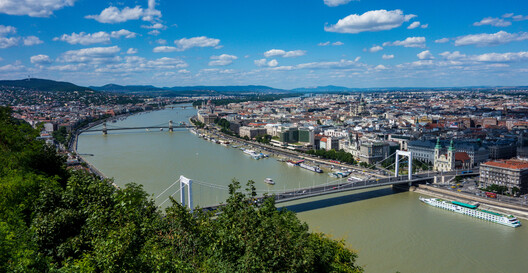
Budapest Architecture City Guide: 15 Projects Tracing a Capital Built on Layers

Subscriber Access | 

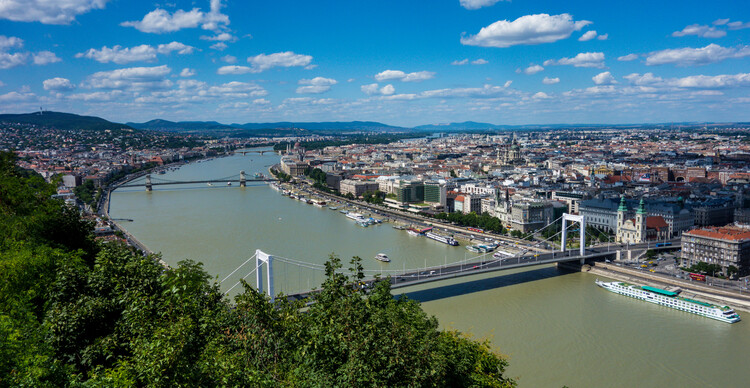
When Buda and Pest joined in 1873, the two parts formed a capital whose identity has since been tied to this balance between geography and urban order. From the riverbanks and thermal baths to imperial monuments and infrastructural works, Budapest's architecture carries the traces of these overlapping histories.

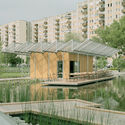
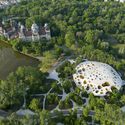
That layered condition continues to shape Hungary's capital today. Alongside its historic fabric, Budapest has seen a steady accumulation of contemporary projects, from cultural institutions in City Park to new educational buildings, sports facilities, adaptive reuse works, and large-scale developments along the Danube. Often working through inherited structures rather than apart from them, these projects add new layers to a city shaped as much by continuity as by change.

Budapest Architecture City Guide: 15 Projects Tracing a Capital Built on Layers - Image 1 of 4Budapest Architecture City Guide: 15 Projects Tracing a Capital Built on Layers - Image 2 of 4Budapest Architecture City Guide: 15 Projects Tracing a Capital Built on Layers - Image 3 of 4Budapest Architecture City Guide: 15 Projects Tracing a Capital Built on Layers - Image 4 of 4Budapest Architecture City Guide: 15 Projects Tracing a Capital Built on Layers - More Images+ 16

Art Nouveau Revisited: Craft, Materiality, and Detail in Contemporary Hospitality Spaces

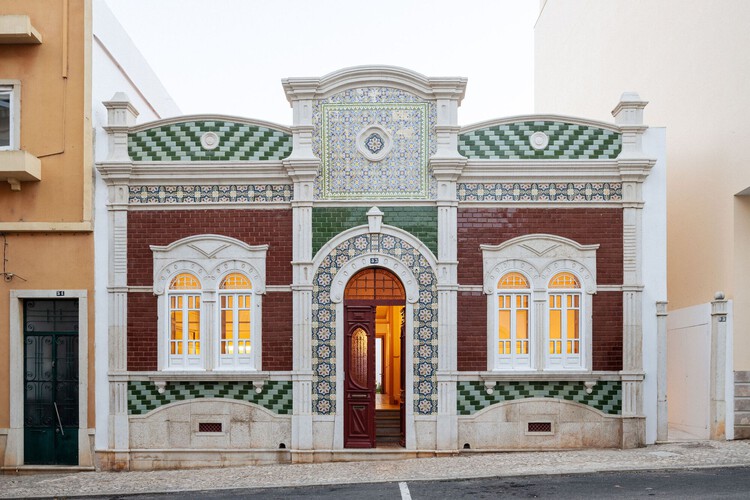
At the turn of the 20th century, parallel, yet connected movements around the world ushered in a new style and architectural era. From the Arts and Crafts in England, Art Nouveau, then Art Deco in France, or the Jugendstil in Germany/Austria, these design and artistic developments spread around the world and took on different forms depending on their context. The basis remained similar, though, with a focus on artisanal value and craftsmanship; the use of wood, glass, and various metals; the integration of organic forms into the exterior facade and interior structure; and the refined incorporation of ornamentation as an architectural element, often as vegetation or geometric patterns.

Art Nouveau Revisited: Craft, Materiality, and Detail in Contemporary Hospitality Spaces - 1 的图像 4Art Nouveau Revisited: Craft, Materiality, and Detail in Contemporary Hospitality Spaces - 2 的图像 4Art Nouveau Revisited: Craft, Materiality, and Detail in Contemporary Hospitality Spaces - 3 的图像 4Art Nouveau Revisited: Craft, Materiality, and Detail in Contemporary Hospitality Spaces - 4 的图像 4Art Nouveau Revisited: Craft, Materiality, and Detail in Contemporary Hospitality Spaces - More Images+ 17