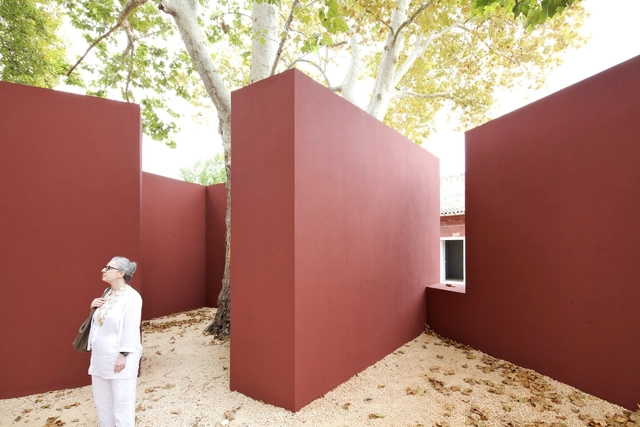
“Recognized by all for its efficiency,” the pavilion that Álvaro Siza designed for last year’s Venice Bienniale of Architecture will remain on display and be utilized as “additional space” by the new curators in 2014 and 2016.
“Recognized by all for its efficiency,” the pavilion that Álvaro Siza designed for last year’s Venice Bienniale of Architecture will remain on display and be utilized as “additional space” by the new curators in 2014 and 2016.

Álvaro Siza. Viagem sem Programa, on display at the Fondazione Querini Stampalia through the duration of the Venice Biennale, narrates the most personal aspects of Álvaro Siza’s work in architecture and his concept of life. In response to Siza being announced as the recipient of the 2012 Golden Lion for Lifetime Achievement, curators Greta Ruffino and Raul Betti, along with organizer MedicinaMentis Cultural Association, began to work closely with the Portuguese master to put together this one-of-a-kind retrospective.
The exhibition features an exclusive collection of 53 works, personally selected by the architect himself, that were developed from travel notes and sketches, along with a 38-minute video interview.
Continue after the break for more images of Álvaro Siza. Viagem sem Programa and check out our previous coverage for more information.

Coinciding with the exhibition Alturas de Macchu Picchu: Martín Chambi – Álvaro Siza at work on view at the Canadian Centre for Architecture (CCA) for an extended run until 29 April 2012, Pritzker prize-winning architect Álvaro Siza will give a not-to-be-missed lecture on Thursday 26 April 2012 at 7 pm at the CCA. The event is a rare opportunity to hear the preeminent architect speak in person. Siza’s lecture discusses his design development of the Iberê Camargo Museum in Porto Alegre, Brazil, completed in 2008 and noted for its sculptural volumes and tight integration with a coastal escarpment. As with all of Siza’s projects, hand sketches play a key role in the design process, from massing studies to fine-tuning details. For more information, please visit here.

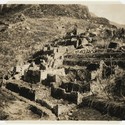
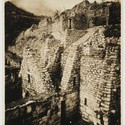
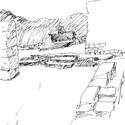
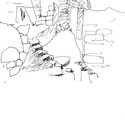
In 1995, Portuguese architect Álvaro Siza packed a few changes of clothes, some poetry books and a single sketchbook as he set forth to Peru. These few items were all he needed to record and interpret his voyage, allowing him to integrate his investigations into his architecture. More than a half a century earlier, Peruvian photographer Martín Chambi ventured into the peaks of Macchu Picchu were he captured a famous series of portraits of the ancient Inca ruins. His project was more political, it acted as a re-appropriation of the site by its locals, but the tools of Chambi and Siza are the same: the production of images to define a reality.
The Canadian Center for Architecture (CCA) presents Alturas de Macchu Picchu: Martín Chambi – Álvaro Siza at work – an exhibit featuring thirty-five original sketches by Álvaro Siza alongside the historic 1920s photographs by Martín Chambi, now on view at in the CCA’s Octagonal Gallery until April 22, 2012. Continue reading for more information.

“How Wine Became Modern: Design + Wine 1976 to Now” is a brand new exhibit at the San Francisco Modern Museum of Art. Co-created and designed by Diller Scofidio + Renfro, the exhibit was organized by Henry Urbach, SFMOMA’s Helen Hilton Raiser Curator of Architecture and Design. Bringing attention to the wine industry and its integration with the latest artists, designers and architects the exhibit will be on display at SFMOMA until April. A main part of the exhibit is featuring the architectural spaces that house the wine making process, tastings, museums, etc. Some big name architects who have developed designs for cutting-edge wineries include: Zaha Hadid, Frank Gehry, Norman Foster, Herzog and de Meuron, Renzo Piano and Alvaro Siza.

The new building for the Ibere Camargo Foundation in Porto Alegre, Brazil designed by Portugal´s Alvaro Siza, is a big rectangular white concrete structure. It has a big central space enclose by circulations and exhibition spaces. Some of this circulations separate from the main body as arms going out through the facade.
I´ve always loved the big white orthogonal Siza buildings, and i think that this form is really informed by brazilian modernists, resulting on sculptural rock in front of the river with an amazing light use, a tradition on Siza´s works.
Pictures by Grazielle Bruscato, plans taken from Fundação Iberê Camargo.