This guide covers a workflow that moves from project parameters to generated floor plans, 3D perspective views, exterior design exploration, and site context visualization, using AI tools in place of preliminary CAD and rendering work.
This guide covers a workflow that moves from project parameters to generated floor plans, 3D perspective views, exterior design exploration, and site context visualization, using AI tools in place of preliminary CAD and rendering work.


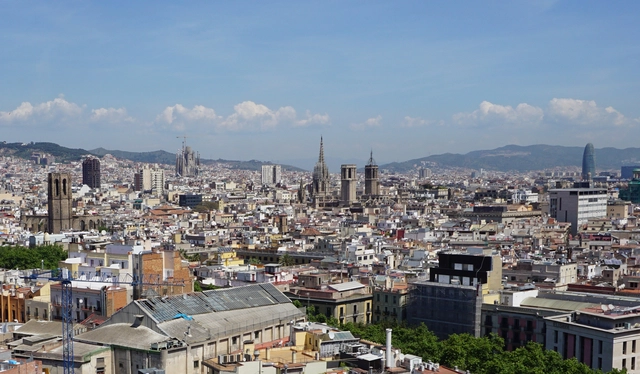
Laura Foraster i Lloret is the Secretary General of DIPLOCAT, a public-private consortium aimed at connecting Catalonia with the rest of the world and promoting initiatives that project its image abroad. Its 38 members include key public institutions as well as leading organizations from the business, social, labor, academic, and sports sectors—ranging from Futbol Club Barcelona to the University of Barcelona.
During the Model Barcelona Architectures Festival, which took over the city in May—an event already paving the way for the city's designation as the 2026 World Capital of Architecture—she joined us to discuss how architecture serves as a fundamental tool for presenting and projecting the region abroad. Read Laura Foraster i Lloret's key reflections below.
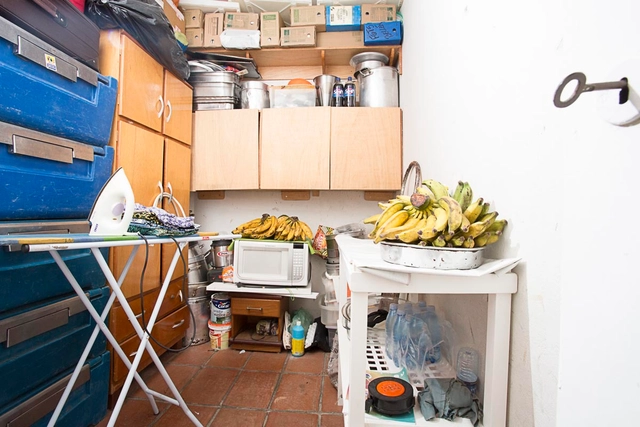
The room built for workers to "rest"—as current discourse attempts to camouflage the origin and meaning of the well-known "service room," "maid's room," or "storage room" typically located next to the service areas of contemporary homes—holds a historical, cultural, social, and economic significance within today's context that is rarely questioned.
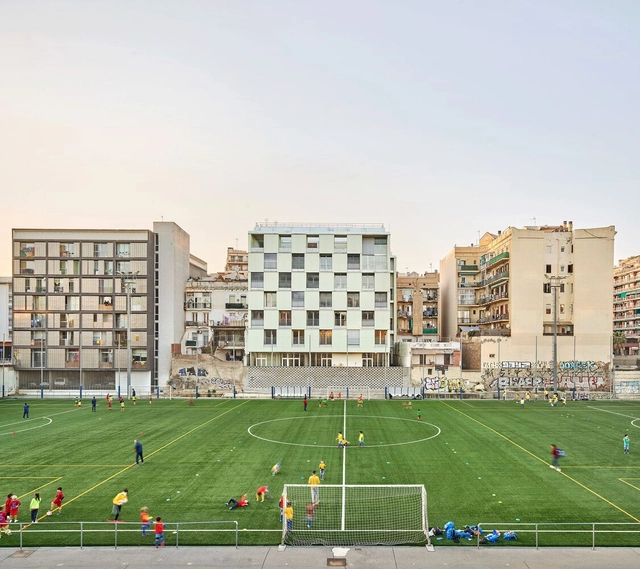
Is there a future for our cities if we do not transition to a sustainable way of life? For some time, urban sustainability has adopted a perspective focused more on climate change than on a holistic vision that incorporates society and the way we live in community.
What new ways of living are we experiencing amidst social, economic, and ecological shifts? Ultimately, we must bring to the table examples from different parts of the world to understand the latest trends in how we live in our cities.
We want to hear from you—not only about examples of co-living, cooperatives, and any new type of social housing you consider a benchmark, but also your thoughts on the matter. Selected comments from the form below will be published in an upcoming article.

What does sustainable landscaping in Brazil entail? What is truly important within our environmental reality? Written in accessible language and grounded in both science and practice, this book seeks to understand the past and present while envisioning the future, exploring paths toward these answers. Developed over the course of seven years, it is a work for professionals, enthusiasts, and anyone interested in the subject.

99+Imaginaris invited renowned architects from around the world to speculate on the future of Barcelona. Within the context of the Model Festival, curators Eva Franch i Gilabert and Josep Maria Montaner, alongside the design, coordination, and exhibition design by the Enric Miralles Foundation, brought together a wide-ranging series of sketches, ideas, visions, and models—from an edible Barcelona by Areti Markopoulou to a Barcelona of inflection points by Zaida Muxí.
The resulting exhibition catalog is a diverse archive of drawn manifestos—a document that allows us to review and debate future ways of living in the city. The curatorial text for 99+Imaginaris, along with the individual visions of its contributors, is presented below.

Technical expertise is best discussed on the construction site!


Born on July 17, 1897, Julia Guarino Fiechter became the first woman to earn an architecture degree in Uruguay, in 1923. Although she was originally from Éboli, in the Italian province of Salerno, she grew up and spent her entire professional life in Uruguay. After graduating from the Faculty of Architecture at the Universidad de la República, she also worked as a draftsperson and educator.


Brazilian architects Mário Rubem Costa Santana and Rafael Lamary Silva Santos received a special mention in the Children's House competition in Senegal, organized by the Kaira Looro organization. The competition sought proposals for a "space aimed at preventing child malnutrition" in Sub-Saharan Africa.

The 13th International Architecture Biennial enters its final week of activities—ending on Sunday, July 17—and brings very special attractions for those who have already visited or have yet to experience the Biennial.
Between July 8 and 17, the event features debates, conferences, short film screenings, a cycling tour, and much more, in this first in-person edition since the pandemic. The exhibition has been running since May 27 at Sesc Avenida Paulista and Centro Cultural São Paulo.