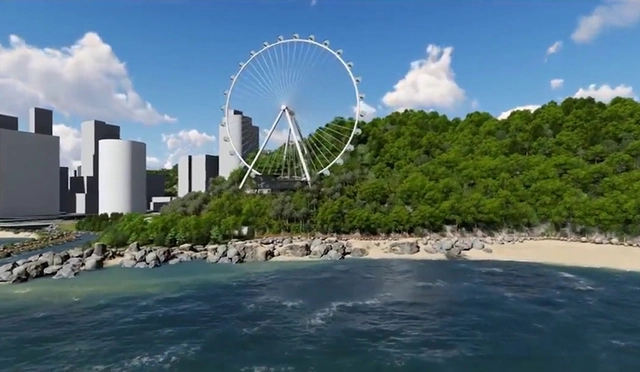
The proposal to build South America's largest Ferris wheel in Balneário Camboriú (SC) underwent another public hearing this Monday (11)—this time to present the project's Neighborhood Impact Assessment (EIV), which plans for a 57,200-square-meter complex in the Praia do Coco area.
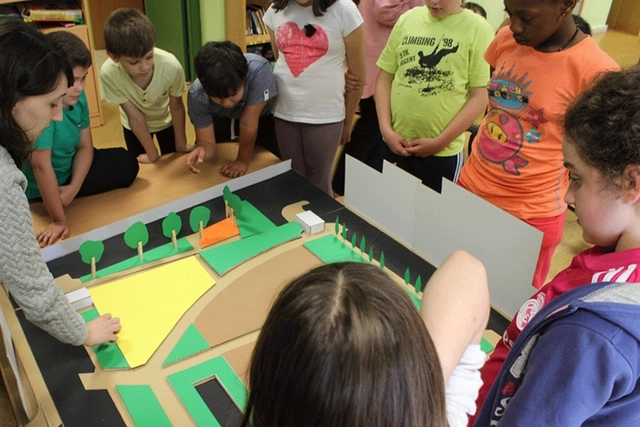
Projeto “Arquitetura para Crianças”, realizado na Galícia, Espanha. Image Cortesia de CAU/BR
The Urban and Environmental Policy Commission (CPUA) of CAU/BR will produce supplemental educational materials on architecture and urbanism for elementary and middle school classrooms. Developed in partnership with Pistache Editorial, the project aims to bring urban planning discussions into schools to help build better cities in the future. The goal is to foster students' critical perspective on the urban environment, helping them understand the city as a space with multiple historical layers.
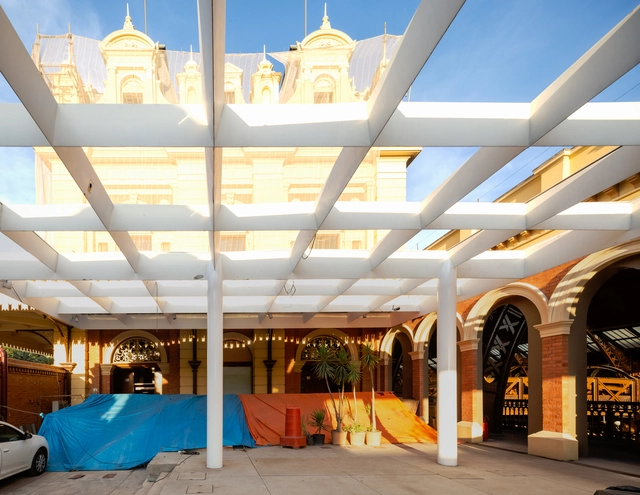
Partially destroyed by a fire in 2015, the Museum of the Portuguese Language has undergone a lengthy restoration process and now has a date to reopen its doors: June 27, 2020. The announcement was made by state and municipal officials this Monday, December 16, during a visit to the site.
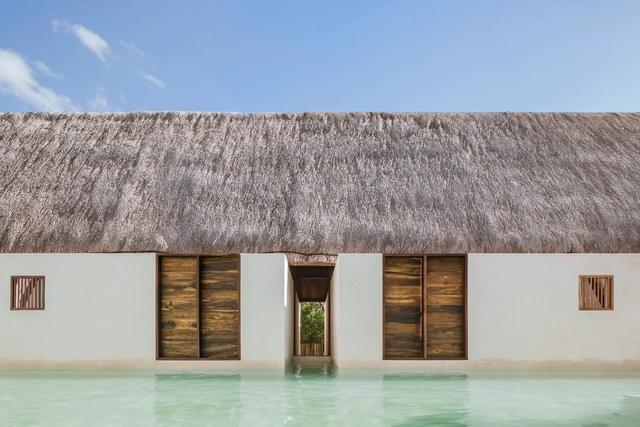
Much like stone, wood, and other natural materials, straw and thatch have been used as building resources since the dawn of human history. However, with the advent of new technologies like concrete, and the concept of *Progress* driven by the Industrial Revolution—and subsequently by the rise of steel—many traditional materials fell out of favor, widely replaced by modern alternatives.
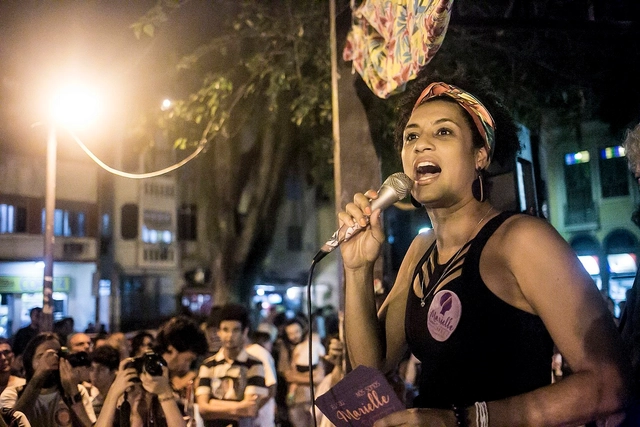
Today marks one year since the brutal assassination of Rio de Janeiro sociologist and city councilwoman Marielle Franco. The week before her death, Marielle took part in a series of debates organized by CAU/RJ called "Architecture - Feminine Noun," aimed at strengthening mobilizations for International Women's Day.
https://www.archdaily.com/1122060/watch-marielle-franco-in-the-debate-architecture-feminine-nounPedro Vada
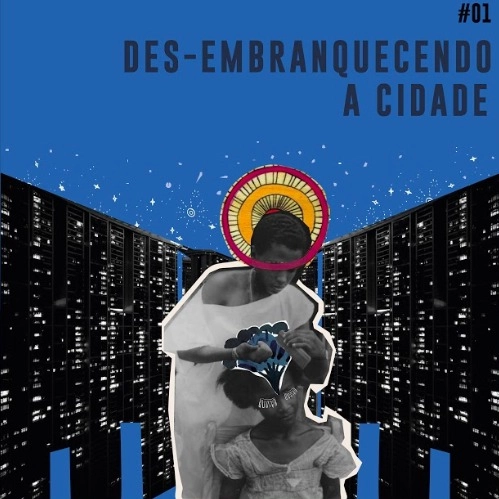
The “De-whitening the City” Podcast is a space invented from the desire of five Black women residing in Salvador, São Paulo, Rio de Janeiro, and Belo Horizonte to circumvent geographic distance in order to foster and celebrate connection. Emmily Leandro, Gabriela Gaia, Luciana Mayrink, Malu de Barros, and Natalia Alves make up the Terra Preta collective, giving shape and voice to this exercise in creating a shared virtual territory—both a political and aesthetic commitment—now made public for the first time.
https://www.archdaily.com/1122076/de-whitening-the-cityTerra Preta Cidade
Projeto Tercer Sonido, Madri, Espanha. Image Cortesia de CicloVivo
C40 Cities, a global coalition of cities, launched a competition to select the best solutions for transforming underutilized urban spaces into resilient, carbon-neutral developments. Named Reinventing Cities, the competition selected 15 innovative ideas poised to "reinvent" the future of cities.
"PHANTOM. Mies as Rendered Society" Exhibition. Courtesy of Andrés Jaque—Office for Political Innovation
Design is a critical act, and architecture is an inevitably political discipline—no matter how much one tries to deny it. This is the view of Andrés Jaque, a Spanish architect and founder of the Office for Political Innovation, based in Madrid and New York. Jaque dedicates himself to architectural practice, research, and activism as if they were inseparable. In this interview, conducted during the 12th São Paulo International Architecture Biennale, Jaque discusses how queer perspective can contribute to community engagement and how architecture is "unfolding into a trans-scalar activity and a multi-media practice."
Once subjugated by outlaw armed groups and devastated by the largest urban military operation in Colombia's history, the Las Independencias neighborhood, located in Medellín's Comuna 13, is today an open-air graffiti gallery of sorts, accessed via a system of electric escalators—the only ones in the world built in an informal settlement.
With over 1.3 million visits last year, the GeoSampa platform, an open-format digital map of the city of São Paulo, has expanded its reach since its launch in 2016. These results demonstrate that the portal remains a benchmark for geospatial data in São Paulo, thereby strengthening public sector transparency — one of the guidelines of the Strategic Master Plan.
The Ministry of Education (MEC) has released its list of the best and worst architecture programs in Brazil, based on the Preliminary Course Score (CPC). Topping the list is the Architecture and Urbanism program at the Centro Universitário Facvest, in Lages, Santa Catarina.
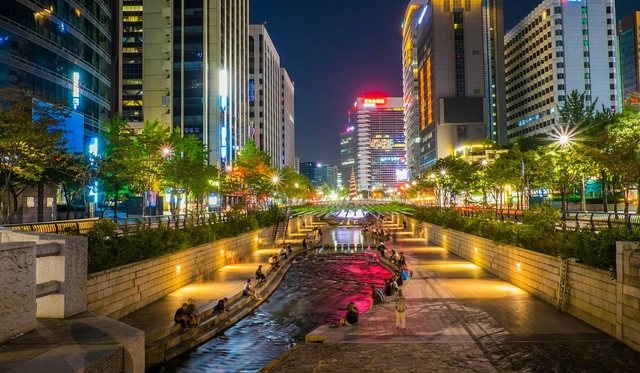
Renaturalization of the Cheonggyecheon River in Seoul – South Korea. Source: https://www.koreapost.com.br/wp-content/uploads/2016/01/Rio-Cheonggyecheon-Seul.jpg. Courtesy of the authors
The significant restoration of the natural riverbed of the Cheonggyecheon River in Seoul, South Korea, and the urban revitalization of its surroundings are a brilliant example of Sustainable Urban Drainage. This deconstruction is based on the premise of renaturalization, which aims to restore the pre-development water balance (increasing concentration time and reducing peak runoff) through high permeability. It also demonstrates the undeniable importance of preserving valley floors and Permanent Preservation Areas (APPs) in Brazil, as defined by the Forest Code.
https://www.archdaily.com/1121937/sustainable-urban-drainage-to-achieve-un-sdg-targetsAdriana Idalina Rojas Gutierrez e Ivanete Carpes Ramos
Whether for universal accessibility, spatial fluidity, or plastic continuity, ramps bring unique and highly welcome qualities to architectural projects. That is, of course, when they can be successfully integrated into the design—typically a demanding task due to accessibility standards governing maximum slopes.
This week's Arquicast Entrevista features the work of an internationally recognized architect from Minas Gerais. A 1973 graduate of the School of Architecture at the Federal University of Minas Gerais (UFMG), Gustavo Penna founded his firm, GPA&A, that same year. Since then, the practice has been based in a century-old mansion in downtown Belo Horizonte. Penna has won numerous international awards, and his work has been exhibited in Brazil and around the world, including at the São Paulo Architecture Biennale, the Venice Biennale, the World Triennial of Architecture in Belgrade, and the Institut Français d’Architecture in Paris.
Eletrodutos para distribuição da rede elétrica aparente. Aplicação de papel de parede. Projeto: Apartamento 203. Image Cortesia de Apartamento 203
Also known as "dry construction," this concept is increasingly used in interior renovations. These simple solutions transform the essence of indoor spaces in a more economical and sustainable way by minimizing construction waste and, consequently, reducing the waste of money, time, and raw materials. In this guide, we have gathered 8 tips to help you design more mindful interior renovations.
Today, computer-aided design (CAD) is the most widely used system for producing technical drawings among construction professionals and academics. It became popular through AutoCAD (Autodesk) by representing geometries that translated design intent into two dimensions. Released in the 1980s, it remains highly relevant and is still used by large corporations, extending its utility through the tradition it has built over four decades in the market.
Brazil has just surpassed the 2,000-megawatt (MW) milestone of operational capacity in centralized solar photovoltaic generation systems—large-scale plants connected to the National Interconnected System (SIN).
According to data from the Brazilian Association of Solar Photovoltaic Energy (ABSOLAR), solar photovoltaic power—based on the direct conversion of solar radiation into electricity in a renewable, clean, sustainable, and increasingly competitive way—reached a total of 2,056 MW of operational installed capacity, equivalent to 1.2% of the country's electricity mix. As a result, it becomes the 7th largest energy source in Brazil, surpassing nuclear power, which accounts for 1,990 MW (1.2%) from the Angra I and Angra II plants located in Rio de Janeiro.
Masonry is undoubtedly one of the most widespread construction techniques in Brazil. Brick, which can serve as both structural support and building enclosure, is an expressive and highly versatile material, easy to use due to its widespread production and the general availability of labor across the country.
Aerial view of the Deodoro Complex, in São Luís (MA). Photo: Meireles Jr. Courtesy of Iphan
A high-quality public space that prioritizes pedestrians, features organized urban planning, and invites people to stay, enjoy, and socialize. This was the guiding premise of the first phase of the urban revitalization of Rua Grande, in São Luís, the capital of Maranhão. The project began with the restructuring of the entire Deodoro Complex, which now offers visitors and residents a new perspective on the Deodoro and Panteon Squares and the Silva Maia and Gomes de Castro promenades.
Reflecting on the everyday. This is the premise of the 12th São Paulo International Architecture Biennial, which opens this September in the capital. Under the theme “Everyday” (“Todo dia”), the biennial aims to address the “most trivial dimension of reality,” shedding light on the production of ordinary, common space—which is, for this very reason, fundamental to the quality of the environment we inhabit daily. Curators Vanessa Grossman and Ciro Miguel join us for a conversation about this key event, which plays a crucial role in bridging academic research, architectural practice, and society at large.
The Association of Sabesp Engineers (AESabesp) has launched a competition to select the best architectural designs for the future São Paulo Water Museum. The goal is to find the best architectural concepts and alternatives for the restoration and expansion of the former water and sewage department building—currently known as the França Pinto Reservation Center—and the implementation of the cultural venue.
Marked by the intersection and mutual reinforcement of curatorial design and institutional action, the 34th Bienal de São Paulo emphasizes the poetics of “relation” and adopts an innovative operational structure. This framework involves exhibitions and events hosted at the Bienal Pavilion starting in February 2020, in collaboration with a network of more than 20 institutions across São Paulo. Once the Pavilion is fully occupied by the exhibition starting in September 2020, these partner institutions will host, within their own spaces, exhibitions integrated into the 34th Bienal.
The fanzine Architecture and Politics, produced days before the second round of the 2018 presidential elections, is a manifesto on the urgency of understanding the production of space in its intrinsic relationship with power. Foreshadowing the fate that the outcome of this election brought upon the country, it suggests a way of interpreting the Brazilian political landscape.
.jpg?1564667184&format=webp&width=640&height=580)
_(Custom).jpg?1559915700&format=webp&width=640&height=580)



.jpg?1556291339&format=webp&width=640&height=580)
.jpg?1562087791&format=webp&width=640&height=580)
.jpg?1561993576 "Aplicação de revestimento sobre revestimento. DEPOIS da Reforma de Banheiro em parceria com a Leroy Merlin Brasil. Projeto: Apartamento 203. Image Cortesia de Apartamento 203")
.jpg?1561992294 "Aplicação de papel de parede. Elétrica projeta com distribuição da rede elétrica aparente. Projeto: Apartamento 203. Image Cortesia de Apartamento 203")
.jpg?1561992738 "DEPOIS da Reforma de Banheiro em parceria com a Leroy Merlin Brasil. Projeto: Apartamento 203. Image Cortesia de Apartamento 203")

.jpg?1562087791)

.jpg?1553011212&format=webp&width=640&height=580)


.jpg?1568988710&format=webp&width=640&height=580)
.jpg?1568988664 "Ximena Garrido-Lecca - Insurgencias Botánicas: Phaseolus Lunatus, 2017 | Installation view / Dimensions variable / Photo: Ramiro Chavez")
.jpg?1568988535 "Deana Lawson - Mama Goma, 2014 | 35 x 45 in (99 x 114.3 cm) / Courtesy of the artist")
.jpg?1568988594 "Clara Ianni - Free Form, 2013 | video (b&w, sound), 7’14’’ / Courtesy of the artist")
.jpg?1568988648 "Ximena Garrido-Lecca - Insurgencias Botánicas: Phaseolus Lunatus, 2017 | Installation view / Dimensions variable / Photo: Ramiro Chavez")
.jpg?1568988710)