Where is public housing in the Basque Country (Spain) headed? Do the built dwellings align with the needs of contemporary society? How can it be improved? How has it evolved over the last few decades? These questions, and many others, will likely arise during the roundtable discussion organized for Thursday, May 17, at the Bizkaia Aretoa. The event is part of the ‘Housing the Basque Country’ exhibition program, promoted by the Basque Government's Department of Environment, Territorial Planning, and Housing.
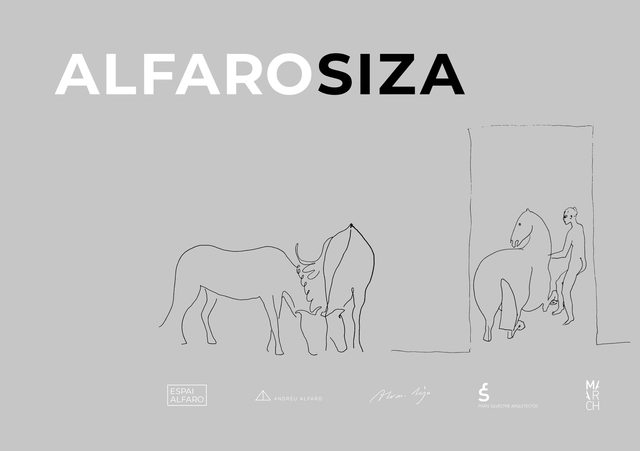
The Valencian center, Espai Alfaro, has opened the exhibition "AlfaroSiza," featuring a dialogue between architect Álvaro Siza and sculptor Andreu Alfaro, co-curated by Fran Silvestre and António Choupina.
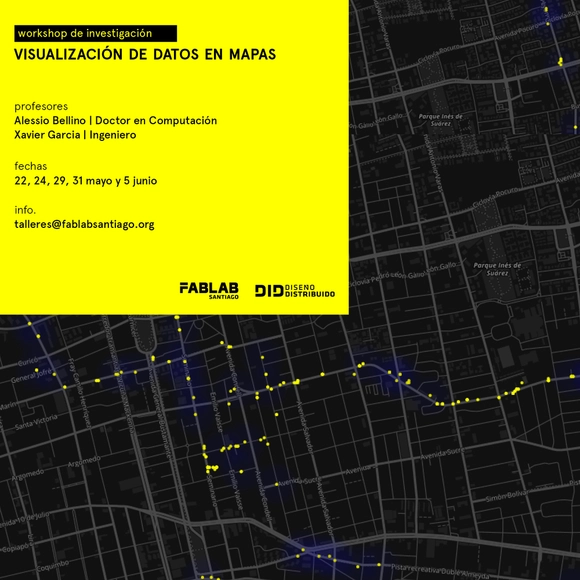
The objective of this course is to provide the theoretical and practical foundations of architectural photography. This ensures participants gain the essential principles needed to photograph their first project. In the second phase, participants will apply the knowledge they have acquired during a photo shoot of an assigned architectural project. Following the photo shoot, the process will continue with the editing of selected images, printing, and mounting, culminating in a photo exhibition at the "La Incubadora" space in Cumbaya. The goal is to provide workshop attendees with a comprehensive experience, covering everything from capturing images of a building to printing and mounting them for an exhibition.
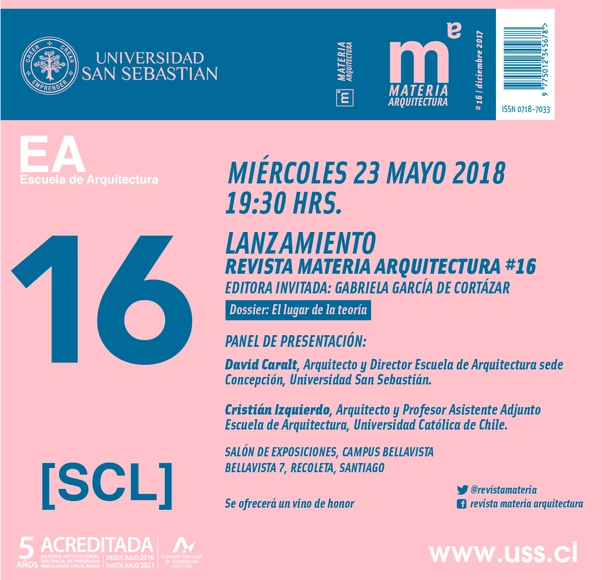
The new issue of Materia Arquitectura magazine, an editorial project by the Faculty of Architecture, Art, and Design at Universidad San Sebastián directed by Mario Marchant, centers on one of architecture's fundamental subjects: theory. This issue invites readers to reflect on the role of theory, arguing that architectural magazines are the space where it is put to the test.
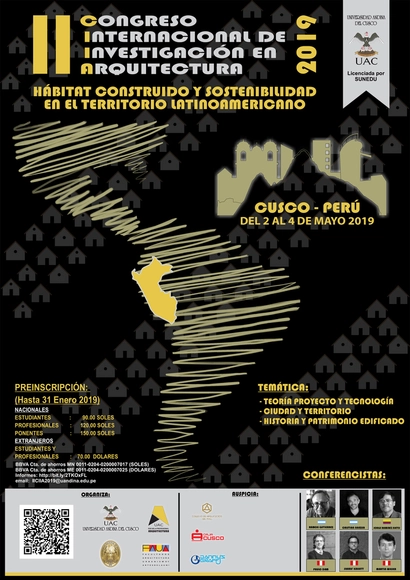
The International Congress of Architectural Research is a recently established academic initiative. Its primary objective is to promote the convergence of architects, urban planners, and students from Latin American schools and faculties, united by a shared awareness of the current importance of research in addressing the challenges facing the discipline and their implications for the development of our countries. The call for papers for the second Congress focuses on research projects centered on the theme: "Built Habitat and Sustainability in the Latin American Territory."
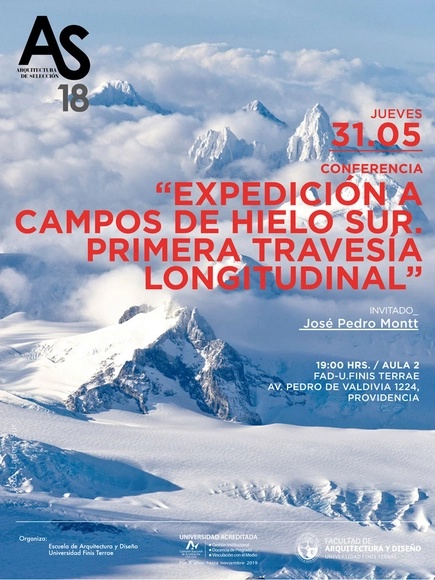
As part of the "Arquitectura de Selección" lecture series—dedicated in this edition to extreme territories—the Universidad Finis Terrae School of Architecture will host José Pedro Montt, a member of the expedition that completed the first longitudinal crossing of the Southern Patagonian Ice Field in the late 1990s.
The Wilton Paes de Almeida building, a landmark of modern architecture in São Paulo and recognized as a municipal cultural heritage site in 1992, collapsed following a massive fire on May 1st of this year. The Docomomo São Paulo chapter mourns, above all, the loss of human life and the tragedy faced by the residents who occupied that architectural icon.
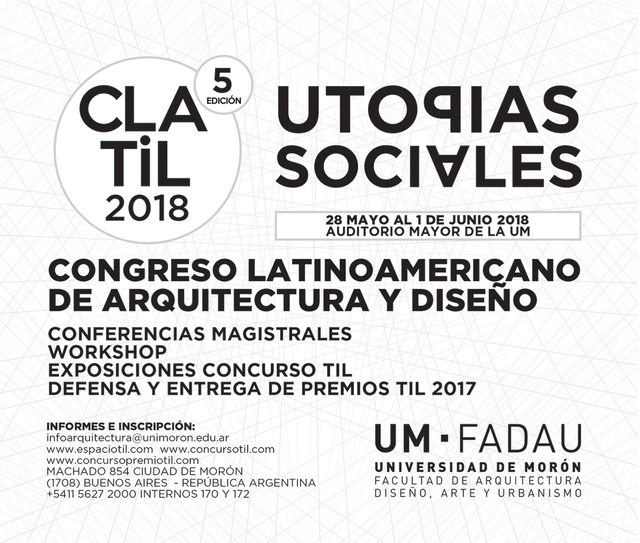
Building on its history, the Latin American Congress of Architecture (CLA TIL)—organized since 2013 by the Faculty of Architecture, Design, Art, and Urbanism at the University of Morón—will host its fifth edition in Argentina. The event, themed "Social Utopias," will take place from May 28 to June 1, 2018.
For over 20 years, the Proyecto Escape organization and the Altos del Pino community have developed cultural practices aimed at fostering a culture of peace to improve the quality of life for the children, youth, and mothers in their community. To promote these practices, Escape, in partnership with various organizations, has organized the Workshops on Emerging Architecture and Urbanism. These workshops aim to create spaces for the exchange of knowledge among neighborhood residents, students, and professionals regarding the construction of various participatory projects.
From May 17 to July 14, 2018, Pinakotheke Cultural Rio de Janeiro presents the exhibition "Victor Brecheret (1894–1955)," featuring works by the renowned artist born in Italy and based in Brazil. A key figure of modernism and a participant in the historic 1922 Week of Modern Art, Brecheret is the focus of this exhibition curated by Max Perlingeiro. The show gathers significant works by the artist alongside those of other figures who participated in that watershed event in Brazilian art: Anita Malfatti, Di Cavalcanti, Menotti del Picchia, John Graz, Vicente do Rego Monteiro, Helios Seelinger, and Zina Aita. Many of these pieces were featured in the original 1922 event at the Theatro Municipal de São Paulo.
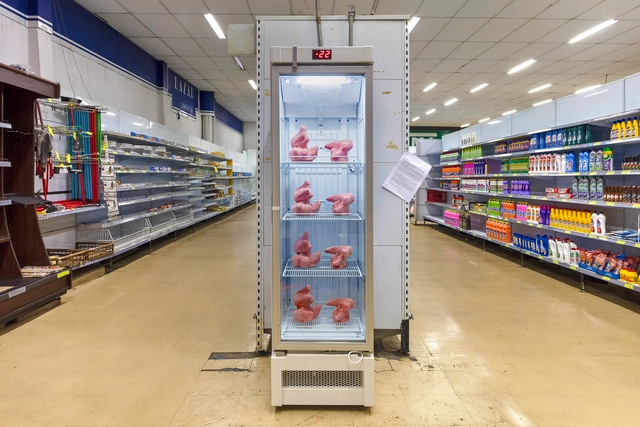
Work by João Loureiro at the Futurama Supermarket in Vila Buarque, downtown São Paulo. Part of the "Assisted Reproduction" exhibition by the 1:1 project, curated by Bruno de Almeida. Photo: Filipe Berndt
Galeria Jaqueline Martins presents the first edition of the 1:1 project, featuring new work by João Loureiro.
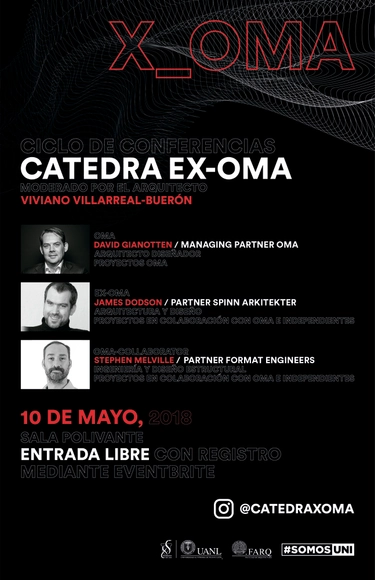
X-OMA Chair: The X-OMA Chair analyzes projects by the firm OMA, as well as those by subsequent offshoot firms that have emerged from OMA (known as x-OMA's), such as Zaha Hadid, Bjarke Ingels, MVRDV, Fernando Romero, among many others.
The 4th Smart Cities Congress promotes the exchange of knowledge and experiences regarding Smart Cities in Spain, using technology and innovation as the foundational tools for their development. To this end, it addresses the main topics related to the Smart City in a transversal, multidisciplinary, and multisectoral manner, showcasing initiatives currently being developed in the country.
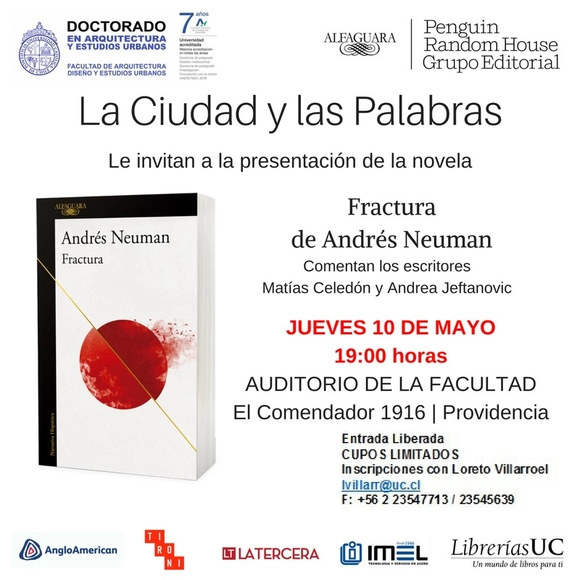
The second 2018 installment of the renowned "La Ciudad y Las Palabras" series, in which writer Andrés Neuman will present his new novel, Fractura. The event will feature commentary by writers Matías Celedón and Andrea Jeftanovic.
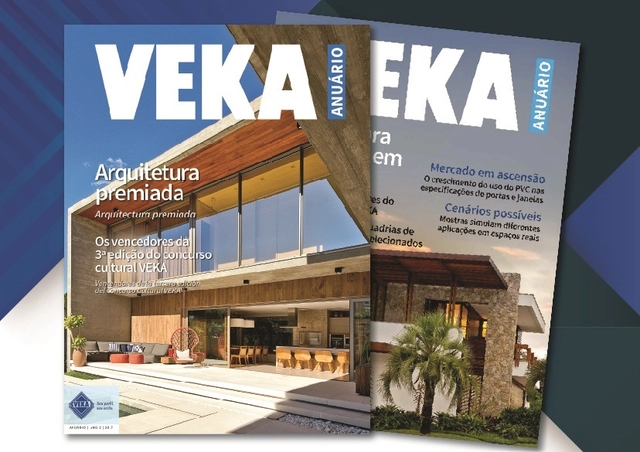
Pictured are the first two editions of the VEKA Yearbook. Cover photos: Lio Simas
Registration is now open for the fourth edition of the VEKA Latin America Cultural Competition. This initiative from the German multinational PVC profile systems company introduces new features this year: projects will be evaluated in two categories—Horizontal Architecture and Vertical Architecture—and must have been executed in any country in Latin America.
Coffee culture is booming, and Northern Europe holds the official title for the world's largest coffee consumers. Countries such as Finland, Norway, Denmark, Iceland, and Sweden all rank in the top ten, with annual consumption reaching up to 12 kg per person.