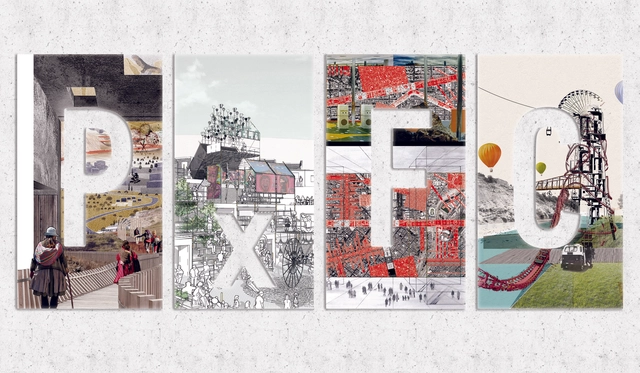
The dream of homeownership is a cornerstone of Chilean housing policy; however, there are other ways to provide housing beyond those offered by the real estate market. These alternatives address the increasingly urgent need to tackle the scarcity of well-located land, as well as the social and spatial vulnerability of certain territories.
There is always a lingering feeling or fear that a project might remain just a dream upon presentation. This sentiment is heightened in a final degree project, where one might view it as the last opportunity to experiment, yet simultaneously the first opportunity to make it as realistic as possible. In what sense? Even as part of an academic exercise that allows for imagination and exploration, it can be developed with the challenge of addressing a real problem that benefits society and the country. In this way, students can finish their degree by opting for buildable dreams that go beyond the purely architectural.
This remarkable ambition and social consciousness are present in each of these diverse Experimental Final Degree Projects (PxFC) by graduates of the PUCP. These proposals explore the theoretical-practical limits of architecture and integrate with other fields—such as engineering, agriculture, sociology, politics, and art—resulting in projects that are not necessarily limited to specific building programs. We hope that many, regardless of their academic background, will attend, reflect, and incorporate these critical perspectives into our professional practice. The exhibition runs until May 11 at the university's Cultural Center gallery.
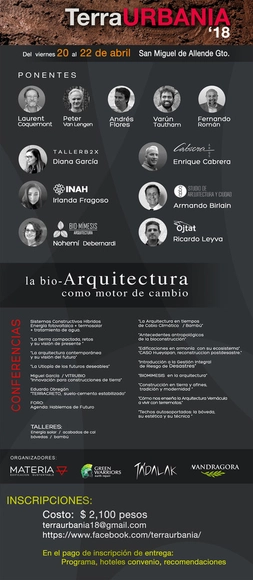
Terraurbania brings together architects and bio-construction experts to propose solutions ranging from ancestral earth-building techniques to contemporary models. Bridging the past and the present provides the vision to propose better architecture for a viable, healthy future, defined by the beauty of architecture in harmony with its environment.
The most innovative voices and actions on the global stage warn that we are witnessing a global crisis of the current consumerist and materialist paradigm. This crisis is political, scientific, technological, and educational. Faced with this reality, the need to trigger a paradigm shift arises. This change requires a true rupture in the theory of knowledge (epistemology) and in individual, social, and public (policy) practices.
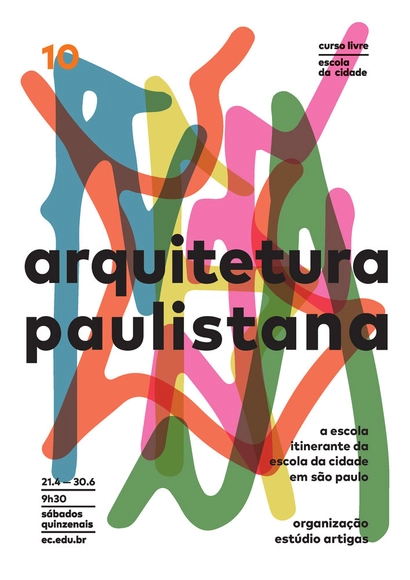
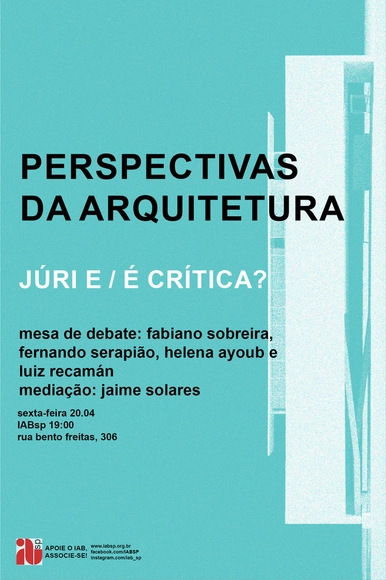
Second panel discussion on architectural competitions in Brazil. This session will focus on the relationship between juries and criticism. The panel includes Fabiano Sobreira, Fernando Serapião, Helena Ayoub, and Luiz Recaman, with Jaime Solares as moderator.
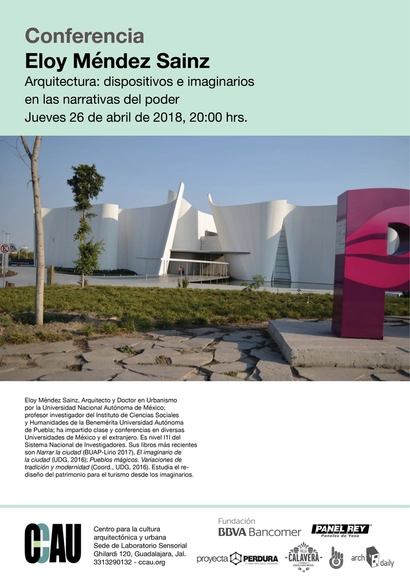
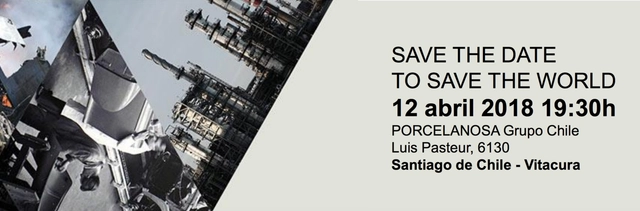
Featuring two talks on models that have driven societal change—spanning both urban development and technology—the Master’s in City, Anthropocene, and Built Environment at FAD U.Finis Terrae will host the "Models of Reality Transformation" event on Thursday, April 12, at 7:30 PM.
Brazilian state capitals have become the setting for an unusual trend: motels are moving away from highways and into city centers, offering an increasingly wide range of entertainment-related services. The motel, which originated in Japan about 400 years ago, is a lodging format that generates R$ 4 billion annually in Brazil and accounts for approximately 25% of all lodging in the country's capitals.
After being on display at the Cité de l’Architecture et du Patrimoine in Paris in 2016, the exhibition "The Universalists – 50 Years of Portuguese Architecture" will be presented for the first time in Portugal at the Nave Expositiva of the Casa da Arquitectura in Matosinhos, from April 13 to August 19.
The opening will take place on the 13th at 9:00 PM, featuring a guided tour by the exhibition curator, architect Nuno Grande. This will be followed at 10:00 PM by the debate "Portugal, an 'Other' Universalism," featuring testimony from Eduardo Lourenço and the participation of Alexandre Alves Costa, João Belo Rodeia, and Nuno Grande (moderator).
Porcelanosa Grupo is bringing KEAST technology and its new product, Krion K-LIFE, to Chile—a solution designed to improve our quality of life and that of those around us.
Qianhai is located in the western part of Shenzhen, Guangdong Province, on the eastern bank of the Pearl River Estuary. Adjacent to Hong Kong, it is planned as a future demonstration zone for deep cooperation between Guangdong, Hong Kong, and Macao, as well as a new urban center. To develop a series of high-level, high-quality iconic buildings that establish a new landmark for Qianhai in terms of form, design, and function, and to enhance the area's influence and appeal, the Qianhai Authority intends to construct the Qianhai International Financial Exchange Center in Unit 1 of the Guiwan area. This project will be the first international-level conference center in Qianhai, positioned as a venue for head-of-state level multilateral summits. It will serve government agencies, public institutions, enterprises, and associations within the Guangdong-Hong Kong-Macao Greater Bay Area, functioning primarily as a conference venue while incorporating auxiliary functions such as dining, banquets, hotel accommodations, boutique exhibitions, product launches, and festival events.
https://www.archdaily.com/1046349/competition-call-architectural-design-for-the-shenzhen-qianhai-international-financial-exchange-center韩爽 - HAN Shuang
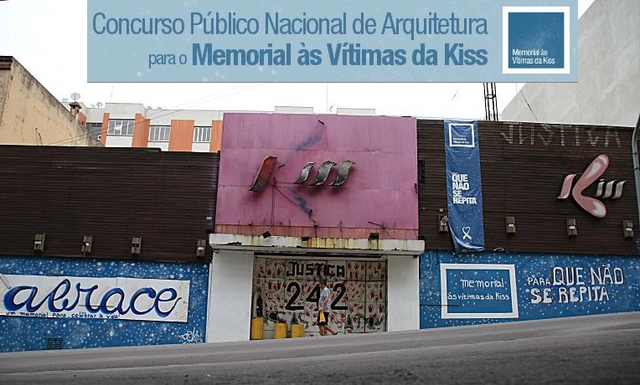
On January 27, the fifth anniversary of the Kiss nightclub tragedy, the National Public Architecture Competition for the Kiss Victims Memorial was launched in Santa Maria. The competition is a partnership between the city government, the Institute of Architects of Brazil (IAB RS), and the Association of Families of Victims and Survivors (AVTSM).
Architects from across Brazil may submit their projects via the competition website until March 19. Proposals must adhere to an estimated construction budget of R$ 3 million. The winning project is scheduled to be announced on April 10.