The COVID-19 pandemic has presented the world with unprecedented challenges and is impacting our daily lives by restricting our personal movements radically. It almost goes without saying that this month has continued to see extraordinary, rapid and previously unthinkable changes to public and private spaces. As the virus continues to spread, countries around the globe have ordered citizens to retreat to their homes – and stay there. Social distancing measures drastically scaled down our personal range of movement to our ‘own four walls’.
Hernán Díaz Alonso, one of today’s most influential and innovative architects, heads a multidisciplinary design practice, based in Los Angeles, called HDA-X (formerly Xefirotarch). Praised for its work at the intersection of design, animation, interactive environments, and radical architectural explorations, HDA- X combines these disciplines to create plans for sculptures, architectural ventures, and various objects. Featuring plans for the Helsinki Central Library, a Budapest Museum, and major architectural projects in Barcelona, this book is a spectacular survey of Díaz Alonso’s cutting-edge designs.
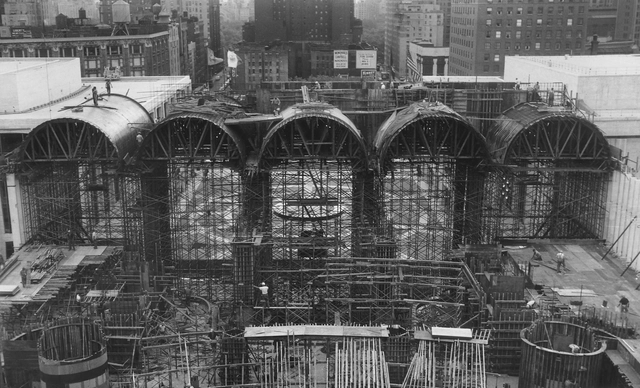
The new Met under construction in May 1964 (Photo: Metropolitan Opera Archives)
The Metropolitan Opera offers a free stream each night on the Met website for a period of 23 hours, from 7:30 p.m. EDT until 6:30 p.m. EDT the following day.
Brian May's micro concerts, goats on the streets, pizza delivery with toilet paper, Two men jam on a balcony. Above left: Brian May's micro concerts on his Instagram page. Above right: Great Orme Kashmiri goats on the streets of Llandudno, Wales. Below left: Pizza delivery with toilet paper, Rotterdam, Netherlands. Below right: Two men jam out on the guitar and flute on a balcony in Turin, Italy
When in 2009 Jacob Ross Boswell, in his article "Dystopic Verdure" in MONU #11 on "Clean Urbanism", introduced the topic of diseases, such as malaria, cholera, tuberculosis, yellow fever, and typhus etc, and how they had impacted urban landscapes and the shape of cities in the past, we were very intrigued and considered dedicating an entire issue on this topic. Particularly fascinating were his elaborations on how, by the second half of the 19th Century, urban designers and landscape architects such as Daniel Burnham, Frederick Law Olmsted, and a host of other architects, planners, and landscape architects collaborated with medical colleagues like Chicago's John Rauch in reshaping American cities: broadening streets and boulevards to allow for more sanitary air flow, moving pestilential cemeteries and dumps to the fringes of the city, carving out, reclaiming, or simply seizing land for America's first great urban parks, such as New York's Central Park. However, in the end we abandoned the idea to create an entire MONU issue on the relation between diseases and cities, since it seemed to us as something that belonged to the past only.
Open work area at Johnson Wax Headquarters, CC license
The office environment, collaborative by nature, presents distinct challenges in a world still recovering from a pandemic. Hear how architects, designers and their clients are exploring creative solutions.
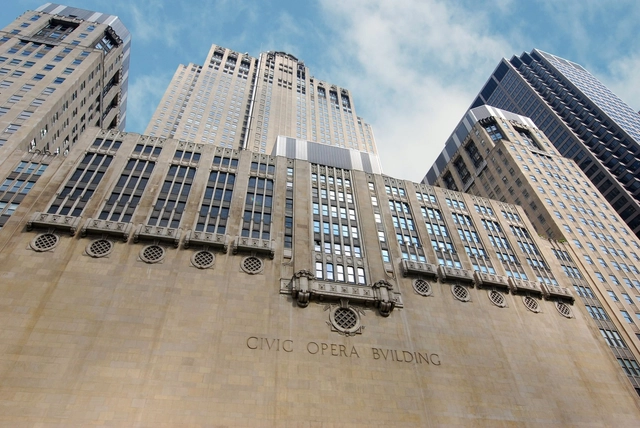
Learn about Art Deco—the opulent architectural style from the 1920s and 1930s—with CAC docent Mike McMains on this live, 45-minute virtual tour in downtown Chicago on May 5 or 10.
Photo of the Year 2020 is now open for all students of architecture
Aarhus School of Architecture proudly announces the second edition of the international competition, Photo Of The Year, which is a joint collaboration with Dreyers Foundation and Dinesen. Architecture students from all over the world are invited to participate in the international competition that celebrates architectural photography.
Non Architecture - SOCIAL DISTANCING - Housing Block
Our world is changing fast, while ambitions and challenges match in importance. In this context, design can play a huge role. How do we imagine the world to be? What range of possibilities we haven’t discovered yet? What’s a Non-Architecture for a World in crisis? In 2020 we started the second phase of competitions to address the issues of tomorrow.
Non Architecture - HEALING - Alternative Designs for Quarantine Cities
Our world is changing fast, while ambitions and challenges match in importance. In this context, design can play a huge role. How do we imagine the world to be? What range of possibilities we haven’t discovered yet? What’s a Non-Architecture for a World in crisis? In 2020 we started the second phase of competitions to address the issues of tomorrow.
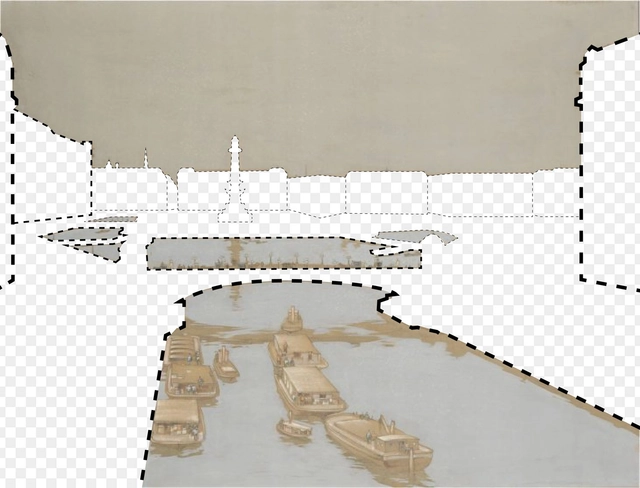
Plan of Chicago, Plate 107. Image by Nathan Rennich.
The Chicago Architectural Club (CAC) is pleased to announce the 2020 Burnham Prize Competition: Burnham 20/20. A call for entries is taking place as of April 30th, 2020 with the announcement of the winning entries in September 2020.
We invite everyone to re imagine the conventions of public toilets and encourage the best possible solutions for this serious problem scenario which plaguing our World.
The world today is experiencing unprecedented demographic growth and consequent urbanization of various places. Rapid population growth in urban areas usually gets coupled with poor planning of physical and social infrastructure along with a lack of individual and communal sanitary consciousness.
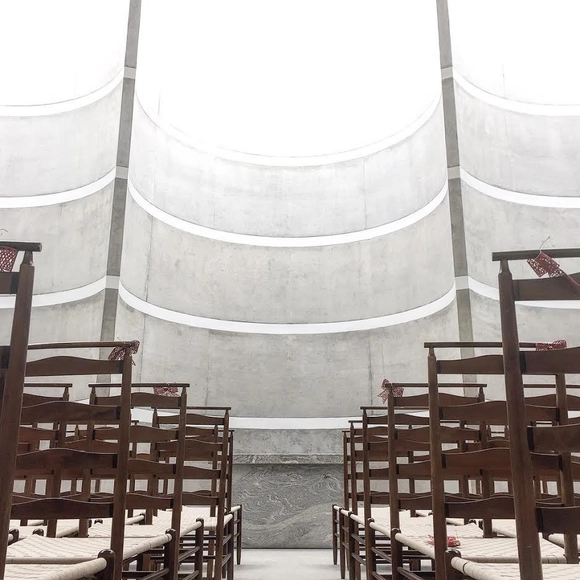
In this webinar, Eric Salitsky will present his 2018 Stewardson Keefe LeBrun Travel Grant research, Exploring the Global Phenomenon of Multifaith Spaces. Most commonly found in airports, hospitals, and university campuses, multifaith spaces also exist in military bases, prisons, malls, stadiums, museums, and as stand-alone institutions. Salitsky traveled to over 50 of these spaces in New York, Boston, London, Manchester, Zurich, and Berlin to document the various ways that both architects and laypeople have attempted to solve the inherent issues involved in accommodating the prayer needs of various religions at once.
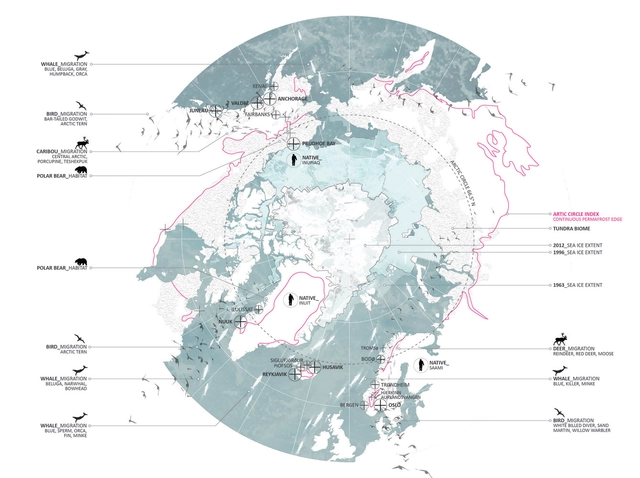
In this webinar, Amanda Aman, AIA, LEED AP BD+C will present her 2018 Stewardson Keefe LeBrun Travel Grant research, Fragile Fields of the Arctic Circle Periphery. The perpetual global climate shift materializes within the Arctic Circle as a reaction to the pressures of petrochemical industrial output and unsustainable human practice. Arctic environments are among the first to experience the manifestations of this shift as the Arctic is warming at twice the rate of the rest of the globe. As a result, natural systems, wildlife migrations, and patterns of habitation will be severely altered, in addition to the dependence of indigenous people groups on these for cultural preservation and physical survival.
Architects, landscape architects and urban planners from around the world are invited to contribute to the Open international architectural ideas competition for landscaping of Vyzvolennia Square and the revitalization of the DASU building with adjacent territory in Mariupol, Ukraine.
Construction alone accounts for more than 30% of the world’s greenhouse gas emissions and must now be reinvented to meet the ecological, economic and societal challenges of doing better with less, reducing its environmental footprint, limit the consumption of natural resources; build more responsibly and sustainably.
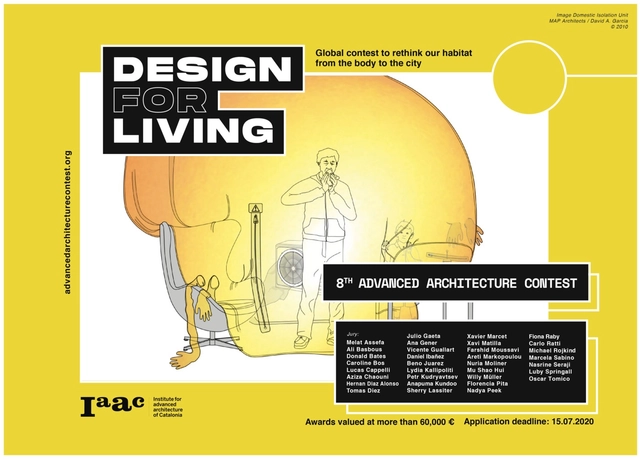
The Institute for Advanced Architecture of Catalonia (IAAC) calls its 8th Advanced Architecture Contest as a global reflection to rethink human habitats, at a time when the fight for life and climate allows us to consider how we would like to live in the coming decades.
The Intimate City hosts Dining in the Urban, a design competition that offers the opportunity to explore domestic rituals in Skopje's public realm. The brief uses the knowledge gained from domestic rituals to expose the current social and physical forms, unveiling the boundaries between the public, communal, and private within the city. Aiming to reveal social and physical latency the brief is an experiment that acknowledges form as a social commitment in order to mediate the tension in the city.