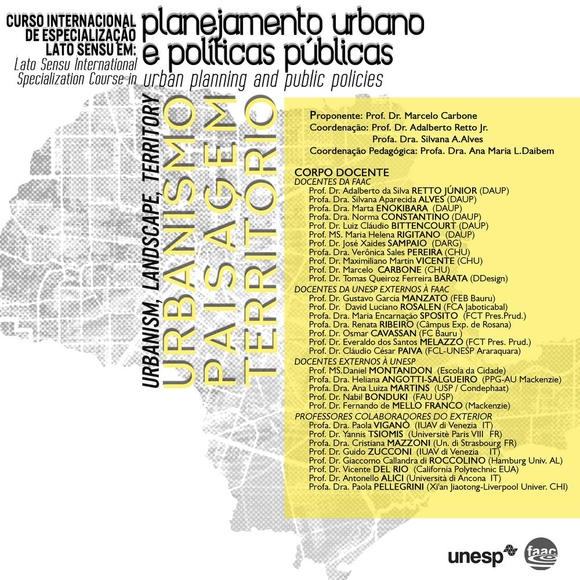
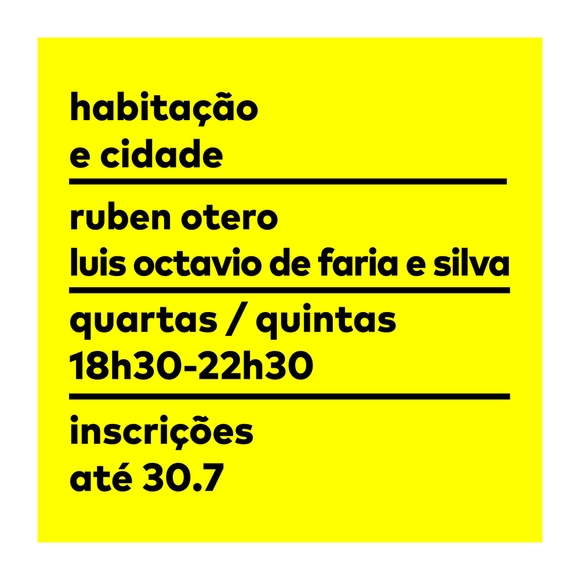
The proposal for the International Lato Sensu Specialization Course in URBAN PLANNING AND PUBLIC POLICY: URBANISM, LANDSCAPE, TERRITORY is structured as a research itinerary with a dual objective. First, it aims to create a think tank on contemporary urbanism as an interdisciplinary activity that encompasses urban and territorial policies, moving beyond the rigid dichotomy between planning and design. Second, by establishing relationships with the environment through research, reflection, and action, the course aims to link academic investigation with diverse public policies, based on the production of scientific knowledge systematized in a database that serves as support for Territorial and Urban Planning.
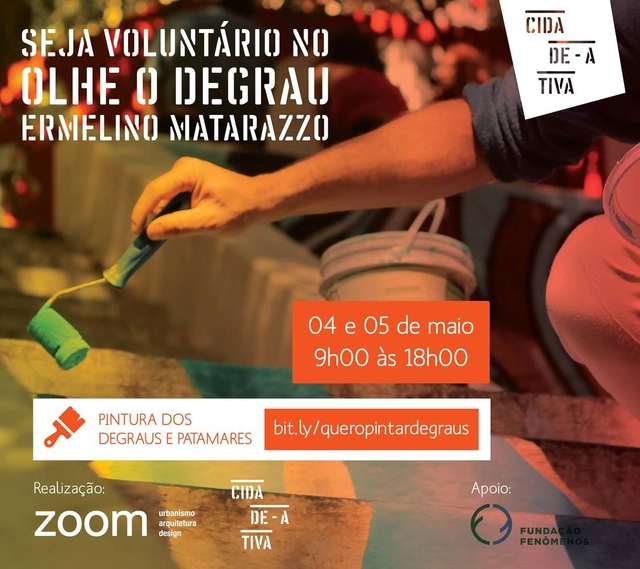
Olhe o Degrau Painting Workshop in Ermelino Matarazzo
Cidade Ativa is leading another "Olhe o Degrau" initiative, this time on a staircase in Ermelino Matarazzo. We will intervene at the site by painting the steps and landings. In partnership, Zoom Urbanismo Arquitetura e Design will support the intervention with a workshop on furniture made from wood and tires.
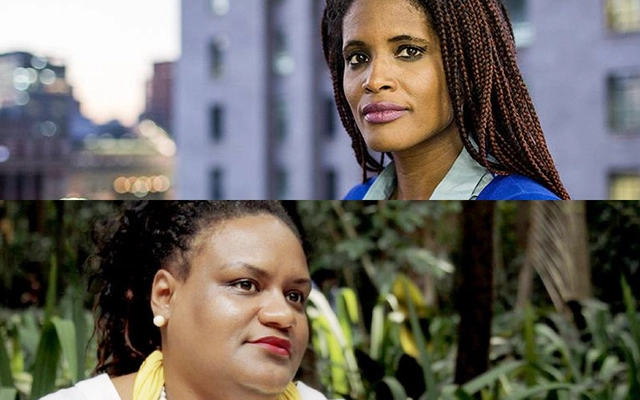
Djamila Ribeiro and Juliana Borges host book launches in João Pessoa. (Djamila photo: RICARDO MATSUKAWA / Juliana photo: Cauê Gomes-Carta Capital)
Juliana Borges and Djamila Ribeiro will headline the evening of April 26th on the stage of the IESP Academic Week of Architecture and Urbanism (SAAU'18) in João Pessoa. Alongside other prominent figures in feminist activism, State Representative Estela Bezerra (PB) and attorney Liana Cirne Lins (PE), they will lead a discussion on social invisibilities in the production of the contemporary city. The debate will be moderated by architect, urbanist, and actress Natália Sá (PB). Furthermore, Borges and Ribeiro will launch their respective books, "O que é encarceramento em massa?" (What is mass incarceration?) and "O que é lugar de fala?" (What is the standpoint theory?), both published by Grupo Editorial Letramento as part of the Feminismos Plurais (Plural Feminisms) collection.
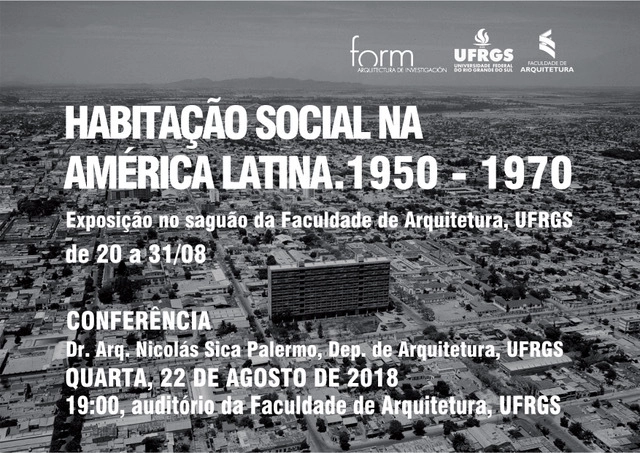
The exhibition showcases social housing complexes in Latin America—specifically in Argentina, Brazil, Chile, and Mexico—built between the 1950s and 1970s, representing an important legacy of modernity. The extensive collection of photographs, drawings, graphics, and texts regarding the projects and works researched highlights their formal and functional characteristics, construction techniques, open spaces, and social facilities, as well as their integration into the urban fabric of their respective cities. Recognizing these aspects provides a counterpoint to current Brazilian social housing production and encourages a renewal of reflection and discussion on a topic that is undeniably of vital importance to society as a whole.
The Institute of Architects of Brazil, Paraíba Department, is pleased to invite the entire community of Paraíba to the book launch of Valsa Brasileira, by economist and USP professor Laura Carvalho. The event is open to the public! _____
Videos
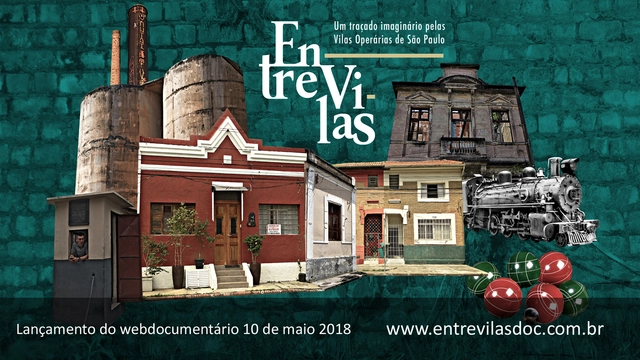
Produced over 3 months, EntreVilas allows users to navigate through the countless layers of the workers' villages in the city of São Paulo, serving as the first interactive documentary to delve into this context.
In times of debate surrounding unemployment rates and housing deficits, this interactive documentary outlines a period when the industry-housing link was practiced through the proliferation of worker villages in urban "suburbs." The official launch will take place on May 10 and 24.
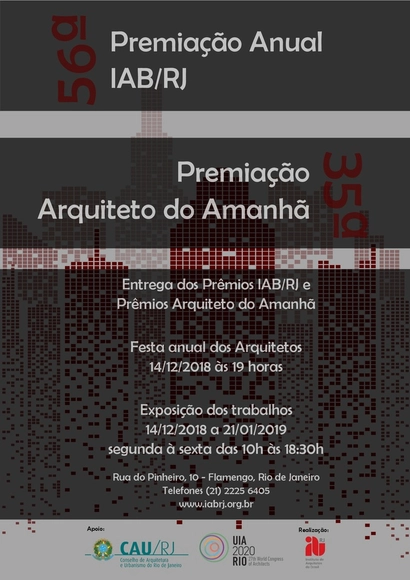
The Rio de Janeiro Department of the Institute of Architects of Brazil (IAB-RJ) is pleased to announce the 56th Annual Awards and the 35th Architect of Tomorrow Award.
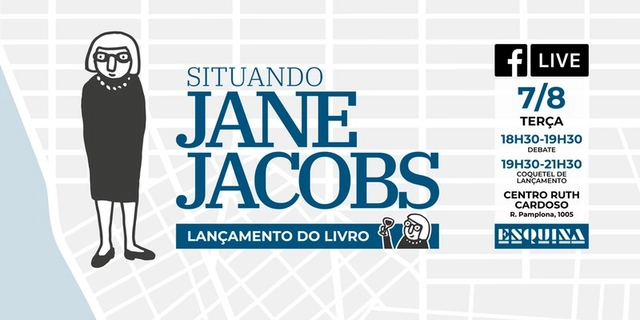
Esquina, a platform dedicated to cities, is hosting the launch of the book Situating Jane Jacobs on August 7. The book is a collection of essays by various authors, edited by Renato Cymbalista—an architect, urbanist, and professor at FAU-USP—and published by Anna Blume.
The event will also feature a discussion on the significance of Jacobs beyond her seminal 1961 book, The Death and Life of Great American Cities, which remains one of the most important essays ever written on urban life.
The Council of Architects and Urbanists of Brazil (CAU/BR), the Institute of Architects of Brazil (IAB), and CAU/SP will host the "National Seminar on Urban Policy: For More Humane, Just, and Sustainable Cities" on July 3rd and 4th. The event is free and will be held at the IAB São Paulo headquarters.
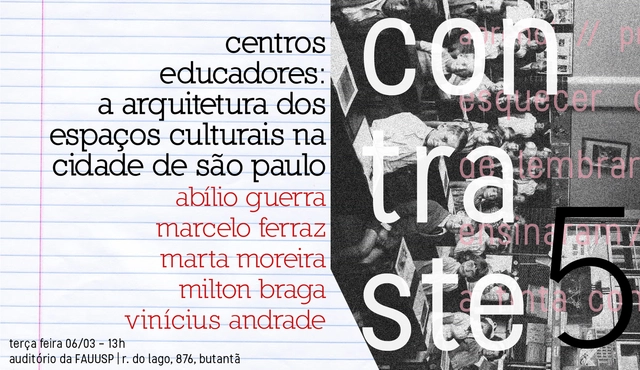
Revista Contraste, an independent publication developed by undergraduate students at the Faculty of Architecture and Urbanism of the University of São Paulo (FAU-USP), announces the launch of its 5th edition, themed "Education." For this occasion, we invite everyone to participate in the debate "Educating Centers: The Architecture of Cultural Spaces in the City of São Paulo." The event is part of a series of activities organized by the magazine, addressing the theme of education through various approaches.
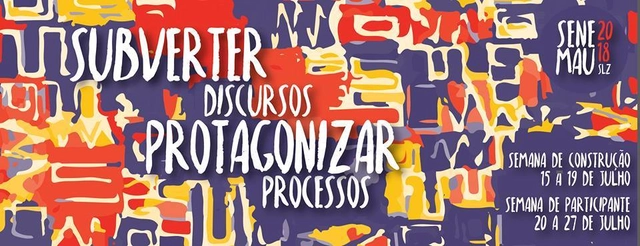
DATES FOR THE SEMINAR CONSTRUCTION WEEK AND THE PARTICIPANT WEEK, RESPECTIVELY
The National Seminar of Model Architecture and Urbanism Offices (SeNEMAU) is the occasion where members of EMAUs from across the country discuss, exchange experiences, and improve the model of education and university extension, where production is primarily focused on issues involving the democratization of architecture. SeNEMAU, like the EMAU itself, is an event conceived and promoted by FeNEA and has been held annually since 1997, organized by students involved with EMAUs alongside faculty advisors. The seminar program consists of activities that promote a collective experience of exchange and learning, such as presentations of work from model offices, practical workshops, lectures, roundtables, and experiences and interventions in urban spaces.
The event will take place at Sesc Avenida Paulista with an educational activity. Free of charge.
The second title in the series presents the city as a place for gathering and play; the event will take place at Sesc Avenida Paulista and includes an educational activity. Free admission.
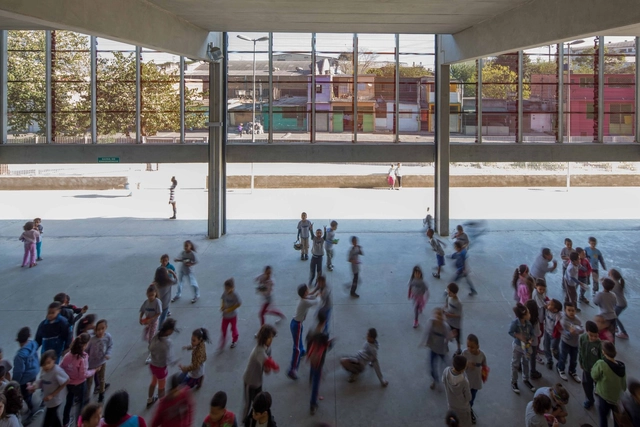
The exhibition addresses the trajectory of the FDE and reflects on the history of public school architecture in São Paulo by presenting the most significant projects from each period
The exhibition "Public School Architecture in São Paulo 1890–2017" celebrates the 30th anniversary of the Foundation for Educational Development (FDE).
Starting today, Sesc São Paulo is hosting the Arquite-Tô project, which invites the public to imagine how the arts and architecture can articulate knowledge and more democratic ways of building, inhabiting, and enjoying space.
The project takes place at the Sesc Pinheiros unit, with a program that includes lectures, theatrical performances, workshops, film screenings, and other activities that engage with architecture and the city.