Romullo Baratto is an architect with a PhD from FAUUSP and Managing Editor of ArchDaily. He previously coordinated the editorial team of the 11th São Paulo Architecture Biennial and served as Managing Editor of ArchDaily Brasil, where he led the platform to win the FNA Award—the first time the honor was granted to a media outlet. He collaborated on the editing of the book "Concrete Jungle", published by gestalten, and has curated architecture exhibitions in Brazil, Chile, Denmark, and Italy, as well as delivered lectures and moderated debates in Spain, the United States, and Portugal. His doctoral thesis investigates the urban landscapes of São Paulo through cinema. His work spans academic research and editorial practice, communicating architecture through texts, interviews, lectures, curatorship, and photography. Follow him on Instagram @romullobf.
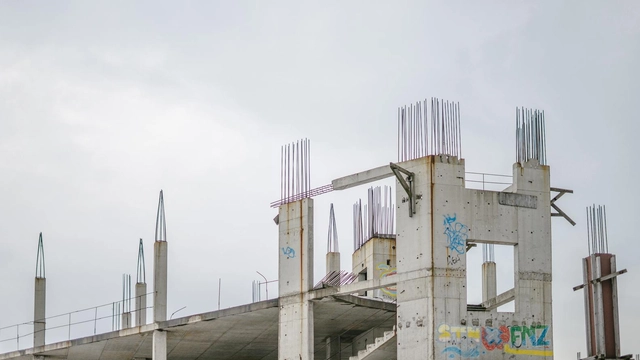
Although some projects conceal it, structure is always a primary concern in architectural design. Defining the structural system is among the first crucial decisions to be made, and it will likely shape a series of other aspects of the building. There are, however, extreme cases where architecture is seen and read simply as structure—projects whose character and image are largely defined by the chosen structural solution.
Elisabete França, a public administrator dedicated to implementing urban development, housing, and urban mobility programs, is the eighth guest on Studio Casa, an interview series produced by Casa da Arquitectura - Portuguese Center for Architecture.
Elisabete França has distinguished herself over the last few decades through her work promoting and disseminating architecture, curating several national and international exhibitions, and coordinating conferences and specialized publications. She holds a PhD from FAU Mackenzie and is a professor in the Architecture program at the Armando Alvares Penteado Foundation (FAAP).
Celso Sim, artistic collaborator of Teatro Oficina, is the seventh guest on Studio Casa, an interview series produced by Casa da Arquitectura - Portuguese Center for Architecture. As a filmmaker, he directed, wrote, and edited the 2018 feature film Penetrável Genet, which derives from the work created for the 10th São Paulo Architecture and Urbanism Biennial titled Penetrável Genet/Experiência Araçá, which occupied a cemetery in the city of São Paulo for 40 days.
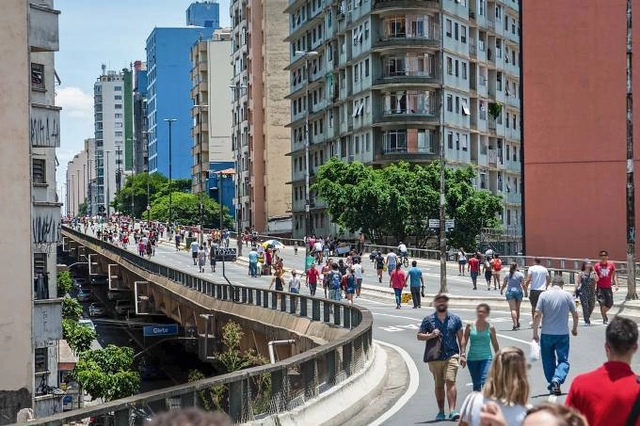
The São Paulo Municipal Government launched a bidding process this week for companies interested in constructing eight pedestrian access points to the João Goulart Elevated Highway, popularly known as the Minhocão, in downtown São Paulo.
In this week's debate hosted by Escola da Cidade, Guilherme Wisnik talks with Nuno Ramos, a painter, draftsman, sculptor, writer, filmmaker, set designer, and composer who holds a degree in philosophy from the University of São Paulo.
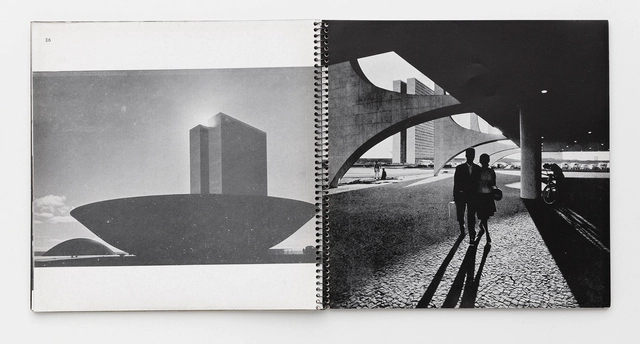
Photography researchers and enthusiasts now have another major tool at their disposal. The Photography Book Database (BDLF) has just been launched: a bibliographic reference platform exclusively dedicated to photography books. Conceived by photographer and researcher Leonardo Wen, the project began development in 2018 with funding from the Federal District's Cultural Support Fund.
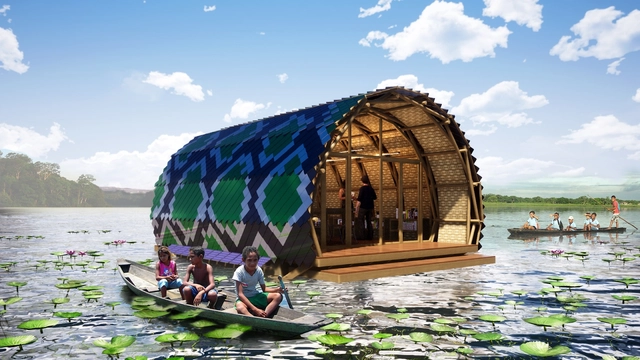
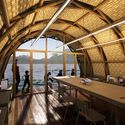
Atelier Marko Brajovic recently shared the design for a Floating Community Library on Lake Mamori, in the Amazon Rainforest. Developed in close collaboration with the local community, the project aims to become a benchmark for sustainable construction and environmental education.
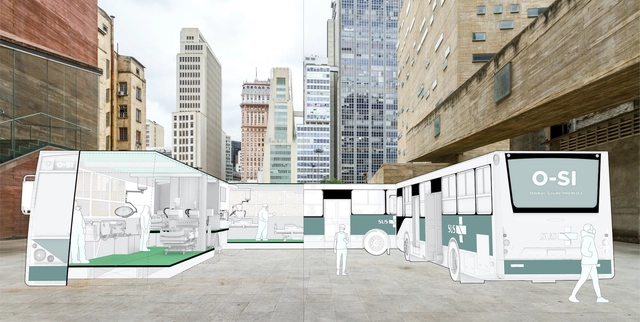
COVID-19 cases in Brazil continue to rise, overwhelming the healthcare system with patients diagnosed with the virus. Understandably, hospital visits by people suffering from other illnesses have also decreased due to fear of contracting the coronavirus. To prevent health complications among those hesitant to visit hospitals, the architects at the Brazilian studio Democratic Architects have proposed the Immediate Health Bus (O-SI), a system focused on telemedicine.
Marcelo Morettin, partner at the firm Andrade Morettin Associados, is the sixth guest on Studio Casa, an interview series produced by Casa da Arquitectura - Portuguese Center for Architecture. A graduate of the School of Architecture and Urbanism at the University of São Paulo, Morettin worked at the offices of Joaquim Guedes Arquitetos Associados and Marcelo Fragelli before founding his own practice in 1997.
What is the historical arc that traces the path from Brasília's social-democratic (and urban) utopia to today's neo-slaveholding dismantling of the democratic pact? What is this city we see today, stripped of all utopias, and with distinct regimes of vulnerability to the coronavirus pandemic?
Guilherme Wisnik talks with Raquel Rolnik, architect and urbanist, and full professor at the University of São Paulo's School of Architecture and Urbanism (FAU-USP). She was the director of planning for the São Paulo Municipal Planning Department (1989–92) and National Secretary of Urban Programs at the Ministry of Cities (2003–07), among other public sector roles. The Seminar on Culture and Contemporary Reality is organized by Escola da Cidade with support from IABsp.
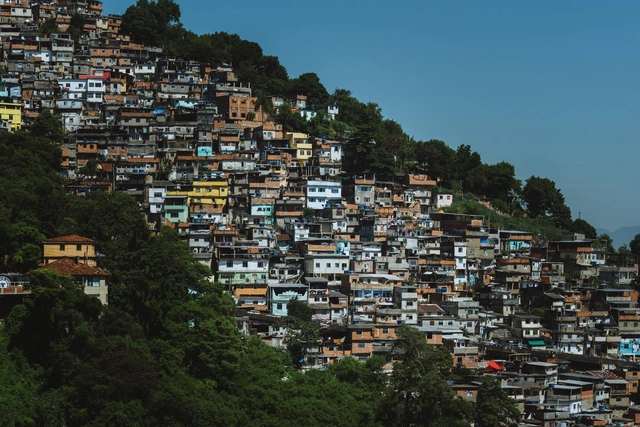
The Mapa Corona nas Periferias, a digital initiative by the Marielle Franco Institute and the Favela em Pauta channel, is now live. The digital map highlights solidarity initiatives combating COVID-19 in socially vulnerable areas such as favelas, communities, quilombos, or rural hinterlands.
Architect Carlos Alberto Maciel is the fifth guest on Studio Casa, an interview series produced by Casa da Arquitectura - Portuguese Center for Architecture. With a master's degree and a PhD in Design Theory and Practice from the School of Architecture at the Federal University of Minas Gerais, where he teaches design, Maciel is a founding partner of Arquitetos Associados, a collaborative studio based in Belo Horizonte.
It is impossible to discuss Amazonian architecture without mentioning Severiano Porto. The Minas Gerais-born architect was key in shedding light on the potential of that climate and context when integrated into design practice. Yet Amazonian architecture is not defined by Porto alone; indeed, many contemporary examples deserve attention for their careful selection of materials, ingenious application of vernacular techniques, or the sophistication achieved with limited resources.
Marta Moreira, founding partner of MMBB Arquitetos since 1990 and collaborator of architect Paulo Mendes da Rocha since 1995, is the fourth interviewee of Studio Casa, an interview series produced by Casa da Arquitectura - Portuguese Center for Architecture.
Guilherme Wisnik talks with Ester Carro, a community leader from Jardim Colombo in Paraisópolis, about forms of organization in vulnerable territories in times of epidemic, as well as the importance of community-led social initiatives.
Current Brazilian politics is an anti-politics aimed at the annihilation of institutions, such as the notions of the public and the state. Guilherme Wisnik talks with Fernando Haddad about prospects for imagining ways out of this abyss.
Almost two months have passed since the quarantine regime started in several countries as a strategy to reduce the transmission rate of the coronavirus. Since then, a considerable part of the architecture professionals has started to adopt telework or home office, keeping up with the projects that have already started, supported by a number of new online meeting tools, document storage in the cloud and BIM models.
In celebration of Brasília's 60th anniversary, filmmaker Pedro Rodolpho has made his documentary O Corpo e a Cidade Modernista available to the public for free. The film was screened at several of Europe's most prestigious film festivals in 2018, the year of its release.







.jpg?1588366232&format=webp&width=640&height=580)