Escola da Cidade is hosting a discussion between Cape Verdean architect Patrícia (Patti) Anahory and the editors of América magazine, Marianna Al Assal and Maira Rios. The event marks the launch of the second issue and addresses the construction of identities through the reading of urban landscapes, as well as the displacement and production of knowledge in the fields of architecture and urbanism between the Americas and Africa today.
Romullo Baratto
Romullo Baratto is an architect with a PhD from FAUUSP and Managing Editor of ArchDaily. He previously coordinated the editorial team of the 11th São Paulo Architecture Biennial and served as Managing Editor of ArchDaily Brasil, where he led the platform to win the FNA Award—the first time the honor was granted to a media outlet. He collaborated on the editing of the book "Concrete Jungle", published by gestalten, and has curated architecture exhibitions in Brazil, Chile, Denmark, and Italy, as well as delivered lectures and moderated debates in Spain, the United States, and Portugal. His doctoral thesis investigates the urban landscapes of São Paulo through cinema. His work spans academic research and editorial practice, communicating architecture through texts, interviews, lectures, curatorship, and photography. Follow him on Instagram @romullobf.
BROWSE ALL FROM THIS AUTHOR HERE
↓
Escola da Cidade hosts a conversation with Patti Anahory for the launch of Revista América
https://www.archdaily.com/1123561/escola-da-cidade-hosts-a-conversation-with-patti-anahory-for-the-launch-of-revista-americaRomullo Baratto
Brazilian Houses: 20 Residences with Verandas
.jpg?1546956437&format=webp&width=640&height=580)
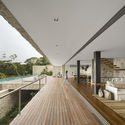
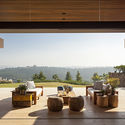
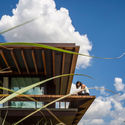
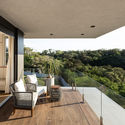
The veranda is one of the architectural elements that most powerfully fosters the connection between interior and exterior spaces. Its precise origins are difficult to pinpoint, as it can be found in vernacular architecture across the East, the Arab world, Europe, and, with particular prominence, Brazil.
.jpg?1546956437)
https://www.archdaily.com/1122277/brazilian-houses-20-residences-with-verandasRomullo Baratto
IAB São Paulo makes the complete archive of Jornal Arquiteto available.
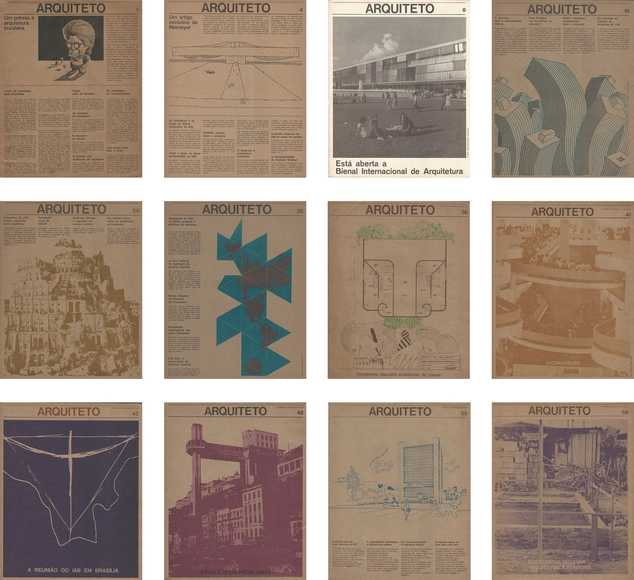
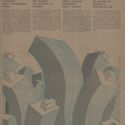
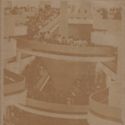
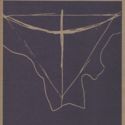
The Institute of Architects of Brazil - São Paulo Department (IABsp) has made all 74 editions of Jornal Arquiteto available online. This prominent publication in the field of architecture and urbanism was edited by IABsp in partnership with the Union of Architects in the State of São Paulo (SASP) between 1972 and 1980. Distributed nationwide, the newspaper aimed to be a "spokesperson for all architects."

https://www.archdaily.com/1123854/iab-sao-paulo-makes-the-complete-archive-of-jornal-arquiteto-availableRomullo Baratto
Escola da Cidade broadcasts 2002 inaugural lecture with Oscar Niemeyer
For the first time, Escola da Cidade is broadcasting the architecture school's inaugural lecture, delivered by Oscar Niemeyer in 2002. In a lucid and conscious address to young students, Niemeyer emphasizes the social function of architecture and presents, through sketches and images, some of his key works, including the Pampulha architectural complex and Brasília.
https://www.archdaily.com/1123930/escola-da-cidade-broadcasts-2002-inaugural-lecture-with-oscar-niemeyerRomullo Baratto
Shining Constellations: Maps Show the Population Distribution on Earth
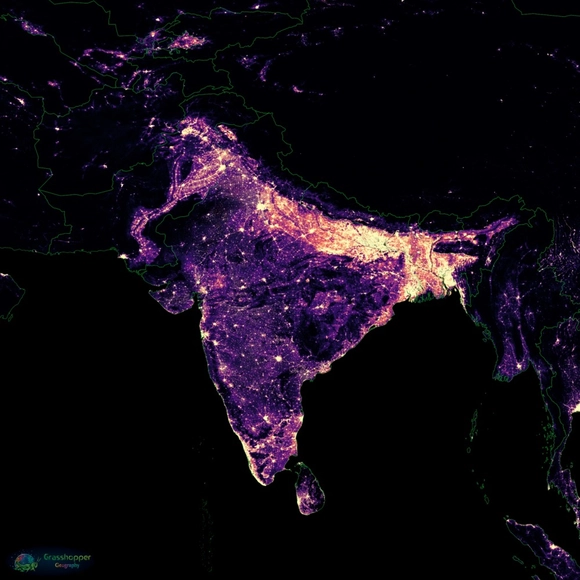
Hungarian analyst and cartographer Robert Szucs shared with ArchDaily another of his series of maps, this time addressing the population distribution on Earth. A large blackboard, identifying only the geopolitical boundaries of countries and continents, reveals bright constellations, representing human agglomerations and the world's great voids.
https://www.archdaily.com/942971/shining-constellations-maps-show-the-population-distribution-on-earthRomullo Baratto
Instituto Tomie Ohtake launches digital publication on experiences of the body with architecture during social isolation

As part of their partnership in art-education and cultural mediation exchanges, the Tomie Ohtake Institute and the Astrup Fearnley Museum in Oslo have launched the digital publication Our Home Is Where We Are. The project is supported by the Royal Norwegian Embassy in Brasília.
https://www.archdaily.com/1123882/instituto-tomie-ohtake-launches-digital-publication-on-experiences-of-the-body-with-architecture-during-social-isolationRomullo Baratto
Interview with Paulo Mendes da Rocha on Coronavirus and the Future of Metropolises
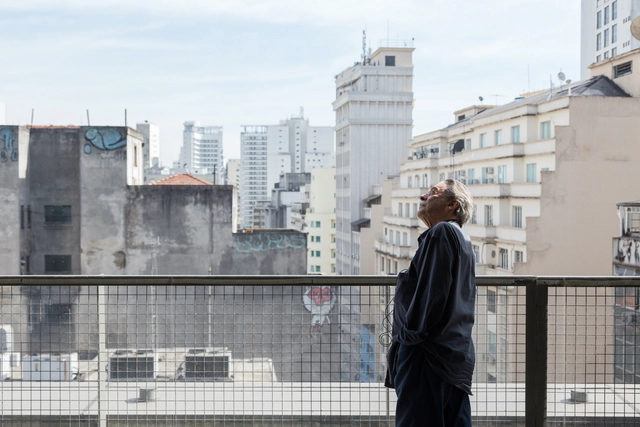
Paulo Mendes da Rocha is interviewed by Paulo Markun in another episode of the series “Conversas na Crise – Depois do Futuro” [Conversations in Crisis – After the Future], organized by the Institute of Advanced Studies (IdEA) at Unicamp in partnership with the UOL news portal. The interview addresses topics such as the impact of the coronavirus pandemic on cities, the public health crisis, and the precariousness of urban housing in Brazil.
https://www.archdaily.com/1124060/interview-with-paulo-mendes-da-rocha-on-coronavirus-and-the-future-of-metropolisesRomullo Baratto
Hiperstudio proposes transforming commercial buildings into mixed-use developments post-pandemic

One side effect of the global coronavirus pandemic in the field of architecture is a reflection on the future of cities and the built environment. Debate on the topic has perhaps never been so intense, with numerous proposals and visions emerging to address everything from social interaction in public spaces to the details of new uses for private ones. Regarding urban dynamics, programmatic changes may offer a way to ensure that commercial and service districts maintain their vitality.
With more people working remotely, commercial buildings face the potential of becoming partially vacant. Driven by this reflection, architects Matheus Marques, Ricardo Goncalves, Luis Favilla, and Rolando Figueiredo, from the São Paulo-based firm Hiperstudio, developed a proposal to convert single-use commercial buildings into mixed-use complexes, incorporating residential units and public gathering spaces.
https://www.archdaily.com/1123932/hiperstudio-proposes-transforming-commercial-buildings-into-mixed-use-developments-post-pandemicRomullo Baratto
Social Inequality, As Seen From The Sky
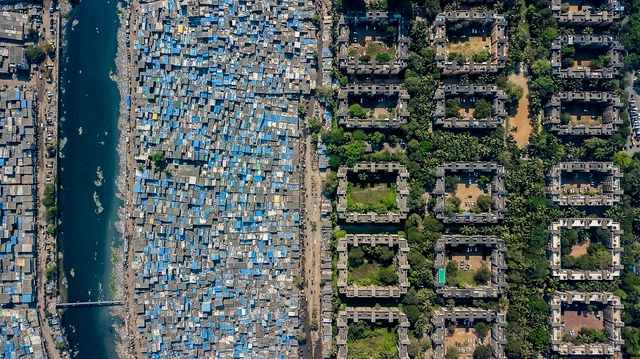
Across the world, urban clusters have —to a greater or lesser extent— social and economic differences. Reflected in space, these imbalances of income and access to education, health, sanitation, and infrastructure generate ruptures more or less visible —although drastically felt.
Although a daily reality for some, socio-spatial inequalities can often go unnoticed. Photographer Johnny Miller states, "Discrepancies in how people live are sometimes hard to see from the ground... Oftentimes, communities of extreme wealth and privilege will exist just meters from squalid conditions and shack dwellings." Miller's photo series 'Unequal Scenes' seeks "to portray the most 'Unequal Scenes' in [the world] as objectively as possible."


https://www.archdaily.com/900023/social-inequality-as-seen-from-the-skyRomullo Baratto
6 Movies That Use Architectural Visualizations to Tell Stories and Create Atmospheres
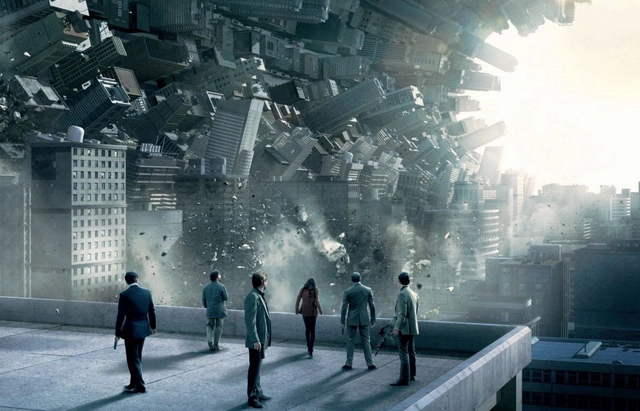
Representation of the real world is, without any doubt, in the genesis of cinema, an art originated from photography, by creating a sequence to convey the impression of movement to the viewer. In fact, the earliest known film recording is from 1895, picturing the arrival of a train at Ciolat station in France, a trivial event in the daily life of 19th-century European cities.
However, even though tangible reality plays a big role in cinema, one cannot ignore that the fascination caused by this art comes, to a great extent, from its capacity to create imaginary worlds, to activate mental spaces, and to unleash emotions. In this sense, the real world may often provide insufficient fuel, inspiration, or background for the directors' and screenwriters' storytelling, so the art direction and scenic design teams are required to create other intangible realities that serve as a basis for the narrative.


https://www.archdaily.com/942402/6-movies-that-use-architectural-visualizations-to-tell-stories-and-create-atmospheresRomullo Baratto
Fogs Yesterday and Today: Guilherme Wisnik in Conversation with Michael Wesely
The development of digital interfaces, combined with the daily bombardment of advertising images, increases the demand for clarity—a clarity we tend to take for granted. This is what Baudrillard called the "world of hypervisibility." Art, however, can offer a slowing down of perception, pointing us to deeper dimensions of experience where speed becomes delay.
Guilherme Wisnik talks with Michael Wesely, a German art photographer best known for his photos of cities, buildings, and landscapes taken with a special ultra-long exposure technique. From 1986 to 1988, Michael Wesely attended the Bayerische Staatslehranstalt für Photographie in Munich before studying at the Munich Academy of Fine Arts.
https://www.archdaily.com/1123840/fogs-yesterday-and-today-guilherme-wisnik-in-conversation-with-michael-weselyRomullo Baratto
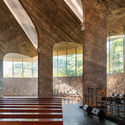
Church of the Bahia Administrative Center, designed by Lelé, through the lens of Guilherme Pucci
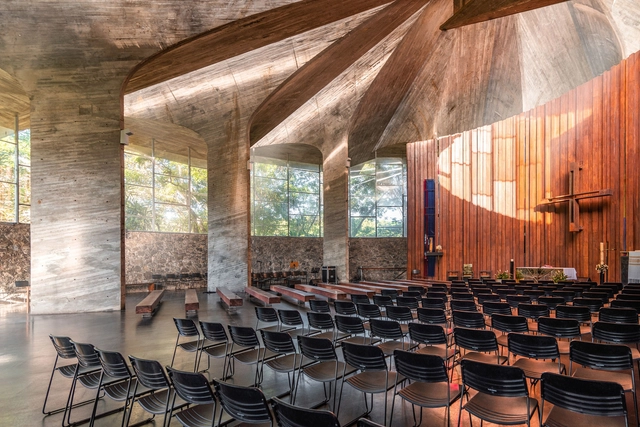
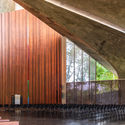
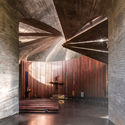
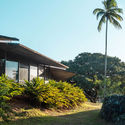
Architectural photographer Guilherme Pucci shared with us a series of images of the Ascension of the Lord Church at the Bahia Administrative Center, designed by João Filgueiras Lima, known as Lelé. Completed in 1975, this classic of Brazilian architecture reveals Lelé's design sensitivity, visible in how the building integrates with the site's topography, the quality of the materials used—concrete, glass, wood, and stone—and the tension created by light and shadow within the church.

https://www.archdaily.com/1124311/church-of-the-bahia-administrative-center-designed-by-lele-through-the-lens-of-guilherme-pucciRomullo Baratto
Tainá de Paula and Guilherme Wisnik discuss racial exclusion, the health crisis, and society
Urban precariousness, social vulnerability, racial exclusion, health crisis, environmental catastrophe, genocidal state. Growing dissatisfaction on the streets, falsification of pandemic data, economic recession. What social and political pacts will be possible to reshape democracy in a shattered country? Guilherme Wisnik speaks with Tainá de Paula, architect and urbanist, urban struggle activist, who holds a master's degree in Urbanism from the Federal University of Rio de Janeiro.
https://www.archdaily.com/1123695/taina-de-paula-and-guilherme-wisnik-discuss-racial-exclusion-the-health-crisis-and-societyRomullo Baratto
Brazilian architect proposes urban equipment for sanitization and coronavirus information

Amid the novel coronavirus pandemic, the international “Coronavirus Design Competition,” organized by the platform Go Architect, encourages students and professionals from various fields to think about how to develop products, objects, and equipment that help the population remain physically and mentally healthy in a scenario of so much uncertainty. Brazilian architect Leonardo Dias is competing, alongside more than 100 candidates from around the world, with a proposal for an urban totem that promotes hand sanitization, citizen information, and the humanization of data.
https://www.archdaily.com/1123936/brazilian-architect-proposes-urban-equipment-for-sanitization-and-coronavirus-informationRomullo Baratto
Angelo Bucci talks about the Paulista School and the mythology of FAUUSP
Angelo Bucci, founder and principal of SPBR Arquitetos, is the tenth and final guest of Studio Casa, an interview series produced by Casa da Arquitectura - Portuguese Center for Architecture. For over 25 years, Bucci has divided his time between professional practice and academia. This parallel career has ultimately shaped his approach to design, where professional demands are treated as opportunities to explore new possibilities.
https://www.archdaily.com/1123360/angelo-bucci-talks-about-the-paulista-school-and-the-mythology-of-fauuspRomullo Baratto
Arquiteturas Film Festival will make architecture films available online weekly
One of the world's most prestigious architecture-focused film festivals, the Arquiteturas Film Festival is launching a retrospective series of its seven previous editions, held between 2013 and 2019, with online screenings of some of the key films from each year. To kick off the series, the Canadian film Misleading Innocence (2014), directed by Francesco Garutti and Shahab Mihandoust, will be available between June 12 and 19 on the festival's website.
https://www.archdaily.com/1124034/arquiteturas-film-festival-will-make-architecture-films-available-online-weeklyRomullo Baratto
Guilherme Wisnik and Vladimir Safatle discuss culture, democracy, and society
In this week's debate hosted by Escola da Cidade, Guilherme Wisnik speaks with Vladimir Safatle, an associate professor in the Department of Philosophy at the University of São Paulo and a visiting professor at the universities of Paris VII, Paris VIII, Toulouse, Louvain, and Stellenbosch. Safatle is one of the coordinators of the Laboratory of Research in Social Theory, Philosophy, and Psychoanalysis (Latesfip/USP).
https://www.archdaily.com/1123429/guilherme-wisnik-and-vladimir-safatle-discuss-culture-democracy-and-societyRomullo Baratto
Global Watersheds and Waterways Captured in Vibrant Colorized Maps
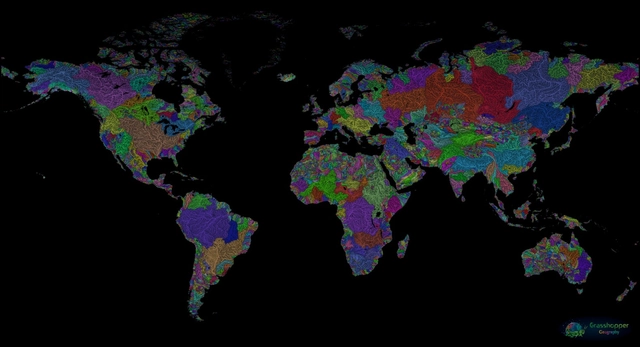
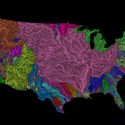
GIS analyst and Hungarian cartographer Robert Szucs has shared an impressive collection of maps that bring together all the drainage basins of the world in vibrant colors. Titled Grasshopper Geography, the maps showcase the rivers and watercourses of the world, featuring the basins of selected regions, countries and continents.




https://www.archdaily.com/940976/global-watersheds-and-waterways-captured-in-vibrant-colorized-mapsRomullo Baratto