
History of Art, Painting, Architecture, Photography & Cinema Course - Module 3
History of Art, Painting, Architecture, Photography & Cinema Course - Module 3
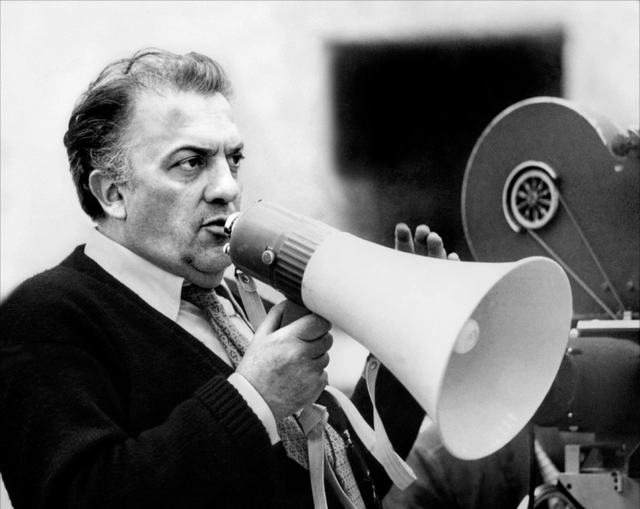
This course—offered in three monthly modules (April, May, and June) of four classes each—will discuss central issues in the history of modern art through iconic works by Paul Cézanne, Louise Bourgeois, Le Corbusier, Marguerite Duras, Federico Fellini, Toyo Ito, Rem Koolhaas, Kazimir Malevich, Hannes Meyer, Aleksander Rodchenko, Arnold Schoenberg, and Giuseppe Terragni. The modules can be taken individually or sequentially. By adopting a critical and non-linear approach to the history of art and architecture, the classes will explore paradigmatic points of the field in the 20th century. The diverse group of young speakers selected—including art historians, curators, architects, and psychoanalysts—provides, in itself, an overview of contemporary art criticism and research in São Paulo.
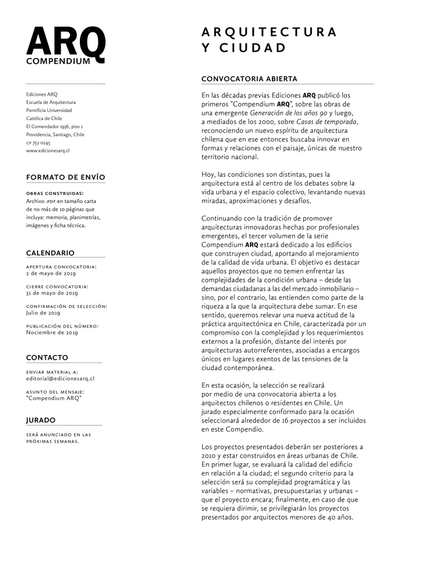
In previous decades, Ediciones ARQ published the first "Compendium ARQ" volumes, focusing on the work of an emerging generation from the 1990s and later, in the mid-2000s, on vacation homes, recognizing a new spirit in Chilean architecture that, at the time, sought to innovate in form and its relationship with the landscape, unique to our national territory.
![23rd Architectural Culture Lecture Series [CCCA] - Featured Image](https://snoopy.archdaily.com/images/archdaily/media/images/5cdb/03a0/284d/d1a5/0a00/00ef/slideshow/open-uri20190514-26493-yawjo8.jpg?1557857099&format=webp&width=640&height=580)
This edition of the Architectural Culture Lecture Series [CCCA] explores various approaches to architecture and the city through an understanding of the floor plan. Graphic representation is an indispensable instrument in the discipline, and the floor plan, as the quintessential architectural tool, not only represents the project's concept but also manifests a discourse—a vision of the specific context in which the work is framed. History, economy, and society are all captured within it.
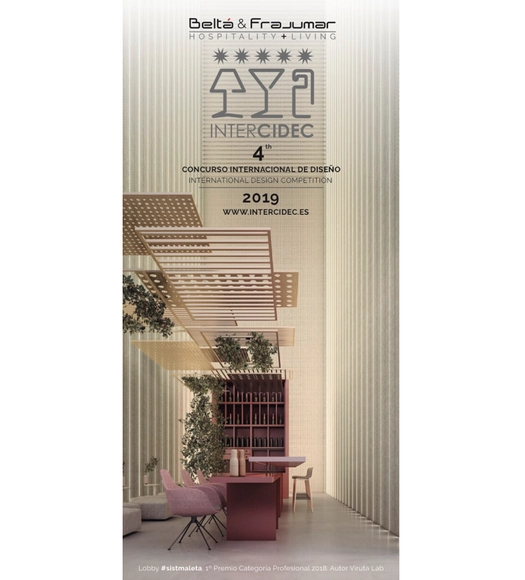
The Spanish company Beltá & Frajumar, a manufacturer of home and hospitality furniture and upholstery, invites professionals, architects, and interior designers specializing in habitat environments to participate in the InterCIDEC'19 International Contract Design Competition.

The purpose of this call is to create an artistic or expressive work that represents and gives form to the competition's interpretive scope.
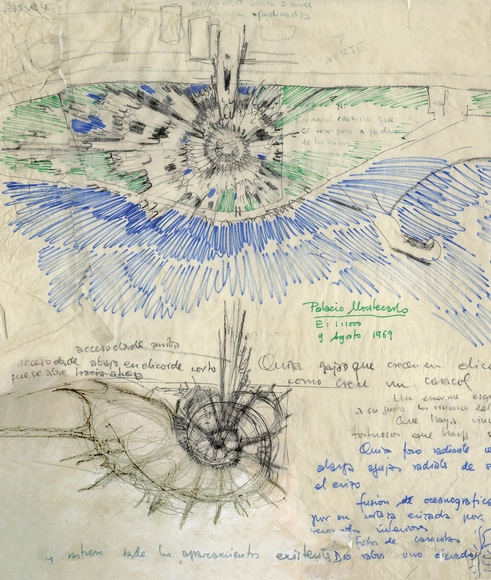
Ediciones Asimétricas, in collaboration with the Fernando Higueras Foundation, the ICO Foundation, the ICO Museum, and the Ministry of Public Works, has published the 2nd edition of the catalog Fernando Higueras. Desde el origen.
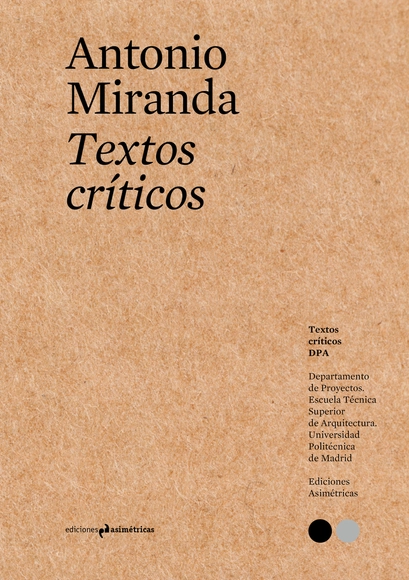
In defense of Modernity and against all robotic classicism and buffoonish romanticism, Miranda has always been an uncomfortable presence—a resistor who understands the value of the sedimentation of structured thought and knows that one must preach constantly. A committed intellectual during cloying times when the most pedestrian discipline took over the classrooms, his voice has been beloved by students and scorned by many of his colleagues in an Academy he has always questioned. This doubt has become an instrument for transforming his thinking; we know that doubting is dangerous, as those in power have always fed us certainties that allow for unceasing adoration, yet never for progress or change.
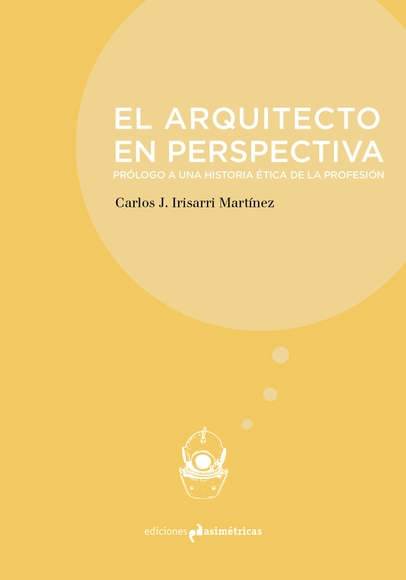
This essay examines the role of the architect in contemporary society, aiming to be critical and, even more so, combative. Grounded in a deep understanding of the profession's history, the author seeks lessons from the past to illuminate paths for the architect of the future. It addresses not only the individual but also the collective, operating on the belief that opportunities for professional corporatism still remain.
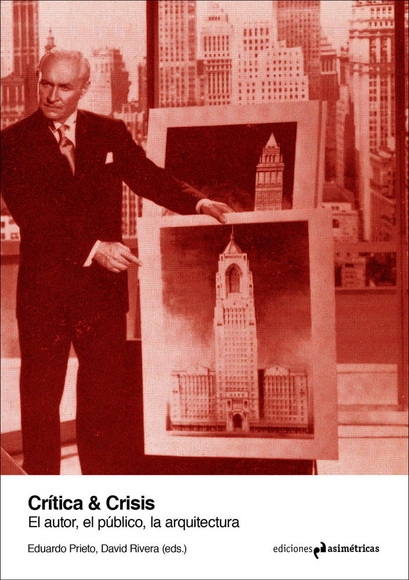
Cultural criticism is an occupation as serious as the work of an actor or a comedian. No society can do without it without suffering an internal process of fatal contraction. Neither can architecture, a discipline that suffers—perhaps more than most—from the pressures of political and economic powers, as well as the prejudices of the public and architects themselves. With the same insistence that people speak of the 'death of the novel,' some critics and historians frequently revisit the tropes of the 'death of architecture' and the 'death of criticism.' These are bad times for criticism. Yet it is precisely the threatened state of the discipline—the fact that it finds itself in a 'crisis' that will lead either to its death or to its revitalization—that opens the door to reflecting on it without prejudice.
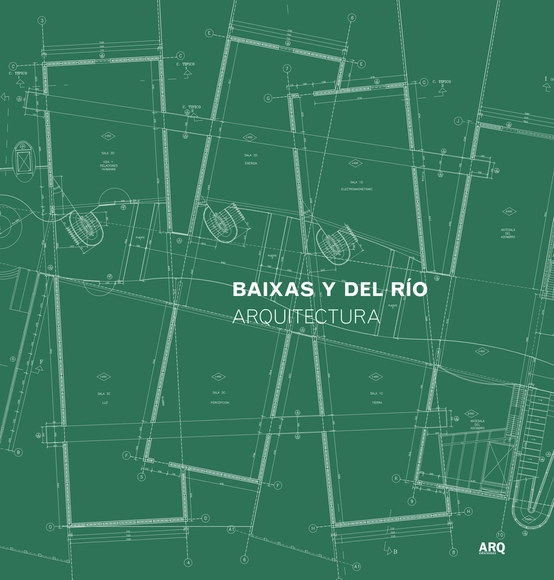
This book compiles a record of writings, projects, and works completed by Juan Ignacio Baixas and Enrique del Río between 1968 and 2018—fifty years of continuous professional practice, remarkable in its integrity. It presents a broad repertoire that spans the full range of architectural scales, covering everything from furniture design to houses, buildings, and urban neighborhoods, all executed using the same method, with equal rigor and responsibility.
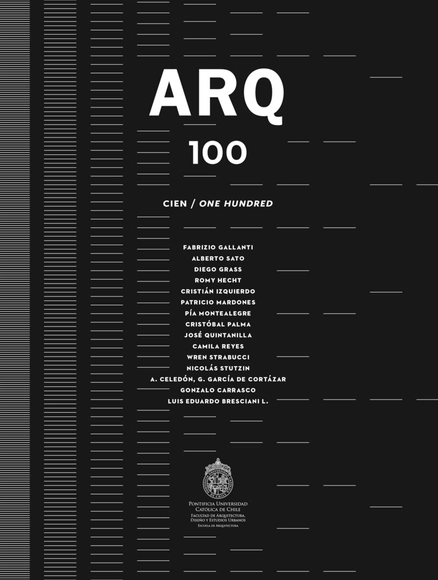
Does everything really deserve to be published and preserved? Or perhaps we publish out of an anxiety to insert ourselves into a larger history, with the vague hope that the future will take notice of what we do today? The excess of publications must be weighed against the mathematical impossibility that everything is worthwhile. Naturally, this includes us. In this age of suspicion, as defined by Boris Groys, criticism—and above all, self-criticism—is an intellectual duty. This is the spirit that frames this 100th issue of ARQ. For despite the urge to celebrate, we could not help but ask ourselves: what are we celebrating? Mere survival?
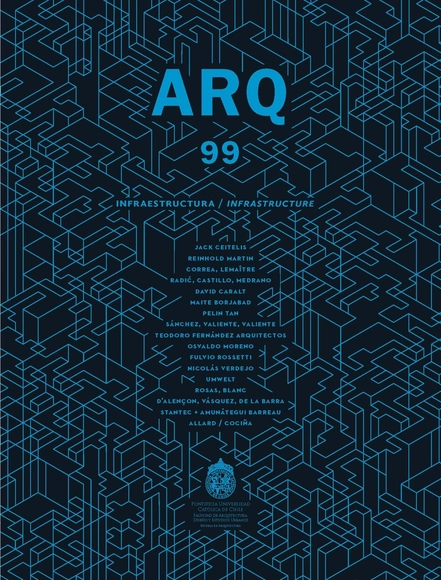
While infrastructure is a prerequisite for any modern notion of "civilization," we rarely notice how much we depend on it. Perhaps the fact that we only interact with its interfaces makes it go unnoticed, to the point that we only remember its existence when it fails or when, at the end of the month, we have to pay the bill.
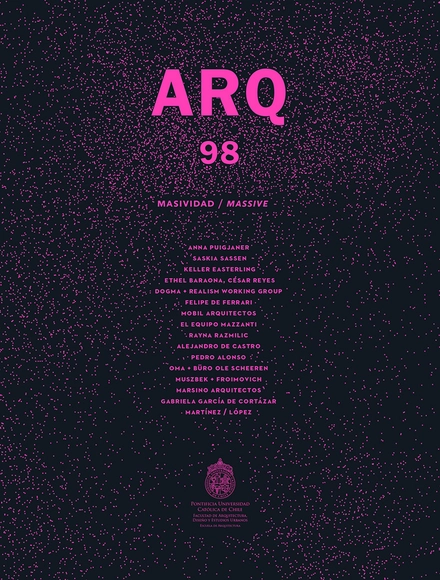
No era has built as much or had to accommodate as large a population as ours. Furthermore, no other era has had so many architects. Today, everything seems to be massive: catastrophes, hunger, wealth, migration, production, trends, or cities.
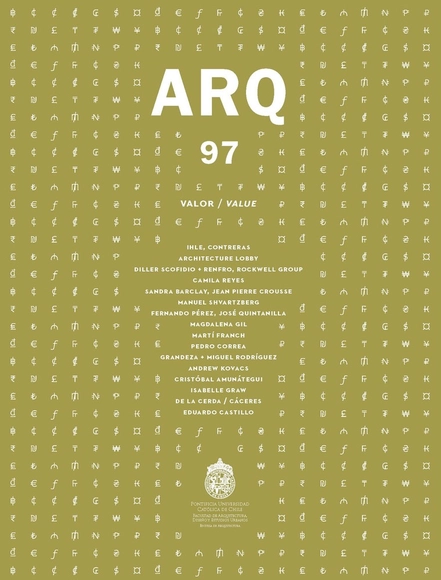
This issue of ARQ attempts to articulate the complexity of the concept of "value."
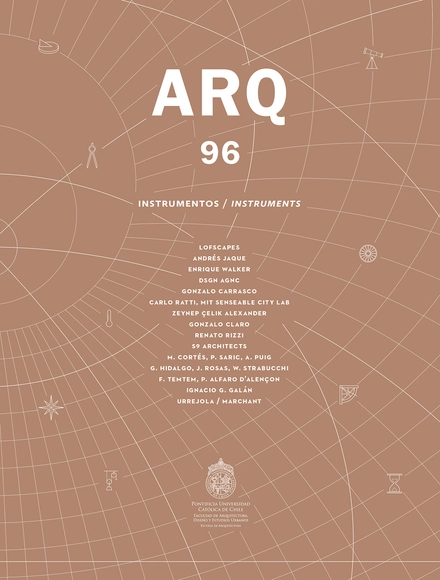
This issue of ARQ presents a broad critical discussion on the supposed neutrality of instruments. This emphasis is evident in the conversation between Andrés Jaque and Enrique Walker, in the texts by Zeynep Çelik Alexander, Ignacio G. Galán, and Gonzalo Carrasco, as well as in the debate surrounding the Promotion Law, which seeks to support architecture produced in Chile through a legal instrument. Furthermore, it explores a territory where architecture can make a contribution: the creation of instruments.
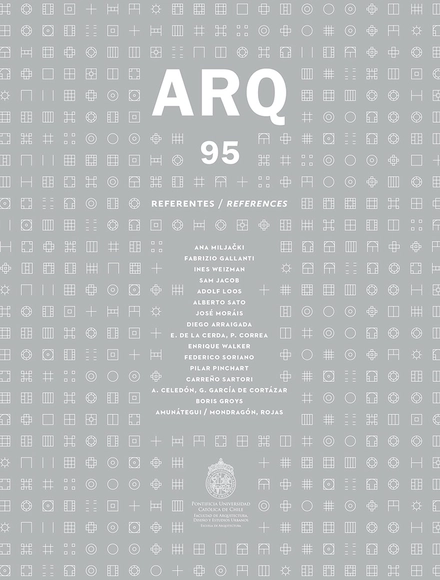
As both a problem and a design tool, the reference has been a recurring theme in architecture. Furthermore, recent discussions regarding copyright have brought this notion back to the forefront, necessitating a conceptual update, which serves as the focus of this 95th issue of ARQ.
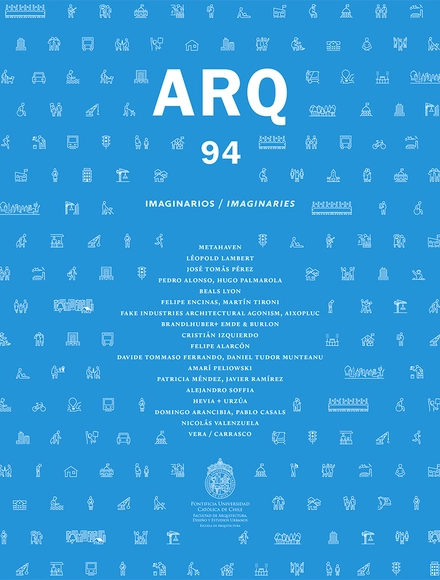
In this issue of ARQ, the heterogeneous and incoherent nature of "imaginaries" is presented in its full breadth. The house by Fake Industries Architectural Agonism and Aixopluc, the pedagogical proposal by Beals Lyon, the projects by Hevia and Urzúa, the house by Alarcón, and the research by Soffia all explore the concept of the imaginary as a collection of references. The review of existing imaginaries and their impact on how we understand the city, the territory, or even the market, is addressed in the texts by Encinas and Tironi, Méndez and Ramírez, as well as in the work of Peliowski. Meanwhile, the creation of new imaginaries is explored in the text by Valenzuela and in the proposals by Ferrando and Tudor, Brandlhuber+ Emde and Burlon, Izquierdo, Pérez, and Arancibia and Casals. Finally, the discovery of those imaginaries that remain hidden in plain sight is analyzed in the interviews with Metahaven and Lambert, as well as in the text by Alonso and Palmarola.