Content Editor at ArchDaily Mexico. Architect by UNAM (2018). Her interests focus on exploring the relationship of the body with architecture through dance. She has collaborated with different international choreographers who explore dance and architecture as an event. Twitter / Instagram: @monicarellano_
The president of the Venice Biennale, Paolo Baratta, and directors Yvonne Farrell and Shelley McNamara presented, via videoconference, the official curatorial proposal of the Artistic Direction for the 16th International Architecture Exhibition of the Venice Biennale.
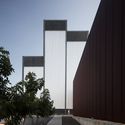
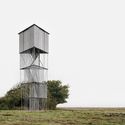
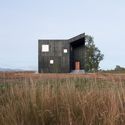
The 21 projects making up the Official Selection of the Mexican Pavilion at the 16th International Architecture Exhibition of the Venice Biennale converge across latitudes, geographical regions, and territorial echoes, rooted in the curatorial concept of "Freespace." In four installments, we will share the work and ideas of each participant representing Mexico in Venice. Read on to discover the fourth part of these projects.
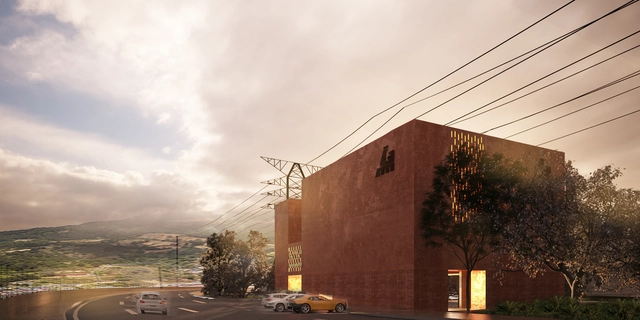
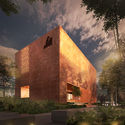
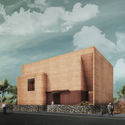
The Colegio de Arquitectos del Estado de Michoacán is a non-profit association established 54 years ago serving the city of Morelia, dedicated to heritage preservation and fostering debate on contemporary architectural production and urban development. To provide an adequate space for these activities, a competition was launched after securing a site for the new headquarters to support and foster contemporary architecture.
On November 29, the National Competition for the Headquarters Project of the Colegio de Arquitectos Michoacán, A.C. was held at its current headquarters. The jury—composed of Pedro Núñez González, Isaura González Gottdiener, Salvador Reyes Ríos, José Muñoz, Carlos Marín, and Jorge Humberto Flores Romero—evaluated 17 completely anonymous proposals.
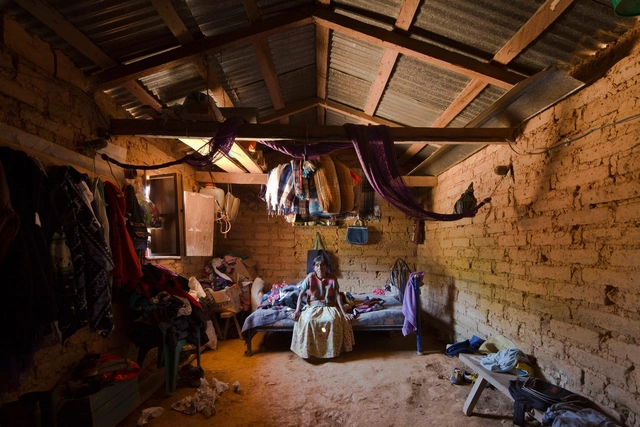
“Earthquakes are a naturally destructive effect of our earth's constantly changing surface” -National Geographic, “Latest Earthquakes–and How Earthquakes Work”, February 2018.
ReConstructo is a group exhibition curated by Mexican architects Luis Carbonell and Andres Souto, presented at Zuecca Project Space in parallel with the International Architecture Exhibition of the Venice Biennale 2018. The exhibition offers a multifaceted look at simultaneous and overlapping readings of the actions and agents of destruction that subsequently paved the way for a latent reconstruction following the 2017 earthquakes in Mexico.
Since its founding, the National Workers' Housing Fund Institute (Infonavit) has conducted research to guide its urban, architectural, economic, and social approach to housing in Mexico.
This month, we continue to celebrate the 6th anniversary of ArchDaily Mexico, an achievement made possible thanks to the hard work of our great team, as well as the relationships we have built over the years with the local architectural community and our readers.
With this in mind, this year we decided to celebrate with a contest that involved all of our readers. We wanted to discover their favorite projects in Mexico, whether classic or contemporary. We asked our readers to follow the @ArchDailyMx account on Instagram and share their favorite project with us using the hashtags #ConcursoArchDailyMx and #6AñosArchDailyMx.
UN-Habitat Executive Director Maimunah Mohd Sharif and Sheikh Mohammed bin Rashid Al Maktoum, Prime Minister of the United Arab Emirates and Ruler of Dubai, presented David Penchyna, Director General of Infonavit, with the Dubai International Award for Best Practices to Improve the Living Environment yesterday.
Established in 1996 to recognize global initiatives that excel in their contribution to sustainable urban development, this year's award was presented to the work led by INFONAVIT, within the framework of SEDATU's activities, carried out in collaboration with the UN-Habitat office in Mexico and with invaluable data contributions from local municipalities.
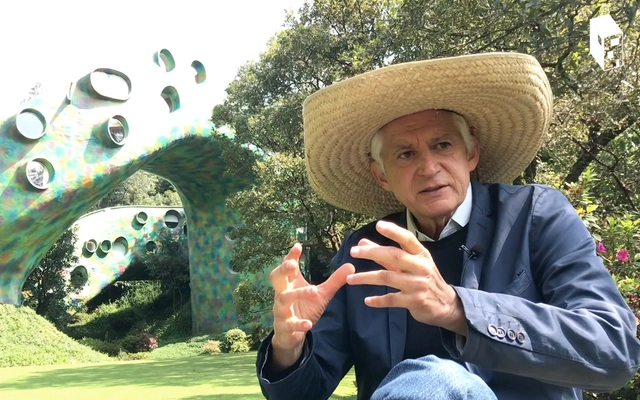
Javier Senosiain is a Mexican architect and graduate of the UNAM Faculty of Architecture whose work focuses on researching and developing organic architecture through a deep immersion in the geographical qualities of specific sites. As he notes, his work seeks to create far more human spaces by understanding how we move through and inhabit our environments. His practice draws on the research of internationally renowned architects such as Frank Lloyd Wright, Hundertwasser, and Gaudí; nevertheless, he prioritizes regional materials and solutions tailored to the specific needs of Mexico. His portfolio includes projects such as the Organic House, Nido de Quetzalcóatl, and the Amiba House in São Paulo, among others.
This year's jury is composed of Spanish architect Ángela García de Paredes of Paredes Pedrosa (1999 AR Emerging Architecture Award winner), Indian architect Gurjit Singh Matharoo (2010 AR House Award winner), and Ronald Rietveld of RAAAF (2013 AR Emerging Architecture Award winner).
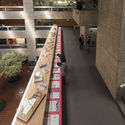
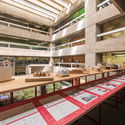
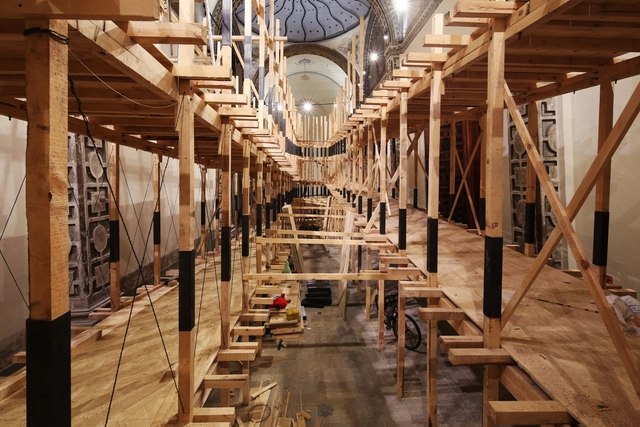
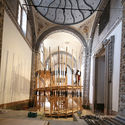
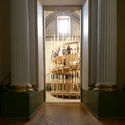
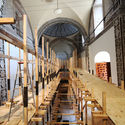
As part of the acoustic exhibition "Modos de Oír," Mexican architect Mauricio Rocha built an architectural and sculptural structure designed to unfold the space of the central nave, creating an ascending path that evokes the cochlear shape of the ear.
The exhibition is spread across the various spaces of the Convento de San José and the Templo de Santa Teresa la Antigua, currently Ex Teresa Arte Actual. Built in the early 17th century, this venue is renowned for hosting numerous events, exhibitions, and sound showcases due to its unique acoustics. Sound art has experienced a significant boom in Mexico in recent decades, with specific links to other historical periods where sonic thinking was also present. Driven by the unique character of this venue and its rich history, Laboratorio Arte Alameda and Ex Teresa Arte Actual sought to create a comprehensive exhibition featuring works that spark a collective reflection echoing the richness, complexity, and significance of the sound art scene.
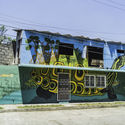
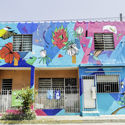
Colectivo Tomate is a Puebla-based civil organization made up of 20 artists, lawyers, architects, designers, nutritionists, and administrators who have intervened in around eight cities across Mexico, inviting people to take action in the streets to drive transformation, demonstrate the power of citizens in communities, and strengthen community ties.
On September 30, 2013, at the Palacio de Bellas Artes in Mexico City, the collective was recognized with the Quórum award for their Ciudad Mural project. This award recognizes, among other categories, the strategic use of design to impact quality of life as an agent of change, as well as its role as a key ingredient for innovation, productivity, and economic development in the country.
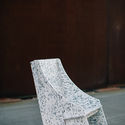
Luken is a designer furniture brand –created and produced in Mexico by architect Paola Calzada Prats–, characterized by its use of recycled or eco-friendly materials. The collection consists of indoor and outdoor furniture that is easily assembled and resistant to sun, water, and heavy use.
Two different materials are used: recycled plastic for outdoor furniture and valchromat for indoor pieces, the latter being a 12 mm thick Portuguese wood fiber panel that, while not rainproof, is resistant to moderate humidity. No glue or nails are required for assembly. Meanwhile, the outdoor recycled plastic is made of 100% melted plastic with no added chemicals in the process. It performs exceptionally outdoors due to its resistance to direct sunlight, sea air, rain, and even heavy daily use by children.
Yesterday, July 12, a partial collapse occurred at Plaza Artz Pedregal, a high-end shopping mall in southern Mexico City. Designed by the prominent Mexican architecture firm Sordo Madaleno Arquitectos, the collapsed section appears to be an overlapping cantilevered volume, as seen in social media videos of the incident and renderings released in 2016. The cause of the collapse remains under investigation.
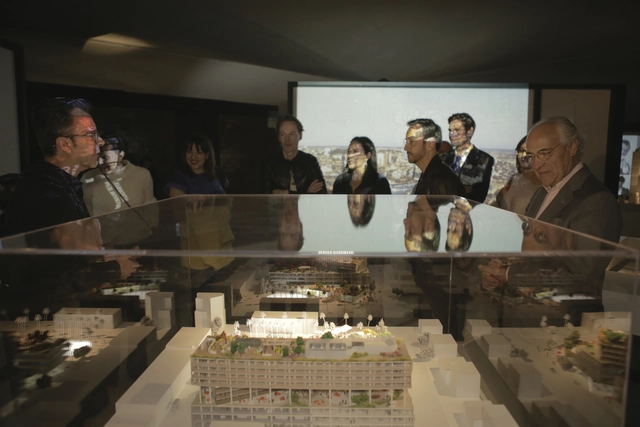
The exhibition “10 Exponents of the 21st Century: City, Architecture, and Design” launches the cultural activities at Espacio CDMX, a public space dedicated to promoting architecture, urban planning, and socially responsible design in the city, while also serving as a temporary creative venue and Information Center for World Design Capital CDMX 2018.
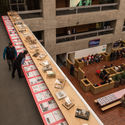
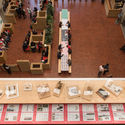
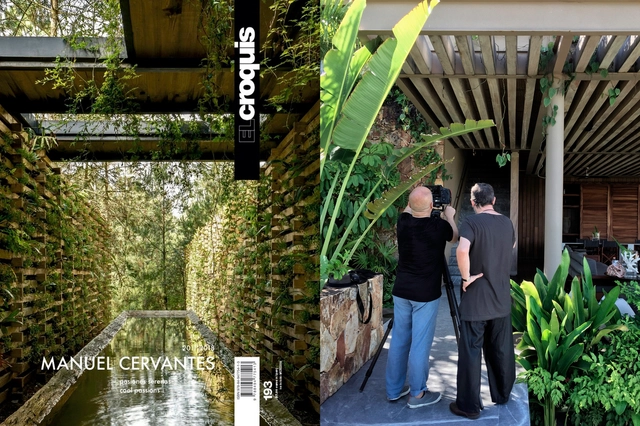
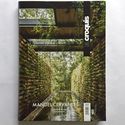
'El Croquis' is one of the most prestigious international architecture magazines, edited by architects Fernando Márquez Cecilia and Richard Levene. Published as carefully curated monographs, the magazine analyzes the work of architects whose careers feature some of the most influential and prestigious projects globally, such as OMARem Koolhaas, Kazuyo Sejima, Herzog & de Meuron, Álvaro Siza or Rafael Moneo. Every two months, a new issue is published with a print run of 35,000 copies, distributed to specialized bookstores in Europe, the Americas, and Asia.
The magazine is published in English and Spanish from El Escorial in Madrid, Spain, and is currently a member of ARCE (Asociación de Revistas Culturales de España) and the Asociación de Editores de Madrid. To date, only 193 issues have been published, the latest of which is dedicated to the career of architect Manuel Cervantes—the first Mexican architect to be featured in 'El Croquis' and the second from Latin America, following Smiljan Radic.
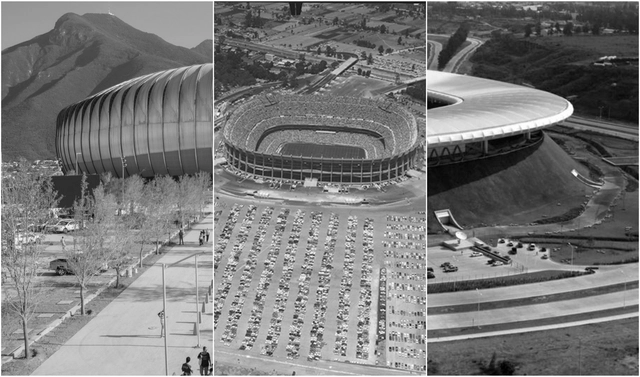
A few days ago, FIFA announced that Mexico, the United States, and Canada will host the 2026 World Cup. The news came as a surprise to some, as it will be the first World Cup to be played across three countries, featuring a new format with 48 teams divided into 16 groups of three. Consequently, further details on the organization will not be available until 2020, when FIFA is scheduled to announce the event's logistics.
Knowing that many of our readers are fans of both soccer and Mexican architecture, we present this special feature on the three Mexican stadiums that will host the 2026 World Cup. Don't miss it!
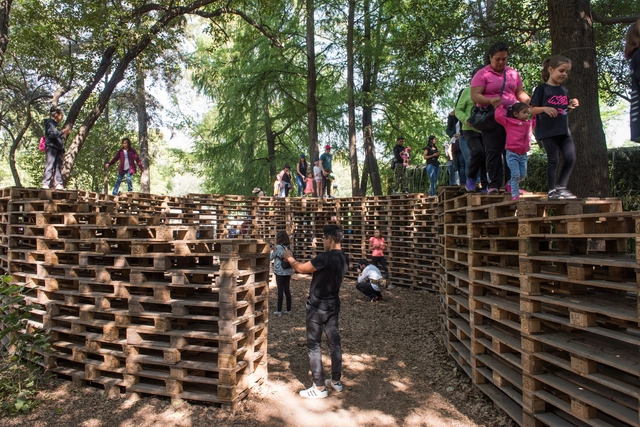
The FYJA Flowers and Gardens Festival is an event that brings together landscape architects, architects, artists, designers, artisans, gardeners, and students to create, for each edition, a route with various activities and exhibitions. These offer everyone—experts, enthusiasts, and the curious alike—the opportunity to engage with horticulture and experience the benefits of plants.
This year's edition, which took place from April 20 to 22, aimed to raise awareness among Mexicans about the importance of plant care and the necessity of creating and preserving urban green spaces, while also fostering interest in landscape design, floral art, and gardening.
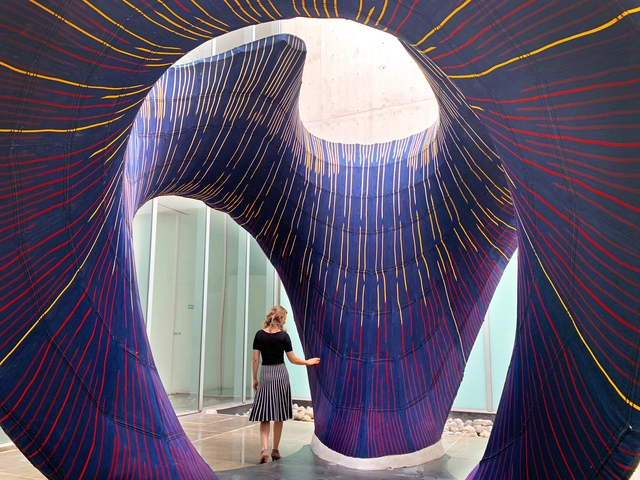
As part of Zaha Hadid Architects' first exhibition in Latin America, the Museo Universitario de Arte Contemporáneo (MUAC) in Mexico City is hosting an experimental structure that pays tribute to Mexican architect and engineer Félix Candela. "Design as Second Nature" showcases several projects by architect Zaha Hadid through models, audiovisual materials, paintings, and photographs, exploring her practice's creative process and highlighting the importance and complexity of design as the articulating axis of forms and construction processes in her work.
.jpg?1520005213&format=webp&width=640&height=580)
.jpg?1520005166 "© Mexico Pavilion")
.jpg?1520005196 "© Mexico Pavilion")
.jpg?1520005136 "© Mexico Pavilion")
.jpg?1520005151 "© Mexico Pavilion")
.jpg?1520005213)