Content Editor at ArchDaily Mexico. Architect by UNAM (2018). Her interests focus on exploring the relationship of the body with architecture through dance. She has collaborated with different international choreographers who explore dance and architecture as an event. Twitter / Instagram: @monicarellano_
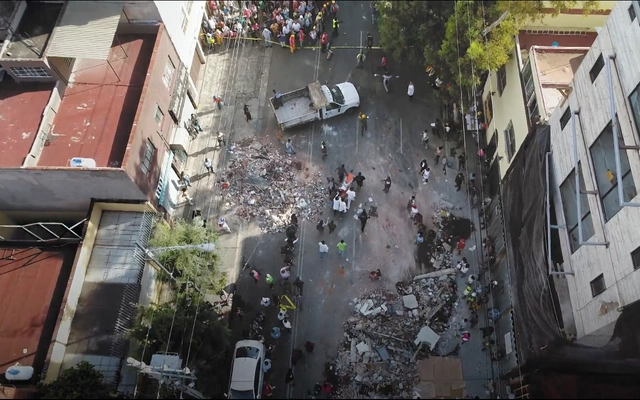
As part of The New York Times' documentary series "En los ojos de México" –where six filmmakers present a perspective on their country– Santiago Arau and Diego Rabasa present "Ciudad Herida" (Wounded City), a chronicle of the 2017 earthquake in central Mexico. Through drone footage, the film captures the strength and resilience shown during a moment of crisis.
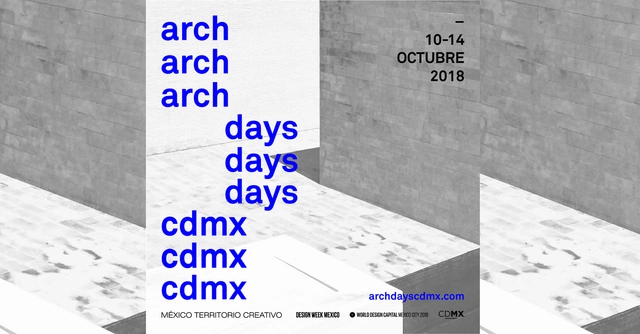
Arch Days CDMX emerged as an initiative ofDesign Week Mexico to create a cutting-edge platformdedicated to architecture based in Mexico City while seeking to expand to other territories. The goal of this project is to blend disciplines related to architectural design, such as urbanism and engineering, across a broad spectrum of application fields including housing, public space, mobility and transport, heritage preservation, neighborhood revitalization, community activation, and urban infrastructure, all based on a comprehensive, sustainable, and socially responsible design vision. Arch Days CDMX will celebrate its first edition from October 10 to 14, alongside Design Week Mexico 2018.
On October 13, the 2018 Archmarathon Awards concluded their fifth edition in Milan. Held at the impressive Palazzo Mezzanotte from October 11 to 13, 2018, the event featured 55 architecture and interior design projects across 16 categories, submitted by 55 studios from 23 countries and four continents. Selected by a prestigious international jury, the 55 firms were invited to present their projects to a large audience of architects, developers, and designers from around the world.
During the ceremony, the winners of each of the 16 categories and two overall winners—one for architecture and one for interior design—were announced. The selection was made by a main jury chaired by Luca Molinari, Gary Chang, Lesley Lokko, and Mexican architect Rozana Montiel, along with a guest jury comprising Massimiliano Cecconi, Cherubino Gambardella, and Evgeniya Murinets. Read on to discover the final winners in both categories.
Discovering what young architects are doing across Mexico was the starting question for architects Lucia Zesati Farías, Gustavo López Padilla, and Honorato Carrasco, curators of the exhibition 21 jóvenes arquitectos mexicanos. Segunda edición (21 Young Mexican Architects: Second Edition). The show opened on August 9 at the National Museum of Architecture at the Palace of Fine Arts and will run until September 23, 2018.
Over a year and a half, the curators reviewed recent works to select 21 architecture firms whose design teams are under 45 years old. This age limit was established because significant architectural production is rare among recent graduates in their twenties.
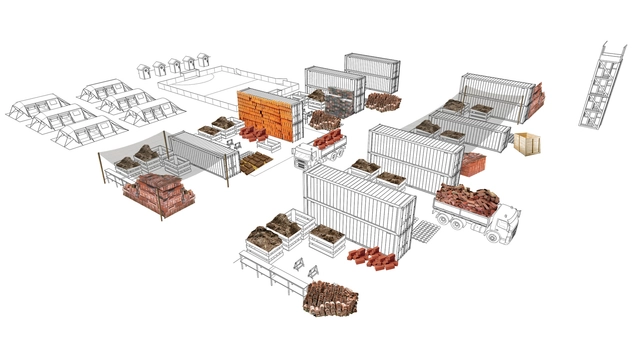
To mark the commemoration of the February 27 earthquake and tsunami, the creation of “Rubble Hospitals” is being promoted, drawing on recent earthquake experiences in Chile and Mexico.
A new guide for creating these spaces was announced in Concepción by Chile's Proyecta Memoria Foundation, coinciding with the anniversary of the February 27 earthquake and tsunami. The guide compiles experiences from earthquakes in Chile and Mexico, while promoting Rubble Hospitals as spaces to safeguard and reuse debris from large-scale seismic events.
The document is the result of three years of work and details memory rescue initiatives during the 2010 and 2015 earthquakes in Chile and the earthquakes in Mexico.
The 2018 International Housing Finance Summit, organized by INFONAVIT, brought together experts from various disciplines to discuss the future of cities and the lessons learned to date. Held on May 2 and 3 at the Camino Real Polanco, the event hosted prominent figures who examined urban transformation processes to evaluate models that could guide us toward an integrated urban plan.
As part of a generation of photographers who in recent years have helped place Mexican architecture on the global map, Jaime Navarro is one of the key figures who has navigated the technological transition shaping a new way of seeing and practicing architecture. As one of the country's most recognized photographers, Jaime Navarro's approach aims for photography that can help document the beauty and goodness of specific historical moments, witnessing how we relate, what moves us, and what transcends disciplinary boundaries to build new futures. Below, we present an exclusive interview that showcases his career and the admiration of the ArchDaily team.
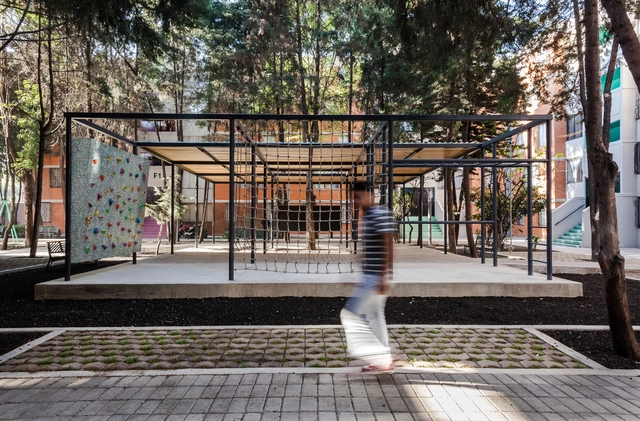
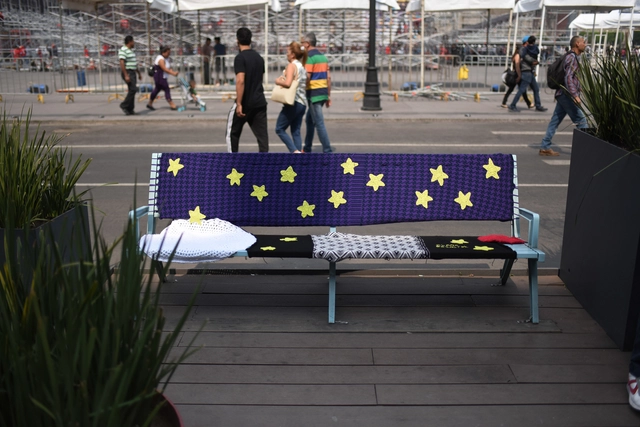
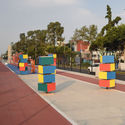
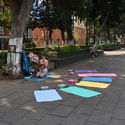
The 2nd Placemaking Latinoamérica Summit—organized by Lugares Públicos A.C.—took place in Mexico City during the first and second weeks of November. It featured various activities, including the rehabilitation of eight public spaces led by Mexican and Latin American participatory urban planning specialists in the boroughs of Cuauhtémoc, Iztacalco, and Miguel Hidalgo.
These interventions were carried out as part of a broader effort to reflect and act on the Placemaking methodology at a Latin American scale, fostering collaboration between organizations from different countries to improve public space. This process is detailed in the "White Paper on Latin American Placemaking: Tactical Urbanism and Innovation in Public Space Program," presented this week by the Alliance for Urban Regeneration (ARU) and Lugares Públicos.
In the presence of officials from the Ministry of Culture, Dra. Lidia Camacho, general director of the National Institute of Fine Arts, Mtra. Irene Muñoz Trujillo, director of the Mixed Fund for Tourism Promotion of Mexico City, and Maria Laura Medina de Salinas, honorary president of the Design Week México board, the general director of Design Week México and World Design Capital CDMX 2018, Emilio Cabrero, announced the details of the activity program for World Design Capital CDMX 2018.
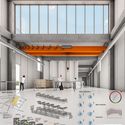
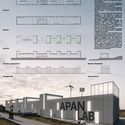
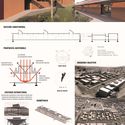
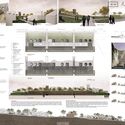
Through the Center for Sustainable Development Research (CIDS), Infonavit launched an open call for architecture and engineering firms to design the "Materials, Energy, and Water Laboratories" Building. Aiming to research and experiment with new materials, industrialized components, and spatial characteristics that foster the development of social housing, the building will be part of the complex named "Infonavit Housing Practical Research and Experimentation Laboratory" in "San Miguel del Arco," Apan, Hidalgo.
The brief required the proposal to be designed as a program container. Specifically, the design for this Ideas Competition had to house three major research spaces (materials, energy, and water) tailored to the specific testing and research needs of each laboratory, which will be developed in detail during the executive project phase with the winning firm. A key requirement for these spaces was spatial flexibility and versatility in both plan and section.
A new interactive museum is opening its doors at the Mexican Stock Exchange. The Mexican Stock Exchange Museum, “MUBO”—inaugurated in May 2018—is a space dedicated to a historical narrative focused on the country's financial market culture, utilizing interactive modules to enhance the understanding of the curatorial script. Through this new space, the Bolsa Mexicana de Valores Group brings together efforts initiated just over a year ago alongside the "Escuela de la Bolsa" to disseminate financial topics and foster an understanding of the country's history and development.
The eternal task of architecture is to create embodied and lived existential metaphors that concrete and structure our being-in-the-world. Architecture reflects, materializes, and eternalizes ideas and images of real life. Buildings and cities allow us to structure, understand, and remember who we are. 1 —J. Pallasmaa
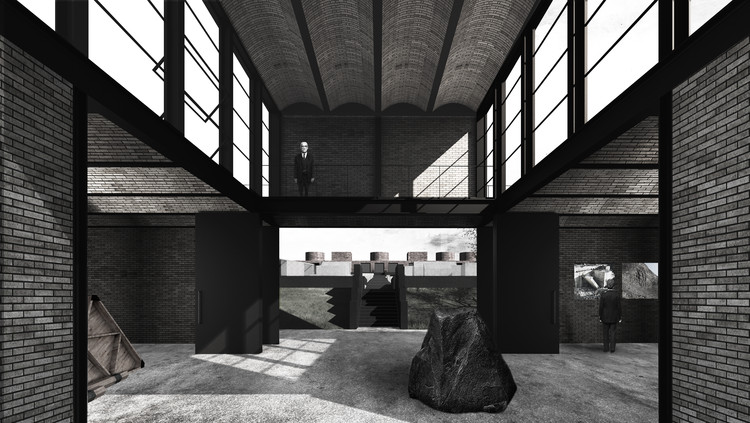
We understand architecture as a series of processes directly linked to two phases. The first involves the birth of ideas, and the constant emergence and creation of questions, affirmations, and negations. It is a back-and-forth between affirmation and self-questioning, between narrative and utopia, arising from our architectural proposals. However, we chose to dedicate this documentary to the second phase: the materialization of that flow of ideas.
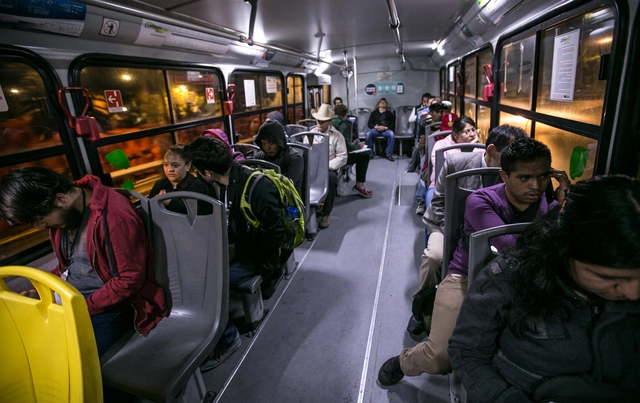
Can you imagine arriving at a bus stop in the early hours of the morning—after a party, work, or school—and knowing the exact minute your public transit will arrive? Cities like London, New York, Madrid, and Melbourne have successfully implemented night transit systems with fixed schedules, yielding various financial and safety benefits for residents while boosting tourism and encouraging sustainable mobility. What would happen if this system were applied to the second-largest avenue in the Americas, after Buenos Aires' Avenida 9 de Julio?
Mexico City already has a night transit service: the Nochebús. With 11 routes operating between midnight and 5:00 a.m., it serves late-shift workers, night-lifers, and others needing late-night transportation. However, the service faces several challenges, many of which stem from uncertainty around arrival times—largely due to a much lower frequency than daytime public transit.
The 21 projects making up the Official Selection of the Mexican Pavilion at the 16th International Architecture Exhibition of the Venice Biennale converge across latitudes, geographical regions, and echoes of the territory, responding to the curatorial theme “Freespace.” In four installments, we will share the work and philosophy of each of the participants representing Mexico in Venice. Read on to discover the second part of these projects.
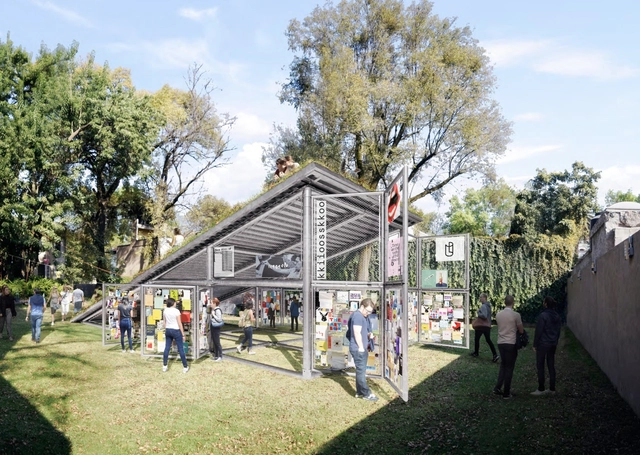
Kiosko, the Alumnos47 initiative that explores publications outside of publishing, now has a winning design for its pavilion. Following the launch of the open call last year, forty-nine proposals were received from different states across Mexico, as well as one from abroad. After a lengthy and rigorous deliberation, the jury—composed of Chus Martínez, Daniel Garza Usabiaga, Tiago Pinto de Calvalho, and Fermín Espinosa—awarded an honorable mention and selected five finalists, from which a winner was chosen.
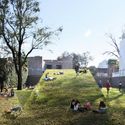
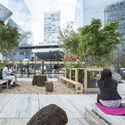
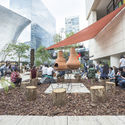
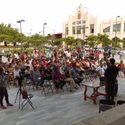
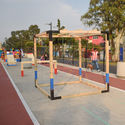
Museo Jumex presents 'Proposals for a Plaza,' a collaborative project by artists Fritz Haeg (United States, 1969) and Nils Norman (United Kingdom, 1966). This temporary installation, commissioned as part of the series 'Agora: A Blueprint for Utopia,' will invite the public to imagine and participate in an alternative vision of the museum's plaza.
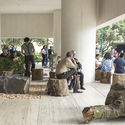
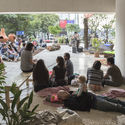
Inspired by the outdoor spaces of Mexico City, the project draws elements from public parks and the wildlife areas surrounding the city, while also integrating informal uses of open space. It features seating and sleeping areas, a kiosk, a fire pit, bleachers, and outdoor spaces designed for contemplation, gathering, resting, and play.




_at_Cuadra_San_C....jpg?1518020946&format=webp&width=640&height=580)
_at_Cuadra_San_Cri....jpg?1518020987 "Sean Scully Wall of Light Cubed, Mexico 2018 Stone sourced locally near Mexico City © Sean Scully. Image © Felix Friedmann")
_at_Cuadra_San_Cristobal__....jpg?1518020930 "Sean Scully Landline That Pink, 2017 Oil on Aluminum © Sean Scully")
_at_Cuadra_San_C....jpg?1518020946 "Sean Scully Wall of Light Cubed, Mexico 2018 Stone sourced locally near Mexico City © Sean Scully. Image © Felix Friedmann")
_at_Cuadra_San_Cristobal__....jpg?1518020961 "Sean Scully Brown Silver Tower, 2016 Corten and Stainless Steel © Sean Scully. Image © Felix Friedmann")
_at_Cuadra_San_C....jpg?1518020946)





-1.jpg?1518763923&format=webp&width=640&height=580)